
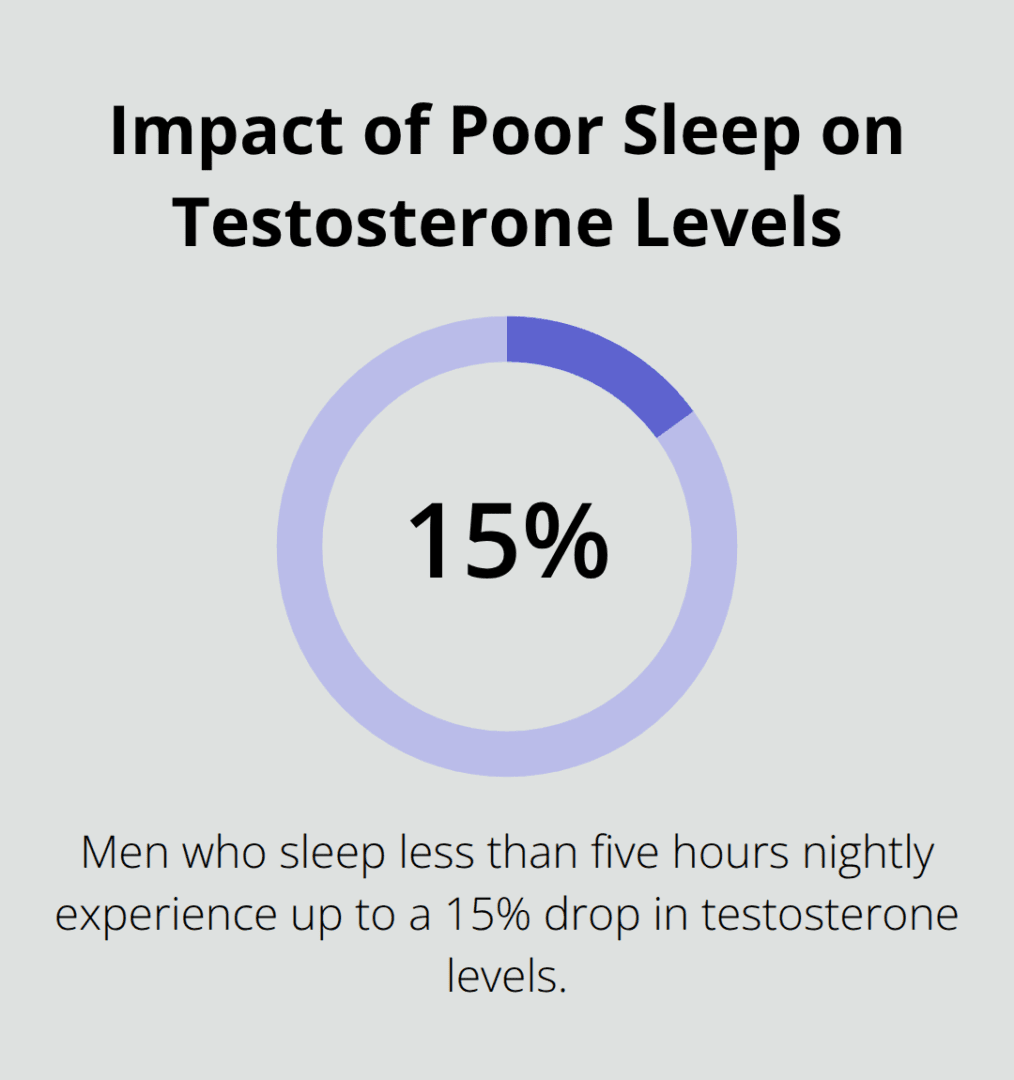
Poor sleep wreaks havoc on your hormone production, particularly testosterone levels in men. Research shows that men who sleep less than five hours nightly experience a 10-15% drop in testosterone compared to those getting adequate rest.
At Mosaic Medicine Clinic, we see how sleep and testosterone issues often go hand in hand. Insomnia and other sleep disorders rank among the top low T causes we treat, making this connection vital for men’s health.
How Sleep Affects Testosterone Production
Your testosterone production follows a precise nighttime schedule that sleep disruption destroys completely. The majority of your daily testosterone release happens during sleep, with levels that climb steadily through the night and peak just before you wake up. This natural rhythm depends entirely on deep sleep stages, particularly REM sleep, when your body releases luteinizing hormone that triggers testosterone production.
Peak Production Occurs During REM Sleep
Research shows testosterone production increases during REM sleep episodes throughout the night. Men who experience sleep fragmentation or wake frequently miss these critical production windows. Your body needs uninterrupted sleep cycles to maintain this hormonal surge, which explains why shift workers and insomniacs often show testosterone deficiency symptoms. Each REM cycle you lose means less testosterone production, which creates a cumulative deficit over time.
Sleep Loss Creates Immediate Hormonal Damage
Studies that track men through controlled sleep restriction reveal dramatic testosterone drops within just one week. Participants who slept only 5 hours nightly showed testosterone decreases of 10-15%, with the most significant drops that occurred between 2 PM and 10 PM the following day. The National Health and Nutrition Examination Survey found that men lose 5.9 ng/dL of testosterone for every hour of sleep they lose below 7 hours (approximately 15% of men get less than 6 hours nightly). This creates a vicious cycle where low testosterone makes sleep quality worse, which further reduces hormone production and creates deeper deficits each night.
Sleep Disorders Amplify Testosterone Loss
Men with obstructive sleep apnea face particularly severe testosterone drops due to frequent sleep interruptions throughout the night. Research shows that men without sleep apnea have significantly lower odds of erectile dysfunction compared to those with untreated sleep disorders. CPAP therapy can lead to improvements in both sleep quality and hormone levels for men who adhere to treatment consistently. These sleep-related testosterone changes often manifest as physical symptoms that many men don’t immediately connect to their sleep quality.
Signs Your Sleep May Be Affecting Your Testosterone
The connection between poor sleep and declining testosterone shows up through specific warning signs that many men dismiss as normal aging or stress. Energy levels that crash by mid-afternoon signal more than just a busy schedule – they indicate hormonal disruption from inadequate rest. Men who experience sleep-related testosterone drops report persistent fatigue that caffeine cannot improve, decreased motivation for physical activity, and noticeable drops in sexual desire that correlate directly with their worst sleep periods.
Physical Warning Signs Point to Hormonal Disruption
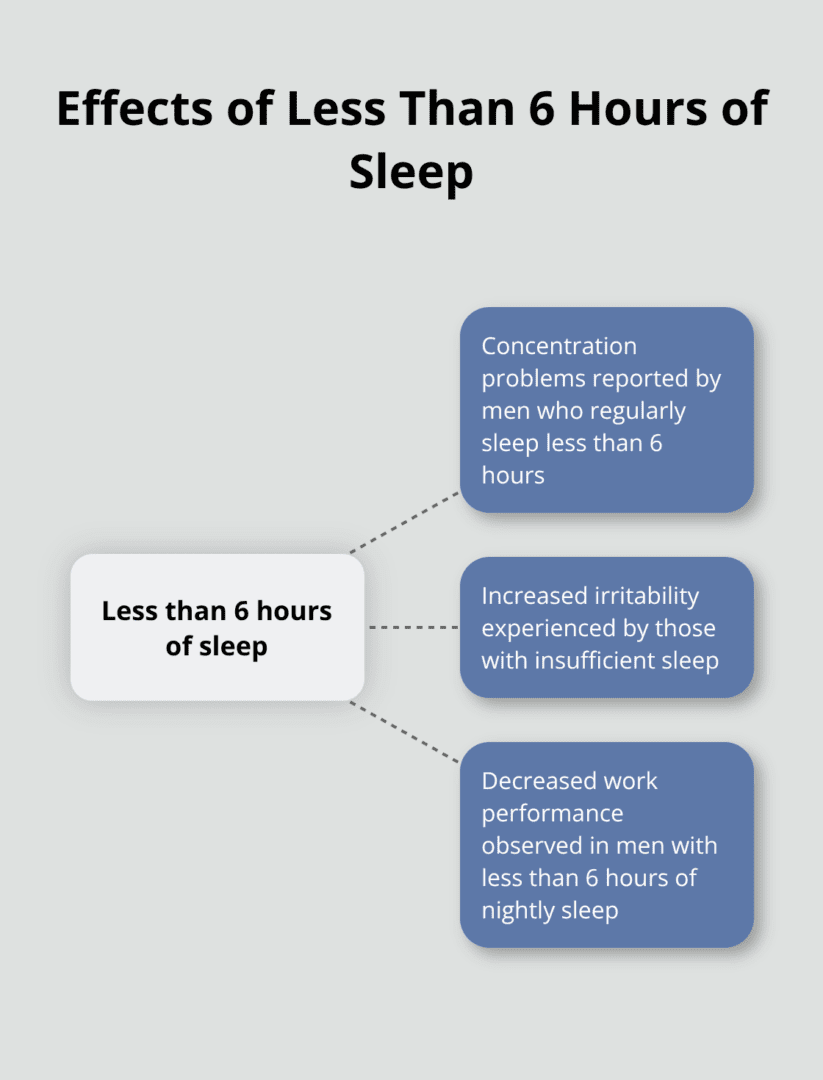
Morning erections become less frequent or disappear entirely when sleep consistently falls below 6 hours nightly. Muscle mass decreases despite men maintaining the same workout routine, while body fat accumulates around the midsection even without dietary changes. Research shows that 29.2% of men get less than 6 hours of sleep regularly, and these men report significantly higher rates of concentration problems, irritability, and decreased work performance compared to those who sleep 7-8 hours.
Sleep Quality Indicators Reveal Testosterone Impact
Men whose testosterone drops due to poor sleep experience specific sleep pattern disruptions that create a recognizable cycle. Frequent nighttime awakenings between 2-4 AM, difficulty that occurs when they try to fall back asleep after waking, and feeling unrefreshed despite spending 8 hours in bed all indicate sleep fragmentation that disrupts hormone production. Sleep apnea symptoms like loud snoring, gasping during sleep, or morning headaches compound testosterone loss – research shows men with untreated sleep apnea have notably higher scores for erectile dysfunction and lower urinary tract symptoms compared to those without sleep disorders.
Testing Becomes Essential After Consistent Symptoms
Hormone testing makes sense when sleep problems persist for more than 4 weeks alongside physical symptoms like decreased libido, persistent fatigue, or mood changes. Morning testosterone levels below 300 ng/dL combined with poor sleep quality scores indicate a clear connection that requires medical attention. The STOP-Bang questionnaire effectively screens for sleep apnea in clinical settings, while sleep diaries that track both sleep duration and next-day energy levels help identify patterns that point to hormone disruption.
Once you recognize these warning signs, the next step involves taking concrete action to improve your sleep quality and support healthy testosterone production through proven strategies.
How Can You Optimize Sleep for Better Testosterone?
The right sleep environment and habits directly impact testosterone production through measurable changes in sleep quality and hormone levels. Your bedroom temperature should stay around 32-34°C, as research shows this range promotes deeper sleep stages that maximize testosterone release. Complete darkness matters – even small amounts of light from electronic devices can disrupt melatonin production and fragment sleep cycles. Blue light exposure from screens within one hour of bedtime reduces REM sleep duration by up to 23 minutes, which translates to measurable testosterone losses the next day.
Sleep Schedule Consistency Boosts Hormone Production
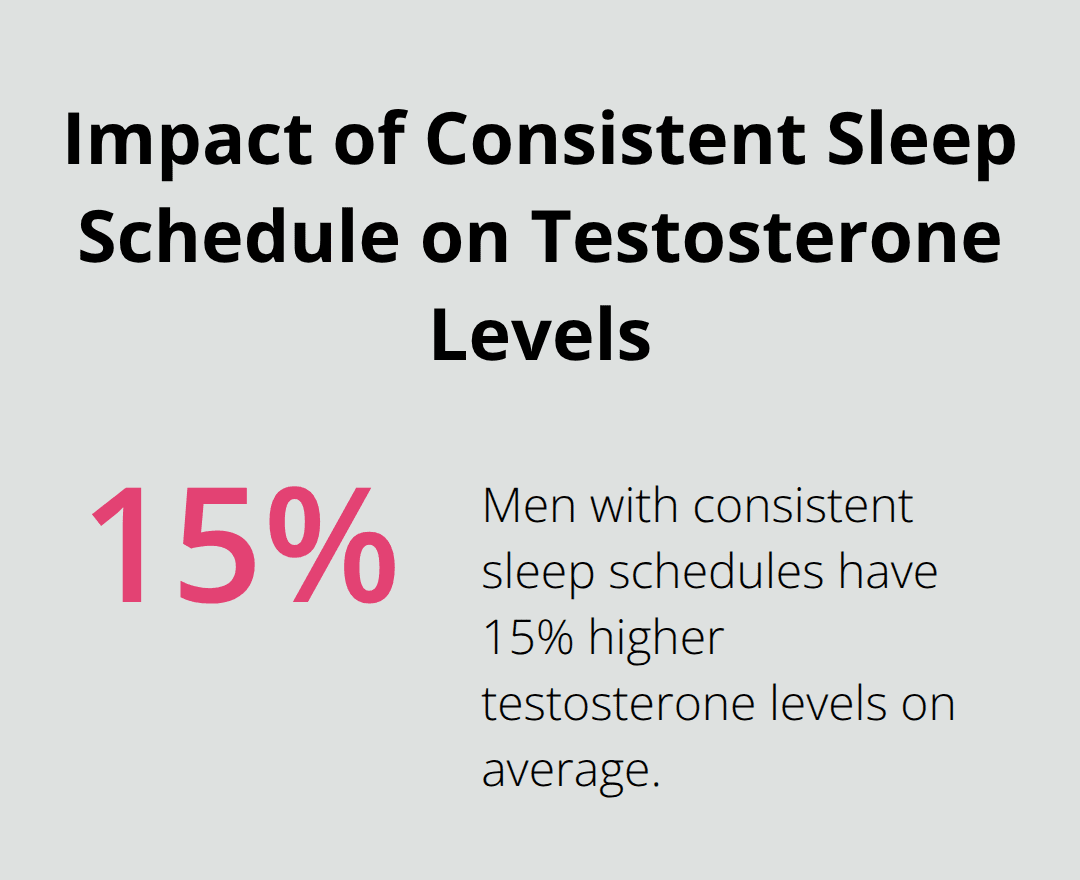
Men who maintain consistent bedtimes and wake times see testosterone levels that average 15% higher than those with irregular schedules. You should go to bed before 10 PM to allow your body to complete more deep sleep cycles before midnight, when testosterone production peaks. The American Academy of Sleep Medicine confirms that sleep quality decreases significantly when bedtime varies by more than 30 minutes nightly. Afternoon naps longer than 30 minutes disrupt nighttime sleep architecture and reduce testosterone-boosting REM sleep by an average of 45 minutes.
Exercise Timing Affects Sleep Quality
Regular physical activity increases sleep efficiency by 18% and extends deep sleep phases, but timing matters. Exercise within 3 hours of bedtime raises core body temperature and delays sleep onset by an average of 39 minutes. Men who complete workouts at least 4 hours before bed show better sleep quality scores and maintain more stable testosterone levels throughout the week. Morning or early afternoon exercise sessions provide the greatest sleep benefits without interfering with nighttime hormone production.
Substance Use Disrupts Testosterone Production
Caffeine consumption after 2 PM blocks adenosine receptors and reduces total sleep time, with each cup consumed in the afternoon decreasing REM sleep by 7-10 minutes. Alcohol might make you feel drowsy initially, but it fragments sleep during the second half of the night when testosterone production peaks. Men who limit alcohol to no more than two drinks and stop consumption 3 hours before bed show 22% better sleep quality scores. Nicotine acts as a stimulant that can delay sleep onset and reduce deep sleep phases (even when used hours before bedtime).
Final Thoughts
The connection between sleep and testosterone represents one of the most significant yet overlooked factors in men’s health. Research consistently shows that men who sleep less than 6 hours nightly experience testosterone drops of 10-15%, while they lose 5.9 ng/dL for every hour below the recommended 7-8 hours. This creates a cycle where poor sleep reduces hormone production, and low testosterone worsens insomnia.
Action starts with simple changes that produce measurable results. Men should maintain consistent bedtimes before 10 PM, keep their bedroom at 60-67°F, eliminate screens one hour before sleep, and avoid caffeine after 2 PM. These modifications can improve sleep quality by 18% and restore healthier testosterone levels within weeks.
Professional medical guidance becomes necessary when sleep problems persist beyond 4 weeks alongside symptoms like persistent fatigue, decreased libido, or morning testosterone below 300 ng/dL (sleep apnea screening and hormone testing help identify the root causes of these interconnected issues). We at Mosaic Medicine Clinic understand that addressing low T causes requires examination of sleep quality alongside other factors. Our comprehensive approach to men’s health includes evaluation of sleep patterns, hormone levels, and lifestyle factors that impact your overall well-being.