

Many men considering testosterone therapy wonder about its impact on their ability to start a family. The relationship between TRT and fertility is complex and often misunderstood.
At Mosaic Medicine Clinic, we see patients who assume testosterone therapy will boost their sperm health. The reality is more complicated than most expect.
This guide examines how testosterone therapy affects male fertility and explores safer alternatives for men planning families.
Does Testosterone Increase Fertility in Men: How Does Testosterone Really Work in Male Fertility
Testosterone operates through a complex feedback system that most men don’t understand. The hormone travels from your brain to your testicles through a pathway called the hypothalamic-pituitary-gonadal axis.
Your brain produces luteinizing hormone and follicle-stimulating hormone, which signal your testicles to make both testosterone and sperm. The testosterone levels inside your testicles are actually 50 to 100 times higher than what shows up in your blood tests. This massive difference matters because sperm production needs these ultra-high local concentrations to function properly.
What Really Causes Male Fertility Problems
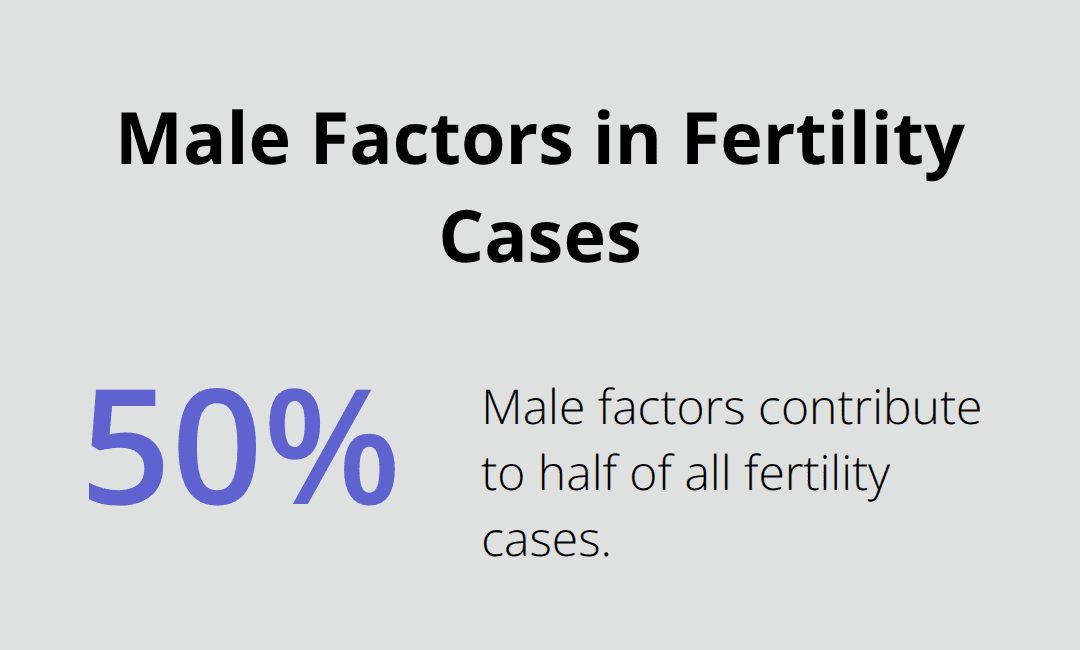
Male factors contribute to 50% of all fertility cases, yet most men remain unaware of the primary culprits. Testosterone is the primary sex hormone in people assigned male at birth, and it supports sperm production, sex drive, muscle mass, and other key functions in the male body, while women face their own set of common hormone-related health issues. It is produced in the testes, while the HPG axis controls how signals move between the hypothalamus, pituitary gland, and gonads to regulate hormone output and support traits such as facial hair. Age plays a bigger role than most realize – sperm quality starts to decline after age 35, and low testosterone levels become more common with age, often causing fatigue, reduced libido, and other symptoms tied to low levels.
Varicoceles affect 15% of all men and 40% of infertile men, and create heat that damages sperm production. Obesity reduces testosterone by 10-15% for every 20 pounds of excess weight, and many men can improve hormone health through natural testosterone-boosting lifestyle changes. Environmental toxins from plastics, pesticides, and heavy metals accumulate in testicular tissue over decades, and certain medications can also disrupt hormone balance. Misuse of anabolic steroids may sharply suppress sperm production, and synthetic testosterone from unregulated sources carries added risks. Even prescribed testosterone can lower sperm counts when fertility is the goal.
Why Low Testosterone Doesn’t Equal Infertility
Men with testosterone levels as low as 200 ng/dL can still father children successfully. Testosterone levels naturally decline by 1-2% per year after age 30, and about 40% of men over 45 have low testosterone levels. Treatable causes of male infertility are found in 18% of cases, and men with naturally low levels often maintain normal sperm count despite symptoms such as sex drive changes, low libido, or erectile dysfunction. Clinically, persistently low testosterone levels are called hypogonadism, and this condition can affect fertility through low sperm count and other factors that make it harder to conceive or achieve conception. Environmental or health-related causes can also lower testosterone or disrupt hormones, including obesity, sleep apnea, chronic illness, opioid pain medicines, long-term corticosteroids, and some chemotherapy drugs, just as thyroid problems can disrupt hormones in women. Anabolic steroids and synthetic testosterone can suppress sperm production and harm fertility, even though prescribed testosterone may be appropriate for some men with documented deficiency.
The key difference lies in location – your blood testosterone level doesn’t reflect what happens inside your testicles. Your body can compensate for low blood levels when it increases local production where sperm are made. This explains why 84% of men recover normal sperm counts within two years after they stop testosterone therapy (according to research from Kohn and colleagues).
The Testosterone Therapy Paradox
Here’s where testosterone replacement therapy creates problems for men who want children. Low testosterone, also called hypogonadism, may cause low libido, low sex drive, or erectile dysfunction without always causing a low sperm count. Those symptoms can still make conception harder even when fertility is not severely impaired. External testosterone shuts down your body’s natural hormone production system, so taking testosterone, testosterone use, and testosterone supplementation can suppress the signals your brain sends to your testicles. That risk also applies to testosterone supplements, taking testosterone supplements, and other supplements that affect hormone balance.
This creates a fertility trap that catches many men off guard when they start testosterone therapy without proper guidance.
Does Testosterone Therapy Destroy Male Fertility
Testosterone replacement therapy creates a devastating paradox for men who want children, so understanding what to know before starting testosterone therapy is crucial. Taking testosterone from outside sources—including testosterone supplementation, testosterone supplements, or other hormone-related supplements—can shut down the body’s natural production signals. This complete absence of sperm occurs because external testosterone tricks your brain into thinking your body has enough hormone production.
The mechanism works against fertility in a predictable way. When you inject or apply testosterone, your hypothalamus stops the release of gonadotropin-releasing hormone. This shuts down luteinizing hormone and follicle-stimulating hormone production from your pituitary gland. Without these signals, your testicles cannot produce sperm, which can mean lower sperm output and eventually decreased sperm count. Testosterone is necessary for making healthy sperm, but using it this way can still affect fertility. The result is testicular atrophy and fertility loss that can persist for months or years, so using testosterone without a proper evaluation can undermine fertility goals.
TRT Shuts Down Your Natural Hormone Factory
Your testicles shrink by 20-30% during testosterone therapy because they stop work entirely. Research from Baillargeon shows TRT prescriptions tripled among men over 40 in the past decade, yet fewer than 2% of men receive semen analysis before treatment starts (according to Rao’s research). This creates a fertility crisis that most men discover too late.
The suppression happens faster than most expect. Sperm production takes 74 days to complete, so you’ll see counts decline within three months. Total sperm absence often occurs by month four. Your natural testosterone production can remain suppressed for six months to two years after you stop therapy.
Recovery Takes Longer Than Most Men Expect
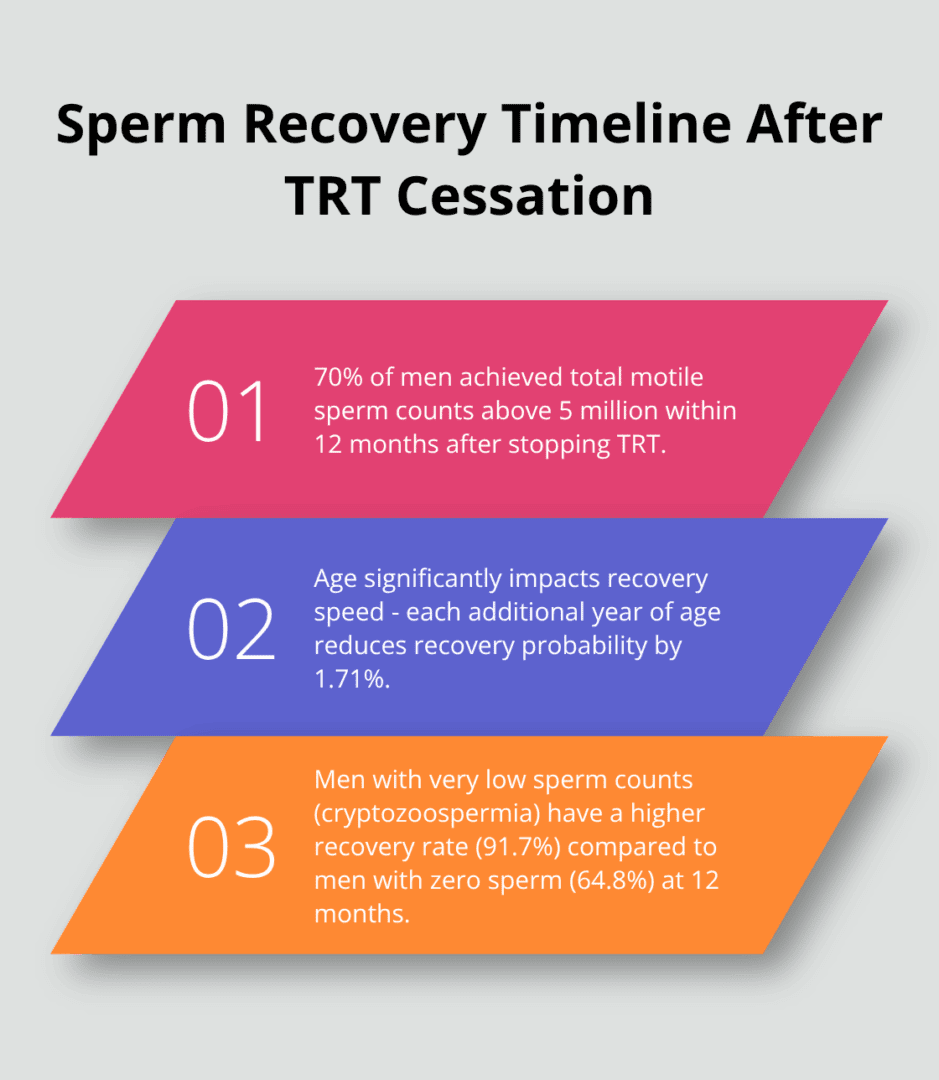
Sperm recovery after TRT cessation follows a timeline that tests patience. Research that tracked 66 men found that 70% achieved total motile sperm counts above 5 million within 12 months. About 25% of urologists still prescribe testosterone for male infertility despite its suppressive effect on sperm production. However, age significantly impacts recovery speed – each additional year of age reduces recovery probability by 1.71%.
Men with cryptozoospermia recover faster than those with complete azoospermia. Recovery rates reach 91.7% for men with very low counts compared to 64.8% for men with zero sperm at 12 months. The duration of TRT matters more than dose – longer therapy periods require extended recovery times, so a healthcare provider or fertility specialists may discuss treatment options if recovery is incomplete, including sperm retrieval with intracytoplasmic sperm injection.
Age Makes Recovery More Difficult
Older men face steeper challenges when they attempt fertility recovery after TRT. Men over 40 show significantly lower recovery rates and need longer timelines to restore normal sperm production. Some men need up to 24 months to restore normal fertility, which makes family plans extremely challenging for couples who discover this information after treatment starts.
Fortunately, several fertility-friendly alternatives exist that can address low testosterone without compromising your ability to father children.
What Are Safer Alternatives to TRT for Fertility
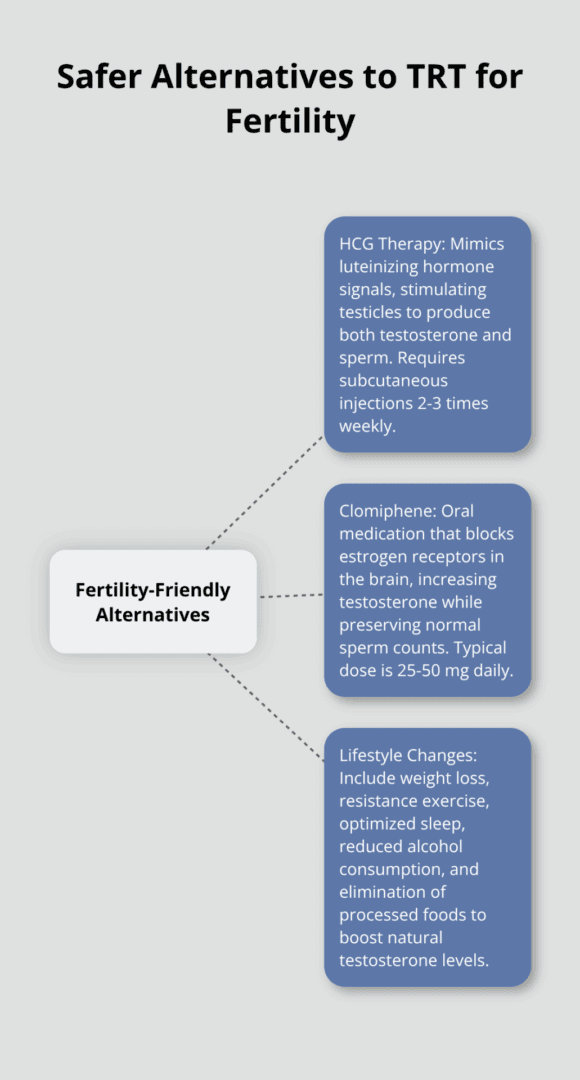
Men who want children have three proven alternatives to testosterone replacement therapy that preserve fertility while they address low testosterone symptoms. Human chorionic gonadotropin therapy stands out as the most effective option because it mimics luteinizing hormone signals from your brain. HCG injections two to three times weekly stimulate your testicles to produce both testosterone and sperm simultaneously. Research demonstrates that men who use HCG maintain normal testicular function and testosterone levels without fertility suppression.
HCG Preserves Natural Production
HCG therapy protects your ability to father children while addressing low testosterone symptoms. The treatment requires subcutaneous injections of 1,500 to 3,000 units every other day, which most men handle easily after initial instruction. Studies show HCG can increase testosterone levels while maintaining sperm production at baseline levels. Men report improved energy and libido within four to six weeks of treatment start. The therapy works because it bypasses your brain’s feedback system and directly tells your testicles to increase hormone production.
Clomiphene Blocks Estrogen Signals
Clomiphene citrate offers an oral alternative that requires no injections. This medication blocks estrogen receptors in your brain, which tricks your hypothalamus into production of more gonadotropin-releasing hormone. Research shows clomiphene increases testosterone while preserving normal sperm counts. The typical dose ranges from 25 to 50 milligrams daily, with most men seeing results within eight to twelve weeks. Side effects remain minimal, though some men experience mild mood changes or visual disturbances.
Lifestyle Changes Boost Natural Levels
Weight loss provides the most dramatic testosterone increase through lifestyle modification. Men who lose significant weight can expect testosterone levels to rise substantially. Resistance exercise three times weekly increases testosterone within six months and also supports muscle mass and muscle growth, and the connection between exercise and testosterone becomes even more important when you’re trying to protect fertility. Sleep optimization matters more than most realize – men who sleep seven to eight hours nightly maintain higher testosterone levels than those who get insufficient sleep, which can also affect energy levels. Vitamin d and zinc may help boost testosterone levels naturally, and vitamin D plays a major role in men’s overall health. Try to reduce alcohol consumption and eliminate processed foods to support healthy testosterone levels while building sustainable evidence-based self-care habits.
Final Thoughts
Testosterone therapy and fertility decisions demand careful evaluation of your family plans and timeline. TRT can suppress sperm production for months or years, which makes it wrong for men who want children soon. Men under 40 recover fertility faster after they stop TRT, but recovery can take up to two years regardless of age.
Fertility-friendly alternatives like HCG therapy and clomiphene citrate offer effective solutions that preserve your ability to father children while they address low testosterone symptoms, which can include profound changes in mood, motivation, and mental clarity when testosterone is low. Your age, current testosterone levels, fertility timeline, and symptom severity all influence the best treatment approach. The decision between TRT and fertility preservation requires individual assessment rather than generic recommendations.
Working with experienced healthcare providers changes your outcomes significantly. At Mosaic Medicine Clinic, we evaluate your individual situation through male hormone testing in Bradenton and create personalized treatment plans that align with your family goals, similar to the guidance in our resource on choosing the right testosterone optimization clinic. Don’t let incomplete information guide such an important choice about your reproductive future (marketing claims often oversimplify these complex medical decisions).
