


Exercise and testosterone share a powerful connection that directly impacts men’s health and vitality. Research shows that specific types of physical activity can boost testosterone levels by 15-20% within weeks. At Mosaic Medicine Clinic, we see how the right exercise approach transforms hormone balance for our patients. Not all workouts affect testosterone equally – some build it up while others can actually lower it.
How Does Exercise Change Your Hormone Production?
The relationship between physical activity and testosterone production operates through three distinct pathways, each with dramatically different results. Resistance training stands as the most powerful testosterone booster, with studies showing that heavy compound movements like squats and deadlifts can increase testosterone levels immediately after workouts. A meta-analysis published in the Journal of Endocrinological Investigation assessed whether physical exercise acutely affects testosterone levels in men across multiple studies. This hormonal surge occurs because large muscle groups under stress trigger the hypothalamic-pituitary-gonadal axis to release luteinizing hormone, which directly stimulates testosterone production in the testicles.
Resistance Training Creates the Biggest Hormonal Response
Heavy compound movements generate the strongest testosterone response compared to isolation exercises or machine-based workouts. Research demonstrates that men who perform squats, deadlifts, bench presses, and barbell rows with 6-8 repetitions at 85-90% of their one-rep maximum create optimal conditions for hormone production. Men who focus on these multi-joint exercises three times per week see sustained testosterone improvements over months, not just temporary spikes. The key lies in progressive overload – you must continuously challenge your muscles with heavier weights to force your body to maintain elevated hormone production for muscle growth and fat loss.
High-Intensity Intervals Boost Testosterone While Endurance Training Suppresses It
High-intensity interval training produces significant testosterone increases through short bursts of maximum effort followed by brief recovery periods. A 2014 study found that men who performed 30-second sprints with 90-second rest periods experienced testosterone surges comparable to heavy weight sessions. However, excessive endurance exercise creates the opposite effect. Marathon runners and cyclists who train more than 60 minutes daily often develop chronically low testosterone levels due to elevated cortisol production (stress hormone response). This hormonal suppression explains why many endurance athletes struggle with low energy, decreased muscle mass, and reduced libido despite their impressive cardiovascular fitness.

The type of exercise you choose makes all the difference, but other factors also influence how your body responds to physical activity.
Which Exercises Maximize Testosterone Production
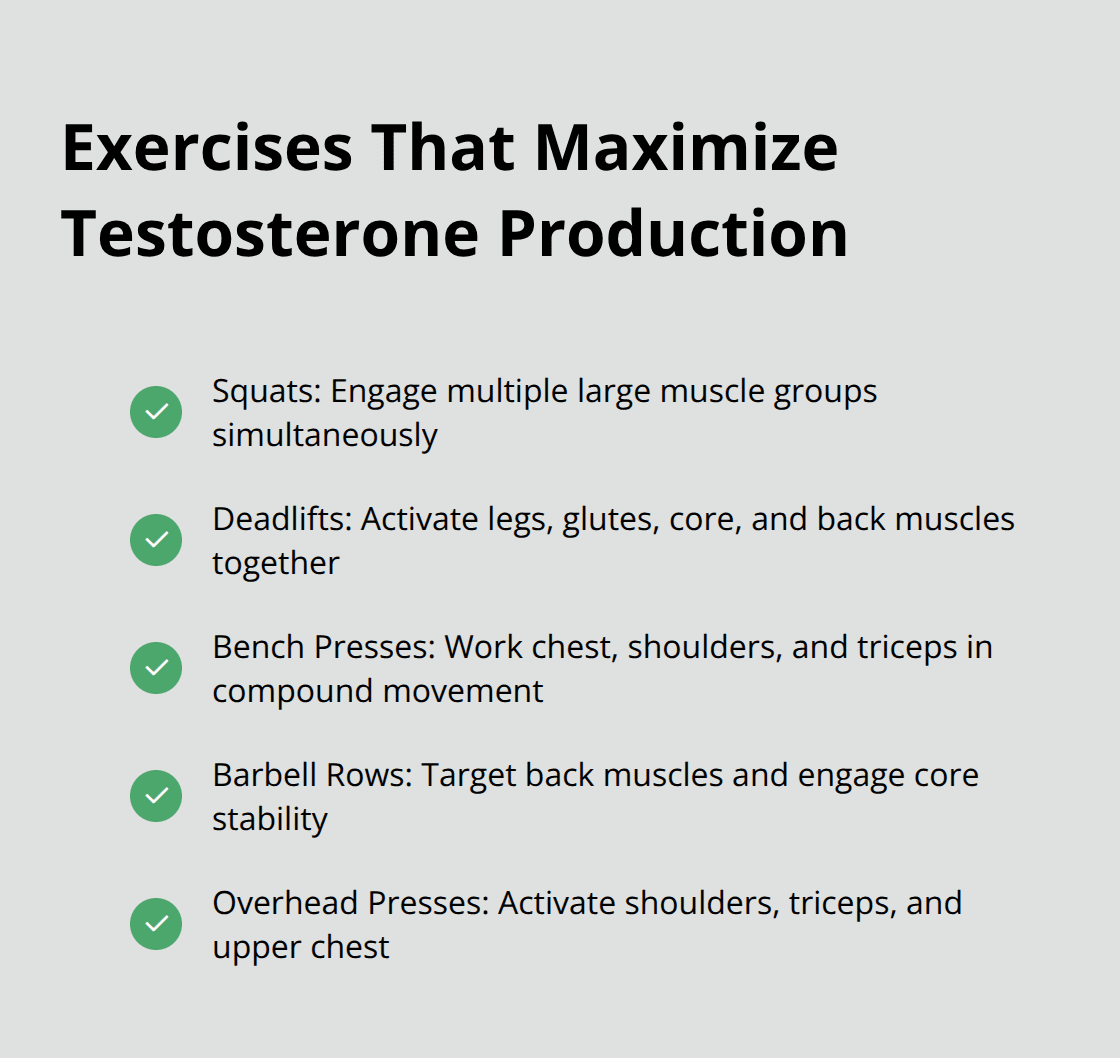
Weightlifting with heavy compound movements produces the highest testosterone increases of any exercise type. Men who perform squats, deadlifts, bench presses, and rows with 85-90% of their maximum weight for 6-8 repetitions create optimal hormonal responses. A 1983 study found that men experience significant testosterone increases after they lift weights, while women see almost no change. The American Journal of Physiology confirms that regular leg workouts with squats and deadlifts result in higher testosterone levels because these exercises activate the body’s largest muscle groups simultaneously.
Heavy Compound Movements Beat Isolation Exercises Every Time
Compound exercises that work multiple muscle groups generate far superior testosterone responses compared to isolation movements like bicep curls or leg extensions. Squats and deadlifts engage your legs, glutes, core, and back muscles together, which forces your body to produce more luteinizing hormone to support muscle growth. Machine-based exercises produce weaker hormonal responses because they limit natural movement patterns and reduce total muscle activation. Men who focus on barbell squats, deadlifts, overhead presses, and bent-over rows three times per week maintain elevated testosterone levels long-term.
Sprint Intervals Create Powerful Hormone Surges
High-intensity interval workouts with 30-second all-out sprints followed by 90-second recovery periods produce testosterone surges comparable to heavy weightlifting sessions. A 2014 study revealed that intensive interval sessions boost testosterone levels in men more effectively than steady-state cardio. Sprint intervals on a bike, treadmill, or outdoor track for 15-20 minutes total create maximum hormonal impact with minimal time investment (perfect for busy schedules). However, sessions longer than 45 minutes begin to elevate cortisol levels, which suppresses testosterone production and negates the benefits.
Recovery Between Sessions Determines Long-Term Success
Training frequency matters more than most men realize for sustained testosterone optimization. Heavy compound movements require 48-72 hours of recovery between sessions that target the same muscle groups to prevent overtraining and cortisol elevation. Men who lift weights every other day while they alternate muscle groups maintain higher baseline testosterone levels than those who train daily without adequate rest periods.
The exercises you choose matter, but your individual response depends on several personal factors that can dramatically influence your results.
What Determines Your Testosterone Response to Exercise
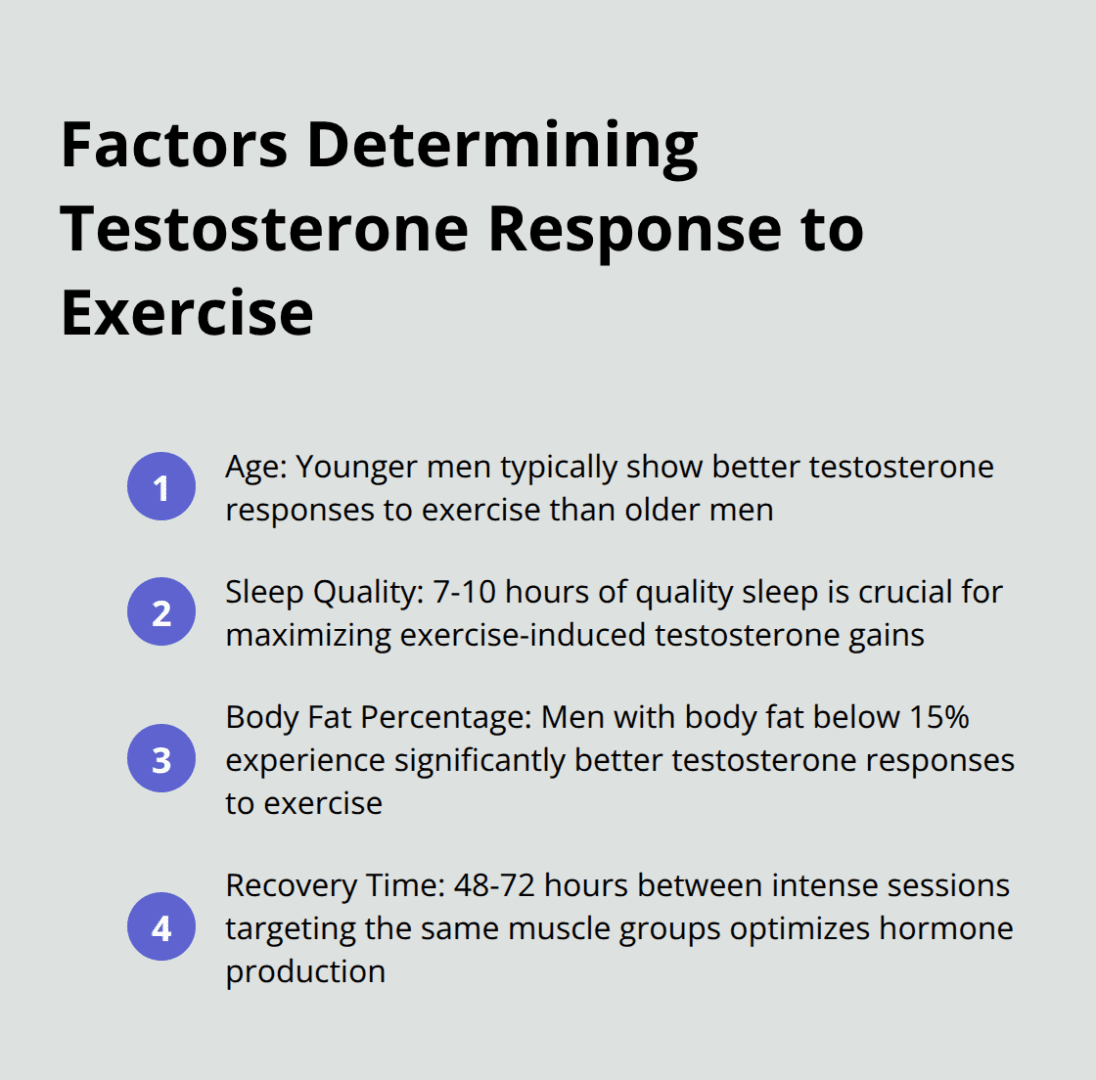
Your age dramatically affects how much testosterone boost you get from exercise, with younger men showing similar relative testosterone responses to older men during high-intensity exercise sessions. A 2008 yearlong study showed sedentary men increased their dihydrotestosterone levels by 14.5% after they began regular exercise, but younger participants consistently achieved better results than older men. Men with existing low testosterone below 300 ng/dL see the most dramatic improvements from resistance training, while those with normal baseline levels above 500 ng/dL experience smaller percentage gains.
Sleep Quality Controls Your Hormone Production
Sleep deprivation destroys testosterone production more than any other lifestyle factor, with men who get less than 6 hours nightly showing 10% to 15% lower testosterone levels within one week of sleep restriction. Most testosterone synthesis happens during deep sleep stages, which makes 7-10 hours of quality sleep non-negotiable for exercise benefits. Men who maintain consistent sleep schedules and avoid screens 2 hours before bed maximize their workout-induced testosterone gains. Poor sleep also elevates cortisol levels, which directly suppresses testosterone production and cancels out exercise benefits.
Body Fat Percentage Determines Exercise Response
Excess abdominal fat converts testosterone into estrogen through aromatase enzyme activity, which makes body composition your most important factor for hormone optimization. Men with body fat above 20% experience significantly lower testosterone responses to exercise compared to those below 15% body fat. Obese men may see minimal testosterone increases from workouts until they reduce their body fat through combined strength training and nutrition changes. Resistance training simultaneously builds muscle and burns fat (creating a positive cycle that improves testosterone response over time).
Recovery Time Between Workouts Affects Results
Your body needs adequate recovery between intense exercise sessions to maintain optimal testosterone production. Men who train with heavy weights daily without rest periods often experience decreased testosterone levels due to elevated cortisol from overtraining. Studies show that 48-72 hours of recovery between sessions targeting the same muscle groups produces the best long-term hormone optimization results. This recovery period allows your body to repair muscle tissue and restore hormonal balance for maximum testosterone benefits.
Final Thoughts
Exercise and testosterone share a direct relationship that transforms men’s health when you approach it correctly. Resistance training with heavy compound movements produces the strongest hormonal responses, while high-intensity intervals offer time-efficient alternatives. Excessive endurance exercise suppresses testosterone production, which makes exercise selection critical for hormone balance.
Men who prioritize strength training three times weekly, maintain 7-10 hours of quality sleep, and keep body fat below 20% see the most significant testosterone improvements. Recovery between sessions remains essential because overtraining elevates cortisol and negates hormonal benefits. Your individual response depends on age, baseline hormone levels, and overall health status (factors that vary significantly between men).
We at Mosaic Medicine Clinic help men optimize their hormone balance through comprehensive testing and personalized treatment plans. If you experience persistent fatigue, decreased muscle mass, or low libido despite regular exercise, professional hormone evaluation can identify underlying issues that exercise alone cannot address. Our direct primary care approach provides unrushed consultations to develop targeted strategies for your specific needs.


