

Healthcare costs keep rising while appointment times get shorter. Many people feel rushed through visits and struggle to build meaningful relationships with their doctors.
Primary care membership offers a different approach. We at Mosaic Medicine Clinic see how this model transforms patient care by removing insurance barriers and creating direct relationships between doctors and patients.
This membership-based healthcare could change how you think about medical care entirely.
How Does Primary Care Membership Actually Work?
Primary care membership operates on a simple premise: you pay a monthly fee directly to your doctor, typically ranging from $135 to $165 per adult according to industry data. This fee covers all primary care services including routine check-ups, urgent care visits, preventive screenings, and basic diagnostics.
The membership eliminates copays, deductibles, and surprise bills that plague traditional healthcare. Most practices also negotiate wholesale pricing for lab tests and imaging services, then pass these savings directly to members.
What Your Monthly Fee Includes
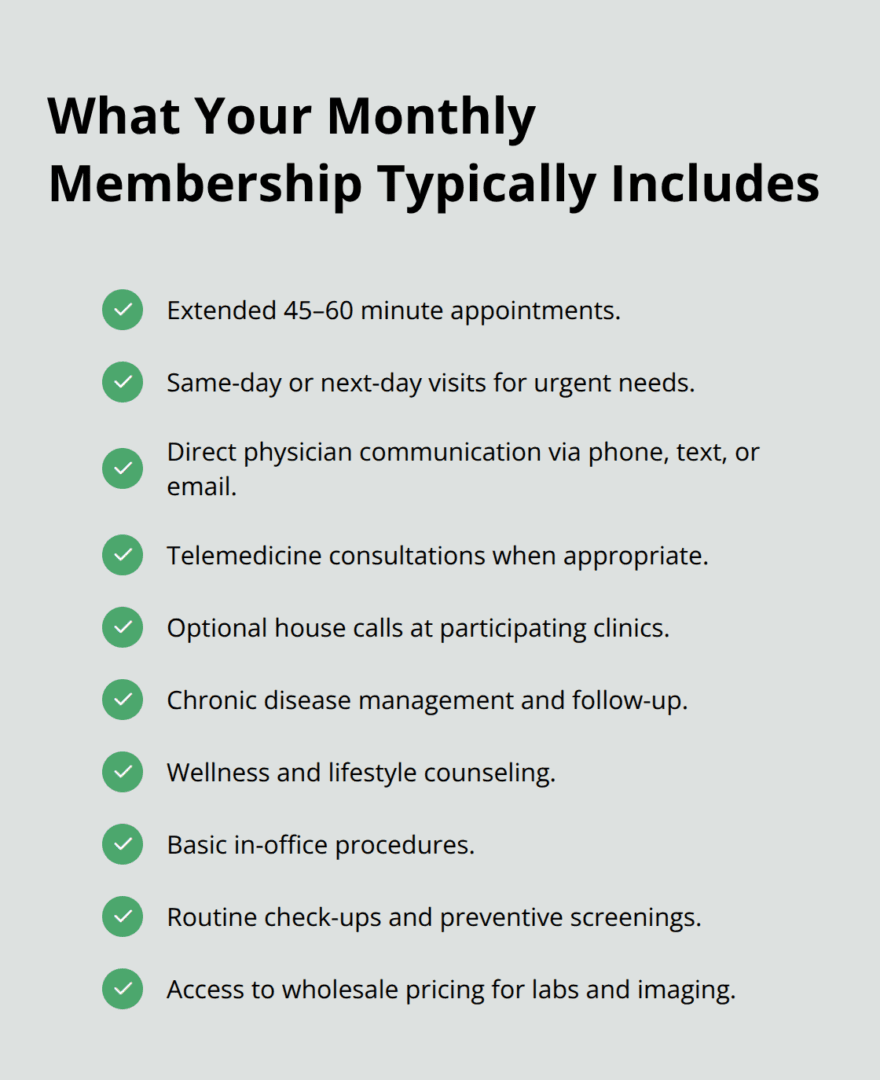
The membership fee grants access to extended appointment times, same-day visits when needed, and direct communication with your physician through phone, text, or email. Many practices offer telemedicine consultations and some even provide house calls.
Unlike traditional practices where doctors see 25-30 patients daily, membership practices limit panels to allow 45-60 minute appointments. This model covers chronic disease management, wellness counseling, and basic procedures performed in the office.
The Financial Reality vs Traditional Care
Traditional healthcare buries costs in complex billing structures and insurance negotiations. A typical family that spends $8,000 annually on healthcare premiums plus deductibles often pays more than membership fees would cost.
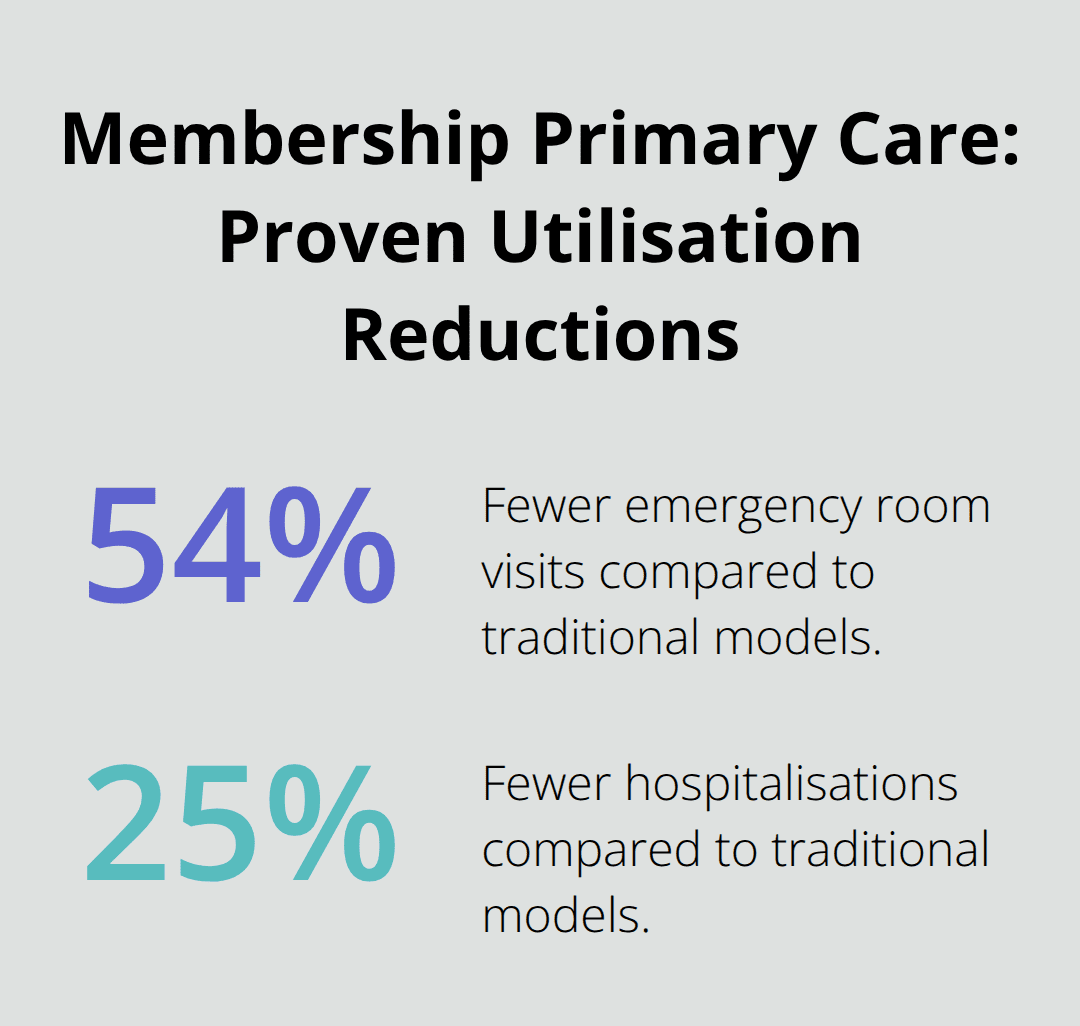
Veterans Health Administration data shows each primary care visit reduces healthcare costs by $721 per patient annually, with first visits that save $3,976 on average. Patients in membership practices report 54% fewer emergency room visits and 25% fewer hospitalizations compared to traditional models.
How Payment Structure Changes Everything
The direct payment model transforms the doctor-patient relationship fundamentally. Physicians no longer spend hours on insurance paperwork and prior authorizations (which can consume up to 30% of their time). Instead, they focus entirely on patient care and health outcomes. This shift creates transparency that traditional healthcare lacks. You know exactly what you pay each month, and your doctor knows they can dedicate proper time to address your health concerns without insurance company interference.
These structural changes set the foundation for understanding why so many patients experience dramatically better health outcomes under this model.
Why Primary Care Membership Delivers Better Results
When you schedule an appointment at a traditional practice, you get 12-15 minutes with your doctor. They rush through your concerns, often interrupting after 23 seconds according to research from the Journal of General Internal Medicine. Primary care membership flips this script entirely.
Extended Appointments Transform Patient Care
Membership practices provide 45-60 minute appointments that allow thorough discussions about your health concerns without watching the clock. Doctors can address multiple health issues in one visit instead of scheduling separate appointments for each concern. This extended time allows physicians to understand their complete health picture and develop comprehensive treatment plans.
Traditional practices pack schedules with back-to-back appointments to maximize insurance reimbursements. Membership practices limit patient panels to focus on quality over quantity, creating space for meaningful healthcare conversations.
Same-Day Access Prevents Health Crises
Traditional practices force you to wait weeks for routine appointments and offer limited same-day availability. Membership practices typically provide same-day appointments for urgent concerns and direct communication with your physician through text, phone calls, or secure messages.
This access prevents minor issues from becoming major problems. A study that tracked patient outcomes found that immediate access to primary care reduces emergency department visits and hospitalizations compared to hospital-based care. The financial impact becomes clear when you consider the average emergency room visit costs $2,200 compared to addressing the same issue during a membership appointment.
Transparent Costs End Financial Surprises
Insurance-based care hides costs until bills arrive weeks later. Membership practices provide upfront prices for everything. Lab tests that cost $300 through insurance networks often cost $30-50 at wholesale prices that membership practices negotiate.
MRIs cost $400-600 instead of $2,000-3,000 through traditional channels. This transparency allows you to budget healthcare expenses accurately instead of facing surprise bills. The average American family spends $8,500 annually on healthcare premiums and deductibles before receiving any actual care, while membership fees typically range from $1,620-1,980 per adult annually with no additional costs for covered services.
These advantages make membership particularly valuable for specific groups of people who struggle most with traditional healthcare limitations.
Who Gets the Most Value from Membership Healthcare?
People with Chronic Health Conditions
Patients with diabetes, hypertension, or heart disease face constant healthcare needs that traditional insurance handles poorly. These individuals typically require quarterly visits, frequent lab work, and medication adjustments that generate substantial copays and deductibles.
A diabetic patient might spend $2,400 annually on copays alone before prescription costs. Membership healthcare eliminates these per-visit charges while doctors provide the extended appointment times needed for comprehensive chronic disease management.
Children and families with chronic conditions benefit from Direct Primary Care according to clinical studies. This improvement occurs largely because doctors can spend adequate time to adjust treatment plans and educate patients about lifestyle modifications.
Families Who Prioritize Prevention
Parents who seek consistent preventive care for their families discover that membership models offer predictable monthly costs instead of surprise bills for well-child visits, immunizations, and sports physicals. Traditional family insurance often carries $5,000-8,000 deductibles that make routine care expensive until families meet the deductible.
Membership practices provide immediate access to preventive services without network restrictions. Parents can schedule same-day appointments when children develop fevers or injuries, avoiding expensive urgent care visits that cost $300-500 per visit.
The monthly fee structure also allows families to budget healthcare expenses accurately throughout the year, rather than face unpredictable insurance claims and varying copay amounts.
Small Business Owners and Self-Employed Individuals
Small business owners and self-employed individuals face even greater challenges with individual insurance premiums that average $7,700 annually for single coverage. These entrepreneurs often delay medical care due to high deductibles and limited provider networks.

Membership practices provide immediate access to care without network restrictions, which allows business owners to maintain their health without disrupting their work schedules. The predictable monthly costs simplify business expense planning compared to unpredictable insurance claims.
Self-employed individuals particularly benefit from the transparency of wholesale lab pricing (often 80-90% less than insurance rates) and direct communication with physicians through text or phone calls when health concerns arise.
Final Thoughts
Primary care membership represents a fundamental shift from insurance-driven healthcare to patient-centered medicine. The data shows clear advantages: 40% fewer emergency visits, $721 in annual cost savings per patient, and extended appointment times that allow proper medical care. The financial benefits become obvious when you compare $1,620-1,980 annual membership fees against traditional insurance premiums that average $7,700 plus deductibles.
This model works best for people with chronic conditions who require frequent care, families who prioritize prevention, and self-employed individuals who seek predictable healthcare expenses. The immediate access to physicians through text, phone, and same-day appointments prevents minor issues from becoming expensive emergencies. Wholesale lab prices and transparent costs eliminate surprise medical bills that plague traditional healthcare.
We at Mosaic Medicine Clinic have seen how this approach transforms patient outcomes through unrushed appointments and direct physician relationships. Our membership-based model provides comprehensive primary care with wholesale labs and discounted medications (available to individuals, families, and small businesses in Bradenton). The decision comes down to whether you value predictable costs, extended appointment times, and direct physician access over traditional insurance networks.