
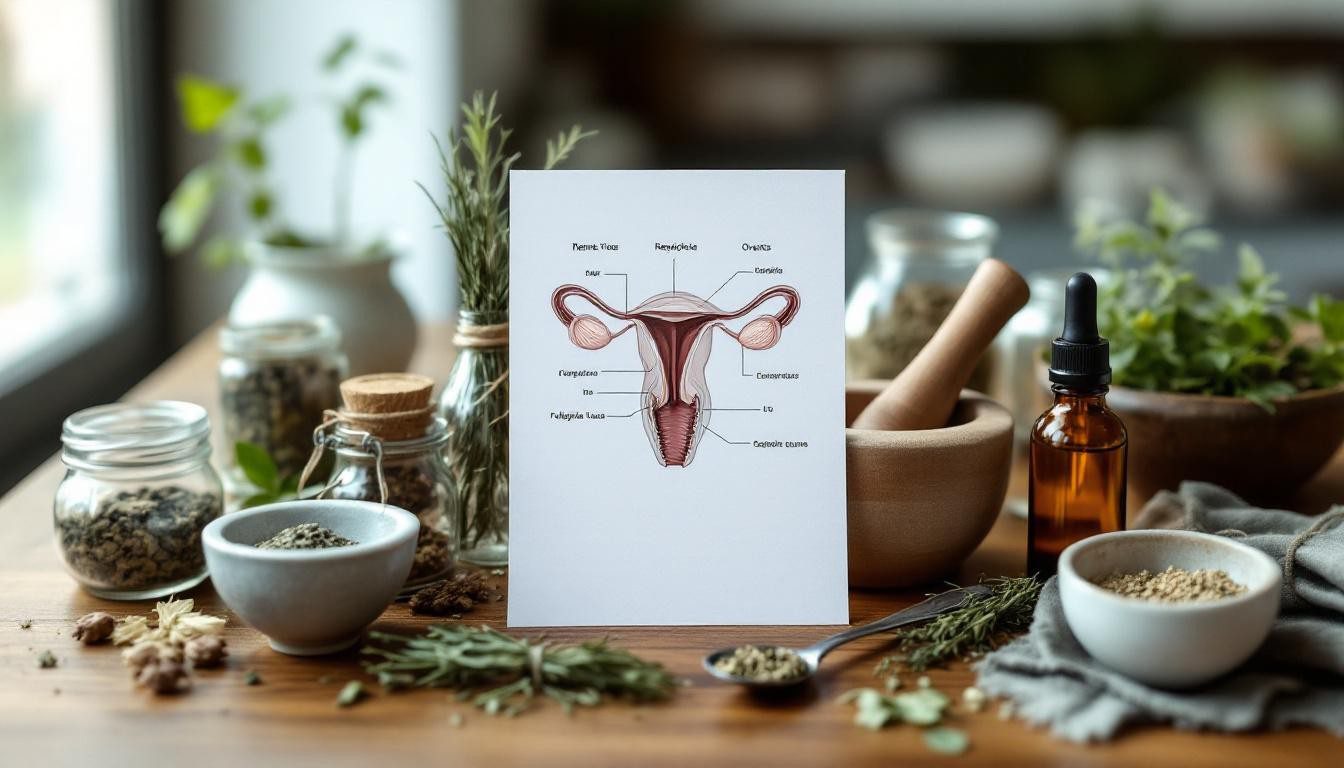
Women’s reproductive health depends on balance-hormonal, physical, and emotional. Many women experience irregular cycles, hormonal shifts, or discomfort that affects their daily lives, and they’re looking for solutions that work alongside conventional medicine.
At Mosaic Medicine Clinic, we’ve seen firsthand how herbs for female reproductive health can offer real support when used thoughtfully. This guide walks you through the most effective herbs, how to use them safely, and why working with a healthcare provider matters.
What’s Really Going Wrong With Your Cycle
The Signals Your Body Sends
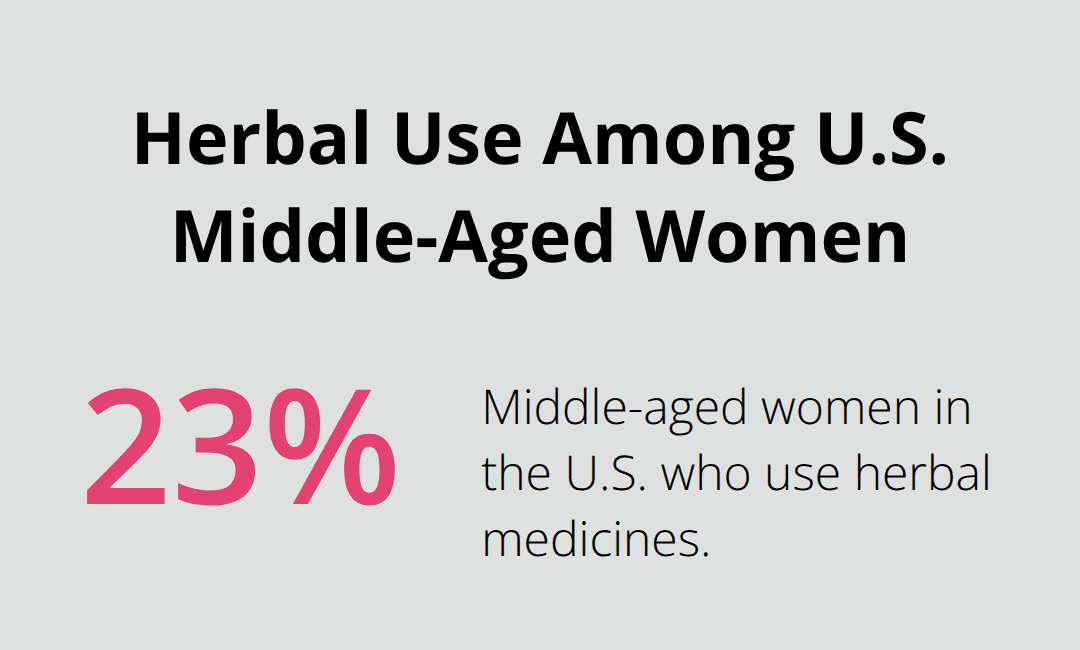
Irregular periods, painful cramps, mood swings, and bloating aren’t just inconveniences-they signal that something’s out of balance. About 23 percent of middle-aged women in the United States use herbal medicines, according to research from Cornell’s Breast Cancer Environmental Risk Factors program, and many turn to herbs specifically because conventional medicine often treats symptoms rather than root causes.
The Root Causes Behind Your Symptoms
Hormonal imbalance stems from multiple sources: an elevated estrogen-to-progesterone ratio, disrupted neurotransmitter responses, abnormal salt metabolism, stress-induced cortisol spikes, carbohydrate metabolism issues, and nutritional deficiencies. Your hypothalamus and pituitary gland regulate this entire cascade, and when that system falters, everything downstream-estrogen, progesterone, adrenal hormones, and insulin-spirals out of sync. Chronic stress alone shifts your progesterone and insulin balance, worsening irritability and cravings. Most women don’t realize their symptoms connect to this deeper hormonal conversation happening in their bodies.
Why Conventional Medicine Misses the Mark
Traditional treatments address what you feel rather than why you feel it. An NSAID quiets cramps, but it doesn’t restore progesterone production. Hormonal birth control suppresses symptoms but doesn’t investigate whether nutritional deficiencies or chronic stress triggered the imbalance in the first place.
Herbs work differently because many of them-particularly adaptogens like chasteberry-communicate directly with your body’s cells to provide targeted support without the systemic side effects of pharmaceuticals. This doesn’t mean herbs replace medical care; it means they fill a gap that conventional medicine often leaves open.
How a Different Approach Changes Everything
A healthcare provider can run tests to identify whether low magnesium, vitamin B6 deficiency, or insulin resistance drives your symptoms, then recommend herbs and nutrients that address those root causes rather than just masking pain or mood changes. This targeted strategy requires understanding your unique situation-something that happens when a clinician takes time to listen and investigate rather than prescribe from a standard protocol. The strongest approach combines professional oversight with natural support tailored to your specific needs, which is exactly why the next section focuses on the herbs that actually work and how to use them effectively.
Three Herbs That Actually Shift Your Cycle
Chasteberry: Building Progesterone From Within
Chasteberry addresses the progesterone gap directly. This herb doesn’t introduce hormones from the outside-it signals your body to produce more of its own progesterone, which is why it works best for the second half of your cycle when progesterone naturally peaks. Chasteberry improved menstrual cycle regularity by keeping prolactin in check, helping restore hormonal balance.
The typical dose ranges from 400 to 500 milligrams daily, taken consistently for at least three months before you’ll notice real shifts in your cycle. Start lower if you’re sensitive to supplements-many women begin at 250 milligrams and increase gradually. Chasteberry works slowly because it retrains your endocrine system rather than forcing quick results. If you skip doses or stop suddenly, your symptoms often return within weeks, so consistency matters far more than dosage strength.
Dong Quai and Red Raspberry Leaf: Supporting Your Cycle Through Different Pathways
Dong quai and red raspberry leaf operate through different mechanisms. Dong quai, used in traditional Chinese medicine for centuries, contains compounds that may improve blood flow to your uterus and help regulate menstrual timing, particularly when combined with other herbs like black cohosh. The evidence is mixed-some women report fewer cramps and better mood stability, while others notice no change-which is why it works best as part of a broader herbal strategy rather than as a standalone solution.
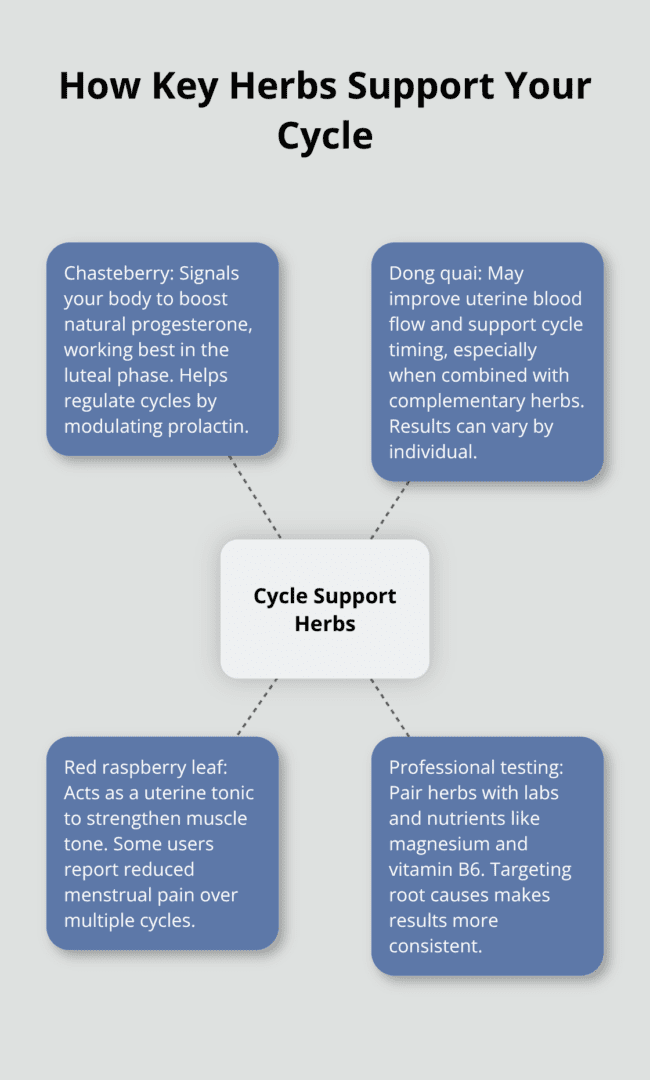
Red raspberry leaf functions as a uterine tonic, meaning it strengthens uterine muscle tone rather than forcing hormonal shifts. Women using red raspberry leaf reported less severe menstrual pain, though the mechanism remains partly unclear. Both herbs appear safest when used as infusions or capsules at moderate doses, and both require at least two to three menstrual cycles before you’ll recognize whether they’re helping your specific situation.
Why These Herbs Work Best Together With Professional Testing
These three herbs work best when your healthcare provider tests for underlying deficiencies first, then layers them into a plan that includes magnesium, vitamin B6, and stress management. Herbs alone rarely solve hormonal imbalance-they’re one piece of a larger puzzle that requires investigation and patience. Your provider can identify whether low magnesium, vitamin B6 deficiency, or insulin resistance drives your symptoms, then recommend herbs and nutrients that address those root causes rather than just masking pain or mood changes. This targeted approach is where the real transformation happens, which is exactly why the next section focuses on how to safely incorporate these herbs into your routine and work with a healthcare provider to personalize your strategy.
How to Start Herbs Without Creating New Problems
Track Your Response With Real Data
Your body needs time to adjust to any herbal regimen, and starting low gives you clarity about whether an herb actually helps your symptoms or simply creates new ones. Start with half the recommended dose for the first two weeks, then track your menstrual cycle response to herbs by noting your menstrual flow intensity, your energy level at midday, and whether your mood shifts noticeably before your period. Write these observations down because memory distorts after a few weeks, and you’ll need actual data to know if the herb works. Most herbal effects take three to six menstrual cycles to stabilize, which means quitting after two weeks tells you almost nothing. If you experience unexpected side effects like nausea, headaches, or increased bloating within the first week at a low dose, that herb likely isn’t right for your body and you should stop and try something else.
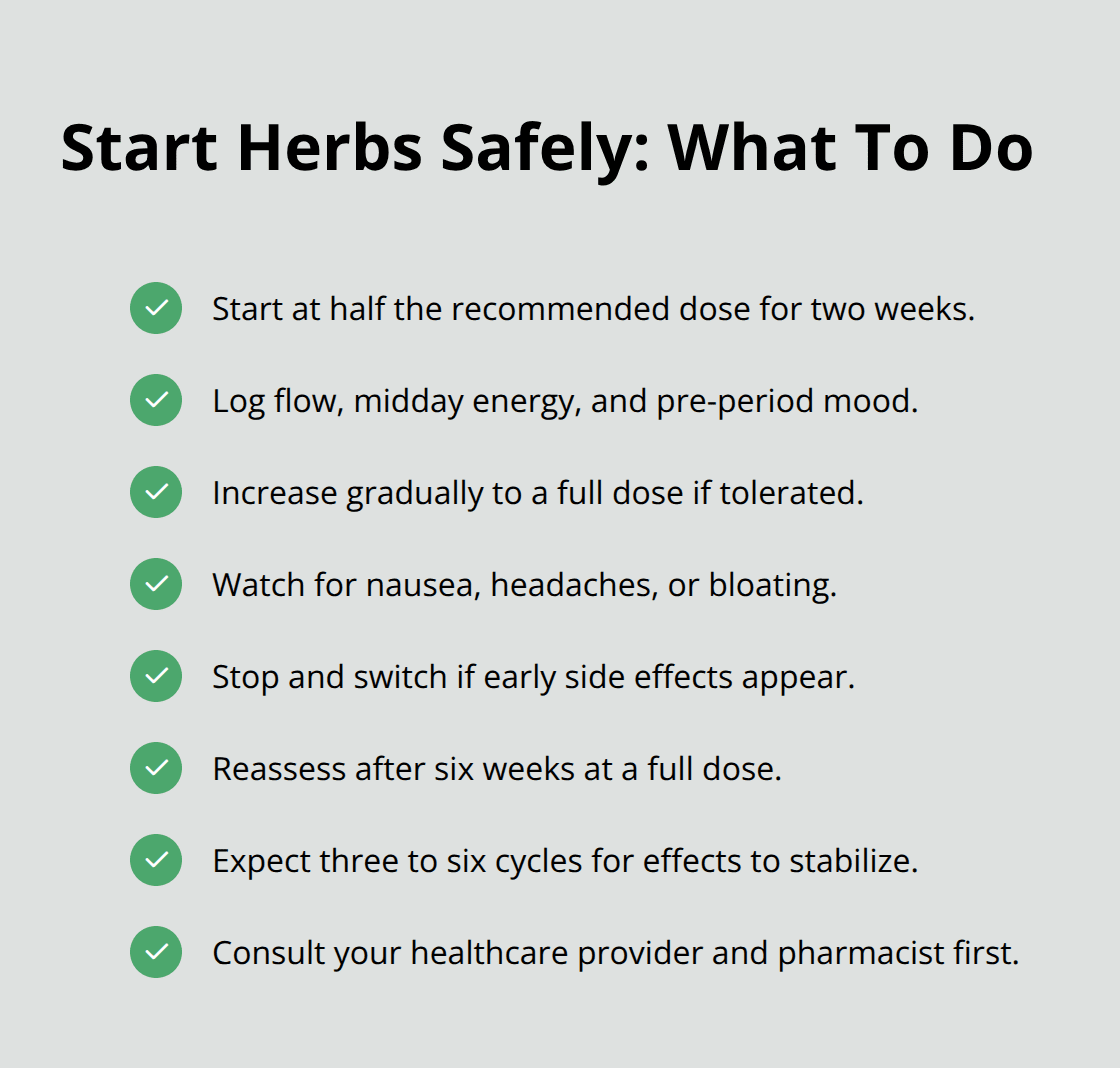
If you feel no change after six weeks at a full dose, that herb isn’t your solution either, and your healthcare provider can help identify why.
Understand Drug Interactions Before You Start
Drug interactions and contraindications matter far more than most women realize because herbal supplements operate outside FDA oversight and don’t carry the same safety warnings as medications. St. John’s Wort, sometimes recommended for PMS mood symptoms, directly reduces the effectiveness of birth control pills and certain antidepressants, yet many herbal retailers don’t mention this clearly. If you take any prescription medication, blood thinner, or hormonal contraception, you must discuss specific herbs with your healthcare provider or pharmacist before starting them. Red clover contains plant compounds that mimic estrogen and could complicate conditions like breast cancer, endometriosis, or hormone-sensitive cancers, which is why women with these diagnoses need professional guidance before using it. Some herbs like chamomile can have drug interactions between herbal supplements and prescription medications, potentially affecting hormonal contraceptives or other treatments.
Contact Your Pharmacist, Not the Internet
Rather than researching interactions yourself online (which often produces contradictory or outdated information), contact your pharmacist directly with the herb name and your current medications, then wait for their response before starting. Pharmacists have access to interaction databases that catch problems individual internet searches miss. Your healthcare provider should also know about any herbal regimen you start because they need complete information to interpret blood work results or understand why a symptom changed unexpectedly.
Final Thoughts
Herbs for female reproductive health work best when you combine professional oversight with your own commitment to tracking what actually happens in your body. The three herbs we covered-chasteberry, dong quai, and red raspberry leaf-offer real potential, but only if you start low, monitor your response over multiple cycles, and adjust based on actual results rather than hope. Your reproductive health isn’t a problem to mask with a quick fix; it’s a signal that something deeper needs attention, whether that’s a magnesium deficiency, chronic stress, or an imbalance between your estrogen and progesterone.
We at Mosaic Medicine Clinic believe in taking time to understand what’s really driving your symptoms. Our Direct Primary Care approach gives you unrushed appointments where your provider can investigate the full picture-your stress levels, your nutrition, your cycle patterns, and your medical history-rather than rushing through a standard protocol. We can order the testing that reveals whether nutritional deficiencies or hormonal imbalances are at play, then recommend herbs and nutrients tailored to your actual situation.
Your next step is straightforward: schedule a conversation with a healthcare provider who takes your reproductive health seriously. Bring your cycle tracking notes, your list of current medications and supplements, and your questions about which herbs might work for you. If you’re looking for a provider who listens and investigates rather than prescribes from a template, Mosaic Medicine Clinic offers the kind of personalized care that makes herbal support actually effective.