

Traditional healthcare often leaves patients frustrated with long waits, high costs, and limited access to their doctors. Direct primary care offers a refreshing alternative.
We at Mosaic Medicine Clinic believe understanding how does direct primary care work can transform your healthcare experience. This membership-based model eliminates insurance middlemen and puts the focus back on patient care.
How Does the Direct Primary Care Model Work
Direct primary care, often called direct primary care (DPC), operates on a simple flat monthly membership system that replaces traditional insurance bills. Patients pay a flat fee from $50 to $150 per month, with DPC practices now active across every U.S. state. This subscription covers unlimited primary care, including office visits, extended appointment times that average 30 to 60 minutes, and direct communication with physicians through phone, email, and text messages, giving patients unlimited access without the usual barriers. The model eliminates copays, deductibles, and surprise bills that plague traditional healthcare.
Monthly Membership Replaces Insurance Complexity
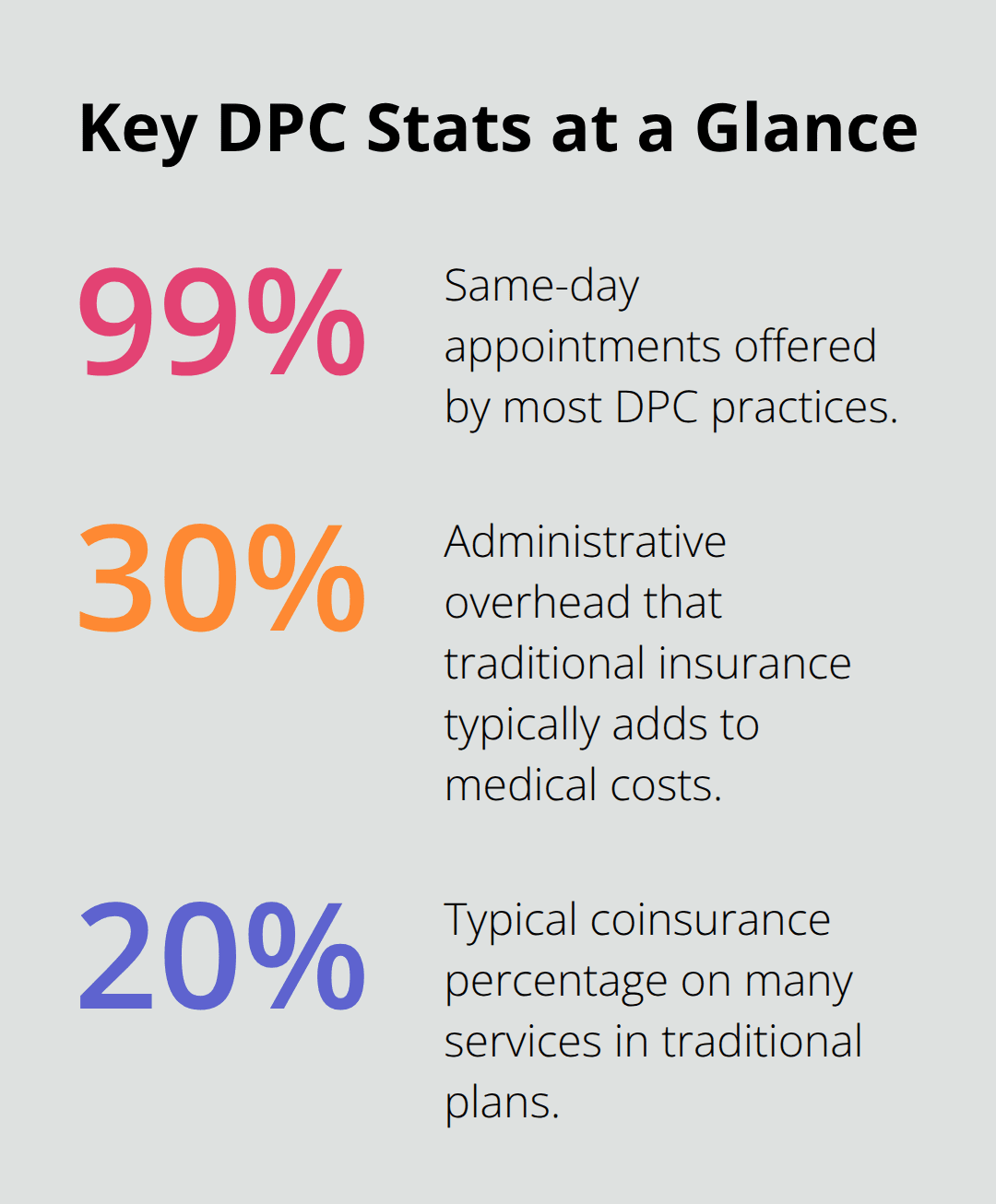
The membership fee structure varies by age, with lower rates for children and higher fees for older adults, making it important to understand how much direct primary care typically costs in your area. Average DPC practices maintain approximately 400 patients each, compared to traditional practices that often handle many patients—2,000 or more patients per physician—while keeping the patient panel intentionally small. This smaller patient panel allows for same-day appointments in 99% of DPC practices (according to industry data). Patients often pair DPC with high deductible insurance for emergencies and specialist care, which can help families save money while covering routine primary care through the monthly fee.
Transparent Costs Eliminate Hidden Fees
DPC practices offer wholesale rates on laboratory tests, lab work, and medications, often providing significant savings compared to insurance-negotiated rates and illustrating why direct primary care can be your most affordable option. Basic services like vaccines, EKGs, and minor procedures fall under the membership fee. Additional services receive upfront costs with no markup, which allows patients to budget healthcare expenses without administrative overhead and reduced overhead costs that typically add 30% to medical costs, while avoiding insurance billing helps keep pricing transparent and can lead to lower costs.
Direct Access Transforms Patient Care
The membership model creates direct relationships between patients and physicians without an insurance company middleman and cuts down on insurance paperwork, reshaping what direct primary care means for your overall healthcare experience. Patients contact their doctors directly through multiple channels, giving them better access and improving patient access, receive responses within hours rather than days, and schedule appointments without referral requirements for easy access. This direct access extends beyond office hours, with many practices offering 24/7 communication options that traditional healthcare systems cannot match due to insurance restrictions and administrative burdens, helping patients get timely care for urgent needs.
This streamlined approach sets the foundation for understanding the significant cost advantages that DPC membership provides over traditional healthcare models.
How Much Money Does DPC Actually Save
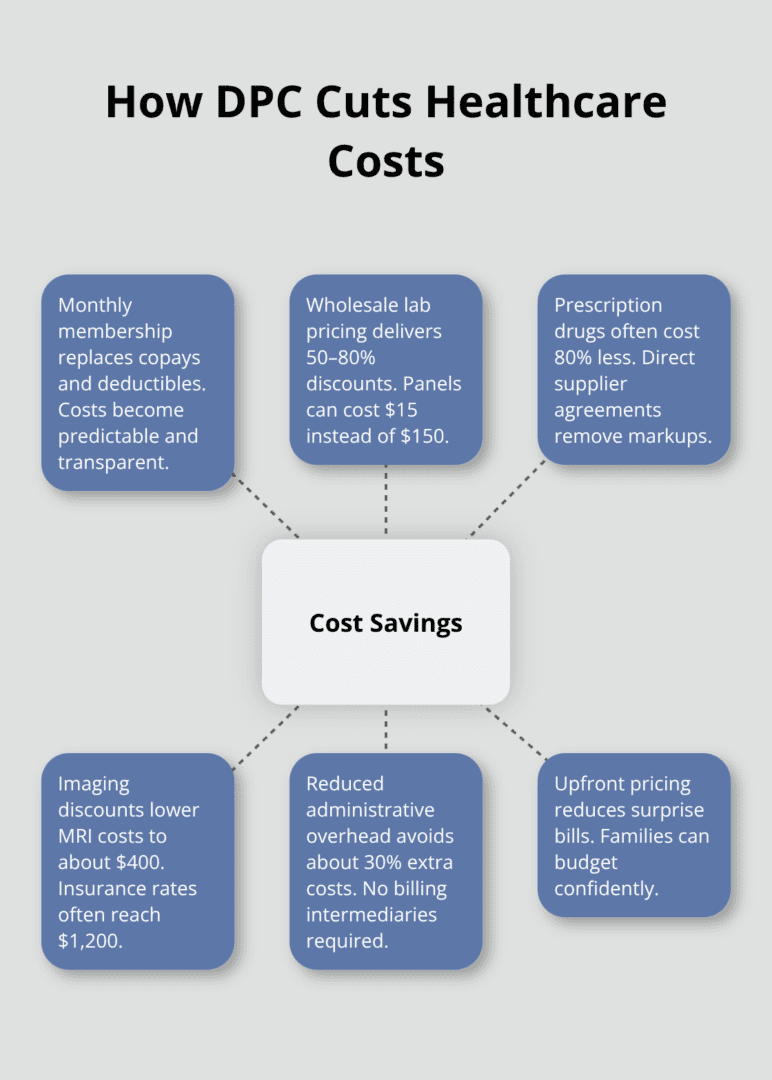
DPC membership fees replace the unpredictable costs of traditional healthcare with fixed monthly expenses, helping many families evaluate whether direct primary care is worth it compared to traditional insurance. A typical family pays $300 monthly for DPC coverage and eliminates copays that range from $25 to $75 per visit, deductibles that average thousands of dollars annually, and coinsurance fees of 20% on most services. Medical practice leaders report significant operating expense increases, with DPC practices eliminating these overhead expenses entirely and pass savings directly to patients through wholesale rates on laboratory tests and medications.
Monthly Fees Replace Multiple Healthcare Costs
Traditional insurance models burden families with copays, deductibles, and coinsurance that create unpredictable monthly expenses, and many DPC practices do not accept insurance for primary care visits, highlighting what the direct primary care model offers as an alternative. DPC membership consolidates these costs into one transparent fee. Families avoid the financial stress of unexpected medical bills that often reach thousands of dollars. The fixed monthly structure allows patients to budget healthcare expenses accurately without surprise charges that traditional insurance frequently generates, and pairing it with a high deductible health plan can make major medical costs more predictable.
Wholesale Lab Costs Beat Insurance Rates
DPC practices purchase laboratory tests at wholesale rates, often 50% to 80% below insurance-negotiated prices, which is a large part of how the model reduces overall healthcare costs. A comprehensive metabolic panel costs $15 through DPC wholesale rates compared to $150 billed to insurance companies. Blood work that insurance plans charge $300 to $500 becomes available for $50 to $100 through direct purchase agreements. Imaging services like MRIs receive similar discounts, with DPC practices offering $400 scans versus $1,200 insurance rates.
Prescription Medications Cost 80% Less
Prescription medications through DPC partnerships cost significantly less than retail pharmacy prices, especially for common medications, which is a key part of how direct patient care improves affordability and access. Common antibiotics price at $4 instead of $40 at traditional pharmacies. DPC practices negotiate directly with pharmaceutical suppliers to reduce costs on routine prescriptions and related medical services, while eliminating insurance processing fees that inflate medication costs. These wholesale arrangements work because practices avoid prior authorizations and billing intermediaries that add unnecessary expenses to prescription drugs.
Monthly DPC fees combined with wholesale service rates typically save families $2,000 to $4,000 annually compared to traditional insurance models. A 2020 Society of Actuaries evaluation found that DPC users had significantly fewer emergency department visits and lower hospital admissions than patients in traditional primary care. That finding matters more financially than any single line item, because preventing one emergency room visit at $1,200 to $1,500 covers an entire year of membership, and avoiding a hospital admission avoids $15,000 to $35,000. These substantial savings become even more valuable when patients consider the comprehensive services included in their membership. Primary care has been shown to significantly decrease the overall cost of healthcare while improving quality of care.
What Services Come with DPC Membership
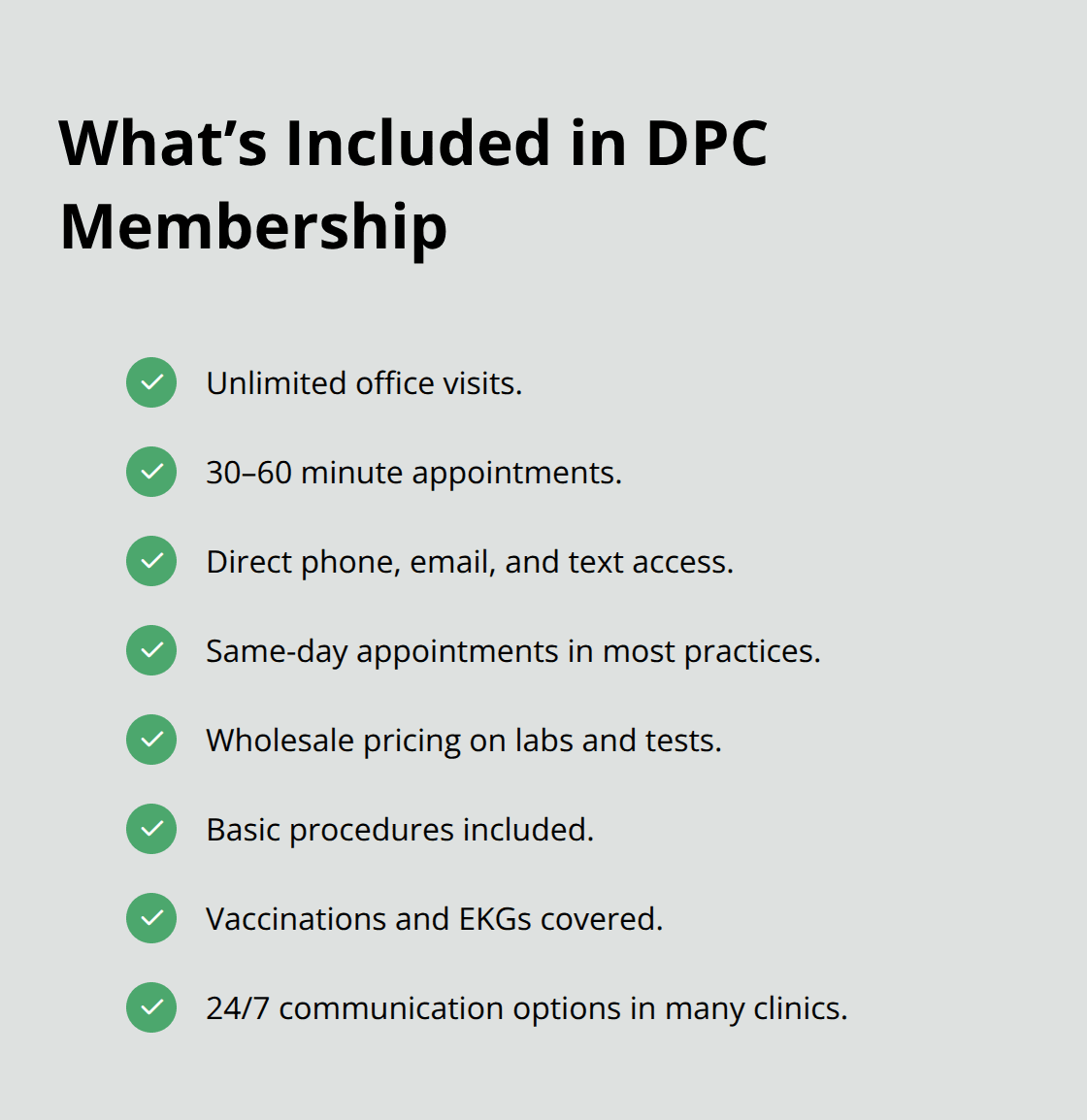
DPC membership includes a broad range of primary care services that support accessible care and that traditional practices often rush through or charge separately, reflecting the core ideas that define direct care in healthcare. Annual physical exams, wellness visits, chronic disease management for conditions like diabetes and hypertension, and preventive screenings become unlimited under the monthly fee to address most routine healthcare needs. Vaccinations, basic procedures like skin biopsies, EKGs, and wound care receive coverage without additional charges. Most DPC practices include basic laboratory tests such as blood glucose tests, cholesterol panels, and urinalysis at no extra cost to support comprehensive care management.
Comprehensive Primary Care Without Extra Fees
The membership model allows physicians to focus on personalized care rather than maximize visit volume, and many patients use this framework to learn how to set up direct primary care arrangements that fit their families or small businesses. Routine screenings for cancer, heart disease, and diabetes receive full coverage under monthly fees. Chronic condition management includes regular check-ups, medication adjustments, lifestyle counseling, and individualized care plans without copays or deductibles. Minor surgical procedures like mole removals, joint injections, and suture repairs fall under standard membership benefits to ensure continuity across routine and ongoing treatment.
Same-Day Access Becomes the Standard
DPC practices schedule same-day appointments 99% of the time according to industry data, improving access to urgent care for routine acute issues compared to traditional practices, where patients wait weeks for routine visits. Appointment times extend to 30-60 minutes as extended visits instead of the typical 15-20 minute visits in traditional primary care practices. This extended time allows physicians to address multiple health concerns during single visits and develop personalized treatment plans. Emergency consultations receive priority scheduling, often within hours of patient requests, unlike traditional rushed visits, where patients feel less heard.
Direct Communication Replaces Phone Tag
Patients contact their DPC physician or provider directly through phone calls, text messages, and secure email platforms without navigating through receptionist barriers or automated systems. Response times average 2-4 hours during business hours, with many practices offering 24/7 communication access for urgent concerns and follow-up on specialty referrals. This direct access eliminates the frustration of waiting days for callback appointments or prescription refills. Telemedicine consultations handle minor illnesses, medication adjustments, and follow-up care without office visits, which helps practices do things differently from traditional offices while saving patients time and travel expenses and maintaining quality care standards.
Paying With Pre-Tax HSA Dollars From 2026
From January 1, 2026, IRS rules let patients on a high-deductible health plan pay DPC membership fees with tax-free Health Savings Account money, provided the fee stays at or below $150 a month for an individual and $300 a month for a family. For someone in the 22 percent tax bracket, that takes roughly $16.50 a month off a $75 membership through the tax treatment alone. Small businesses get a second benefit that has nothing to do with tax. DPC membership pricing stays flat year to year, while traditional group premiums climb 5 to 10 percent annually, so a business covering employees at $75 a month budgets $900 per employee and can count on that number holding.
Final Thoughts
Direct primary care replaces insurance complexity with transparent monthly memberships that save patients thousands annually. This model eliminates copays, deductibles, and surprise bills while providing unlimited physician access and same-day appointments. Wholesale pricing on medications and lab tests creates additional savings that traditional healthcare cannot match.
The question of how does direct primary care work reveals its power to restore authentic patient-doctor relationships. Extended appointment times and direct communication channels allow physicians to focus on comprehensive care rather than rush through visits. Smaller patient panels (averaging 400 patients versus 2,000 in traditional practices) enable personalized attention that improves health outcomes.
We at Mosaic Medicine Clinic provide this membership-based model to families in Bradenton and small businesses in our community. The transition to direct primary care requires evaluation of your current medical expenses and comparison to DPC membership fees in your area. We offer consultations to help you understand how this model can work for your specific health goals.
