

Bioidentical hormones have gained significant attention as a hormone replacement option, but confusion surrounds their safety and effectiveness.At Mosaic Medicine Clinic, we see patients daily who want clear, evidence-based information about these treatments. Many people receive conflicting advice from different sources, making it difficult to make informed decisions.
This guide cuts through the noise to give you the facts you need about bioidentical hormone therapy.
What Are Bioidentical Hormones
Bioidentical hormones are artificial hormones that scientists design to match the exact chemical structure of hormones your body produces naturally. Laboratories process these hormones from plant sources like soy and wild yams, then modify them significantly to create identical molecular structures. The most common types include estradiol, progesterone, and testosterone, which address various hormone deficiencies.
FDA-Approved vs Synthetic Options
The FDA has approved several bioidentical hormone medications that meet strict quality control standards. Estrace (estradiol) and Prometrium (progesterone) represent two widely prescribed FDA-approved options. These medications differ significantly from synthetic hormones like Premarin, which contains horse-derived estrogens that don’t match human hormone structures exactly.
Your hormone receptors recognize bioidentical hormones more readily because of their structural similarity to natural hormones. The Women’s Health Initiative study that linked hormone therapy to increased breast cancer and heart disease risks specifically examined synthetic hormones, not bioidentical versions.
The Compounded Hormone Problem
You can obtain bioidentical hormones through two main routes: FDA-approved medications or custom compounded preparations from pharmacies. This choice makes a substantial difference in both safety and cost. FDA-approved options like generic Estrace cost as little as $24 for 90 tablets with discount coupons and undergo rigorous testing protocols.
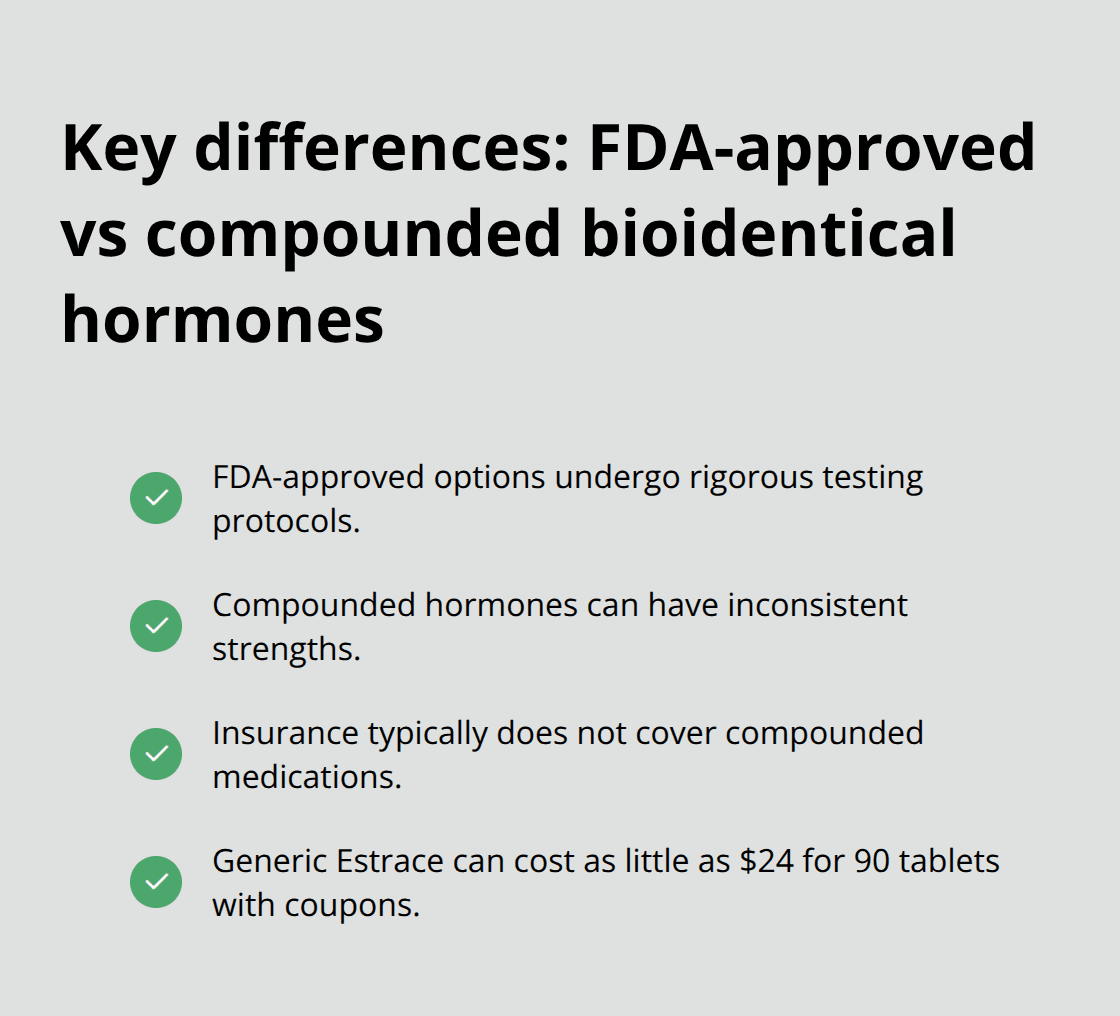
Compounded bioidentical hormones present significant quality control issues. These custom preparations can have inconsistent hormone strengths and don’t undergo the same rigorous testing as FDA-approved medications. Insurance typically doesn’t cover compounded medications, which increases your out-of-pocket expenses considerably.
Why Quality Control Matters
FDA-approved bioidentical hormones follow standardized production processes that guarantee consistent dosing and purity. Each batch undergoes extensive testing before reaching patients. Compounded versions lack these safeguards and don’t require the same safety reporting that FDA-approved medications must follow.
Hormone therapy is FDA-approved as a first-line therapy for the relief of bothersome hot flashes and is shown to be the most effective treatment. This recommendation reflects growing confidence in regulated bioidentical hormones over both synthetic and compounded alternatives.
Understanding these distinctions helps you evaluate the potential benefits and risks that different hormone replacement therapy approaches present.
What Results Can You Expect
Bioidentical hormone therapy delivers measurable symptom relief for most patients within specific timeframes. The North American Menopause Society reports that most healthy women within 10 years of menopause onset benefit significantly from FDA-approved hormone therapy. You can expect mild relief within a few weeks, with full therapeutic effects typically appearing around three months of consistent treatment.
Symptom Relief Timeline
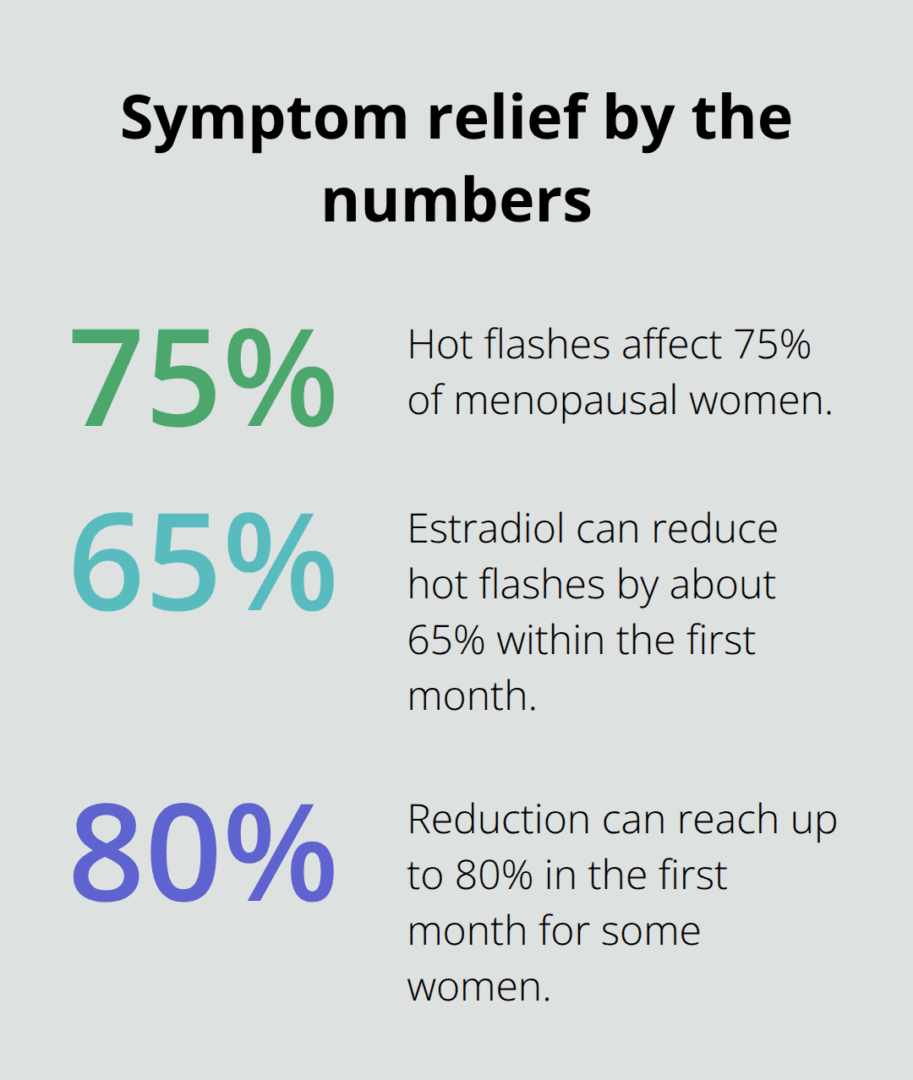
Hot flashes affect 75% of menopausal women, with one-third experiencing severe symptoms that disrupt daily activities. Bioidentical estradiol reduces hot flash frequency by 65-80% within the first month of treatment. Night sweats, brain fog, and vaginal dryness show similar improvement rates.
Men with testosterone deficiency (which affects younger men and approximately 22% of elderly men) experience increased energy and improved mood within 4-6 weeks of starting testosterone therapy.
Risk Profile Analysis
Serious side effects require careful consideration before you start treatment. Heart attack, stroke, and blood clots represent the most significant risks, particularly for women over 60 or those who start therapy more than 10 years after menopause. Breast cancer risk increases modestly with combined estrogen-progestin therapy, similar to the risk from excess weight or moderate alcohol consumption. Women who use estrogen-only therapy after hysterectomy show no increased breast cancer risk according to recent studies.
Ideal Candidates
Women within 10 years of menopause onset with bothersome symptoms make ideal candidates for bioidentical hormone therapy. Men with clinically low testosterone levels confirmed through blood testing also respond well to treatment. Patients with a history of blood clots, unexplained vaginal bleeding, or certain cancers should avoid hormone therapy entirely. Your cardiovascular health status determines whether transdermal options provide safer alternatives to oral preparations.
The next step involves finding the right healthcare provider who can properly evaluate your candidacy and guide you through the treatment process.
How Do You Start Bioidentical Hormone Treatment
Find the Right Healthcare Provider
You need a healthcare provider who specializes in hormone optimization and understands the differences between FDA-approved and compounded options. Choose providers who prioritize evidence-based treatment protocols over marketing claims about custom compounds. Look for physicians who order comprehensive hormone panels that include free testosterone, estradiol, progesterone, and thyroid markers rather than rely solely on symptom questionnaires.
Complete Comprehensive Testing
Your initial evaluation should include blood work that measures baseline hormone levels, complete metabolic panel, and cardiovascular risk markers. Avoid providers who recommend saliva tests, as the Endocrine Society confirms that salivary hormone levels don’t correlate accurately with blood levels. Quality providers test at specific times during your cycle if you’re premenopausal (typically on day 3 for baseline measurements). Men require morning blood draws between 7-10 AM when testosterone levels peak naturally. Expect to pay $200-400 for comprehensive tests, though insurance often covers these diagnostic panels.
Select Your Treatment Approach
Start with the lowest effective dose of FDA-approved bioidentical hormones rather than jump to compounded preparations. Transdermal estradiol patches or gels combined with oral micronized progesterone represent the gold standard for women, while testosterone gels work effectively for men with confirmed deficiency. Hormone replacement therapy uses hormones identical to those produced naturally by the body, allowing for safer and more effective treatment. Your provider should schedule follow-up appointments at 6-8 weeks initially, then every 3-6 months once levels stabilize.
Monitor Your Progress
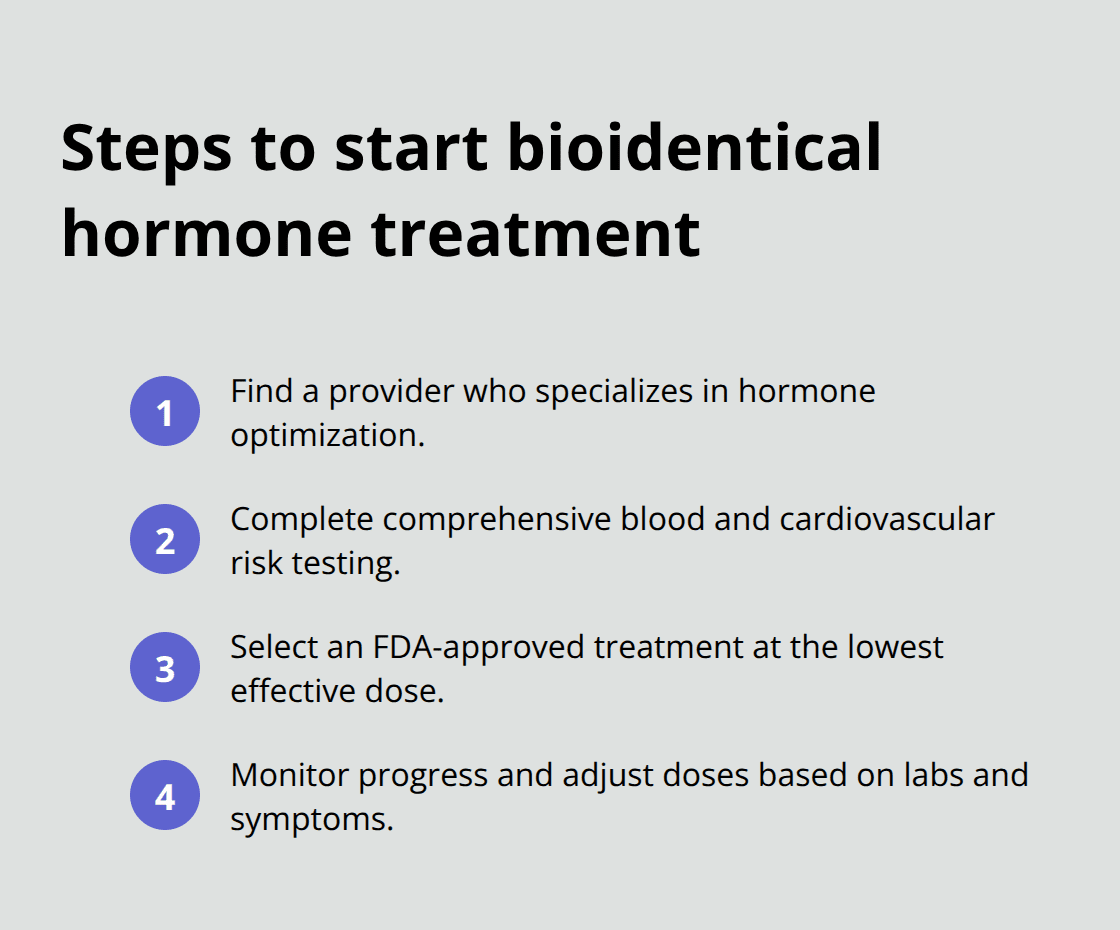
Proper oversight includes symptom improvement tracking, hormone level checks, and side effect screening through regular blood work and physical exams. Your doctor will adjust doses based on your response and lab results rather than predetermined schedules. Most patients achieve optimal results within 3-6 months of treatment initiation.
Final Thoughts
Bioidentical hormones provide effective symptom relief when doctors prescribe them appropriately, but the source matters significantly. FDA-approved bioidentical hormones undergo rigorous tests and deliver consistent doses, while compounded versions lack quality control and cost substantially more. The evidence shows that regulated bioidentical hormones present lower risks than synthetic alternatives, particularly when doctors prescribe transdermal estradiol with micronized progesterone for women or testosterone therapy for men with confirmed deficiency.
Your decision should focus on qualified healthcare providers who prioritize evidence-based treatment over marketing claims. Proper tests, careful monitoring, and gradual dose adjustments maximize benefits while minimize risks. Most patients achieve optimal results within three to six months of treatment start (with consistent medical oversight throughout the process).
We at Mosaic Medicine Clinic provide comprehensive hormone evaluation and personalized treatment plans. Our approach includes thorough tests, careful monitoring, and direct physician access to guide you through every step of hormone optimization safely and effectively.
