

At Mosaic Medicine Clinic, we see patients transform their lives through personalized wellness strategies. The right combination of physical health, mental well-being, and sustainable habits creates lasting change that goes far beyond temporary improvements.
What Makes Wellness Optimization Work
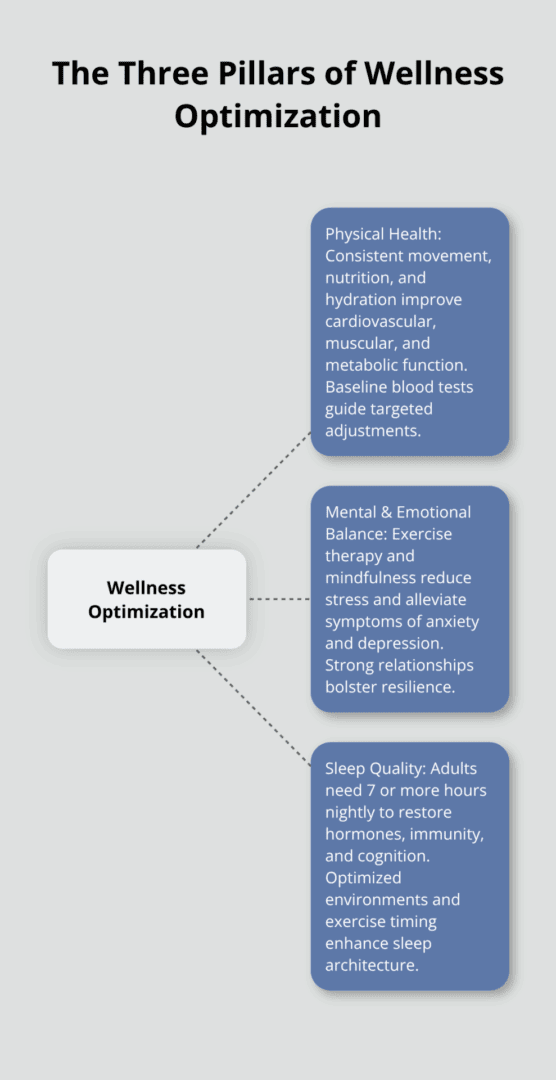
Physical Health Sets Everything in Motion
Your body operates like a complex machine that requires specific inputs to function optimally. The World Health Organization identifies depression as the leading cause of disability globally, which makes physical wellness more important than ever. Studies show that people who engage in at least 150 minutes of moderate to vigorous physical exercise weekly reduce chronic disease risk by 20-30%. Patients transform their energy levels within weeks when they prioritize movement, proper nutrition, and hydration.
Physical inactivity costs the healthcare system billions annually and directly impacts your mental state. Even short 10-minute activity bursts yield significant health benefits. Your cardiovascular system, muscle strength, and metabolic function all improve with consistent movement. Regular blood tests help establish baselines for key markers like vitamin D, magnesium, and inflammatory indicators that directly affect how you feel daily.
Mental and Emotional Balance Drives Long-term Success
Mental wellness works hand-in-hand with physical health rather than as a separate entity. Exercise therapy alleviates depression and anxiety symptoms with benefits comparable to traditional antidepressants. The endorphin hypothesis explains why physical activity naturally improves mood and reduces stress. Regular exercise enhances your hypothalamus-pituitary-adrenal axis function, which helps you manage daily stressors more effectively.
Harvard Medical School’s research shows that strong relationships contribute significantly to overall well-being and mental health. Mindfulness practices like meditation and yoga build psychological resilience. Start with 10 minutes of daily meditation rather than attempt hour-long sessions that most people abandon within days.
Sleep Quality Determines Your Optimization Potential
Sleep represents active optimization time for your brain and body rather than simple recovery time. Adults need 7 or more hours nightly to avoid dark circles, dull skin, and cognitive decline. Poor sleep architecture disrupts hormone regulation, immune function, and stress responses. Exercise improves sleep quality significantly, but timing matters (late evening workouts can interfere with your natural circadian rhythm).
Your sleep environment affects results more than most people realize. Room temperature between 65-68 degrees Fahrenheit optimizes sleep quality. Blue light exposure within two hours of bedtime disrupts melatonin production. Wearable devices can track sleep patterns and help identify specific issues that affect your rest quality, which provides objective data for improvements.
These foundational elements create the framework for effective wellness strategies, but implementation requires specific, personalized approaches that fit your unique lifestyle and goals.
Key Strategies for Wellness Optimization
Personalized Nutrition and Hydration Plans
Most nutrition advice fails because it treats everyone identically. Your individual blood markers tell the complete story about what your body needs. The Harvard Healthy Eating Plate provides evidence-based guidance, but personal metabolic needs vary significantly. Eight glasses of water daily improves skin hydration and energy levels, while antioxidant-rich foods like berries and leafy greens combat free radicals that cause premature aging.
Regular blood tests reveal nutrient deficiencies that affect daily performance. Common issues include low magnesium or vitamin D levels that directly impact sleep quality and mood stability. Foods high in biotin (like eggs and almonds) support strong hair and nails, while collagen-rich bone broth and citrus fruits enhance skin elasticity. Probiotics from yogurt and fermented foods maintain gut health and reduce inflammation throughout your body.
Exercise and Movement for Different Lifestyles
Generic workout plans ignore the reality of modern schedules and individual physical capabilities. Strength training improves posture and creates a more toned appearance, but consistency beats intensity every time. Research shows that even 10-minute activity bursts throughout the day yield significant health benefits for mental and physical well-being.
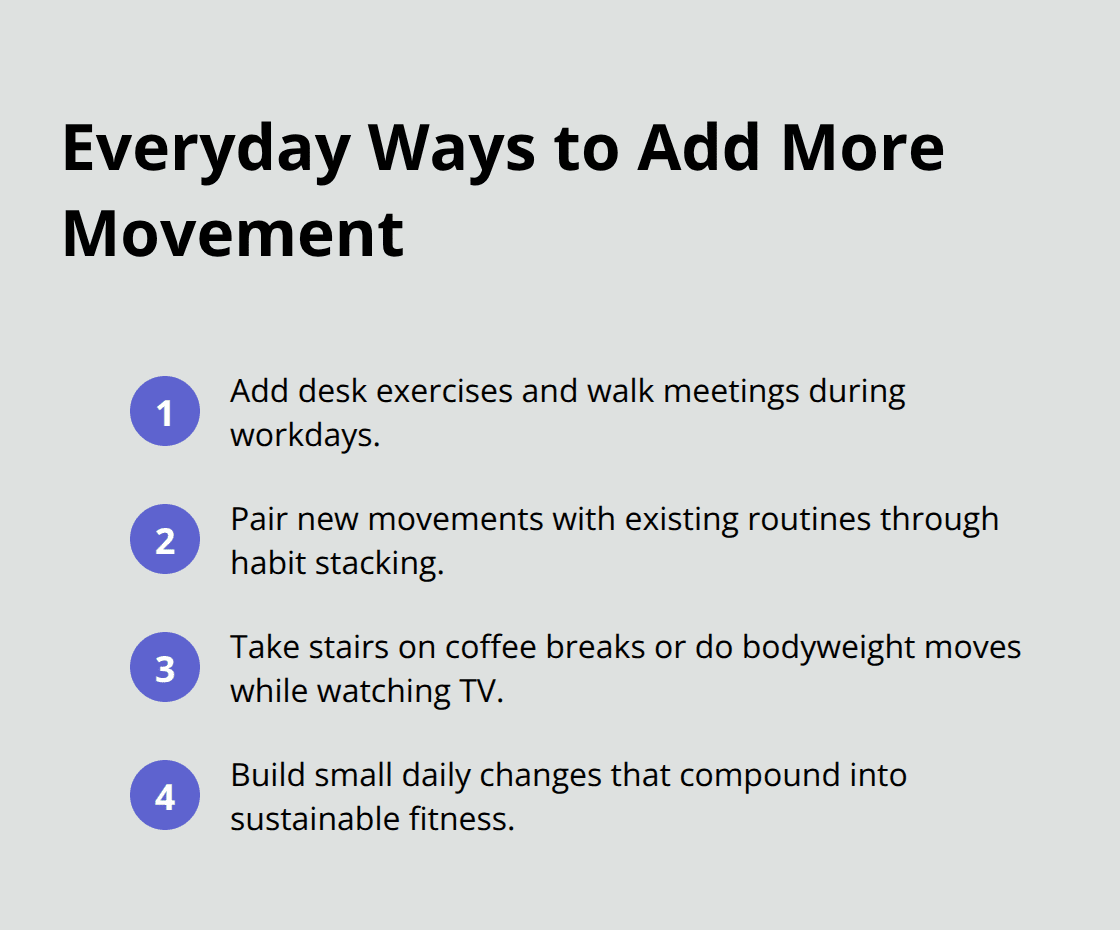
Office workers benefit from desk exercises and walk meetings, while parents can incorporate family activities like hikes or playground workouts. The key lies in habit stacking – you pair new movement habits with existing routines. Take stairs during coffee breaks or do bodyweight exercises while you watch television. These small changes compound over time and create sustainable fitness habits.
Stress Management and Mindfulness Practices
Mindfulness practices like meditation and yoga effectively combat chronic stress, but most people start with unrealistic expectations. Begin with 5-minute breath exercises rather than attempt 30-minute meditation sessions (your success rate will improve dramatically). Acceptance and Commitment Therapy techniques help you develop coping skills for life challenges.
Regular physical activity reduces cortisol levels and alleviates stress-related inflammation that contributes to acne and other health issues. Environmental modifications also reduce daily stress – organize your space, meal prep on weekends, and establish consistent morning routines. These changes create stability that supports your wellness goals.
However, even the best strategies face real-world obstacles that can derail your progress before you see results.
What Derails Most Wellness Plans
Time Becomes the Ultimate Excuse
Americans spend significant time on social media daily according to recent data, yet claim insufficient time for wellness activities. This reveals a priority problem rather than a time shortage. Successful wellness optimization requires 30 minutes daily for meaningful exercise and 10 minutes for meal preparation (less time than most people spend scrolling through their phones).
Patients transform their schedules when they stack wellness activities with existing routines. Walk during phone calls, prepare overnight oats while coffee brews, or do bodyweight exercises during television commercials. The solution lies in micro-habits that compound over time rather than searching for large blocks of free time that rarely exist.
Information Paralysis Stops Action
Health advice contradicts itself constantly across different sources, which creates decision paralysis that prevents any action. One study promotes intermittent fasting while another warns against skipping breakfast. Social media influencers sell quick fixes while medical professionals recommend gradual changes.
The key lies in following evidence-based protocols from qualified healthcare professionals rather than chasing every new trend. Start with basics that work universally – drink more water, move daily, sleep 7-9 hours, and eat whole foods. Ignore advice that promises miraculous results or requires expensive supplements. Track objective metrics like energy levels, sleep quality, and mood stability rather than following subjective opinions from unqualified sources.
Isolation Guarantees Failure
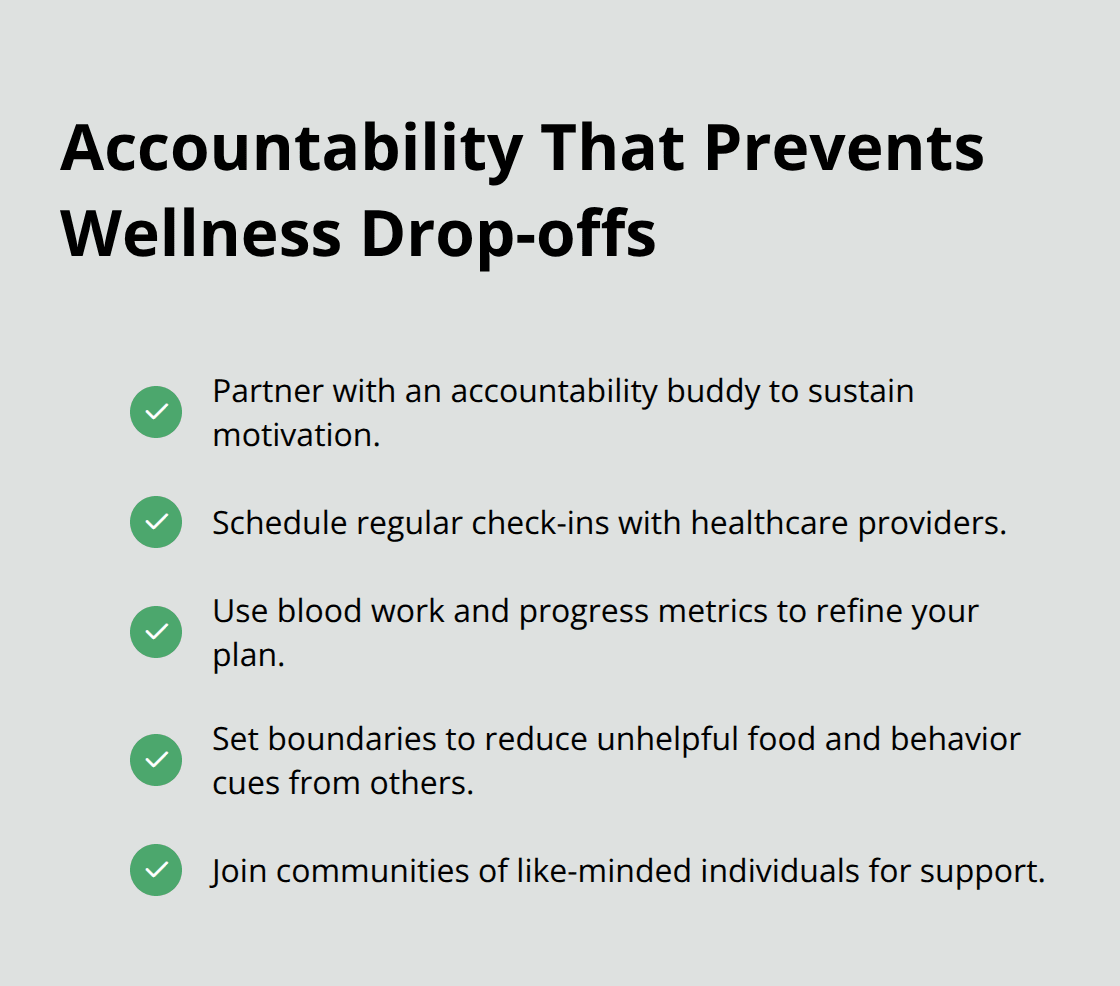
Research shows that people who attempt wellness changes alone face significant challenges, while working with accountability partners dramatically improves outcomes. Most wellness failures occur within the first 30 days when motivation decreases and old habits resurface.
Professional guidance provides personalized strategies that address your specific obstacles and metabolic needs. Regular check-ins with healthcare providers help adjust plans based on blood work results and progress measurements. Family members and friends often sabotage wellness efforts unintentionally when they offer unhealthy foods or discourage exercise routines. Support systems with like-minded individuals create the foundation for sustained success rather than temporary improvements.
Final Thoughts
Wellness optimization succeeds when you build habits that stick rather than chase perfect routines that collapse under real-world pressure. Start with one change at a time and track objective metrics like energy levels and sleep quality to measure progress. Most people abandon wellness plans within 30 days because they attempt too many changes at once.
Healthcare professionals transform scattered efforts into personalized strategies that address your specific needs. We at Mosaic Medicine Clinic provide comprehensive primary care and preventative medicine that includes unrushed appointments and direct physician access. Regular blood work reveals nutrient deficiencies and metabolic markers that guide your optimization efforts.
Long-term benefits compound over months and years rather than appear overnight. Patients who maintain consistent wellness practices report improved cognitive function, better stress management, and reduced healthcare costs (your investment today prevents chronic diseases that affect millions globally). Small daily actions create significant health improvements that extend your healthspan and enhance life quality for decades.
