

Small business healthcare costs continue to rise, forcing owners to make tough choices between employee benefits and company survival. Traditional insurance models often leave businesses struggling with unpredictable expenses and complex administration.
We at Mosaic Medicine Clinic see a growing shift toward Direct Primary Care (DPC) as companies seek affordable, transparent healthcare solutions. This membership-based model eliminates insurance middlemen and provides direct physician access at predictable monthly rates.
How DPC Transforms Small Business Healthcare Costs
Direct Primary Care operates on a straightforward membership model that typically costs between $50-$100 per month per employee. This fixed monthly fee replaces the complex web of copays, deductibles, and surprise bills that plague traditional insurance. The membership covers unlimited office visits, basic procedures, and direct communication with physicians through text, phone, or email. The Direct Primary Care Coalition reports that over 2,400 DPC providers now operate across the United States, with practices that experienced 13% revenue growth even during challenging economic periods.
Predictable Budgets Replace Insurance Uncertainty
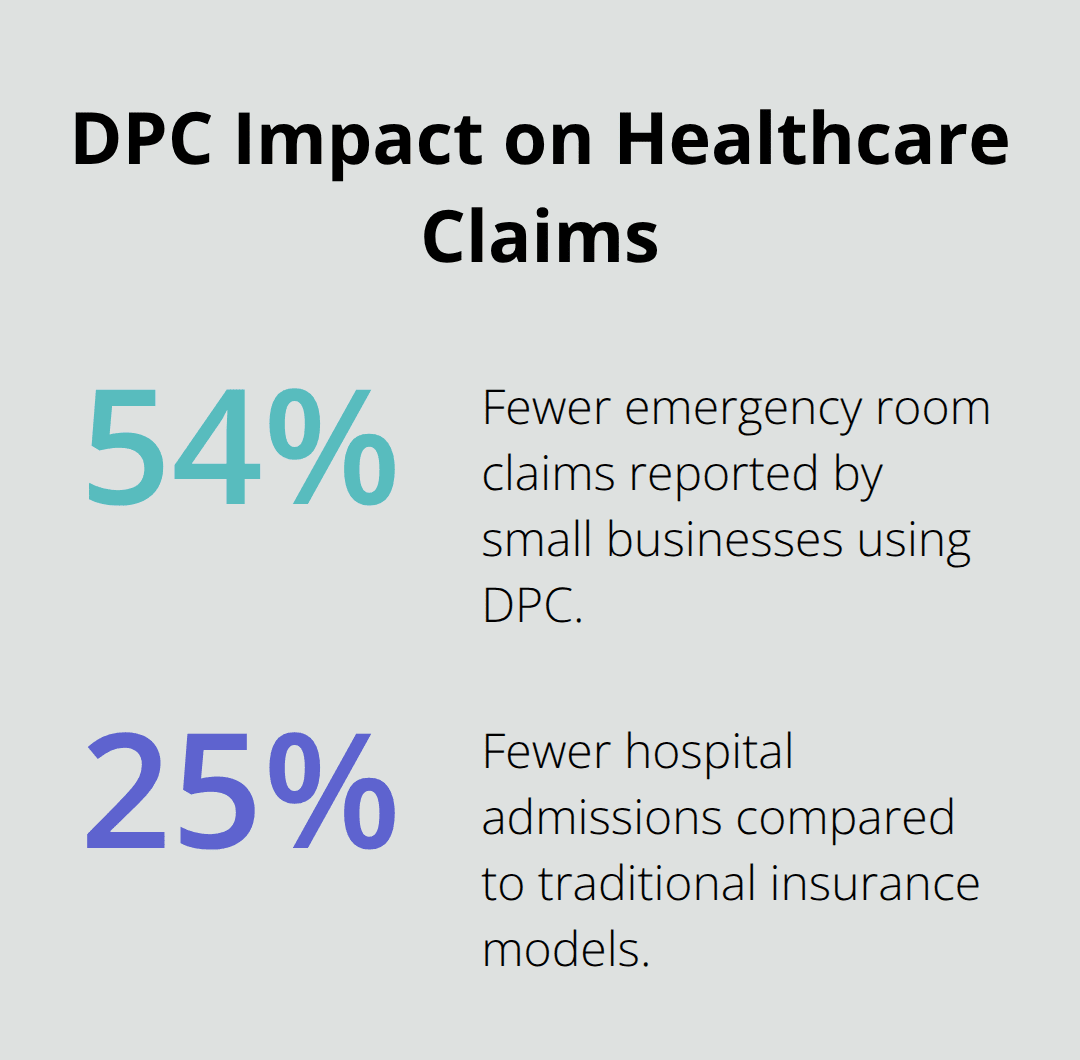
Annual premiums for employer-sponsored family health coverage reached $25,572 this year, 7% higher than the previous year, while DPC memberships remain stable year over year. Small businesses that use DPC report 54% fewer emergency room claims and 25% fewer hospital admissions compared to traditional models. The county government in Union County, North Carolina saved over $1.2 million in medical claims during their first year with DPC. This predictability allows business owners to budget healthcare costs with confidence rather than face annual premium spikes.
Direct Physician Access Eliminates Administrative Burden
DPC removes insurance middlemen entirely and allows employees to schedule same-day or next-day appointments without referrals or prior authorizations. Patients access over 85% of their healthcare needs without additional deductibles or coinsurance costs. The streamlined approach means no claims processing, no network restrictions, and no surprise bills. Employees communicate directly with their physicians through modern channels (text, phone, email), which reduces time away from work for routine healthcare needs while maintaining comprehensive primary care coverage.
Transparent Costs Drive Better Financial Planning
DPC providers offer wholesale lab prices and at-cost services that eliminate the markup typically added through insurance networks. Patients often save 20-30% when they couple DPC plans with high-deductible health plans (which now average $2,300 deductibles). DPC participants cost $313 less on a per-member, per-month basis than traditional consumer-driven health plans. These transparent pricing help small businesses understand exactly what they pay for healthcare services, which creates better financial planning and employee satisfaction with their benefits package.
How DPC Boosts Small Business Performance
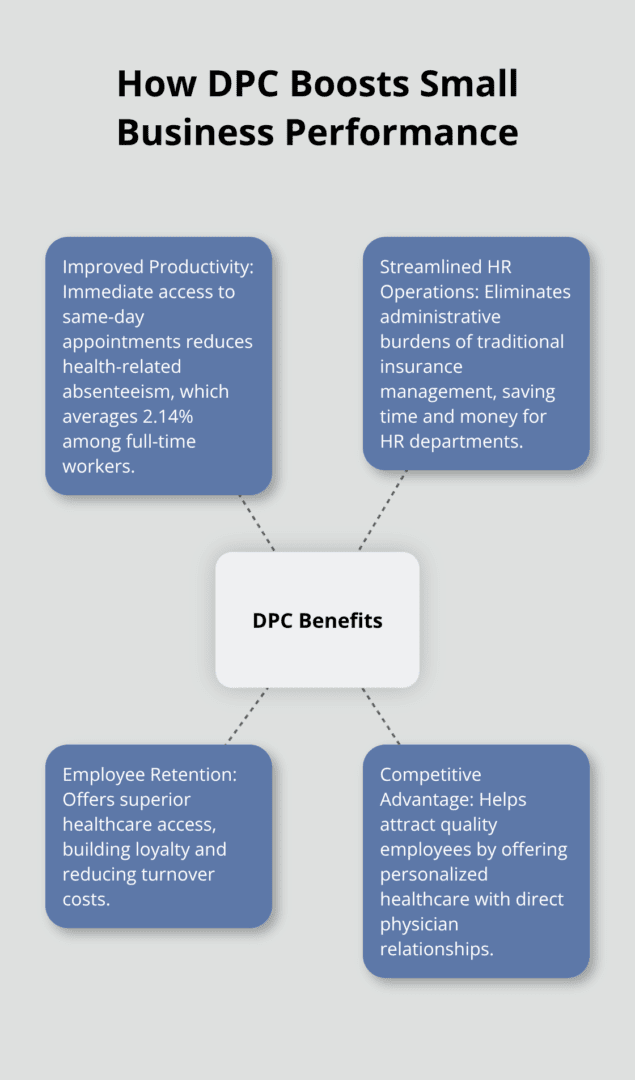
Direct Primary Care transforms small business operations through measurable improvements in workforce productivity and administrative efficiency. Health-related absenteeism among full-time workers averages 2.14%, but companies that use DPC report dramatic reductions in sick days. Immediate access to same-day appointments allows employees to address health issues before they escalate into extended absences. Workers no longer delay medical care due to high deductibles or complex insurance processes, which prevents minor conditions from becoming major health problems that require weeks of recovery time.
Streamlined HR Operations Save Time and Money
The DPC model eliminates the administrative nightmare of traditional insurance management. HR departments spend countless hours handling insurance claims, coordinating with multiple carriers, and explaining complex benefits packages to confused employees. DPC removes these burdens entirely through simple membership agreements and direct physician relationships. Research shows that 97% of employers provide some form of health plan coverage, yet traditional plans create friction between companies and their teams. DPC providers handle all medical services directly, which means no claims processing, no prior authorizations, and no network disputes that consume HR resources.
Employee Retention Through Superior Healthcare Access
Small businesses struggle to compete with larger companies for talent, but DPC levels the playing field through exceptional healthcare benefits. Employees value immediate physician access, 24/7 communication channels, and transparent pricing that eliminates surprise medical bills. The membership model demonstrates genuine employer investment in worker wellbeing, which builds loyalty and reduces turnover costs. Companies report that DPC becomes a key differentiator in recruitment conversations, as candidates recognize the superior access and cost savings compared to traditional group insurance plans.
Competitive Advantage in Talent Acquisition
DPC helps small businesses attract quality employees without matching Fortune 500 benefit packages. The model offers something larger corporations often cannot: personalized healthcare with direct physician relationships and immediate access to care. Job candidates increasingly value healthcare benefits that actually work when they need them (rather than complex insurance networks with high out-of-pocket costs). This competitive advantage becomes particularly important in tight labor markets where skilled workers have multiple employment options. The real-world impact of these operational improvements becomes even more apparent when examining specific cost savings and productivity gains that small businesses achieve through DPC implementation.
What Financial Impact Does DPC Have on Business Operations
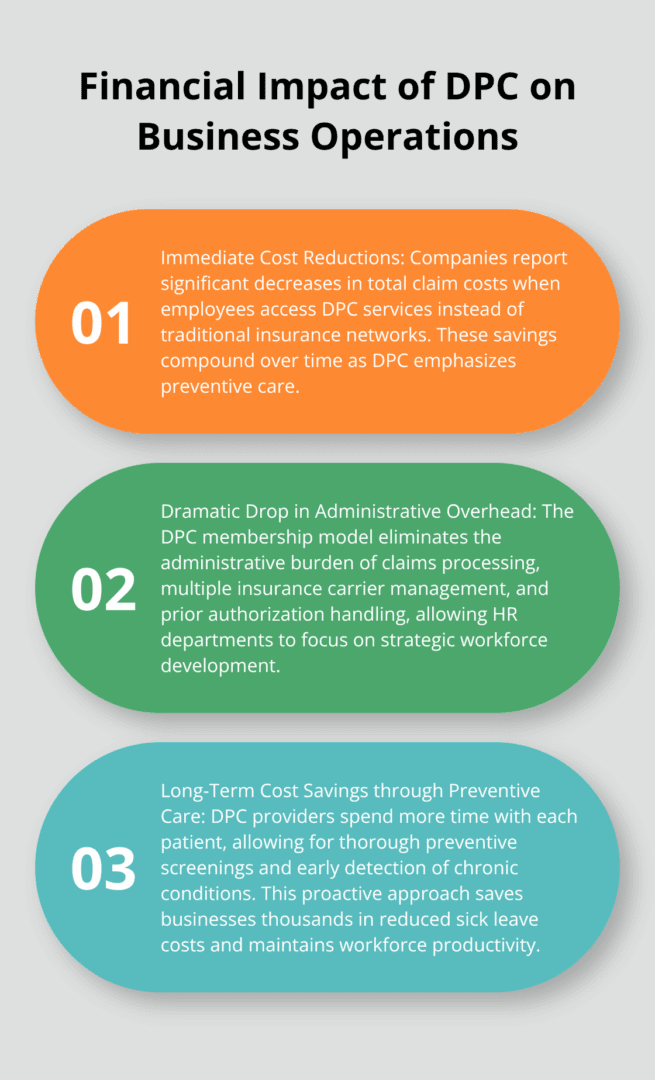
Small businesses that adopt Direct Primary Care see immediate cost reductions that extend far beyond monthly membership fees. Companies report significant decreases in total claim costs when employees access DPC services instead of traditional insurance networks. These savings compound over time as DPC emphasizes preventive care that catches health issues before they require expensive interventions.
Administrative Overhead Drops Dramatically
The membership model eliminates the administrative overhead of claims processing, multiple insurance carrier management, and prior authorization handling that consumes HR resources. Traditional insurance requires constant paperwork, network verification, and benefit explanation sessions that drain productivity. DPC removes these burdens entirely through simple membership agreements and direct physician relationships. HR departments redirect their time from insurance administration to strategic workforce development.
Same-Day Access Prevents Work Disruptions
DPC practices offer same-day appointments that keep minor health issues from escalation into major absences. Employees schedule visits through text messages or phone calls without weeks of wait time or insurance company approval. This immediate access means a worker with early flu symptoms receives treatment within hours rather than missing multiple days while symptoms worsen. The Direct Primary Care Coalition data shows practices experienced revenue growth during economic uncertainty, which demonstrates the model’s resilience and value.
Preventive Care Reduces Long-Term Costs
DPC providers spend more time with each patient during appointments, which allows for thorough preventive screenings and early detection of chronic conditions. Nearly 80% of chronic conditions are avoidable through healthy lifestyle changes, and DPC physicians have the time to coach patients on these modifications. Companies that use DPC report improved health outcomes because employees receive consistent preventive care that prevents emergency situations. This proactive approach saves businesses thousands in reduced sick leave costs and maintains workforce productivity throughout the year.
Final Thoughts
Direct Primary Care represents a fundamental shift in small business healthcare that delivers measurable results. Companies that adopt DPC report 54% fewer emergency room claims, 25% fewer hospital admissions, and average savings of $313 per employee monthly compared to traditional plans. The membership model eliminates administrative burdens while it provides employees with same-day appointments and direct physician access.
The growth from 1,400 to nearly 2,400 DPC providers nationwide reflects how businesses increasingly adopt this transparent healthcare approach. Small businesses gain competitive advantages through superior employee benefits without the need to match corporate-level insurance costs. DPC practices experienced 13% revenue growth during economic uncertainty (which demonstrates the model’s stability and value for employers).
Business owners who consider DPC should evaluate local provider availability, assess current healthcare costs, and survey employee needs. We at Mosaic Medicine Clinic help small businesses transition to membership-based healthcare through comprehensive DPC services that include wholesale labs, at-cost tests, and direct physician communication. The shift toward DPC continues as more companies recognize the operational and financial benefits of this approach to small business healthcare.
