

Your 30s are when the health choices you make start to compound. At Mosaic Medicine Clinic, we see women in this decade making decisions that shape their wellbeing for decades to come.
The good news? You still have time to build habits that prevent serious health issues down the road. This guide covers the screenings, nutrition, fitness, and mental health practices that matter most right now.
Preventative Care and Regular Screenings
Your 30s are when the health choices you make start to compound. At Mosaic Medicine Clinic, we see women in this decade making decisions that shape their wellbeing for decades to come.
The good news? You still have time to build habits that prevent serious health issues down the road. This guide covers the screenings, nutrition, fitness, and mental health practices that matter most right now.
Preventative Care and Regular Screenings: Maintain Health 30s
Your 30s are the decade when preventive screening stops being optional and becomes essential. Establishing a baseline for your health markers gives you and your healthcare provider a clear picture of your current status and the trajectory ahead. The US Preventive Services Task Force recommends that women in their 30s attend regular wellness visits to assess blood pressure, cholesterol, and blood sugar levels, even when you feel perfectly healthy. These screenings catch silent conditions like hypertension and prediabetes before they cause damage.
Schedule Blood Pressure, Cholesterol, and Blood Sugar Checks
Blood pressure screening matters now. Check your blood pressure every three to five years if you have no risk factors, but more frequently if you have diabetes, kidney problems, or a family history of heart disease. Cholesterol screening becomes important starting at age 45 for women without risk factors, though you should start at age 20 if you have risk factors like obesity, high blood pressure, or a family history of early heart disease. If your results are normal, repeat screening every five years.
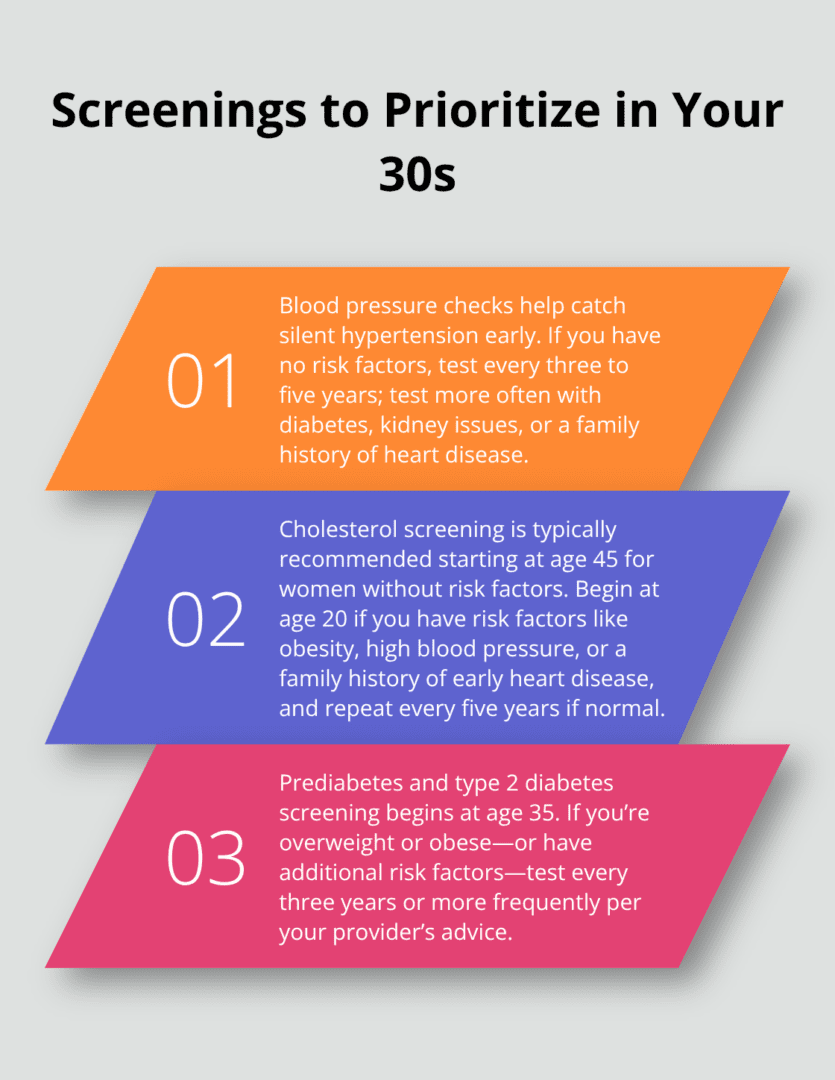
For blood sugar, prediabetes and type 2 diabetes screening begins at age 35, with testing every three years if you’re overweight or obese, or more often if you have additional risk factors. These numbers reveal patterns that matter for your long-term health.
Know Your Family Health History
Your family’s medical past is one of the most predictive tools you have. Before your next wellness visit, document what health conditions run in your family: breast cancer, heart disease, diabetes, stroke, or early deaths. This information helps your provider assess your personal risk and decide which screenings matter most for you.
If your mother or sister had breast cancer before age 50, or you carry BRCA1 or BRCA2, you may face a higher risk and should discuss earlier mammography, MRI, or ultrasound screening options with your doctor. A strong family history of heart disease or diabetes means you should prioritize lipid and glucose screening now, not later. Bring this family history to your appointment in writing so nothing gets missed.
Track Your Numbers Over Time
Start recording your blood pressure, cholesterol levels, and blood sugar readings if you have them checked. These numbers tell a story when tracked over months and years, helping you realize when trends are moving in the wrong direction before symptoms appear. Blood pressure categories matter: normal is below 120/80, elevated is 120-129/80-89, and stage 1 hypertension is 130-139 or 80-89. If your readings fall into the elevated or stage 1 range, lifestyle changes like reducing sodium, increasing physical activity, and managing stress can prevent progression to stage 2.
Ask your provider for specific, personalized steps based on your individual numbers and risk profile rather than generic advice, since that kind of prevention is key to maintaining good health over time. Schedule your annual wellness visit now rather than waiting until you feel sick, because these screenings work best when they become routine. Understanding your baseline now positions you to make informed decisions about nutrition, fitness, and stress management-the habits that truly transform your health trajectory.
Nutrition and Healthy Habits for Long-Term Health
What you eat and how you move your body in your 30s directly shapes your metabolism, bone density, and disease risk for the next three decades. Your metabolism slows during this decade, making it harder to maintain a healthy weight than it was in your 20s, so regular exercise and calorie adjustments matter more. The data backs this up: only 30.7% of women in Singapore exercise regularly, which means most people benefit when physical activity becomes a priority for long-term health.

Stop pursuing restrictive eating rules and instead build a sustainable diet you can maintain long-term. Home-cooked meals matter significantly-research shows that seven or more home-cooked meals per week correlates with a higher Healthy Eating Index, meaning you eat better when you cook at home. Start with meal planning for just three dinners per week, then gradually increase from there. Prioritize protein and fiber-rich foods like eggs, nuts, fish, chicken, yogurt, beans, and vegetables because they boost satiety and prevent overeating. Reduce added sugars deliberately, not because sugar is evil, but because a better diet can lower your risk of cardiovascular disease and other chronic diseases over time. Hydration matters too-higher fluid intake correlates with healthier body composition, so monitor your urine color to gauge whether you’re drinking enough water throughout the day. Focus on whole foods and limit ultra processed foods as part of the healthy lifestyle you build in early adulthood.
Strength Training Protects Your Bones and Muscles
Cardiovascular exercise alone does not protect your bones and muscles in your 30s. You need strength training at least two to three times per week to preserve muscle strength, maintain muscle mass, and support bone density as your body naturally loses both during this decade. Find activities you actually enjoy-Zumba, hiking, cycling, Pilates, swimming, or dancing-because the health benefits and broader benefits of movement are easier to keep when exercise feels sustainable.
Daily step count matters too: try for about 2,500 steps most days (roughly one mile), then gradually add 1,000 steps per week until you reach several miles per day. The aim is to stay active consistently and slow physical decline over time. This sounds manageable because it is.
Sleep and Stress Form Your Health Foundation
Sleep and stress management are not luxuries in your 30s; they underscore the importance of protecting long-term health. Try for seven to nine hours per night with a consistent sleep schedule, and keep your bedroom cool, dark, and quiet. Limit late-afternoon caffeine and screens before bed because poor sleep directly undermines weight management, immunity, and mental clarity.
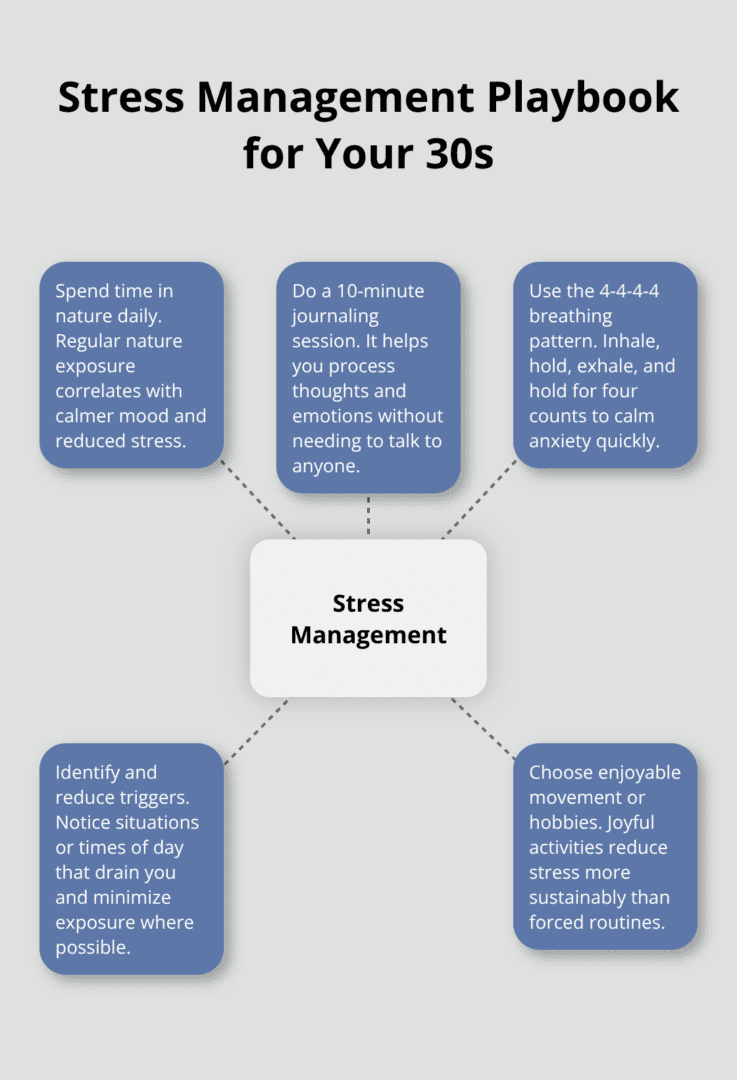
Stress management strategies that work include identifying and managing daily stressors, spending time in nature daily (which correlates with calmer mood and reduced stress), taking a 10-minute journaling session to process your thoughts, practicing a simple breathing exercise like inhale for four counts, hold for four, exhale for four, hold for four, and engaging in hobbies you genuinely enjoy rather than forcing meditation if it feels forced. Focusing on evidence-based self-care strategies for improving overall health helps you filter out wellness trends that drain time and money without supporting your long-term wellbeing.
These healthy habits also support longevity, especially when paired with personalized direct primary care focused on women’s health that keeps prevention and hormone balance at the center of your plan.
The habits you establish now-how you fuel your body, how you move, how you sleep, and how you manage stress-create the conditions for stable energy, strong bones, and resilience against chronic disease. These foundations matter even more when hormonal shifts begin to influence your mood, energy, and physical health, which is exactly what happens in your 30s and deserves its own focused attention, and understanding how female hormones affect your mental health can make these changes feel more manageable.
Mental Health and Hormonal Balance
Your 30s bring real hormonal shifts that affect mood, energy, and physical health in ways you cannot ignore. Women in their 30s experience higher rates of poor mental health compared with men, which means stress and anxiety are not personal failings but predictable challenges of this decade. Chronic stress manifests as headaches, anxiety, and even heart-related issues, so addressing these problems now prevents them from becoming embedded in your physiology, and learning how to support female mental health and wellbeing helps you and the people around you respond more effectively.
Identify and Reduce Your Stress Triggers
Start tracking what stressors drive your stress and anxiety rather than accepting them as inevitable. Notice whether certain situations, people, or times of day consistently drain you, including pressure from career demands or financial strain, then make deliberate changes to reduce exposure when possible. Spend time in nature daily because nature exposure correlates with calmer mood and reduced stress. A 10-minute journaling session helps you process your thoughts and emotions without needing to talk to anyone. Practice a simple breathing exercise: inhale for four counts, hold for four, exhale for four, and hold for four again; repeat as needed when anxiety rises. Avoid coping through alcohol, excessive alcohol, smoking, or drugs. These are not feel-good suggestions but practical interventions that measurably lower your stress response.
Seek Professional Support When You Need It
If you notice persistent symptoms of anxiety or depression, do not wait to see if they pass. Schedule an appointment with a mental health professional now rather than suffering through another six months. A therapist or counselor provides consistent support, helps you develop coping strategies tailored to your specific situation, and may coordinate care or discuss whether medicine is appropriate in some cases, especially when symptoms may be linked to common female health issues such as thyroid disorders, PCOS, or perimenopausal changes.
Track Your Menstrual Cycle and Hormonal Patterns
Hormonal changes in your 30s can lead to longer, heavier, or more painful periods, and these shifts directly affect your mood and energy levels. Track your menstrual cycle for three months by noting the start date, duration, flow intensity, and how you feel emotionally and physically on different days. Share this information with your healthcare provider so they can identify patterns, rule out underlying conditions like hormonal imbalances or thyroid dysfunction, and discuss unusual symptoms, especially if you are pregnant or planning to become pregnant, since staying proactive about your female reproductive system health allows earlier diagnosis and treatment. Many women discover that their mood shifts predictably during specific phases of their cycle, which helps them plan demanding work or social commitments around their peak energy days rather than scheduling important presentations or difficult conversations during low-energy phases.
Build Relationships That Support Your Wellbeing
Reach out to strengthen relationships by planning calls or meetups with people who genuinely support you. Spending time with friends and family reduces stress hormones and boosts mood in measurable ways (research consistently shows that social connection protects both mental and physical health). If you lack a strong local network, consider finding a therapist or counselor who becomes your consistent support person, or exploring comprehensive, personalized primary care options that integrate physical and mental health support. You deserve rest and connection, not because you are struggling but because these investments reduce burnout and help you live a longer, healthier life.
Final Thoughts
Health in your 30s as a female requires intentional choices, but these choices compound into decades of better outcomes, setting the stage for staying strong and active later in life in the same way that proactive men’s health after 50 protects long-term vitality. You do not need to overhaul your entire life at once-start with one screening you have postponed, one home-cooked meal per week, or one stress management practice that feels realistic. Build from there, and watch how small actions transform your energy, metabolism, and disease prevention over time.
We at Mosaic Medicine Clinic specialize in helping women establish preventative care that fits their actual lives. Our membership-based model gives you unrushed appointments and direct access to your physician, making it easier to ask questions and build a personalized health plan tailored to your specific risk factors and goals. Take action this week by scheduling your annual wellness visit and documenting your family health history.