Integrative Medicine Clinic in Bradenton, FL
Your labs came back “normal” and you still don’t feel right. We keep looking. Mosaic Medicine combines conventional primary care with functional medicine, so you get a real workup, the time to talk it through, and a plan aimed at the cause.
Rated 5.0 on Google
- Same day or next day appointments
- Text your clinician directly
Where and when
- 3934 FL-64, Bradenton, FL 34208. Always accepting new patients.
- Or call or text (941) 777-5665.
- Monday to Friday, 8:00 AM to 5:00 PM.
Book an appointment
Tell us what’s been going on. The office confirms your time.
By sending this you agree to be contacted by Mosaic Medicine about your appointment. Nothing here is a medical record.
What Bradenton patients say
EXCELLENT Based on 157 reviews
 Posted on Google
 Nesland KidsI'm not gonna lie, when I first came to Mosaic Medicine, I was tired and exhausted from some of the battles of life and personal setbacks I had been going through. But I can't even begin to say how amazing this place has been for me. They completely helped me transform my life and get things going again better than ever. Mentally and physically, I feel stronger, have more endurance, more energy, and just feel better getting through each day. They really took the time to analyze my labs, explain everything to me, talk with me extensively about what was going on, and help get me back on track. Now, two years later, I can honestly say I've never felt better. I can't thank Dr. Corey and his staff enough. Everyone there has always been extremely friendly and helpful. they even put up with me on the days when I may have been a little grouchy! They are Awesome! If you're thinking about going, don't hesitate. Go see them and check it out for yourself. You'll be glad you did.Posted on Google
 James Daly (Jim)I work 45-55 a week on average and have very limited time. Mosaic worked around my schedule for the initial consultation and even more so after the fact. Cory truly cares and helped me out when I was in a situation. If you’re even reading this review or the many others, look no further. The professionalism and quality of care is far superior to anything I’ve experienced previously.Posted on Google
 Cassie LewisI can honestly say that Mosaic Medicine is the best of the best. After my hysterectomy I was miserable. My corporate medicine doctors gave me multiple different pills and creams that never worked and then nothing. I was miserable and just couldn’t accept that this was going to be my new life reality. I did a couple consults with a few places and once I met Cory and his amazing team I was in. The office is clean. The customer service is top notch. This is patient centered personal care. Labs are done in house and your labs go into the portal AND you get a Tele-Health appointment to go over your labs. You are never rushed. When you are there it’s like you are their only patient. Your plan of care is a 2 way discussion, meaning you have a say in what your plan of care will be. My life today is 100% better than it was. Joining the Mosaic medicine family was the best decision I have ever made. I wish I would have done it sooner. They look at your health from every angle and develop a comprehensive plan for the new you. They see the potential in your health status and take you there. Thank you Cory and the entire mosaic team for being amazing from the moment you walk in the door. If I could give a higher than 5 star rating I would. The bed side treatment is the best I have witnessed and experienced. Keep setting the bar high!!Posted on Google
 Ashley MarieMosaic Medicine is at the top of my list! The medical offices are clean and the area where you receive the IV is set up nicely with accommodating features including calm lighting ambiance and a TV whilst the infusion runs it's course. The Mosaic team is warm, welcoming and kind. I found the medical staff to be swift and efficient with the entire IV process, happy to answer any questions along the way. I am very pleased with my previous experiences here and look forward to my next appointment.Posted on Google
 MJ RushMosaic Medicine with Cory and the entire team deliver an exceptional, high-touch experience from the moment you engage with them. Their professionalism, warmth, and attentiveness have made my transition into executive health care seamless and genuinely impressive. The level of communication, time, and personalized attention they provide creates a strong sense of confidence that you are receiving thoughtful, focused care at the highest standard. I truly feel supported throughout this new chapter in my health journey and appreciate the consistency and clarity they bring to every interaction. I look forward to continuing this elevated pathway to better health with their guidance. Thank you. MJPosted on Google
 Robert KrawczykI have been seeing Dr. Cory for several years now and it has always been a good experience. I appreciate the time he takes to discuss your current health to determine if medication is necessary or if simple lifestyle changes can address the issue. All of his staff members deserve 5 stars as well. They all are so welcoming, friendly and have great bedside manner.Posted on Google
 Mademoiselle ParisThey are awesome ! Highly recommended!Posted on Google
 Nico EspanaVery accommodating nice facility great staff Always doing what’s best for youPosted on Google
 Joe selbeckI have had a great experience here with positive results.Posted on Google
 JEAN DANDONNEAUMy experience with Cory and his team has been incredible. First for a long time I had time to talk, to explain my situation and to set my goals. Cory takes the time to understand and to find the good solution. The blood test helped to confirm everything. I have lost 16 pounds and feel so much better. I am on the right path and I feel really in good hands
Integrative medicine in Bradenton, with a primary care clinic behind it
Conventional medicine is very good at emergencies. It’s much weaker at the slow stuff: the fatigue, weight gain and brain fog that build over years and never show up as one clear diagnosis. Our founder, Cory Lucas, FNP-C, ENP, started as a U.S. Army medic and spent 15 years in emergency medicine treating chronic disease that better primary care could have caught early.
Functional medicine asks why a symptom is there, instead of only which prescription treats it. Integrative medicine is how we put that into practice: we use it alongside standard diagnostics, and we still prescribe when medication is the right call. You don’t have to choose between the two. Here’s how we approach functional medicine in Bradenton across the clinic.
15 yearsin emergency medicine, after starting as a U.S. Army medic
What integrative medicine means here
We look at your body as one connected system. Your thyroid, hormones, blood sugar, sleep and stress all affect each other, so we test and treat them together instead of one specialist at a time.
One specialist at a time
- Thyroid
- Hormones
- Blood sugar
- Sleep
- Stress
Tested and treated together
- Thyroid
- Hormones
- Blood sugar
- Sleep
- Stress
Balanced treatment
Prescriptions when you need them, alongside the nutrition, sleep and lifestyle changes that make them work better.
Whole-person care
We ask about your work, your stress, your sleep and your diet, because they all show up in your labs eventually.
Conventional care, extended
We don’t replace standard medicine. We add the testing and time a ten minute visit doesn’t allow.
A plan built around you
Your plan comes from your own results and history, not from a protocol every patient gets.
Your first visit and the testing behind it
Your first visit is longer than a standard appointment. We go through your history, your symptoms and your goals, plus what most visits skip: sleep, stress, work, diet and your environment.
Then we test. Depending on what you tell us, that can include:
- Full blood chemistry
- Specialized hormone testing, for men and women
- A full thyroid panel, not just TSH
- Gut health assessment
- Environmental toxin screening
We’re looking for what’s driving the symptoms: hormone imbalance, nutrient deficiency, chronic inflammation, metabolic problems or long-term stress. Then we go through the results with you in plain English.
After that, you text your clinician directly. Most patients get a same day or next day appointment when they need one.
Your treatment plan
Your plan comes from your results. Most combine a few of these:
Nutrition. Diet changes based on your labs, targeted supplements and food sensitivity testing.
Lifestyle medicine. Sleep, stress, activity and the habits that keep them on track.
Medication, prescribed carefully and monitored, with the goal of using as little as works.
Detox protocols, when your testing points to them.
We recheck your labs as you go and adjust the plan. If you need a specialist, we coordinate with them so your care stays in one place.
Integrative care at Mosaic: thyroid, IV nutrition and hormones
Most integrative plans end up touching one of these. The same clinician runs all of them, so your thyroid results, hormone labs and nutrient levels get read together, in one visit.
Thyroid treatment in Bradenton
For the patient whose TSH came back “normal” and who still feels tired, cold and heavier than they should. We run a full thyroid panel, not just TSH, treat what it shows, and repeat your bloods 6 to 8 weeks after any dose change. You book directly, no referral.
IV nutrient therapy
Vitamins, minerals and amino acids given by IV instead of by mouth, so your gut doesn’t limit how much gets through. A Myers’ Cocktail is $150, and every infusion is priced on the IV page.
Hormones and weight
Hormones and weight have their own programs, and many integrative patients use one of them: testosterone therapy for men, bioidentical hormone replacement for women and medical weight loss.
Who you'll see at Mosaic Medicine

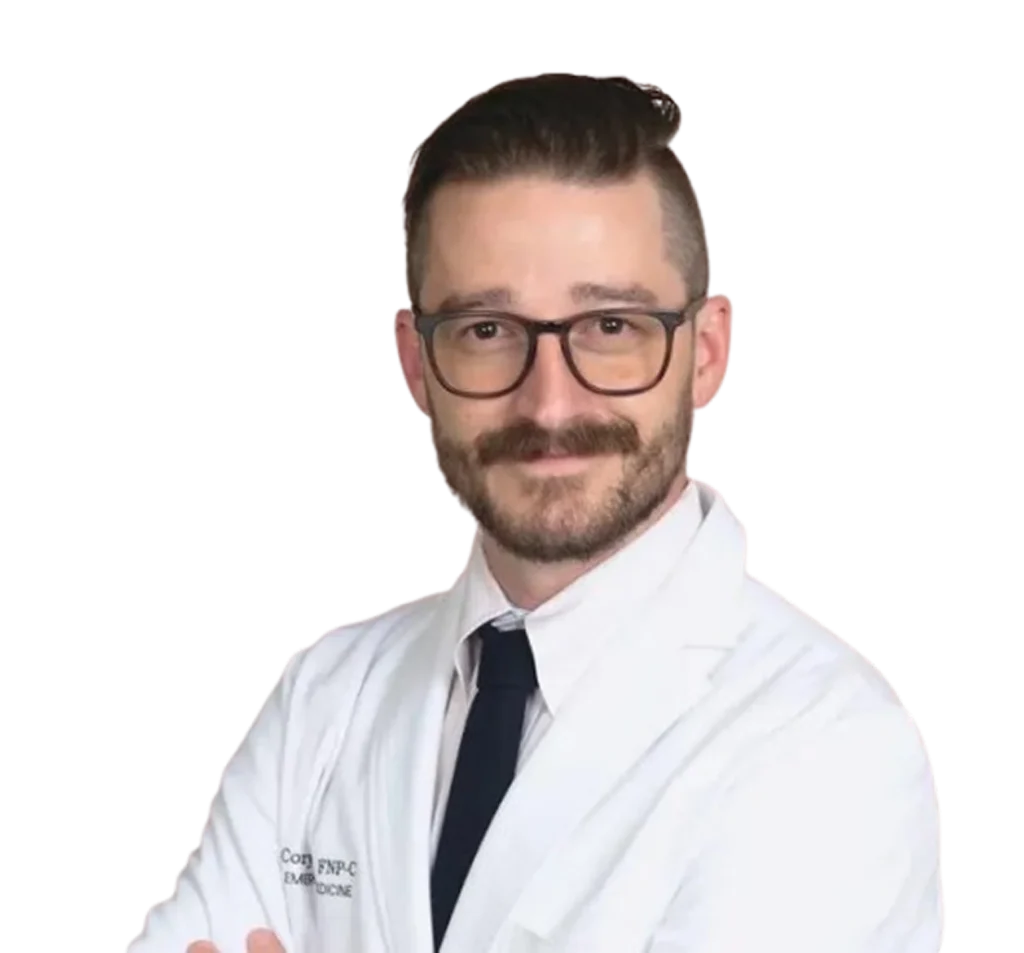
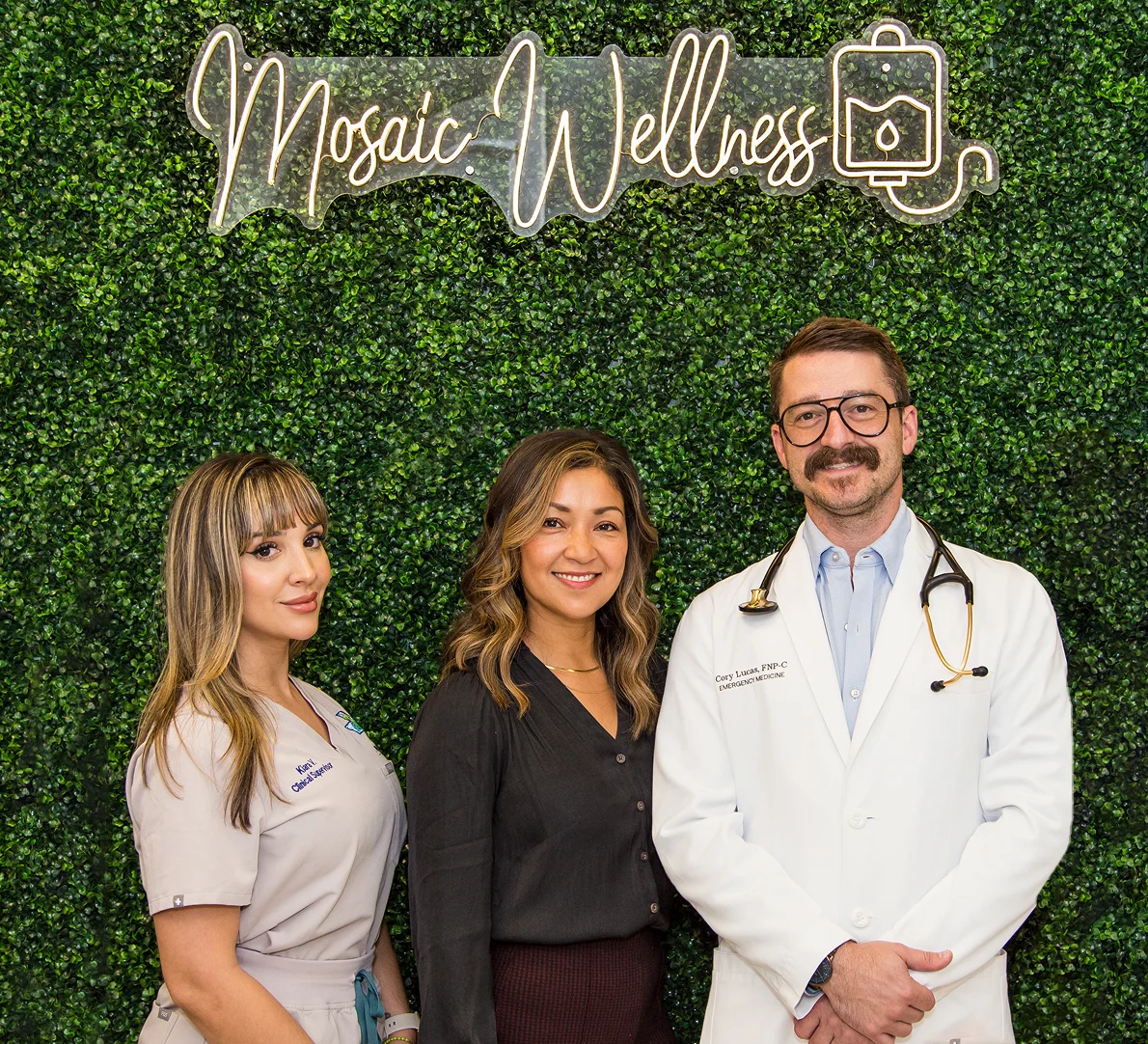
Cory Lucas, FNP-C, ENP
Board-certified family and emergency nurse practitioner, with autonomous practice authority in Florida. Read Cory’s story
Nour Baba, PA-C
Board-certified physician associate, trained at the University of Tampa.
We’ve seen patients in Bradenton since 2022, including patients from Lakewood Ranch, Parrish, Anna Maria, Longboat Key and northern Sarasota. Areas we serve
Take The Next Step Toward a Healthier You
Your health is your greatest asset—let’s optimize it together. Whether you’re looking to boost energy, improve longevity, balance hormones, or achieve sustainable weight loss, Mosaic Medical specializes in direct primary care for families and guides you with expert, personalized care.