

Turning 40 marks a pivotal moment when men’s health priorities shift dramatically. Your body begins changing in ways that demand attention and proactive care.
We at Mosaic Medicine Clinic see men’s health at 40 as the foundation for decades of vitality ahead. The choices you make now directly impact your energy, strength, and overall wellness for years to come.
Common Health Challenges Men Face at 40
Heart disease becomes the leading killer for men who enter their 40s, with cardiovascular disease claiming approximately 1 of every 3 deaths in the United States. Men at this age face a perfect storm of rising blood pressure, climbing cholesterol levels, and increased stress from career and family pressures. Your arteries begin to show wear from decades of processed foods, sedentary work, and accumulated stress. The statistics paint a stark picture: men aged 45 to 54 have a 30% higher risk of heart attack compared to their younger counterparts.
Testosterone Decline Creates Wide-Range Effects
Testosterone levels drop by approximately 1% annually after age 30, with acceleration at 40. This hormonal shift affects far more than libido – it impacts muscle mass, bone density, energy levels, and mood regulation. Men with low testosterone face increased risks of depression, cognitive decline, and metabolic disorders. The American Urological Association provides guidance on assessing patients for testosterone deficiency, yet most men remain undiagnosed and untreated.
Metabolism Slows While Weight Increases
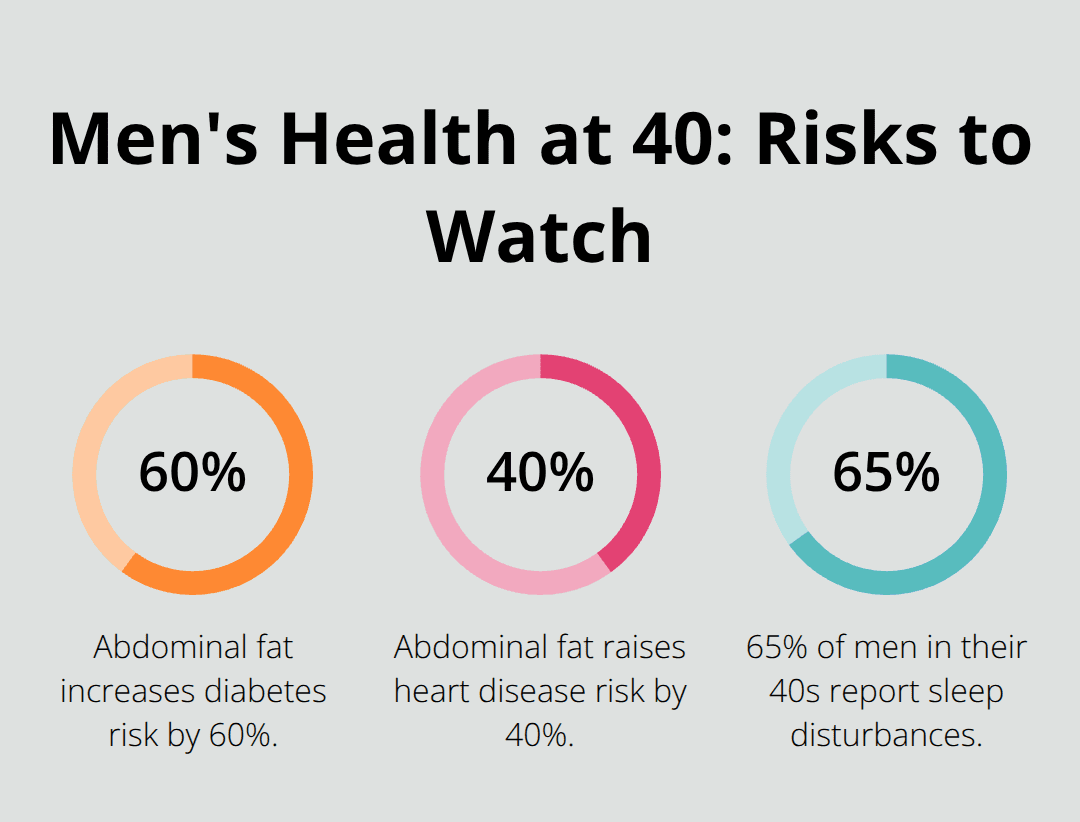
Metabolic rate decreases by 2-5% per decade after age 30, which means your body burns fewer calories at rest while you maintain the same habits. Men typically gain 1-2 pounds annually during their 40s, with most weight accumulating around the midsection. Abdominal fat proves particularly dangerous (increasing diabetes risk by 60% and heart disease risk by 40% according to the Centers for Disease Control). Muscle mass also declines by 3-8% per decade, which further slows metabolism and reduces strength. Sleep quality deteriorates during this decade, with 65% of men in their 40s reporting sleep disturbances that worsen weight gain and hormone imbalances.
These health challenges require proactive monitoring through regular screenings and tests that can catch problems before they become serious threats to your wellbeing.
Which Screenings Save Lives After 40
Men over 40 need aggressive screening schedules that catch problems before symptoms appear. The US Preventive Services Task Force recommends annual blood pressure checks for all men over 40, as hypertension affects 52.5% of men in the 40-59 age group yet produces no warning signs. Cholesterol screening should occur every five years starting at age 35, but the American College of Cardiology suggests more frequent testing if you have diabetes or family history of heart disease.
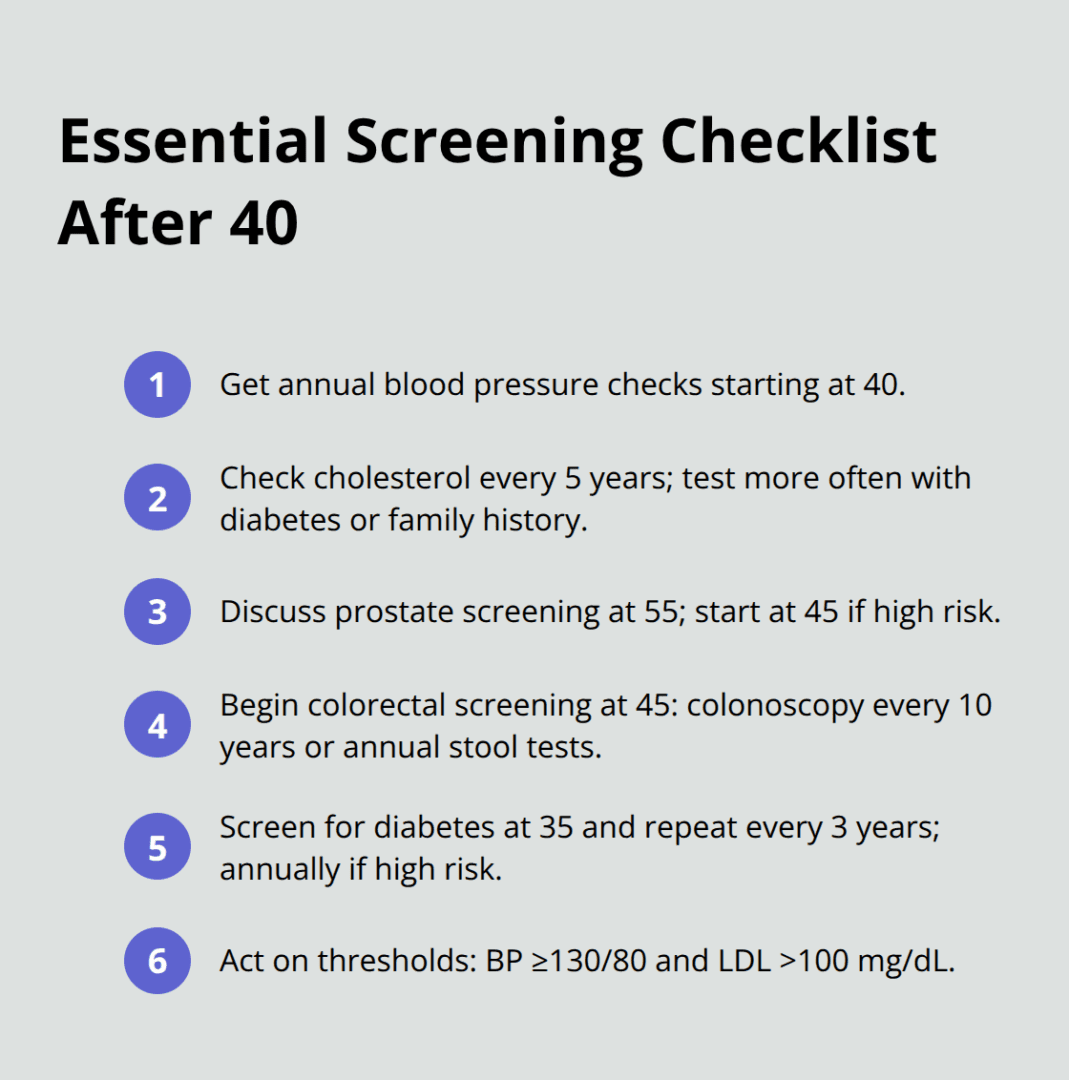
Blood pressure readings above 130/80 require immediate attention, while LDL cholesterol levels over 100 mg/dL signal cardiovascular risk that demands dietary changes and possible medication. On the dietary side, the American Heart Association points to 3,400 milligrams of potassium a day, from foods like mushrooms, tomatoes, oranges and fish, to help the body process sodium and bring pressure down naturally.
Cancer Screening Protocols That Matter
Prostate cancer screening discussions should begin at 55 for average-risk men, though African American men or those with family history need earlier evaluation at 45. The PSA blood test combined with digital rectal examination provides the most comprehensive prostate assessment, despite ongoing debates about overdiagnosis.
Colorectal cancer screening must start at 45 according to updated guidelines from the American Cancer Society, with colonoscopy every 10 years or annual stool tests as alternatives. Screening programs reduce colorectal cancer mortality by 16-23% when implemented consistently, yet only 65% of eligible men complete recommended testing.
Blood Sugar Testing Prevents Diabetes
Diabetes screening should begin at 35 for all adults and repeat every three years, according to the American Diabetes Association. Fasting blood glucose levels between 100-125 mg/dL indicate prediabetes, which affects 38% of American adults yet remains undiagnosed in 80% of cases.
The A1C test provides a three-month average of blood sugar levels and should stay below 5.7% for optimal health. Men with abdominal obesity, high blood pressure, or family history of diabetes need annual testing rather than the standard three-year interval.
Additional Health Monitoring
Eye exams become essential by age 40, with the American Academy of Ophthalmology recommending complete evaluations for early detection of glaucoma and other vision problems. Bone density screening may be necessary for men at risk of osteoporosis (particularly those with low testosterone or family history). Hearing deserves the same attention and rarely gets it, with prevalence of loss climbing from 2% among men aged 45 to 54 to 8.5% between 55 and 64, so test every three years. If you were born between 1945 and 1965, the CDC recommends a one-time hepatitis C screening because liver damage progresses silently. Where bone density is a concern, a DEXA scan measures the spine and hip directly, supported by 1,000 mg of calcium and 800 to 1,000 IU of vitamin D3 daily. Losing more than an inch and a half of height is a warning sign worth acting on.
Regular screenings provide the foundation for prevention, but lifestyle changes amplify their protective effects and address the root causes of age-related health decline.
What Lifestyle Changes Work Best After 40
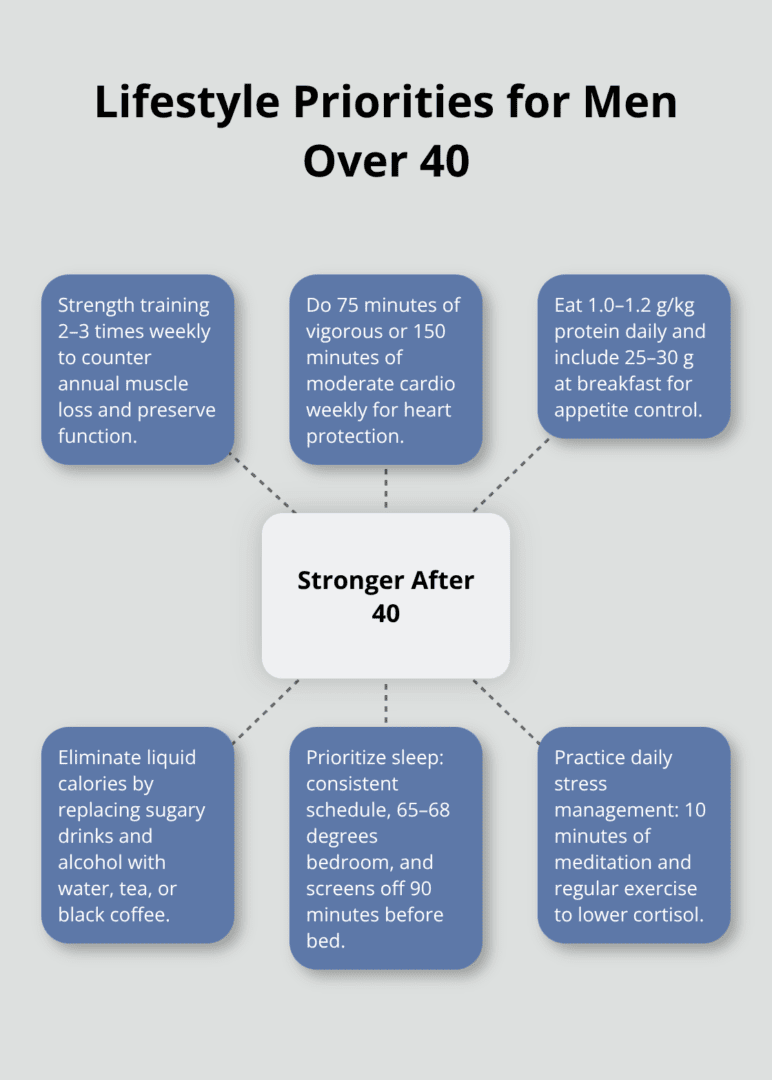
Exercise becomes non-negotiable at 40, but the approach must shift from general fitness to targeted strength and cardiovascular protection. Strength training 2-3 times per week prevents the 1-2% annual muscle loss that accelerates after 50. Compound movements like squats, deadlifts, and push-ups build functional strength that translates to daily activities.
The American Heart Association recommends 150 minutes of moderate aerobic activity weekly, but high-intensity interval training proves more effective for men over 40. Just 75 minutes weekly of vigorous activity provides superior cardiovascular benefits and time efficiency for busy professionals.
Protein Requirements Increase Significantly
Protein intake must increase to 1.0-1.2 grams per kilogram of body weight daily to maintain muscle mass as testosterone declines. Men who consume 25-30 grams of protein at breakfast experience better appetite control throughout the day and improved weight management compared to those who eat high-carb morning meals.
Focus meal timing with larger portions earlier in the day. Studies show that men who eat most of their daily calories before 3 PM improve weight loss compared to evening-heavy patterns.
Eliminate Liquid Calories Completely
Sugary beverages contribute significant empty calories daily for American men, while alcohol adds additional calories plus disrupts sleep quality and testosterone production. These liquid calories provide no satiety benefits and directly contribute to abdominal weight gain.
Replace all sweetened drinks with water, unsweetened tea, or black coffee. This single change can eliminate substantial calories weekly without any other dietary modifications.
Sleep Quality Demands Active Management
Sleep quality deteriorates significantly in your 40s, with many men reporting sleep disturbances that directly impact weight gain and hormone balance. Maintain consistent sleep and wake times even on weekends. Keep bedroom temperature between 65-68 degrees and eliminate screens 90 minutes before bed to improve melatonin production.
Poor sleep reduces testosterone and increases cortisol levels that promote abdominal fat storage.
Stress Management Requires Daily Practice
Stress management requires active intervention rather than passive hope. Meditation for just 10 minutes daily reduces cortisol levels according to research. Regular exercise provides equivalent stress relief to prescription anxiety medications for many men.
Address stress proactively through scheduled relaxation time rather than wait for burnout symptoms to appear. Chronic stress accelerates aging and increases risk for every major disease category.
Mental Health Is the Blind Spot
One in five men between 50 and 75 says he hardly ever thinks about his own mental wellbeing, and the habits behind that number get set in your 40s. Depression in men this age often hides behind physical complaints: disrupted sleep, unexplained pain, low energy, weight loss, digestive trouble. Social isolation is not a soft risk either, raising the likelihood of premature death by roughly 30%. Watch for withdrawal from things you used to enjoy, and treat asking for help as maintenance rather than weakness.
Final Thoughts
Men’s health at 40 demands immediate action rather than wishful thinking. The statistics reveal clear patterns: cardiovascular disease kills one in three men, testosterone drops annually, and metabolism slows while weight increases. These changes accelerate without intervention.
Start with annual screenings for blood pressure, cholesterol, and blood sugar. Schedule prostate discussions with your doctor and colorectal cancer screening at 45. These tests catch problems before symptoms appear and save lives through early detection (particularly for conditions that develop silently).
We at Mosaic Medicine Clinic understand that men’s health at 40 calls for hormone care for men in Bradenton. Our approach provides the time and access needed for comprehensive health management. Contact us today to discuss your specific health goals and develop a plan that fits your lifestyle.
