

Healthcare costs keep rising while appointment times get shorter. Traditional insurance-based medicine often leaves patients frustrated and doctors overwhelmed.
Direct primary care meaning centers on a simple concept: pay your doctor directly through a monthly membership fee. We at Mosaic Medicine Clinic believe this model transforms how you experience healthcare by removing insurance barriers and creating stronger patient-doctor relationships.
How Does Direct Primary Care Actually Work?
Direct primary care operates on a straightforward membership model where patients pay a monthly fee that ranges from $50 to $100 for adults, with children typically costing $20 to $49 per month according to current industry data. This monthly payment covers all primary care visits, preventive services, chronic disease management, and basic procedures without additional fees at the time of service. The American Academy of Family Physicians reports that DPC practices maintain an average patient panel of approximately 402 patients, compared to 2,000-3,000 in traditional insurance-based practices.
Monthly Membership Replaces Insurance Bills
The membership fee structure eliminates the complexity of insurance copays, deductibles, and surprise bills. Patients know exactly what they pay each month, and DPC practices often provide wholesale prices for lab tests and medications at cost. This transparency means a basic metabolic panel that might cost $200 through insurance could cost $15 at a DPC practice. The Direct Primary Care Coalition reports that over 2,600 DPC practices now operate across all U.S. states, which demonstrates the model’s rapid growth.
Direct Communication Changes Everything
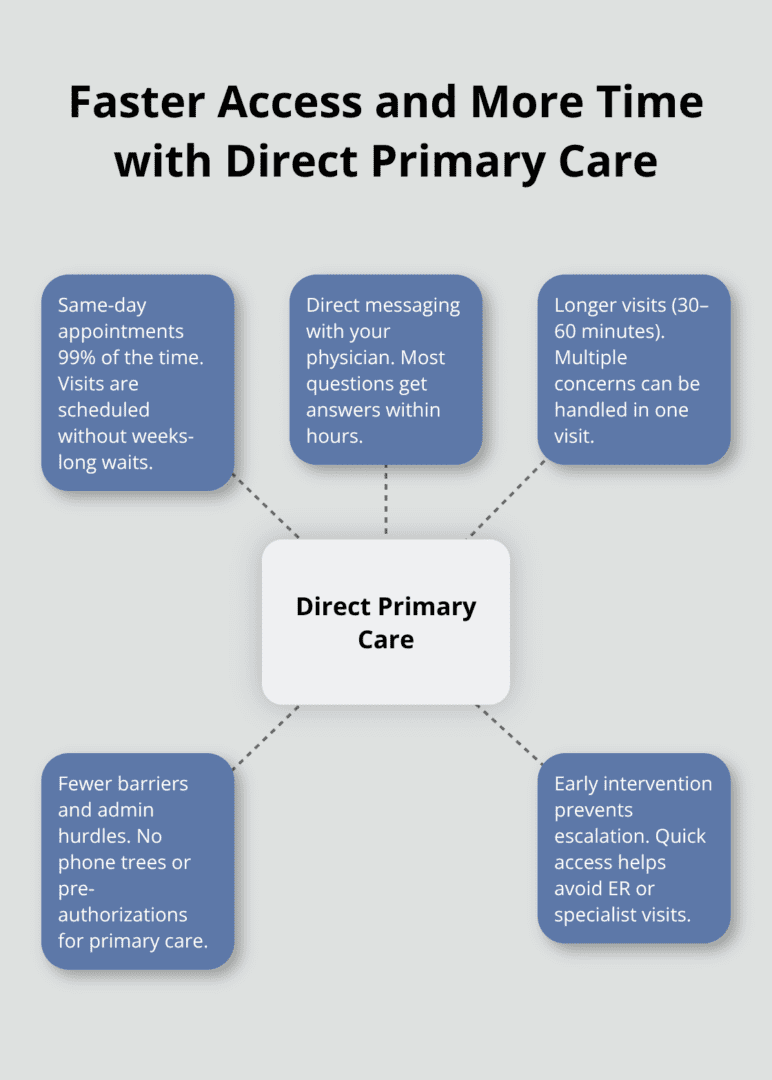
DPC practices offer same-day appointments 99% of the time, with visits that last 30 to 60 minutes instead of the typical 7-minute rushed appointments in traditional medicine. Patients communicate directly with their physicians through text, email, or phone calls without the need to go through multiple staff members or automated systems. This direct access means urgent questions get answers within hours (not days), and routine follow-ups happen through convenient digital channels rather than separate office visits.
What Services Does Your Membership Include
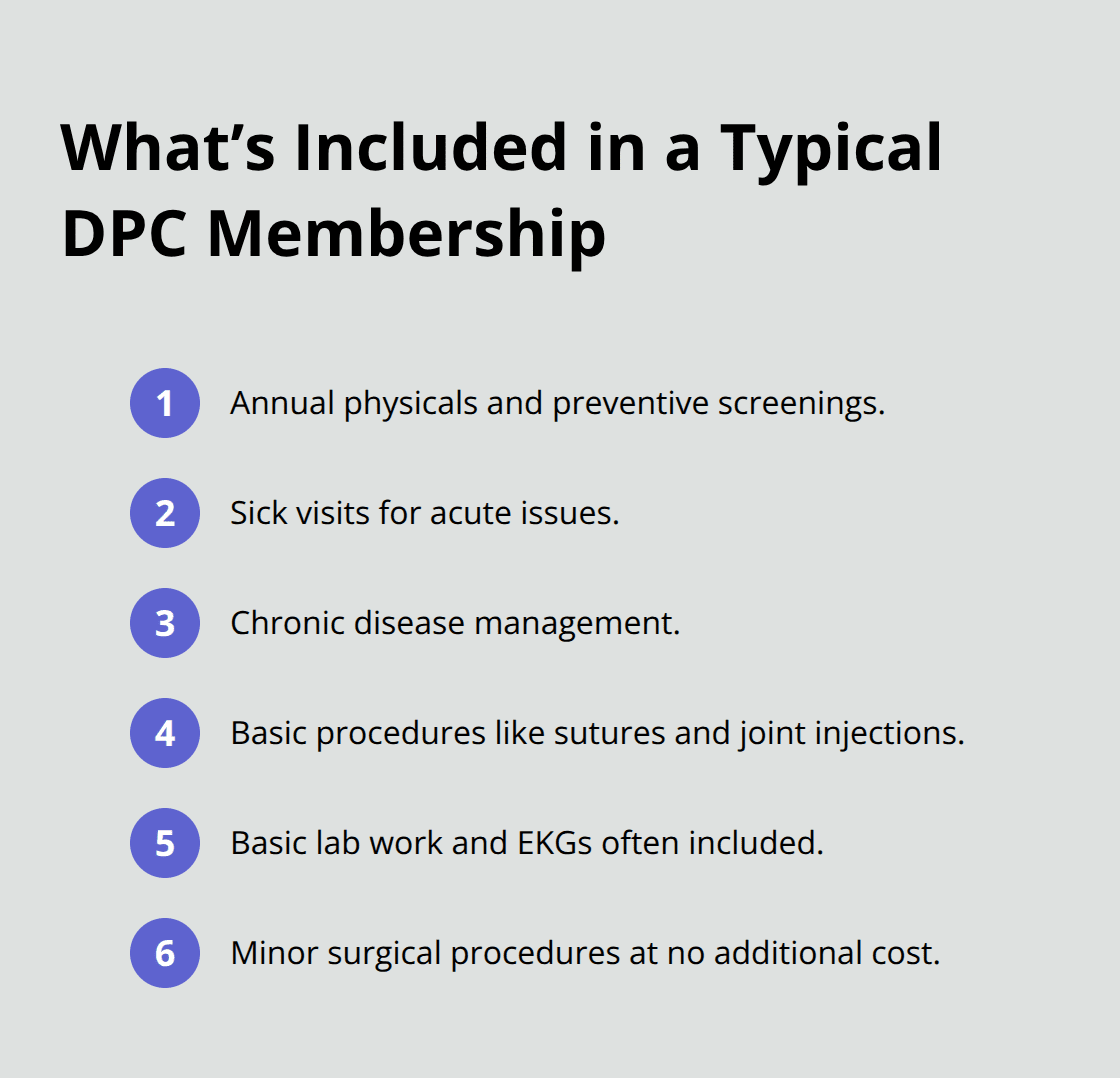
Most DPC memberships cover comprehensive primary care services including annual physicals, sick visits, chronic disease management, basic procedures like sutures and joint injections, and preventive screenings. Many practices also include basic lab work, EKGs, and minor surgical procedures at no additional cost. However, patients typically need separate insurance coverage for specialist referrals, emergency room visits, and hospital stays since these fall outside the primary care scope.
This membership model creates a foundation that transforms how you experience healthcare, but the real differences become apparent when you compare DPC to traditional insurance-based medicine.
Why Direct Primary Care Changes Your Healthcare Experience
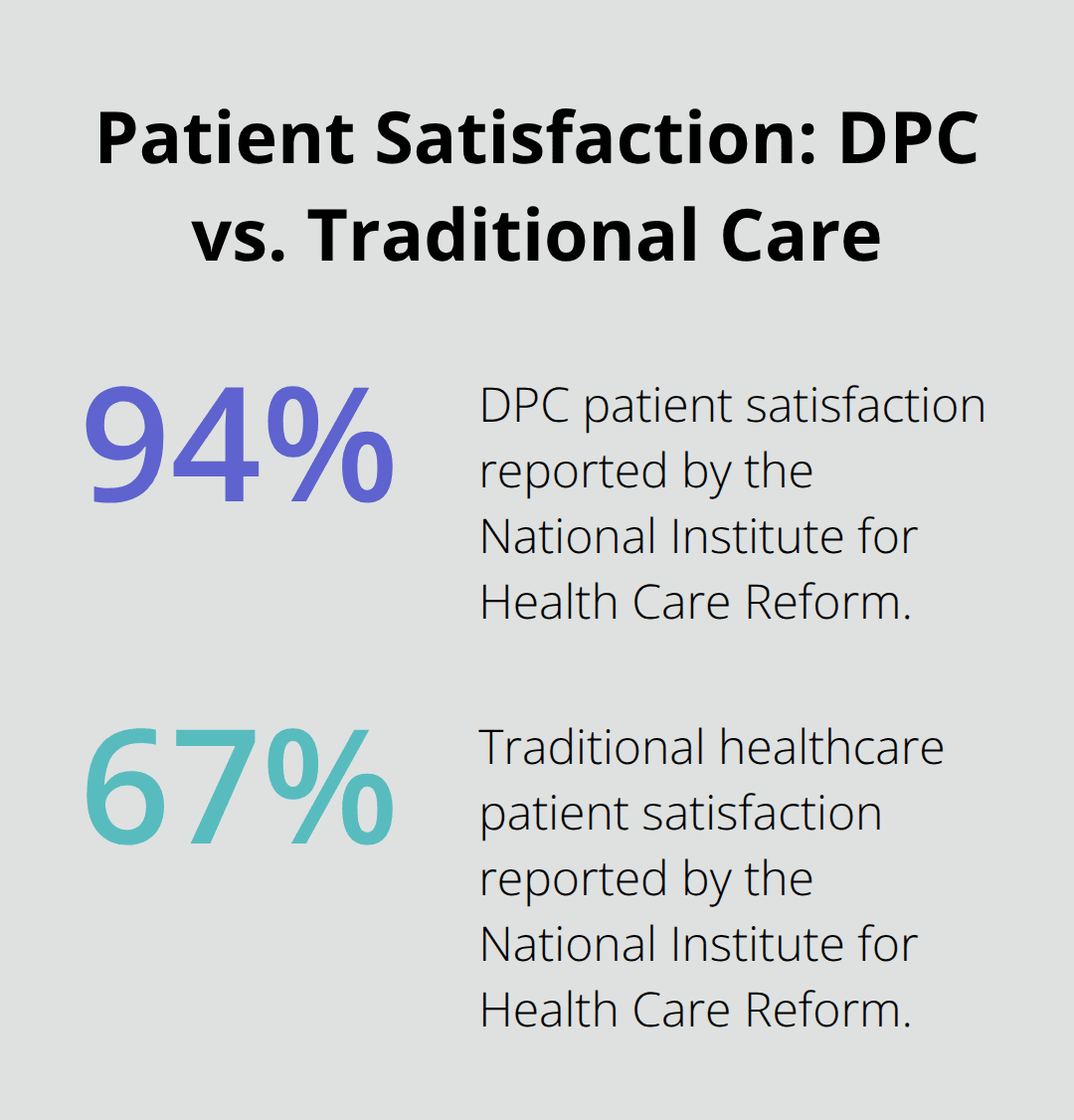
DPC practices deliver appointment times that allow for extended patient interactions compared to traditional medicine’s shorter visits. This extended time allows physicians to address multiple health concerns during a single visit rather than schedule separate appointments for each issue. Patients receive the attention they deserve without the rush of a medical assembly line. The National Institute for Health Care Reform found that DPC patients report 94% satisfaction rates with their care quality, significantly higher than traditional healthcare settings.
Extended Appointments Transform Patient Care
The longer appointment structure means physicians can conduct thorough examinations, discuss lifestyle factors that affect health, and create comprehensive treatment plans during each visit. DPC doctors spend time to explain medical conditions, treatment options, and preventive strategies rather than rush to see the next patient. This approach leads to better health outcomes because patients understand their conditions and feel more engaged in their treatment decisions.
Predictable Costs Replace Medical Bill Surprises
Monthly membership fees eliminate the uncertainty of medical expenses that plague traditional healthcare. A typical office visit that costs $250 through insurance becomes part of your monthly DPC fee, while lab tests like a comprehensive metabolic panel cost $15 instead of $200. Research shows that DPC patients pay an average monthly membership fee of $77.38, which provides significant value when combined with reduced emergency room visits and fewer unnecessary specialist referrals.
Immediate Access Replaces Appointment Delays
DPC practices offer same-day appointments 99% of the time, which eliminates the weeks-long waits common in traditional medicine. Patients communicate directly with their physicians through text, email, or phone calls and receive responses within hours rather than days. This immediate access prevents minor health issues from becoming major problems that require expensive emergency care or specialist intervention.
These benefits create a stark contrast with traditional healthcare models, but the differences extend far beyond convenience and cost savings.
How Does DPC Payment Compare to Insurance
Traditional healthcare payment structures create financial uncertainty through copays that range from $25 to $50 per visit, deductibles, and surprise bills that can reach thousands of dollars for simple procedures. DPC eliminates this complexity through fixed monthly fees of $50 to $100 for adults, with children costing $20 to $49 monthly. A routine office visit that costs $250 through insurance becomes part of your monthly DPC membership, while basic lab tests like a CBC cost $8 instead of $150 through traditional methods. The Medical Group Management Association reports that administrative costs consume 25% of traditional healthcare expenses, money that DPC practices redirect toward patient care.
Monthly Fees Replace Unpredictable Costs
DPC practices charge transparent monthly fees that cover all primary care services without additional charges at the time of service. Patients pay the same amount whether they visit once or multiple times per month, which creates budget predictability that traditional insurance cannot match. Lab tests and medications come at wholesale prices (often 80-90% below insurance rates), while procedures like joint injections or minor surgeries stay included in the membership fee. This structure eliminates the financial anxiety that comes with traditional healthcare visits.
Appointment Access Transforms Patient Experience
Traditional practices force patients to wait 31 days on average for routine appointments, while urgent concerns often get pushed to expensive urgent care centers or emergency rooms. DPC practices provide same-day appointments 99% of the time and offer direct physician communication through text, email, or phone calls that receive responses within hours. Patients schedule appointments through simple online portals or direct physician contact rather than navigate complex phone systems and insurance pre-authorization requirements.
Patient Experience Quality Reaches New Standards
The National Institute for Health Care Reform found that DPC patients report 94% satisfaction rates compared to 67% in traditional healthcare settings. DPC physicians conduct 30 to 60-minute appointments that allow comprehensive health discussions, while traditional medicine limits visits to 7 minutes on average due to insurance reimbursement pressures. Patients receive thorough explanations of their conditions, personalized treatment plans, and preventive care strategies rather than rushed interactions focused on codes. This extended time investment leads to better health outcomes because patients understand their treatment and feel more involved in their healthcare decisions.
Final Thoughts
Direct primary care meaning becomes clear when you experience healthcare without insurance barriers, surprise bills, and rushed appointments. The monthly membership model provides predictable costs, same-day access, and extended visits that allow physicians to address your health comprehensively. With over 2,600 DPC practices nationwide and 94% patient satisfaction rates, this model proves that quality healthcare doesn’t require complex insurance systems.
The switch requires you to evaluate your current healthcare needs and compare monthly DPC fees to your existing insurance costs plus copays and deductibles. Most patients find significant savings while they gain direct physician access through text, email, and phone communication that receives responses within hours rather than days. This direct relationship transforms how you interact with your healthcare provider and eliminates the frustration of insurance middlemen.
We at Mosaic Medicine Clinic provide this membership-based healthcare model in Bradenton, FL, with unrushed appointments and direct physician access through modern communication channels. Our comprehensive primary care includes preventative medicine and specialized programs that put patients first without insurance complications. You take control of your healthcare journey when you choose a model that prioritizes your time, health outcomes, and financial transparency over insurance company profits.