

Most people think healthcare means waiting weeks for appointments and paying thousands in unexpected bills. But there’s a different approach gaining traction-one where you actually get time with your doctor and know what you’ll pay upfront.
At Mosaic Medicine Clinic, we’ve seen firsthand how direct patient care meaning has shifted from a niche concept to a practical solution for frustrated patients. This model cuts through the complexity of traditional healthcare and puts your health back in focus.
How Does Direct Patient Care Differ from Traditional Healthcare: What It Actually Means
This section lays the groundwork for understanding how to define direct care in healthcare as a membership-based model that removes insurance middlemen while prioritizing prevention and access.
Direct patient care is hands-on healthcare where a physician spends real time with you, not billing your insurance company for every minute. Your doctor takes your blood pressure, reviews your medical history in depth, and discusses treatment options without rushing to see the next patient. This differs fundamentally from the fee-for-service model that dominates American healthcare, where doctors earn money based on how many patients they see and how many tests they order. In direct patient care, your physician’s income comes from your membership fee, not from procedures or referrals. According to the American Academy of Family Physicians, the average direct primary care practice maintains a patient panel of around 413 patients, compared to the 2,000-plus patients traditional primary care doctors manage. This smaller panel size means your doctor actually knows your health history, your family situation, and your health goals.
What Primary Care Services Your Membership Actually Covers
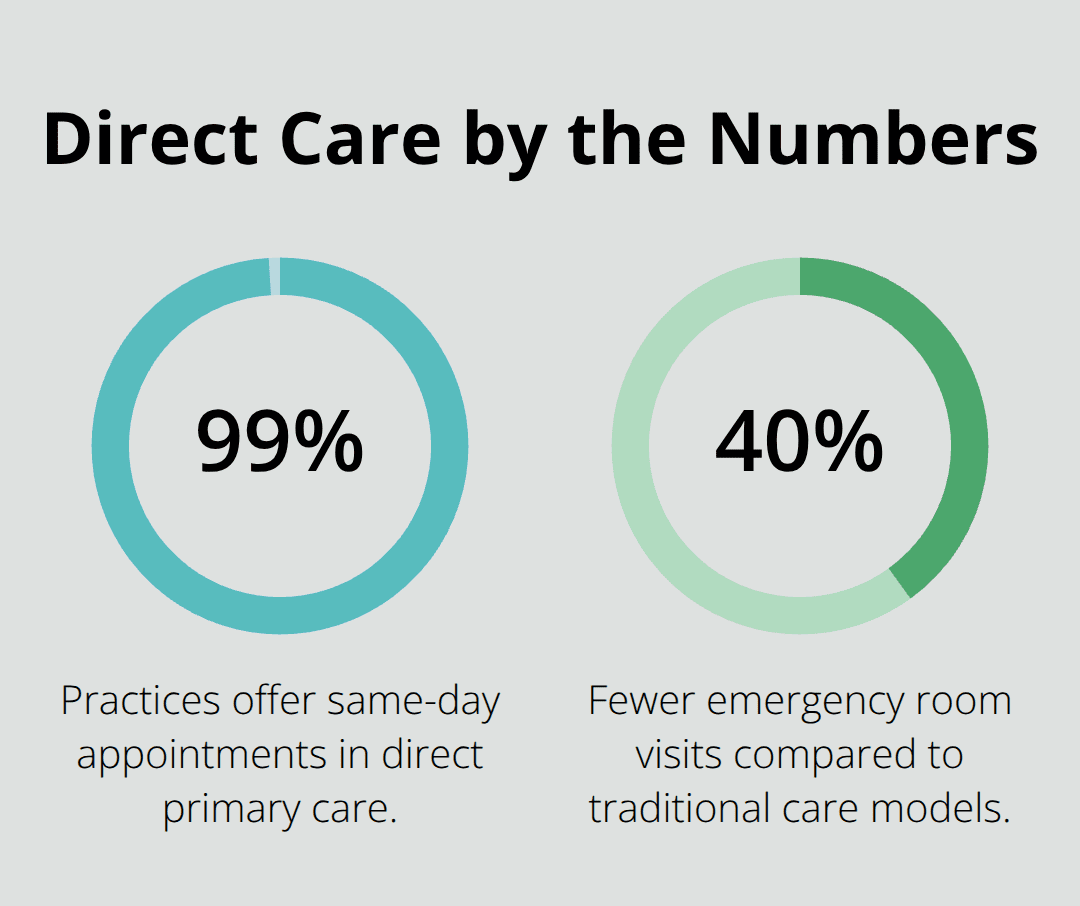
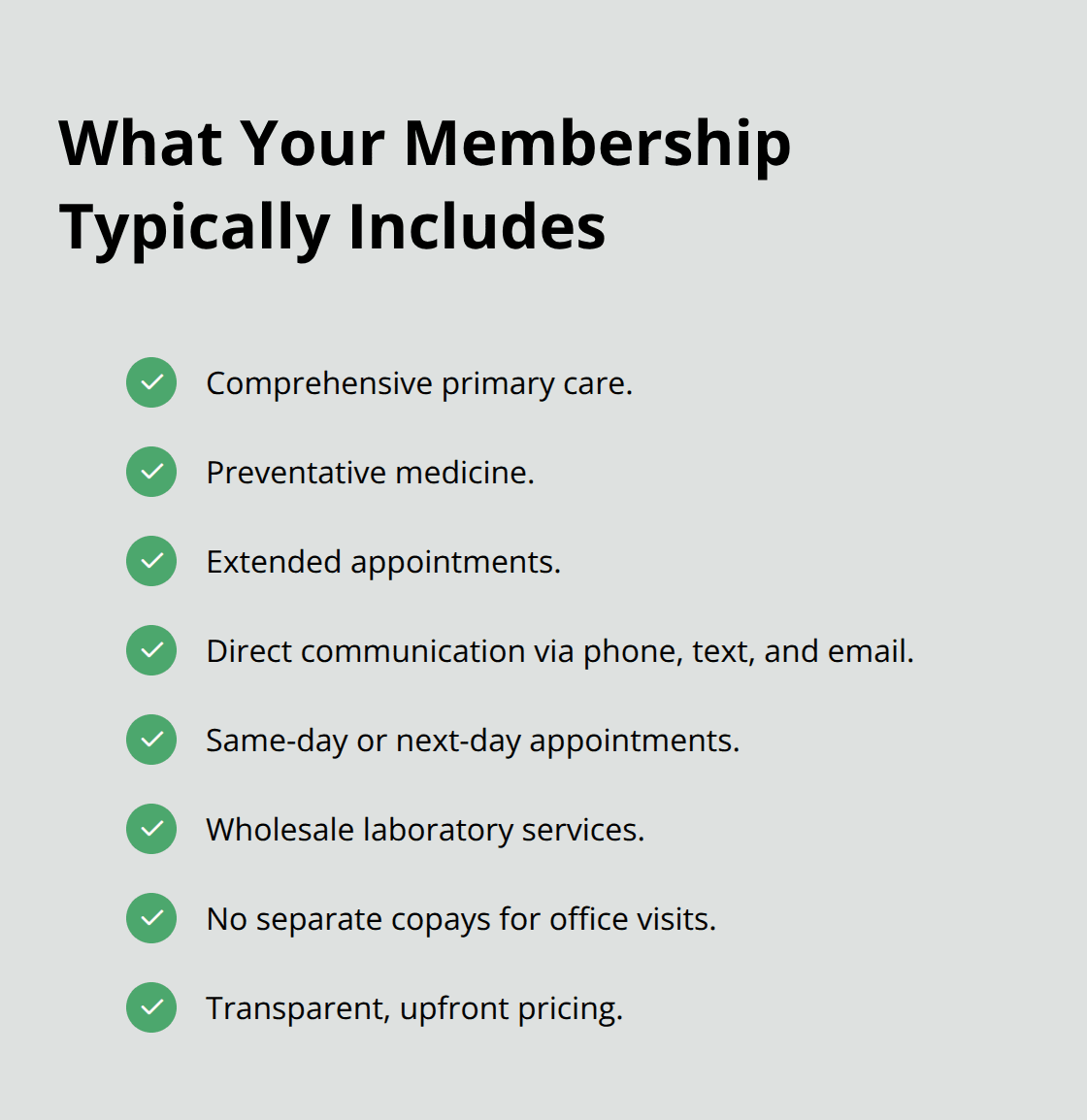
Direct patient care covers far more than you might expect, especially once you understand how direct primary care works as a membership model. Your membership includes comprehensive primary care services such as preventive services, routine check-ups, minor procedures, telemedicine services, extended appointments, direct communication with your physician via phone, text, and email, same-day or next-day appointments, and wholesale laboratory services. You avoid separate copays for office visits or surprise bills for lab work. The American Academy of Family Physicians reports that approximately 99% of direct primary care practices offer same-day appointments, and monthly membership fees typically range from $50 to $100, though some practices charge up to $150 per month.
As of January 1, 2026, if you have a high-deductible health plan, your Health Savings Account can now cover direct primary care membership fees, making this model even more accessible. What direct care doesn’t cover is specialty care, emergency room visits, or hospitalizations, so patients often keep health insurance or high-deductible insurance plans for catastrophic events while the membership handles routine needs, reflecting the key direct primary care pros and cons patients should understand.
How Direct Care Eliminates Healthcare Waste
By stripping away third-party billing and focusing on a simple membership structure, the direct primary care model redirects resources from paperwork back into actual medical care.
Direct patient care eliminates the insurance billing complexity that wastes billions annually on administrative overhead. Your doctor spends less time fighting with insurance companies and many insurance requirements, and more time actually caring for you. Patients in direct primary care practices experience 40% fewer emergency room visits compared to traditional care models. This improvement happens because your physician can focus on proactive care and early intervention rather than treating emergencies. Longer appointments (typically 30 to 60 minutes instead of the standard 15 to 20 minutes) allow your doctor to address multiple health concerns and develop meaningful preventive care tailored specifically to you, with an emphasis on avoiding problems instead of simply treating illnesses. This shift toward prevention and relationship-based care sets the stage for understanding why patients are increasingly dissatisfied with traditional healthcare models.
What You Actually Gain from Direct Patient Care
At Mosaic Medicine Clinic, patients see firsthand how direct primary care is transforming patient experiences through better access, clearer pricing, and more time with their doctor.
Time That Actually Matters for the Doctor-Patient Relationship
Patients experience a fundamental shift when they move from traditional healthcare to direct patient care. The difference in physician attention compounds into something tangible: your doctor maintains a patient panel of 413 instead of 2,000, which means your physician remembers your daughter’s soccer injury from three months ago, knows you’re managing your blood pressure through diet changes, builds a stronger doctor-patient relationship, and spends 45 minutes addressing your concerns instead of rushing through a 15-minute slot. This isn’t a luxury-it’s how medicine functions properly, with smaller panels creating room for personalized care and illustrating direct patient care examples that actually work in day-to-day practice. Patients in direct care practices experience fewer emergency room visits, and that reduction stems directly from having someone who actually knows their health picture. You contact your doctor with a question about medication side effects and receive a response the same day via text or phone, giving you convenient access instead of a voicemail three days later. This accessibility allows you to catch problems early, avoid expensive ER trips for issues your doctor could have handled in an office visit or minor urgent care need, and spend less time navigating the healthcare system overall.
Financial Clarity, Cost Transparency, and Real Savings
For many families and small businesses, direct primary care can be the most affordable option once you factor in transparent pricing, wholesale labs, and fewer emergency visits.
Your financial reality improves dramatically under direct patient care, with greater cost transparency than traditional billing and fewer unexpected costs. Monthly membership fees range from $50 to $100 according to the American Academy of Family Physicians, often as a flat monthly fee or a simple monthly fee. You know exactly what you’re paying upfront, helping you avoid co-pays, out-of-pocket costs, and surprise medical bills that often show up later in traditional care. Your doctor orders lab work at wholesale rates rather than the inflated hospital prices traditional insurance negotiates. As of January 1, 2026, if you have a high-deductible health plan, your Health Savings Account can now cover your membership fee directly, so patients pay their physician in a predictable, cost-effective way. This means you’re not choosing between direct care and building your HSA-you’re doing both simultaneously. Patients typically see total healthcare spending and other medical expenses drop 20 to 30% annually, creating significant cost savings because prevention actually happens instead of getting postponed, because your doctor isn’t ordering unnecessary tests to maximize insurance reimbursement, and because you’re avoiding preventable emergencies entirely.
Managing Chronic Conditions More Effectively
Direct care patients with diabetes show improvement in disease control and better health outcomes compared to traditional models, offering real-world evidence that direct primary care is working for patients today. The financial transparency extends to medications, imaging, and lab tests as well-you understand the cost before treatment rather than discovering unexpected charges later. Your doctor works with you to develop prevention strategies tailored specifically to your health needs, including lifestyle counseling and a whole person approach to chronic-condition support, and longer appointments (typically 30 to 60 minutes instead of the standard 15 to 20 minutes) allow your physician to address multiple health concerns in a single visit. This relationship-based approach transforms how you manage ongoing health challenges and supports a wider range of medical needs, setting the foundation for understanding why direct care practices are reshaping patient expectations across the country.
Why Direct Care Reshapes Healthcare Expectations
The Broken Incentives of Traditional Medicine
Direct care contrasts sharply with the traditional model of medicine, which trains patients to accept frustration as normal. You book an appointment six weeks out, spend 15 minutes with a doctor who barely glances at your chart, and receive a bill three months later for amounts you cannot decipher, even with comprehensive insurance plans. This system persists because it profits hospitals and insurance companies, not because it works. The data confirms what patients already know: 40% fewer emergency room visits occur in direct primary care practices compared to traditional care. Those reductions happen because prevention actually takes place instead of being sacrificed for volume. Americans spend more on healthcare per capita than any other developed nation, yet outcomes remain mediocre. Direct primary care addresses this contradiction head-on and helps patients decide whether direct primary care is worth it for their health, budget, and peace of mind. When your doctor earns money from procedures and specialist referrals rather than from your membership fee, they have financial motivation to order unnecessary tests, schedule follow-up appointments you don’t need, and refer you to specialists prematurely. Direct care flips this dynamic entirely through the dpc model. Your physician’s compensation comes from keeping you healthy, not from treating your emergencies. This alignment of incentives produces measurable results: patients in direct primary care see healthcare spending decrease significantly, and those with chronic conditions like diabetes show meaningful improvements in disease control.
Financial Access Without the Gamble
Healthcare costs have become unbearable for working families, and insurance companies have responded to this crisis by raising deductibles and narrowing coverage rather than controlling expenses. A family with employer insurance, and even small business owners looking for a practical employee benefit, might pay $500 monthly in premiums while facing a $7,000 deductible, meaning they avoid seeking care for manageable problems until they become emergencies. Direct primary care membership fees of $50 to $100 monthly mean the fee covers routine care without the financial uncertainty. You know exactly what you’re paying, and as of January 1, 2026, Health Savings Account funds can now cover direct primary care membership fees directly. This eliminates the false choice between preventative care and building emergency savings.
Your doctor orders labs at wholesale rates, imaging at cost, and discusses medication options with transparent pricing, while also making care coordination, specialist visits, and the referral process far less confusing. Prevention stops being theoretical and becomes something your physician actively pursues because they have time.
How Longer Appointments Change Everything
Longer appointments spanning 30 to 60 minutes highlight the key differences between direct care and traditional care, allowing your doctor to address multiple health concerns in a single visit rather than scheduling you for four separate visits across three months. This efficiency saves you time and money while producing better outcomes. Your physician remembers your health history, your family situation, and your health goals because they maintain a patient panel of around 413 instead of 2,000.
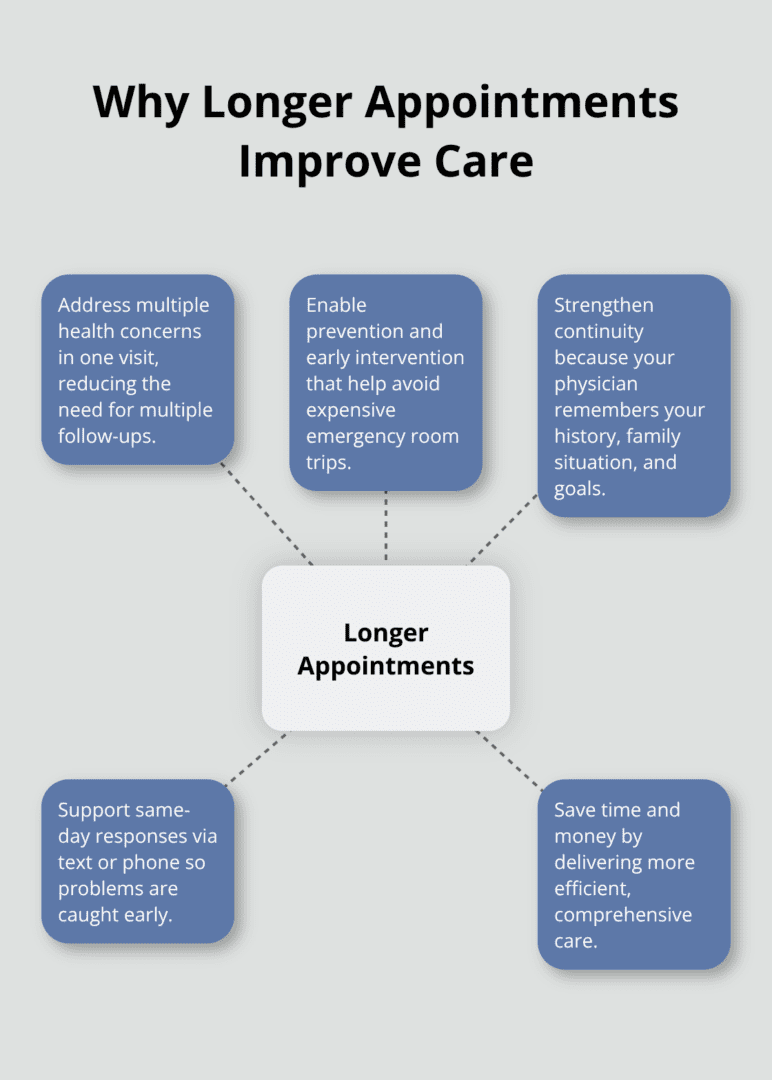
You contact your doctor with a question about medication side effects and receive a same-day response from healthcare providers via text or phone instead of being pushed through rigid traditional channels and waiting on a voicemail three days later. This accessibility allows you to catch problems early and avoid expensive emergency room trips for issues your doctor could have handled in an office visit. The shift represents something deeper than cost savings. It reflects patients finally rejecting a system designed for administrative convenience rather than human health.
Final Thoughts
Direct patient care meaning transforms from a fringe concept into a practical answer to healthcare’s most frustrating problems, with direct primary care (DPC) showing how DPC practices use smaller patient panels, longer appointments, and aligned financial incentives to reshape what healthcare actually delivers-40% fewer emergency room visits, 20 to 30% lower annual healthcare spending, and meaningful improvements in chronic disease management. These results emerge because your doctor has time to know you and financial motivation to keep you healthy rather than treat your emergencies.
You stop accepting healthcare as something that happens to you and start experiencing it as something designed around your actual needs. Your doctor remembers your health history, you know what you’ll pay upfront, and prevention becomes real instead of postponed. Same-day access means you catch problems early, while wholesale lab rates and at-cost imaging reduce your out-of-pocket expenses significantly (compared to inflated hospital prices traditional insurance negotiates).
This model works because it addresses the broken incentives that plague traditional medicine. When your physician earns money from your membership rather than from procedures and referrals, their interests align with yours. Longer appointments spanning 30 to 60 minutes allow comprehensive care in a single visit, and direct communication via phone, text, and email means you get answers the same day. in Bradenton, Florida, operates on these principles every day, building strong patient-doctor relationships through unrushed appointments and direct access to physicians while offering comprehensive primary care, preventative medicine, and clarity on costs.