
Struggling with unexplained weight gain despite eating well and exercising? Your thyroid might be the missing piece of the puzzle.
At Mosaic Medicine Clinic, we see patients daily who battle thyroid and weight gain issues that standard testing often overlooks. When your thyroid hormone production drops, your metabolism slows dramatically, making weight loss nearly impossible.
The connection between hypothyroidism and stubborn pounds affects millions, yet many people suffer without proper diagnosis or treatment.
How Thyroid Function Affects Weight
Your thyroid produces hormones T3 and T4 that directly regulate how fast your body burns calories. The American Thyroid Association states these hormones control your basal metabolic rate, which accounts for 60-70% of your daily calorie burn. When thyroid hormone production drops even slightly, your metabolism can slow by 15-20%, which makes weight maintenance nearly impossible even with perfect eating habits.

Thyroid Hormones Control Metabolism Speed
Hypothyroidism affects approximately 4.6% of Americans aged 12 and older, with women five to eight times more likely to develop thyroid problems. When your TSH levels rise above 2.5 mIU/L, your metabolism begins to slow down significantly. This metabolic slowdown means your body experiences reduced energy expenditure, which leads to gradual weight gain over time.
Hypothyroidism Slows Calorie Burning
The weight gain typically consists of water retention and fat storage, not muscle mass. Your body enters a conservation mode where it stores calories as fat instead of burning them for energy. This shift happens because thyroid hormones directly influence how efficiently your cells convert nutrients into usable energy.
Weight Gain Despite Normal Eating Habits
Even cutting calories to 1,200 per day may not result in weight loss when your thyroid function is compromised. The National Institute of Diabetes and Digestive and Kidney Diseases reports that many patients gain weight despite reducing their food intake because their bodies simply cannot process calories efficiently without adequate thyroid hormone levels.
These metabolic changes explain why traditional diet and exercise approaches often fail when thyroid dysfunction is present. The symptoms that accompany this weight gain can provide important clues about what’s really happening in your body.
Signs Your Thyroid May Be Causing Weight Issues
Weight gain that resists all your efforts represents just one piece of a larger thyroid puzzle. Patients describe how their bodies have betrayed them – they gain weight over months despite maintaining their usual habits and exercise routines. Many of these symptoms, especially fatigue and weight gain, are common and do not necessarily mean you have a thyroid problem. This weight accumulates primarily around the midsection and face, which creates a puffy appearance that patients often mistake for normal stress-related changes.
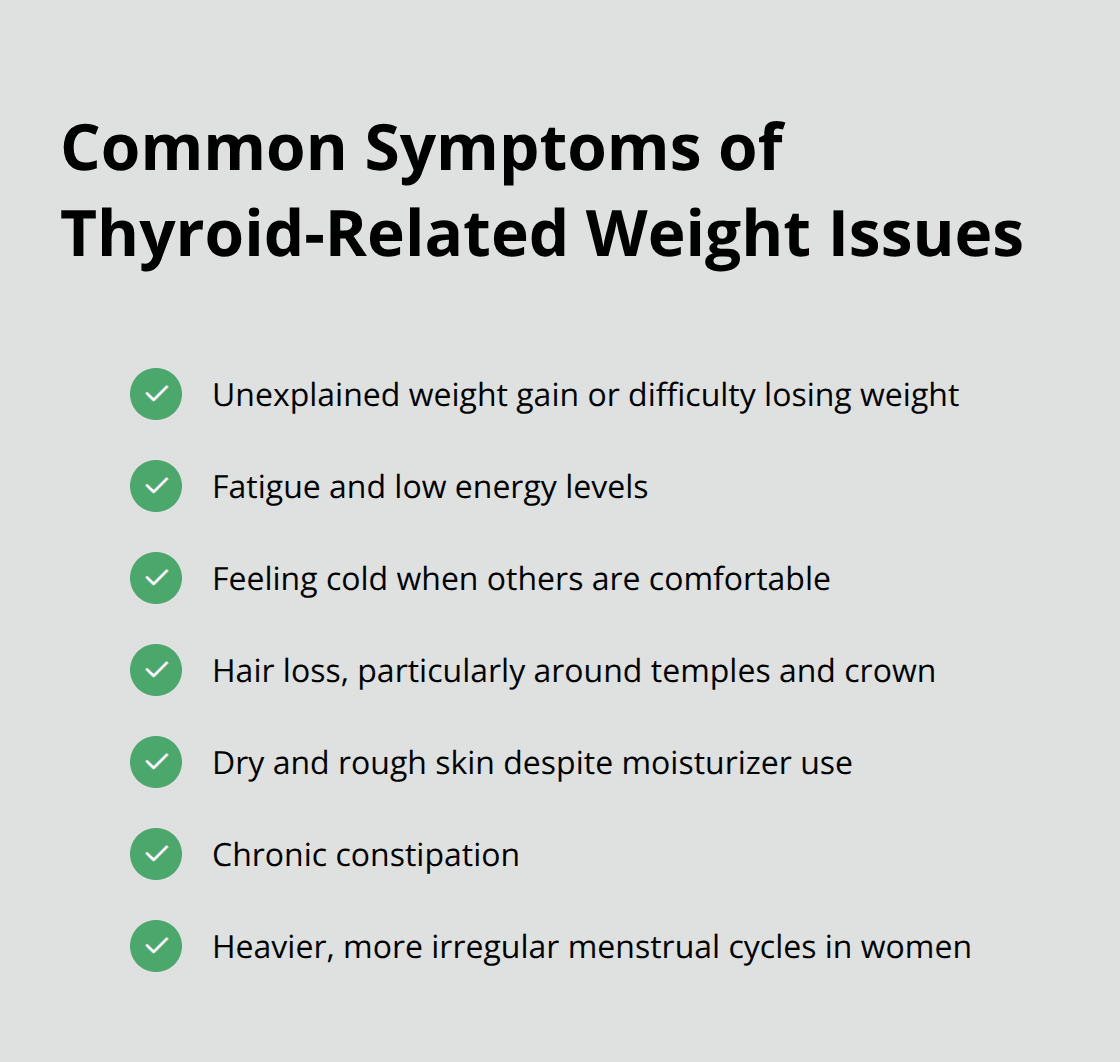
Unexplained Weight Gain or Difficulty Losing Weight
The weight gain pattern with thyroid dysfunction follows a distinct timeline. Patients notice their clothes fit tighter within 2-3 months, then experience rapid accumulation thereafter. This weight consists primarily of water retention and fat storage around the torso, arms, and face. Traditional calorie restriction fails because your metabolism operates below normal capacity when thyroid hormone production drops.
Fatigue and Low Energy Levels
The exhaustion that accompanies thyroid-related weight gain differs completely from normal tiredness. Patients wake up and feel like they never slept, require multiple alarms, and struggle through routines that once felt effortless. Energy crashes by mid-afternoon become so severe that naps become necessary just to function. This fatigue stems from your cells’ inability to efficiently convert nutrients into energy without adequate thyroid hormones. When TSH levels climb above normal ranges, patients report significant energy drops compared to their baseline.
Other Thyroid-Related Symptoms to Watch For
Your body temperature regulation becomes noticeably impaired – you feel cold when others are comfortable and require extra layers even in mild weather. Hair loss accelerates, particularly around the temples and crown, while your skin becomes noticeably dry and rough despite moisturizer use. Constipation becomes chronic. Women often experience heavier, more irregular menstrual cycles that last longer than normal. These symptoms cluster together because thyroid hormones regulate multiple body systems simultaneously.
Standard medical appointments frequently overlook these interconnected changes or attribute them to other causes, which makes proper thyroid evaluation essential for accurate diagnosis.
Getting Proper Thyroid Testing and Treatment
Standard TSH tests miss thyroid dysfunction in 30-40% of patients because most labs use outdated reference ranges. Most studies define normal TSH levels as approximately 0.1 to 4.5 mIU/L, yet many doctors dismiss symptoms when TSH falls within this traditional range. The American Association of Clinical Endocrinologists recommends TSH levels between 0.3-3.0 mIU/L for optimal function, but most conventional practices still rely on the broader range that misses subclinical hypothyroidism.
Why Standard TSH Tests Miss Problems
TSH tests alone fail to reveal the complete picture of thyroid function. Your pituitary gland produces TSH to stimulate thyroid hormone production, but this single marker cannot detect conversion problems or cellular resistance. Many patients experience classic hypothyroid symptoms while their TSH appears normal because their bodies struggle to convert T4 into active T3 hormone. Labs also use reference ranges based on sick populations rather than healthy individuals, which skews what doctors consider normal.

Comprehensive Thyroid Panel Options
Complete thyroid evaluation requires tests for Free T4, Free T3, Reverse T3, and thyroid antibodies alongside TSH. Free T3 represents your active thyroid hormone and often drops before TSH rises, which explains why patients experience symptoms with normal TSH results. Reverse T3 tests reveal cellular thyroid resistance, where your body produces inactive hormone forms that block thyroid function. Thyroid antibody tests detect Hashimoto’s disease, which is the most common cause of hypothyroidism and affects about 5 in 100 Americans. Many patients discover their weight struggles stem from autoimmune thyroid destruction that standard TSH tests completely overlook.
Treatment Approaches for Thyroid-Related Weight Gain
Natural desiccated thyroid medications like Armour Thyroid contain both T4 and T3 hormones, which often produce better weight loss results than synthetic T4-only medications. Patients typically lose 5-15% of their excess weight within 6-12 months when thyroid levels optimize properly. T3 therapy specifically targets metabolic rate and can increase calorie burn by 10-25% when dosed correctly. Medical weight loss programs that address thyroid dysfunction alongside comprehensive metabolic evaluation often achieve superior results. Selenium supplementation at 200 mcg daily supports thyroid hormone conversion, while vitamin D, B12, and iron deficiencies must be addressed to improve treatment outcomes significantly.
Final Thoughts
The connection between thyroid and weight gain affects millions of Americans, yet many struggle without proper diagnosis. When hypothyroidism disrupts your metabolism through hormone imbalance, traditional weight loss methods fail because your body cannot burn calories efficiently. The symptoms extend far beyond weight gain to include fatigue, cold intolerance, and hair loss that cluster together in recognizable patterns.
Standard TSH tests miss 30-40% of thyroid dysfunction cases, which leaves patients frustrated with unexplained weight gain. Comprehensive thyroid panels that include Free T3, Free T4, Reverse T3, and antibody tests provide the complete picture needed for accurate diagnosis and effective treatment. These advanced tests reveal the true state of your thyroid function when standard screening falls short.
If you experience unexplained weight gain alongside persistent fatigue, cold sensitivity, or other thyroid symptoms, seek evaluation from a healthcare provider who understands comprehensive thyroid assessment. We at Mosaic Medicine Clinic provide thorough thyroid evaluation and personalized treatment approaches that address the root causes of metabolic dysfunction (including hormone optimization and nutritional support). Early detection and proper treatment can restore your metabolism and help you achieve sustainable weight management.