
Traditional insurance-based healthcare forces you to jump through hoops just to see your doctor. Copays, deductibles, surprise bills, and months-long wait times have become the norm.
At Mosaic Medicine Clinic, we built a Bradenton DPC clinic model that strips away these barriers. You get direct access to your doctor, transparent pricing, and healthcare that actually works for your life.
Direct Primary Care Bradenton: Why Insurance Gets in the Way of Good Care
Insurance Companies Prioritize Profits Over Patient Care
Traditional insurance-based medicine creates a system where your doctor’s priorities compete with the insurance company’s financial interests. Your physician spends roughly 15 minutes with you during an appointment, partly because they see 1,900 patients on their panel according to industry data—a high volume model where patients can feel like a number instead of receiving personalized care. That’s not enough time to understand your health story or address what actually matters to you.
Insurance companies impose prior authorizations, forcing your doctor to wait days for approval before ordering tests you need today. They deny coverage for treatments your physician recommends, shifting the decision-making power away from the person who knows your medical history. Meanwhile, you’re stuck decoding explanation of benefits statements, arguing about what counts toward your deductible, and receiving surprise bills months after treatment.
How DPC Removes These Barriers
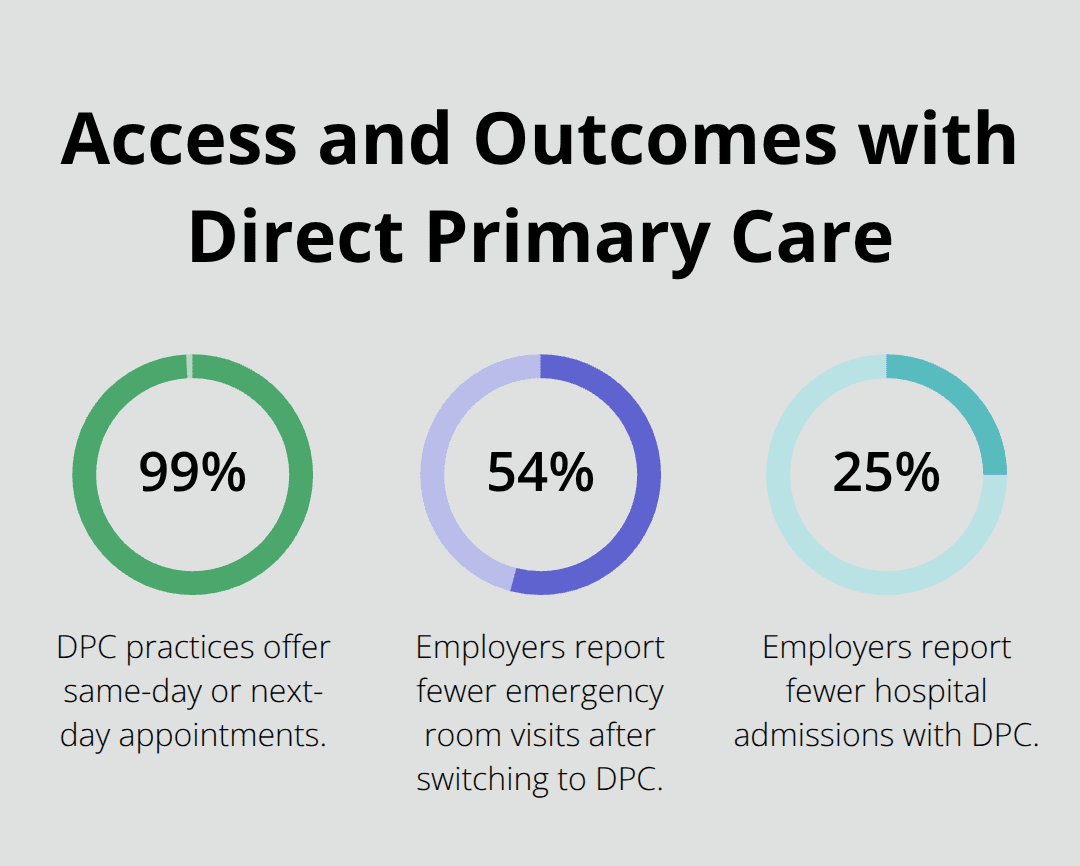
A direct primary care practice flips this entirely by using a flat monthly fee payment approach, so you pay one transparent rate with no co-pays, and that covers your visits, basic labs, vaccines, and direct access to your physician via phone, email, or secure messaging. The American Academy of Family Physicians reports that 99% of DPC practices offer same-day or next-day appointments, and this model can provide visits, labs, vaccines, and direct communication in a more accessible way.
Longer appointments mean your doctor actually listens, explores root causes instead of just treating symptoms, and can resolve the problem in one visit more often while developing a real care plan with you. Labs cost a fraction of traditional prices-basic blood work runs around $15 through wholesale partners instead of $200 through insurance billing. Medications typically cost 90% less when purchased at wholesale rates.
Real Financial Impact for Families and Employers
For families, a monthly membership might cost $220 for everyone, making healthcare predictable and affordable without the administrative chaos. Employers who switched to DPC for their teams report 54% fewer emergency room visits and 25% fewer hospital admissions, which tells you something important: when patients can actually reach their doctor without barriers, they avoid expensive crises.
This shift from reactive, insurance-driven care to proactive, patient-centered medicine changes everything about how you experience healthcare. The question isn’t whether you can afford DPC-it’s whether families deserve care that is proactive and patient-centered, instead of staying trapped in a system that works against your health, especially when you compare direct primary care versus concierge medicine and see how different models serve patients.
How Direct Primary Care Works
Your Membership Covers Everything That Matters
You pay one flat monthly rate, typically around $100-and this membership model includes unlimited appointments, basic lab work, vaccines, and direct access to your doctor through phone, email, and secure messaging. No co-pays, no deductibles, and no surprise bills arrive three months later. For families with children, a household membership might run $220 monthly, which means you can actually budget for healthcare costs.
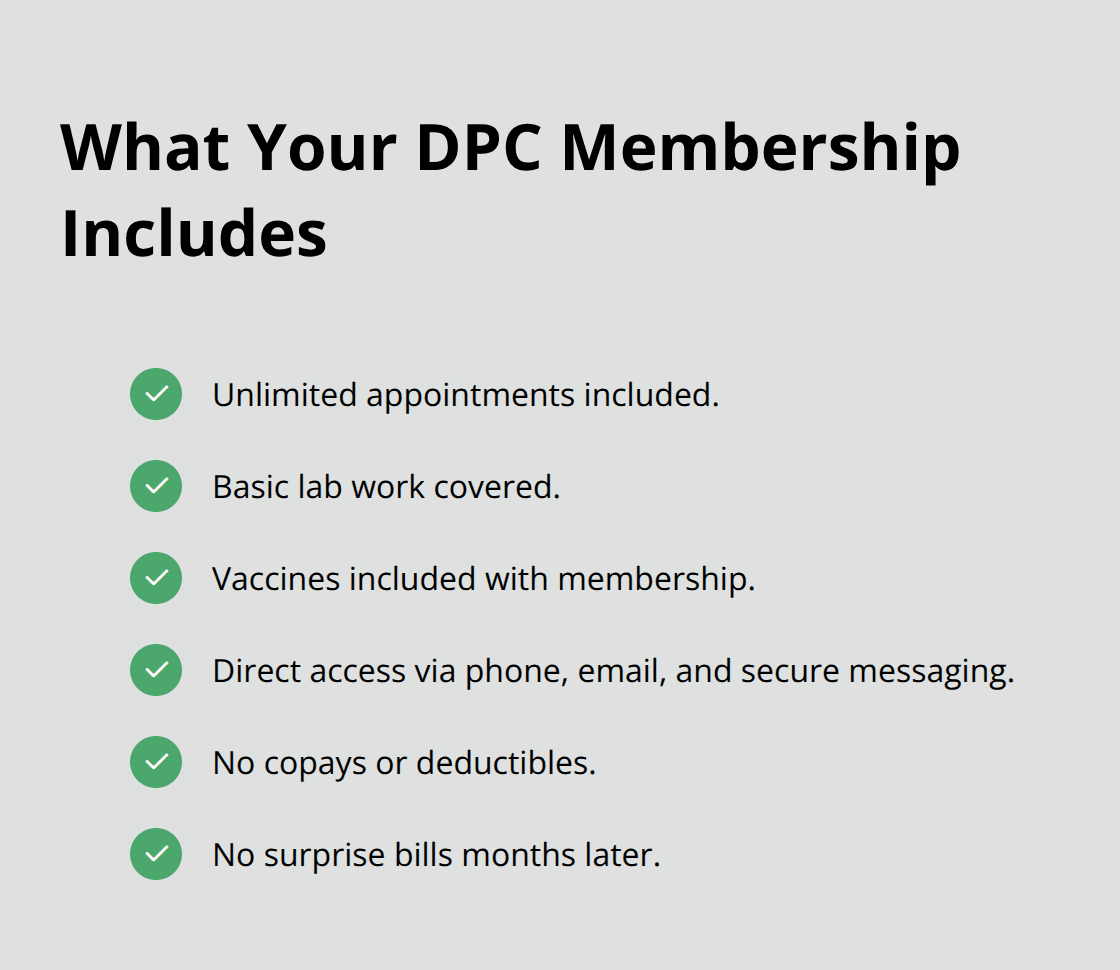
This transparent pricing model eliminates the financial anxiety that comes with traditional insurance, where you never know what you’ll owe until the bill arrives, and aligns with how direct primary care costs are structured nationwide.
Direct Primary Care structures memberships for individuals, families, and small businesses, recognizing that healthcare costs hit differently depending on your situation. The key difference from traditional medicine is that your doctor’s income in this kind of direct primary care model doesn’t depend on rushing through as many patients as possible per day-it depends on keeping you healthy and satisfied. This alignment matters tremendously. Your physician can spend 30 to 60 minutes with you instead of the standard 15 minutes, which means they actually have time to understand your lifestyle, your concerns, and what drives your health decisions.
Direct Access Means Quality Care When You Need It
You can text, call, or message your physician or provider about a concerning symptom, medication question, or follow-up concern without waiting weeks for an appointment. DPC practices offer same-day or next-day appointments, which means you can schedule a visit quickly when needed and get acute issues addressed before they escalate into expensive emergency room visits. When your doctor isn’t battling insurance company denials or prior authorization delays, they focus entirely on what’s best for you.
New patients can submit a request online to schedule an introductory meet and greet and learn how to get started with a DPC practice.
Labs and imaging cost a fraction of insurance-based pricing because DPC practices work with wholesale partners and bypass insurance company markups. Basic blood work runs around $15 instead of $200, and generic medications typically cost 90 percent less than retail prices. This direct payment model creates transparency you won’t find in traditional healthcare.
Preventative Medicine and Specialized Care
Your doctor has time to discuss nutrition, exercise, stress management, and lifestyle changes that actually prevent chronic disease rather than just treating it once you’re sick. Specialized programs and wellness services address specific health priorities for different populations. This is healthcare designed around your actual needs, not around insurance company profit margins or administrative billing cycles, with the goal of supporting the whole body, not just isolated symptoms.
The financial advantage extends beyond your monthly fee. When patients can actually reach their doctor without barriers, they avoid expensive crises. Employers who switched to DPC for their teams report 54% fewer emergency room visits and 25% fewer hospital admissions. This shift from reactive, insurance-driven care to proactive, patient-centered medicine changes how you experience healthcare. Understanding these financial benefits helps explain why the next step-evaluating the true cost difference between DPC and traditional insurance-matters so much for your family’s budget, especially when you consider whether direct primary care is worth it for your situation.
What Direct Primary Care Actually Costs
The True Price of Traditional Insurance
A typical individual insurance plan costs around $822 per month according to US averages, yet people still face copays, deductibles ranging from $1,000 to $5,000, and coinsurance charges that surprise them months after treatment, especially when compared with a straightforward direct patient care arrangement. You pay these premiums faithfully, then discover your coverage doesn’t include the tests your doctor recommends or the specialist you need. The financial unpredictability creates constant stress-you never know what you’ll owe until the bill arrives three months later.
How DPC Membership Pricing Works
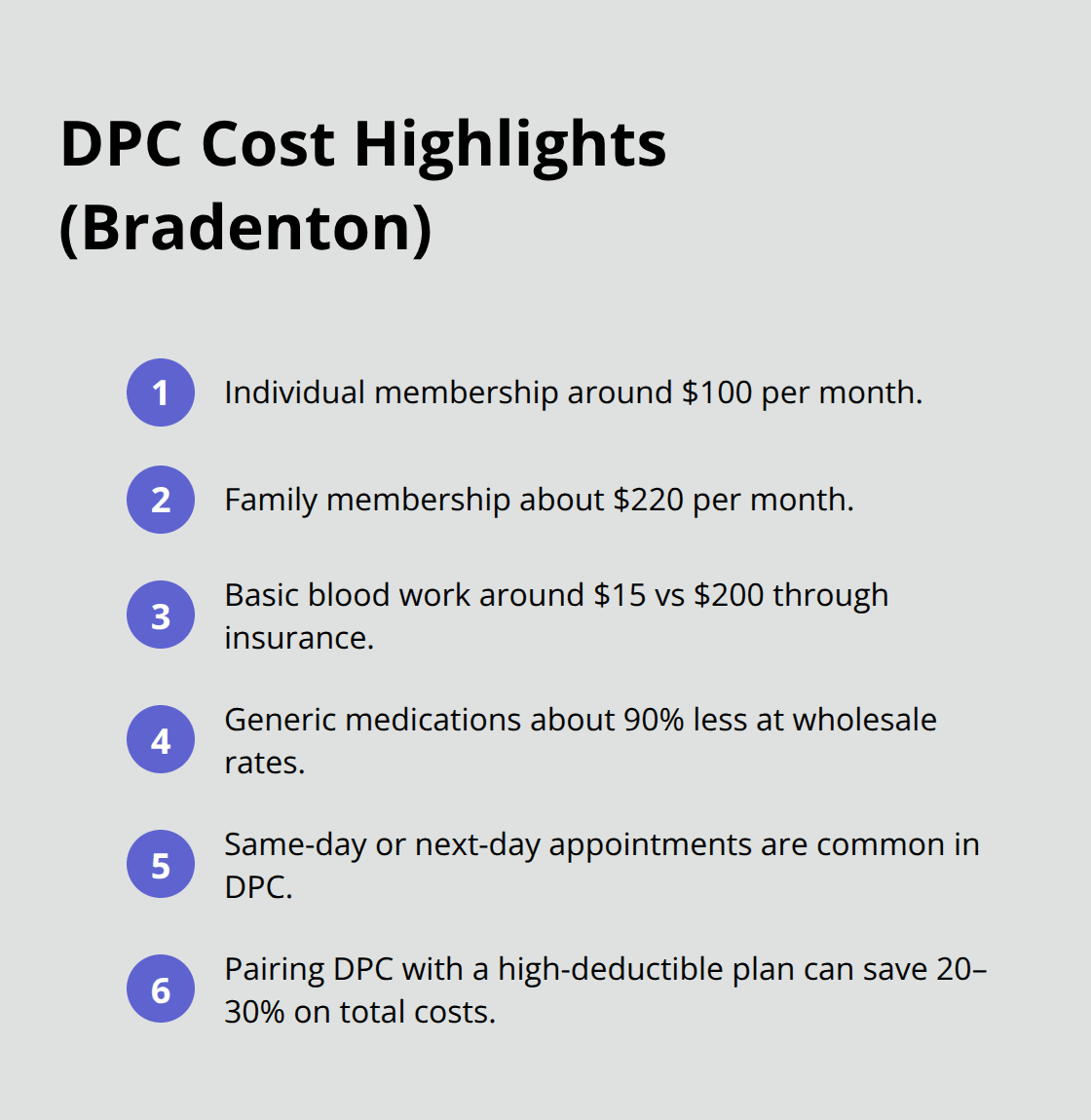
A DPC membership typically costs a flat monthly fee of about $100 for individuals or $220 for families with children, with the removal of co-pays and deductibles entirely. That single difference transforms your healthcare budget from unpredictable chaos into something you can actually plan for. When you pair a DPC membership with a high-deductible health plan for major emergencies, research shows families save 20 to 30 percent on total healthcare costs compared to traditional insurance alone, reinforcing how direct primary care pricing compares to insurance.
Labs, Medications, and Imaging Cost Far Less
Basic blood work costs significantly less through DPC wholesale partners compared to traditional healthcare billing. Generic medications typically run 90 percent cheaper when purchased at wholesale rates instead of retail pharmacy prices. Imaging costs similarly drop when you bypass insurance company markups, meaning an X-ray or ultrasound that might cost hundreds through traditional channels costs a fraction of that through direct payment arrangements, which is a major reason many people now view direct primary care as a worthwhile option.
What Small Business Owners Actually Save
For small business owners, DPC memberships for employees eliminate the administrative nightmare of managing multiple insurance plans while delivering measurable results. Employers who switched their teams to DPC report 54 percent fewer emergency room visits and 25 percent fewer hospital admissions, which directly reduces overall healthcare spending and lost productivity. Your employees gain peace of mind knowing they can contact their doctor anytime without financial barriers.
Prevention Prevents Expensive Crises
Your DPC physician has time to discuss nutrition, sleep, stress management, and exercise because they’re not racing through 20 patients per day. Preventative care conversations reduce chronic disease management costs by allowing your doctor adequate time to understand your actual lifestyle instead of 15 minutes to write a prescription. Families with diabetes, high blood pressure, or asthma see their conditions stabilize faster when their doctor has adequate time to address prevention.
Why Bradenton Residents Choose Direct Primary Care
Bradenton, FL, residents in Manatee County and Sarasota experience healthcare that actually works when they choose Direct Primary Care at our clinic. Your doctor doesn’t rush through 20 patients per day to satisfy insurance metrics-instead, they spend 30 to 60 minutes understanding your health goals and developing solutions tailored to your life. A strong relationship with your provider forms naturally when your physician has adequate time to know you, and they are accessible through phone, email, or secure messaging whenever questions arise.
This accessibility builds trust because you navigate no phone trees and wait no weeks for answers. Your doctor knows your medical history, your family situation, and what matters most to your health. We at Mosaic Medicine Clinic recognize that different people need different health care approaches, so our practice aims to deliver accessible health care to the local community while developing expertise in Executive Healthcare for busy professionals and Men’s Health specialization for concerns men often avoid discussing until problems become serious. These focused programs exist because our doctors have the time to address what actually matters to each patient population.
We are accepting new patients.
The financial reality makes the decision clear for most families-you no longer choose between quality and affordability once you understand how direct primary care and concierge medicine differ. DPC members pay a flat monthly fee of roughly $100 for individuals or $220 for families, with no co-pays, deductibles, or surprise bills, while labs run $15 instead of $200 and medications cost 90 percent less at wholesale rates.
When transparent pricing combines with preventative care that stops expensive crises before they start, the math becomes obvious: you pay less while receiving more time with your doctor and better health outcomes. Meet our team in Florida. Explore how our Bradenton DPC clinic works for your family or business.
