Healthcare can feel confusing when you’re trying to understand your options. Direct patient care is a straightforward model where you pay your doctor directly for ongoing care, without insurance companies in between.
At Mosaic Medicine Clinic, we’ve seen firsthand how this approach changes the patient experience. This blog post breaks down what direct patient care means, how it saves money, and whether it’s the right fit for you.
What Direct Patient Care Really Is
The Core Model
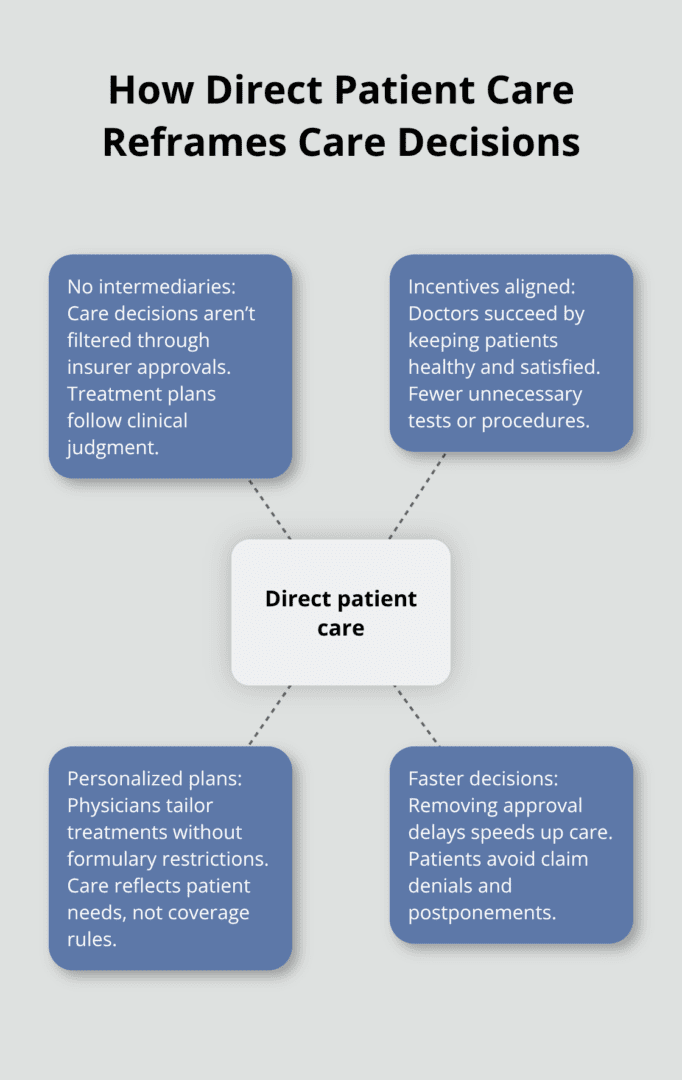
Direct patient care means you have a straightforward relationship with your doctor-no insurance companies determining what care you receive or how much you pay. You pay a direct patient care membership fee, and your doctor’s income comes directly from these fees rather than from billing insurance for each visit. This fundamentally changes how medicine works. Your physician stops juggling dozens of insurance requirements or fighting with claims departments. Instead, they focus entirely on patient care rather than administrative tasks.
How It Differs from Traditional Healthcare
The biggest difference from traditional healthcare is what gets removed from the equation. In conventional medicine, insurance companies act as intermediaries-they decide which treatments they’ll cover, deny claims, and delay care. Direct patient care flips this entirely. Your doctor’s success depends on keeping you healthy and satisfied, not on ordering more tests or procedures. Physicians can customize treatment plans without insurance company interference, prescribing based on clinical judgment rather than formulary restrictions.
Real Costs and Transparency
Labs and imaging costs drop dramatically because practices negotiate wholesale prices directly with providers-you’re not paying inflated hospital markups. Direct patient care provides clarity on costs by offering wholesale labs, at-cost imaging, and discounted medications, making quality healthcare more accessible and affordable. This transparency stands in sharp contrast to traditional insurance-based systems where hidden fees and surprise bills remain common.
The Two-Tier Approach
The model works best when paired with a high-deductible health plan for emergencies and specialist care, creating a two-tier approach where routine primary care stays affordable and predictable while catastrophic coverage protects you from financial disaster. This combination addresses a common concern: direct patient care handles your everyday health needs, but you still maintain protection against major medical events that could otherwise devastate your finances.
Understanding how direct patient care actually functions sets the stage for exploring the specific financial advantages it offers compared to traditional insurance-based medicine.
The Financial Reality of Direct Patient Care
What You Actually Pay Each Month
Direct patient care eliminates the financial friction that makes traditional healthcare so expensive. Monthly membership fees typically range from $55 to $150, depending on the practice and whether your employer sponsors the plan, according to Wolters Kluwer’s 2020 analysis. Compare this to the average American spending over $1,200 annually on out-of-pocket healthcare costs before insurance even kicks in. With direct patient care, you know exactly what you’re paying each month-no surprise bills arrive three months later, no insurance denials force you to fight with your doctor’s office, and no hidden facility fees appear on statements.
Labs, Imaging, and Medications Cost Less
Direct primary care practices negotiate wholesale prices directly with providers, which means labs and imaging costs drop dramatically. You’re not paying inflated hospital markups that can triple the actual cost of a blood test or X-ray. Many practices also negotiate discounted medication prices directly with pharmacies, so common prescriptions cost significantly less than what you’d pay through traditional insurance. This transparency stands in sharp contrast to traditional insurance-based systems where hidden fees and surprise bills remain common.
Insurance Overhead Disappears
The second financial advantage comes from what vanishes: insurance company intermediaries. In traditional healthcare, your doctor’s office spends roughly 25 percent of revenue on administrative work related to insurance billing, coding, and claims appeals. Direct patient care eliminates this entirely.
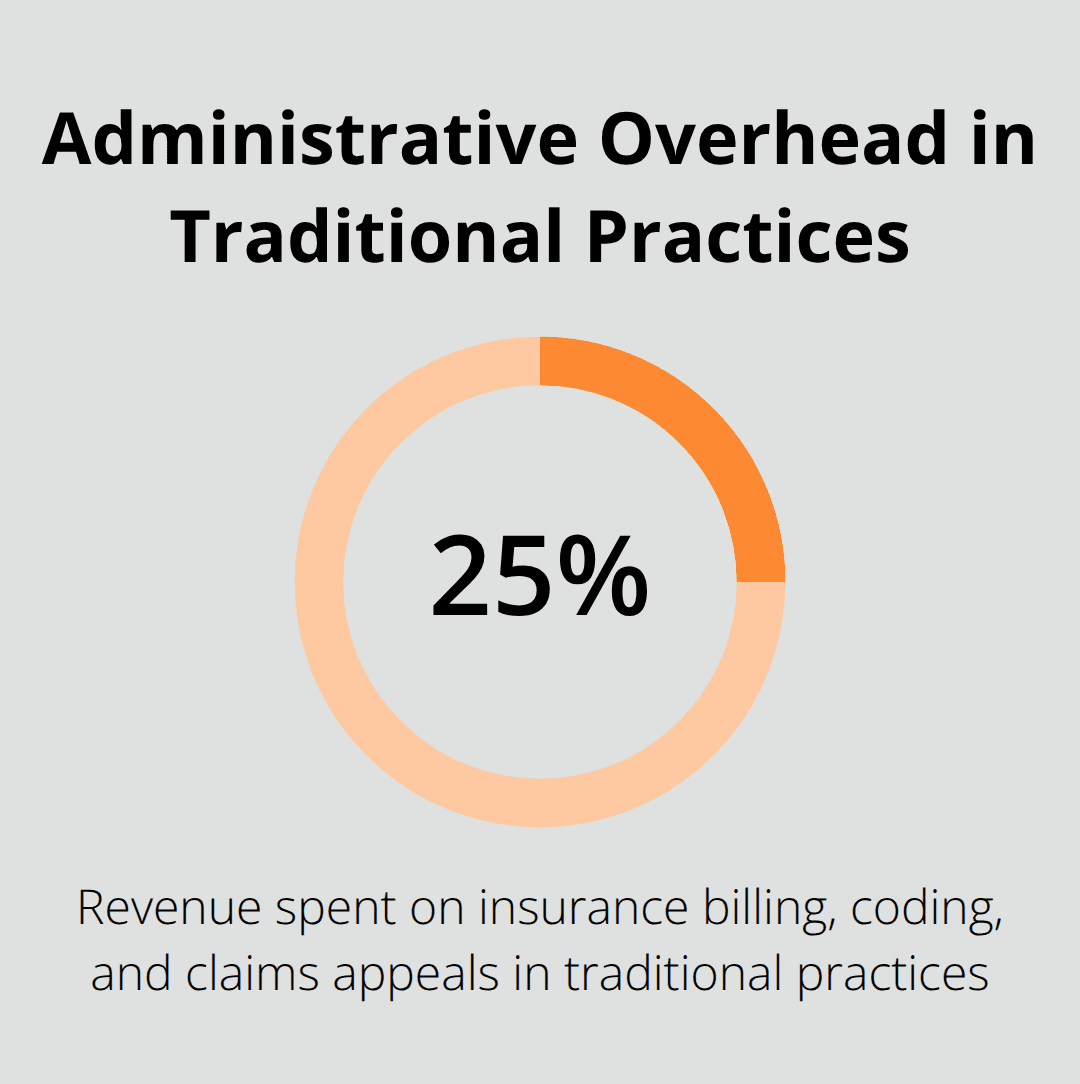
Your physician doesn’t waste time fighting with insurance formularies that restrict which medications you can take, doesn’t deal with prior authorization delays that postpone necessary treatments, and doesn’t lose income on denied claims.
Doctors Spend More Time on Actual Care
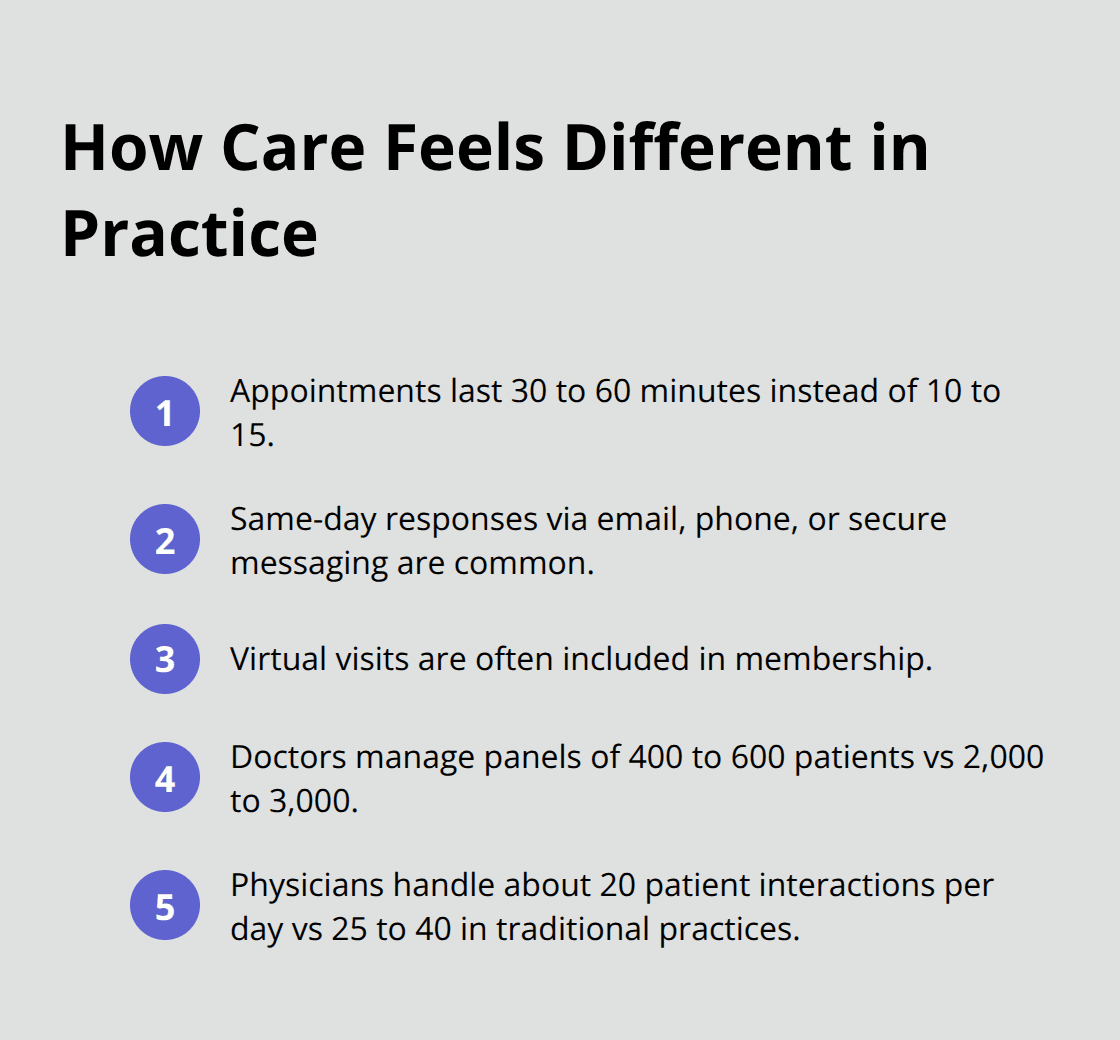
This efficiency translates directly to lower overhead costs, which means practices can charge lower membership fees while maintaining profitability. Physicians in direct primary care models spend roughly 20 patient interactions per day (including virtual visits), compared to traditional practices where doctors see 25-40 patients daily in rushed 10-minute appointments. That time investment in fewer patients means your doctor can order the right tests the first time rather than cycling through multiple visits, which actually reduces your overall healthcare spending. You’re also not paying for the insurance company’s profits, marketing budgets, or executive salaries-your membership fee goes almost entirely toward actual medical care.
How This Affects Your Long-Term Health Costs
When you know your primary care costs upfront, you can actually budget for healthcare instead of dreading the mail. This financial predictability matters more than people realize. The combination of lower monthly fees, wholesale pricing on labs and medications, and physicians who have time to practice preventative medicine creates a model where you spend less money while receiving better care. Understanding these financial advantages sets the stage for exploring how direct patient care actually works in practice.
Direct Patient Care in Practice
Longer Appointments Mean Better Care
At Mosaic Medicine Clinic, we structure appointments around what patients actually need rather than what insurance companies allow us to bill for. Your typical appointment lasts 30 to 60 minutes instead of the 10 to 15 minutes you’d get in a traditional practice. This time difference is not trivial-it fundamentally changes what your doctor can accomplish. During those longer visits, your physician takes a complete health history, discusses your lifestyle and stressors, performs a thorough physical exam, and develops a treatment plan tailored specifically to your situation rather than rushing through a checklist. You’re not competing with 30 other patients scheduled that same afternoon, which means your doctor actually listens instead of watching the clock.
Direct Access to Your Doctor
The communication structure in direct primary care eliminates the usual friction points that plague traditional healthcare. You have direct access to your physician through email, phone, or secure messaging apps-not a nurse hotline or an automated system. If you develop a symptom between visits, you contact your doctor directly and often receive a response the same day. This direct line matters enormously for managing chronic conditions like diabetes or hypertension, where quick adjustments to medication or lifestyle advice prevent complications. Many direct primary care practices include virtual visits in your membership, so you can address minor issues without taking time off work or driving to the office.
Your Doctor Actually Knows You
Your physician knows your medical history intimately because they’re not seeing hundreds of patients-practices typically maintain panels of 400 to 600 patients compared to 2,000 to 3,000 in traditional settings. This smaller patient load means your doctor remembers details about your family, your job stress, or your exercise habits without flipping through notes. That personal knowledge transforms how your physician approaches your care.
Prevention Becomes the Default
Traditional insurance-based medicine incentivizes treatment over prevention because doctors earn more from diagnosing and treating disease than from keeping you healthy. Direct primary care flips this entirely. Your physician’s income depends on your satisfaction and your health, not on ordering more tests or procedures. This alignment creates a completely different approach to preventative care. Your doctor has time to discuss nutrition, exercise, sleep quality, and stress management during appointments instead of rushing you out. You receive screening tests appropriate for your age and risk factors without unnecessary procedures that waste your money. If you’re overweight, your doctor helps you develop an actual plan rather than handing you a brochure. If you’re prediabetic, you get lifestyle coaching before medications become necessary. This preventative focus reduces your healthcare costs dramatically over time because you catch problems early when they’re cheapest to treat.
Final Thoughts
Direct patient care works because it aligns your doctor’s interests with your health. When your physician earns income from keeping you healthy rather than from ordering procedures, the entire relationship transforms. You receive preventative care before problems become expensive, longer appointments where your doctor actually listens, and direct access to your physician when questions arise. This model reduces your out-of-pocket costs through wholesale labs and discounted medications while eliminating the administrative waste that inflates traditional healthcare expenses.
Deciding whether this model fits your life requires honest reflection about your healthcare needs. Direct primary care works best if you value ongoing relationships with your doctor, prefer predictable monthly costs over surprise bills, and want someone who knows your complete medical history. If you rarely see a doctor and rarely need specialist care, the membership fee might not make financial sense, but if you manage chronic conditions or want preventative care, this approach typically saves money while improving your experience.
We at Mosaic Medicine Clinic help patients in Bradenton, FL define direct patient care through real experience rather than theory. Our membership model provides unrushed appointments, direct access to physicians, and transparent pricing on labs, imaging, and medications. Visit Mosaic Medicine Clinic to learn how direct primary care can transform your healthcare experience.