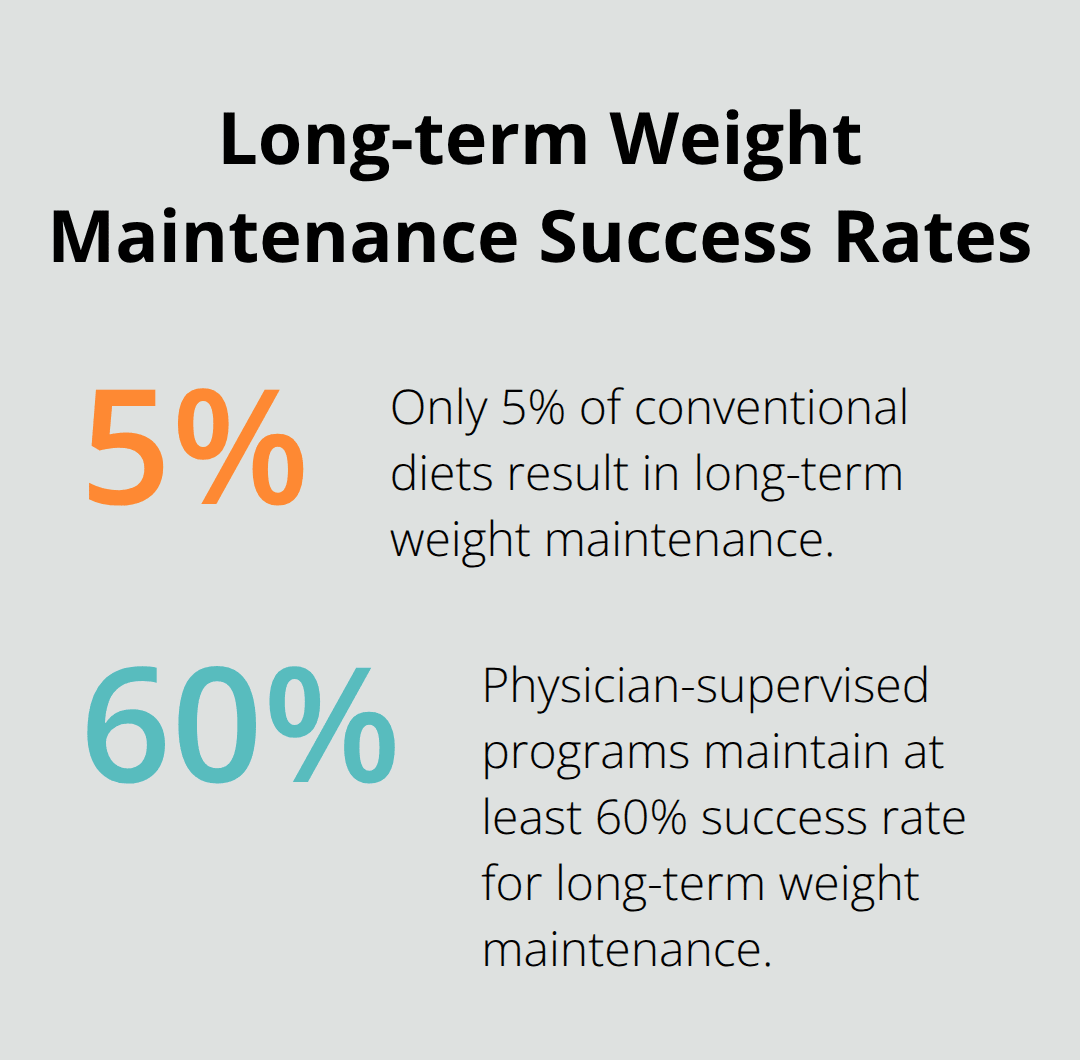
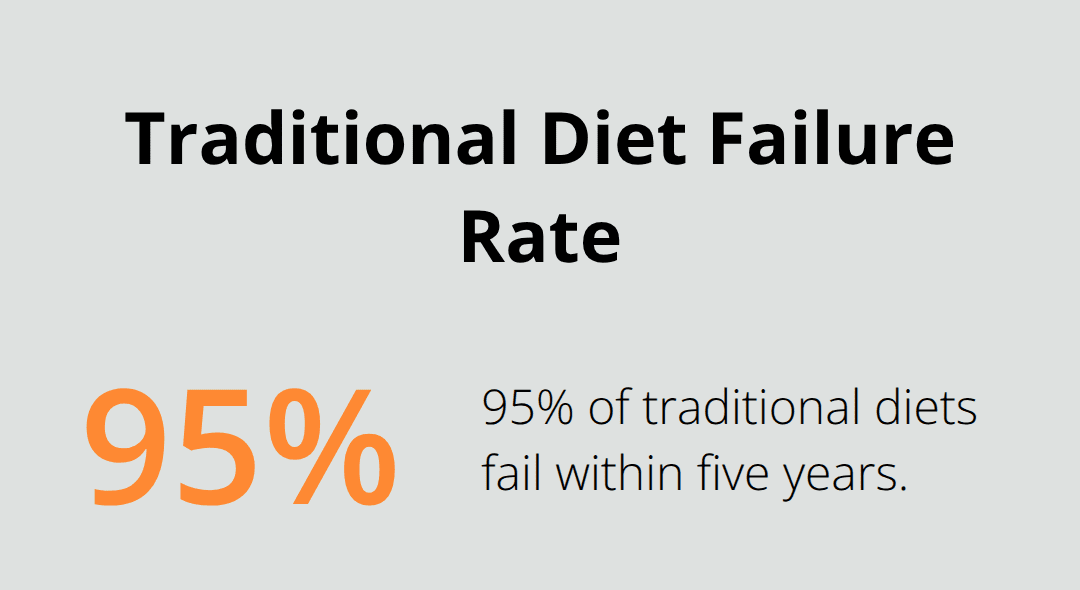
The diet industry generates $78 billion annually, yet 95% of traditional diets fail within five years. Most people regain lost weight plus additional pounds within two years of completing their diet program.
At Mosaic Medicine Clinic, we see patients frustrated by this cycle daily. Medical weight management offers a different approach with physician supervision, personalized treatment plans, and success rates reaching 60-80% for long-term maintenance.
Why Do 95% of Diets Fail
Traditional diets fail because they ignore fundamental biological realities. Research from UCLA shows that dieters typically regain all lost weight within two to five years, with many adding additional pounds. The National Weight Control Registry data reveals only 1-3% of dieters maintain significant weight loss long-term. These statistics reflect three critical flaws in conventional diet approaches.
Your Metabolism Fights Back
When you drastically cut calories, your metabolic rate drops by 15-25% within weeks. This adaptive thermogenesis evolved to protect humans during food scarcity, but it sabotages modern dieters. A study published in The New England Journal of Medicine tracked Biggest Loser contestants and found their metabolisms remained suppressed six years after the show ended.
Participants burned 500-800 fewer calories daily than expected for their body size. Your body literally fights against weight loss by reducing energy expenditure and increasing hunger hormones like ghrelin while decreasing satiety hormones like leptin. This biological response makes long-term weight maintenance nearly impossible without medical intervention.
Generic Plans Ignore Individual Biology
Most diets use one-size-fits-all approaches that ignore genetic variations, medical conditions, and metabolic differences. Only 12.2 percent of American adults are metabolically healthy according to research from the University of North Carolina, yet standard low-fat diets can worsen metabolic conditions.
Thyroid disorders, PCOS, and hormonal imbalances require specific nutritional strategies that generic diet plans cannot address. Without medical oversight, dieters unknowingly work against their biology rather than with it. This mismatch between individual needs and generic recommendations leads to frustration and inevitable failure.
The Missing Medical Component
Traditional diets lack the medical supervision necessary to address underlying health conditions that affect weight loss. Medications, hormonal imbalances, and metabolic disorders all influence how your body responds to dietary changes. This medical gap explains why physician-supervised weight management programs achieve dramatically different results than commercial diet plans.
How Medical Weight Loss Works Differently
Medical weight loss programs start with comprehensive laboratory tests that reveal the hidden factors that sabotage your efforts. We test thyroid function, insulin resistance markers, hormone levels, and inflammatory markers to identify metabolic roadblocks that generic diets ignore. Hypothyroidism has traditionally been associated with obesity, while hyperthyroidism has been linked to being underweight, making thyroid testing essential for overweight patients.
Your Personal Metabolic Blueprint
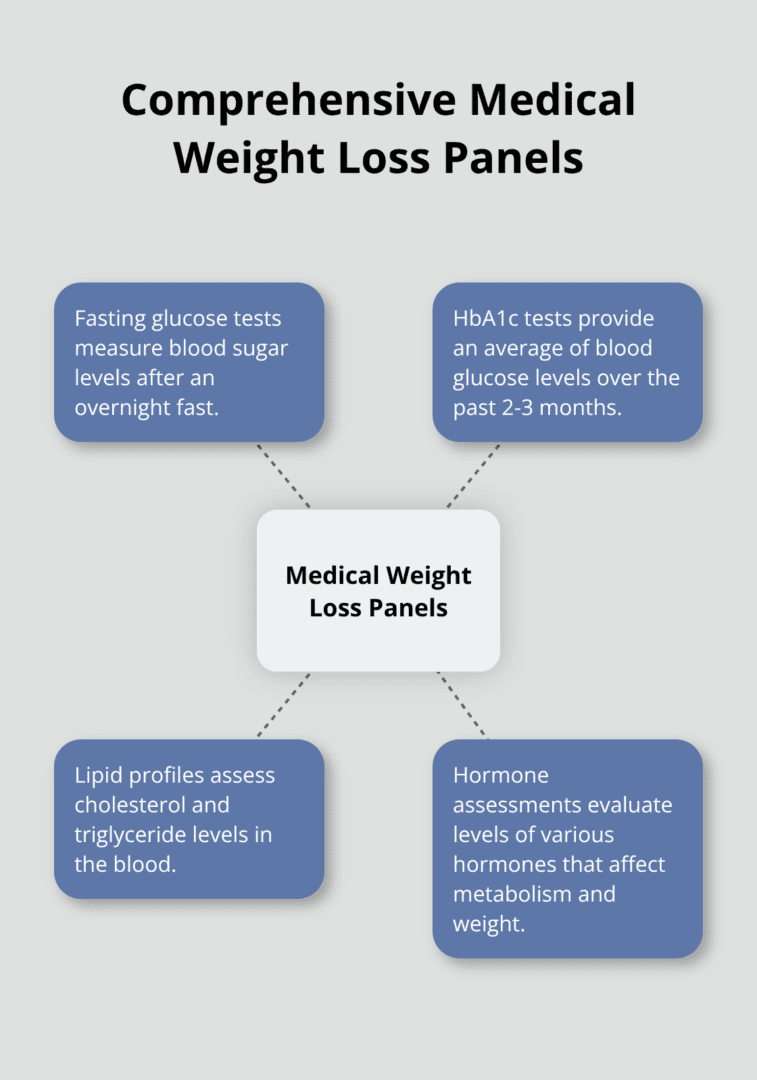
Blood work reveals your individual metabolic profile and shows exactly how your body processes carbohydrates, fats, and proteins. Comprehensive panels include fasting glucose, HbA1c, lipid profiles, and hormone assessments that guide treatment decisions. Patients with elevated cortisol levels receive different nutritional protocols than those with low testosterone or thyroid dysfunction. This personalized approach explains why medical programs achieve higher success rates compared to traditional diets.
Physician-Supervised Treatment Plans
Medical supervision allows for prescription medications that target specific metabolic pathways when lifestyle changes alone prove insufficient. GLP-1 agonists like semaglutide help regulate appetite and cause a delay in gastric emptying, while metformin improves insulin sensitivity in pre-diabetic patients. These medications, combined with regular check-ups and dose adjustments, provide tools that traditional dieters simply cannot access.
Medical Oversight and Progress Tracking
Monthly appointments allow physicians to adjust treatment plans based on your body’s response and new health markers. Blood pressure, kidney function, and metabolic markers are tracked to prevent complications while results improve. This medical oversight catches problems early and modifies approaches before plateaus occur (maintaining steady progress toward sustainable weight management).
The combination of personalized testing, prescription tools, and professional oversight creates a foundation for success that addresses the root causes of weight gain rather than just symptoms.
What Makes Medical Weight Loss Actually Work
Medical weight loss succeeds through three interconnected components that traditional diets completely ignore. Weekly check-ins with healthcare providers create accountability that goes far beyond a simple scale reading – physicians track blood pressure changes, medication side effects, and metabolic improvements that reveal progress invisible to standard weight measurements. Research on weight control registries shows that structured monitoring helps maintain weight loss, but medical programs take this further by monitoring biomarkers like HbA1c levels and inflammatory markers that indicate real health improvements.
Consistent Medical Check-Ins Drive Results
Weekly or bi-weekly appointments create a structure that prevents the gradual slide back into old habits that derails 95% of dieters. These visits allow physicians to adjust medication dosages, address side effects before they become problematic, and modify nutrition plans based on how your body responds. Patients who attend regular medical appointments lose 15-20% more weight compared to those who attempt self-directed programs (according to obesity medicine research). The accountability extends beyond weight tracking to include sleep quality assessments, stress level evaluations, and energy measurements that traditional diets never address.
Behavioral Changes That Actually Stick
Medical weight loss programs include licensed counselors who identify specific triggers that cause overeating and develop personalized strategies to overcome them. Cognitive behavioral therapy techniques help patients recognize emotional eating patterns and develop alternative responses to stress, boredom, or anxiety. Studies show that patients who receive behavioral coaching maintain 70% of their weight loss after two years compared to just 20% for diet-only approaches. This coaching addresses the psychological component of weight management that generic meal plans cannot touch, creating lasting behavioral changes rather than temporary restrictions.
Treating Root Causes Not Symptoms
Medical programs identify and treat underlying conditions like insulin resistance, sleep apnea, and hormonal imbalances that make weight loss nearly impossible through diet alone. At least 70% of patients with obstructive sleep apnea have obesity, and poor sleep disrupts leptin and ghrelin hormones that control hunger (these hormones regulate appetite and satiety). Correcting these medical issues removes biological barriers to weight loss and explains why medical supervision produces sustainable results where traditional diets fail repeatedly.
Final Thoughts
The numbers reveal why medical weight management succeeds where traditional diets fail. While 95% of conventional diets result in weight regain within five years, physician-supervised programs maintain success rates of 60-80% for long-term weight maintenance. This dramatic difference stems from treatment that addresses biological realities rather than reliance on willpower alone.
Medical supervision provides benefits that extend far beyond the scale. Patients experience improved blood pressure, better sleep quality, reduced inflammation markers, and enhanced energy levels that traditional diets cannot deliver. Regular monitoring catches health improvements early and prevents complications that unsupervised weight loss often creates (these medical benefits transform overall health outcomes).
The path forward requires professional guidance that treats weight management as a medical condition rather than a lifestyle choice. At Mosaic Medicine Clinic, we provide the comprehensive approach that transforms lives through evidence-based medicine rather than temporary restrictions. That first step toward medically supervised weight management means you choose a solution that works with your biology instead of against it.