
Most people think their doctor’s job is to manage their insurance paperwork. It’s not. At Mosaic Medicine Clinic, we believe direct patient care means your doctor works for you, not for an insurance company.
What is direct patient care, exactly? It’s a straightforward relationship where you pay a membership fee and get unlimited access to your doctor. No gatekeepers. No hidden fees. Just medicine focused on keeping you healthy.
How Direct Primary Care Actually Works
Insurance Companies vs. Your Doctor
The key difference between direct primary care and traditional insurance-based medicine comes down to who your doctor answers to. In traditional medicine, your insurance company sits between you and your physician, dictating what tests get approved, which specialists you can see, and how long your appointment lasts. Your doctor spends hours fighting with insurance representatives instead of focusing on your health. In direct primary care, that middleman disappears entirely. You pay a monthly membership fee directly to the practice, and your doctor works exclusively for you.
Smaller Patient Panels Mean Better Care
According to the 2024 Direct Primary Care Data Brief from the American Academy of Family Physicians, the average DPC practice maintains a patient panel of about 402 patients, compared to 2,000 or more in traditional primary care settings. This smaller patient load means your doctor actually has time to know you, your health history, and your specific concerns. Monthly membership costs typically range from $50 to $100 for adults, with family discounts and lower rates for children, making budgeting straightforward and predictable.
What Your Membership Actually Covers
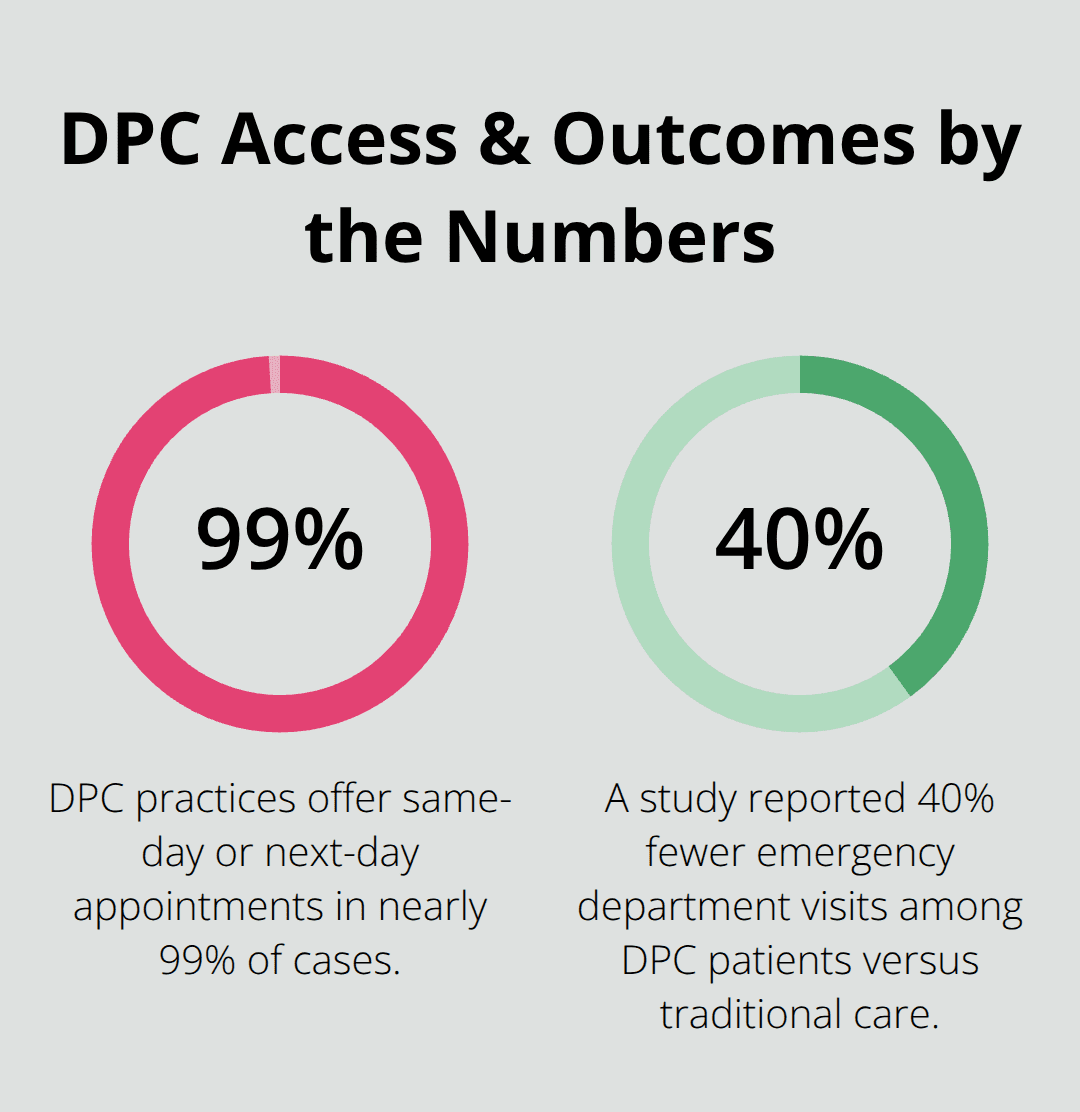
When you join a DPC practice, your monthly fee covers unlimited in-person and virtual visits, text and phone consultations, basic lab work, and routine procedures like biopsies and sutures. You get same-day or next-day appointments in nearly 99% of DPC practices, which means you don’t wait weeks to address a health concern. Direct access to your physician through phone, email, and video eliminates the gatekeeping frustration of traditional medicine. You call your doctor directly when something bothers you, not a nurse hotline or scheduling coordinator.
Real Impact on Emergency Care and Hospital Visits
This direct access proves especially valuable for chronic disease management, where ongoing coordination prevents problems from escalating into expensive emergency room visits. A 2020 study sponsored by The Society of Actuaries found that DPC patients experienced significantly reduced utilization rates for emergency department visits and inpatient admissions compared with traditional care patients. For families with young children or ongoing health issues, unlimited access to your doctor and proactive management creates genuine peace of mind. The next section explores the specific benefits you experience when you step into this model.
What You Actually Save with Direct Primary Care
Appointments That Give Your Doctor Time to Think
Longer appointments fundamentally change how medicine works. In traditional primary care, your doctor has 15 minutes to address your concerns, review your history, and order tests. Appointments at DPC practices typically run 30 to 60 minutes, which means your doctor actually listens instead of rushing toward the next patient.
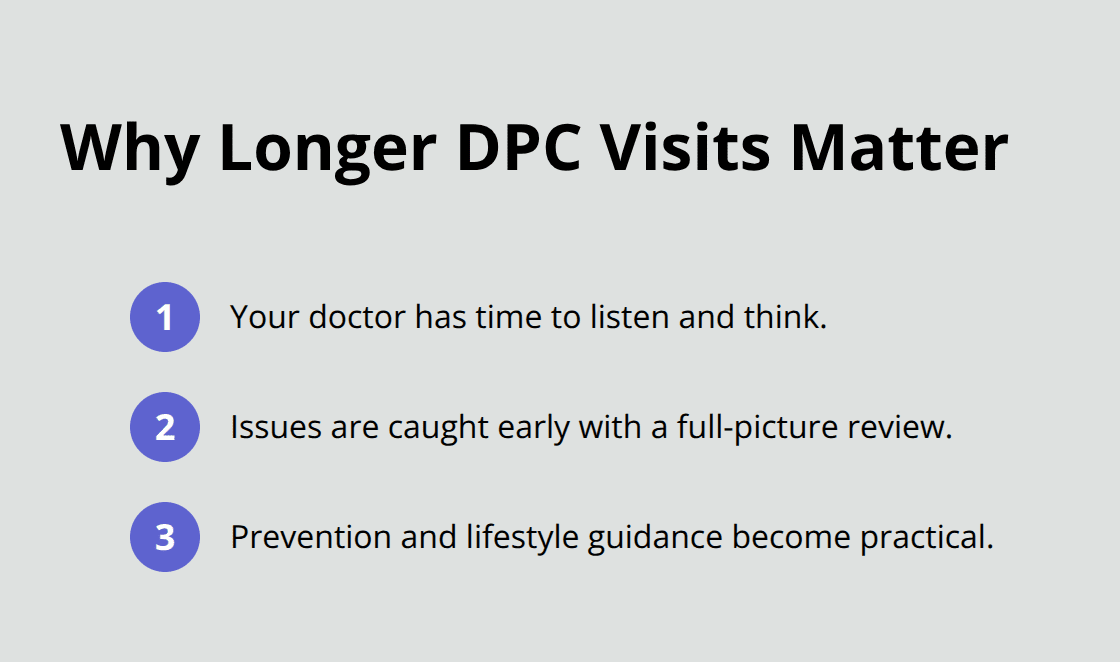
This time investment catches problems early. When your physician understands your full health picture, not just your acute complaint, preventive care becomes real rather than theoretical. You discuss lifestyle changes, nutrition, and stress management because there’s actually time for it.
The Direct Primary Care Data Brief from the American Academy of Family Physicians shows DPC practices maintain an average patient panel size of 402 patients compared to 2,000 or more in traditional settings, making this extended care possible. Your membership fee covers these visits without per-visit charges, so you never hesitate to schedule an appointment when something concerns you.
Pricing That Makes Sense
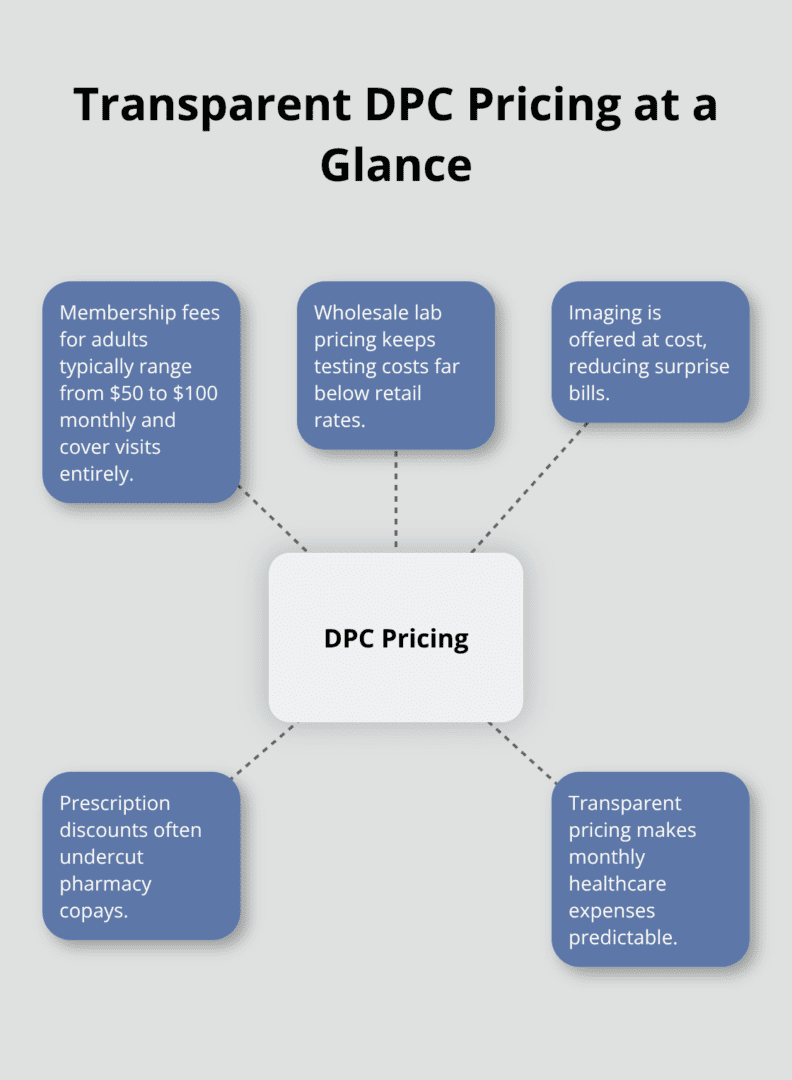
Cost transparency separates direct primary care from traditional insurance entirely. Monthly membership fees at DPC practices typically range from $50 to $100 for adults, with family plans offering better value and children’s rates starting much lower. This single predictable fee replaces the insurance copay chaos where you never know the true cost until after your visit. DPC practices provide wholesale lab pricing and at-cost imaging, meaning you pay substantially less than standard retail rates when testing is needed.
Prescription discounts through DPC networks often beat pharmacy copays, and medications can be dispensed directly at the clinic. A Society of Actuaries study found DPC patients had lower utilization in emergency departments and hospital admissions than traditional care patients, translating to genuine savings beyond your monthly membership.
Who Benefits Most from These Savings
Families budgeting healthcare can actually predict their spending rather than facing surprise bills. For small business owners, offering DPC memberships to employees costs far less than traditional insurance premiums while improving employee health outcomes and satisfaction. The financial predictability extends beyond individuals-employers gain stable, manageable healthcare costs instead of annual premium increases tied to claims and market volatility. This stability matters especially for companies with tight margins or those trying to attract talent in competitive markets.
How DPC Stacks Up in Real Time
Same-Day Access Changes Everything
The moment you need a doctor, DPC’s advantages become unmistakable. Traditional primary care forces you to call a scheduling line, wait weeks for an opening, then sit in a waiting room for 30 minutes before spending 15 minutes with your physician answering insurance-approved questions. DPC practices operate differently. Same-day or next-day appointments are standard in DPC practices, according to the 2024 Direct Primary Care Data Brief from the American Academy of Family Physicians. You call your doctor directly, not a receptionist screening your request. When you arrive, your appointment actually starts on time because your physician isn’t overbooked with thousands of other patients.
Speed Prevents Crises
This speed matters most when it counts. A parent with a sick child gets seen immediately instead of three weeks later. Someone noticing chest pain reaches their doctor within hours, not days. A study found that 40% fewer emergency department visits occurred among DPC patients compared to traditional care patients, which reflects how accessible primary care prevents small problems from becoming crises.
Transparent Costs Replace Hidden Fees
The financial reality separates DPC from traditional medicine just as sharply. Traditional insurance hides costs everywhere. Your copay covers the visit, but lab work triggers another bill, imaging requires a separate authorization and charge, and prescription costs vary wildly depending on your insurance formulary. You never know your true out-of-pocket expense until weeks after the appointment. DPC membership fees for adults typically range from $50 to $100 monthly, covering visits entirely. Labs cost wholesale prices, imaging is provided at cost, and prescription discounts often undercut pharmacy copays. One patient knows exactly what healthcare costs each month.
Predictable Expenses for Business Owners
Small business owners offering DPC memberships to employees gain predictable healthcare expenses instead of annual premium increases averaging 5 to 8% yearly. The doctor-patient relationship deepens because your physician works for you, not for an insurance company deciding what care gets approved. Your doctor recommends the best treatment based on your health, not what insurance allows. This alignment between your interests and your doctor’s creates medicine focused entirely on keeping you well.
Final Thoughts
Direct primary care works because it aligns your interests with your doctor’s interests. At Mosaic Medicine Clinic, we’ve built our practice around this principle: what is direct patient care? It’s medicine where your doctor answers to you, not to insurance bureaucrats. Monthly membership fees typically range from $50 to $100 for adults, with family discounts making coverage affordable for households of any size, and you know exactly what you’ll pay each month without surprise bills arriving weeks later.
The real advantage emerges when your doctor has time to listen and understand your complete health picture. Longer appointments mean your physician addresses not just your acute complaint but also prevention through discussions about nutrition, stress management, and lifestyle changes that prevent disease. Your doctor recommends treatments based on what keeps you healthy, not what insurance allows, and you access care immediately instead of waiting weeks for appointments.
We at Mosaic Medicine Clinic provide wholesale labs, at-cost imaging, and discounted medications because transparent pricing matters and removes administrative waste. Explore how membership-based care fits your family’s health needs and experience medicine designed around patient health rather than insurance company profits.