

Direct primary care is reshaping how Americans access healthcare, but it’s not right for everyone. Understanding the advantages and disadvantages of direct primary care helps you make smart decisions about your health.
We at Mosaic Medicine Clinic see patients weighing these options daily. This model offers unique benefits while presenting specific challenges worth considering.
Why Direct Primary Care Saves Money and Improves Care
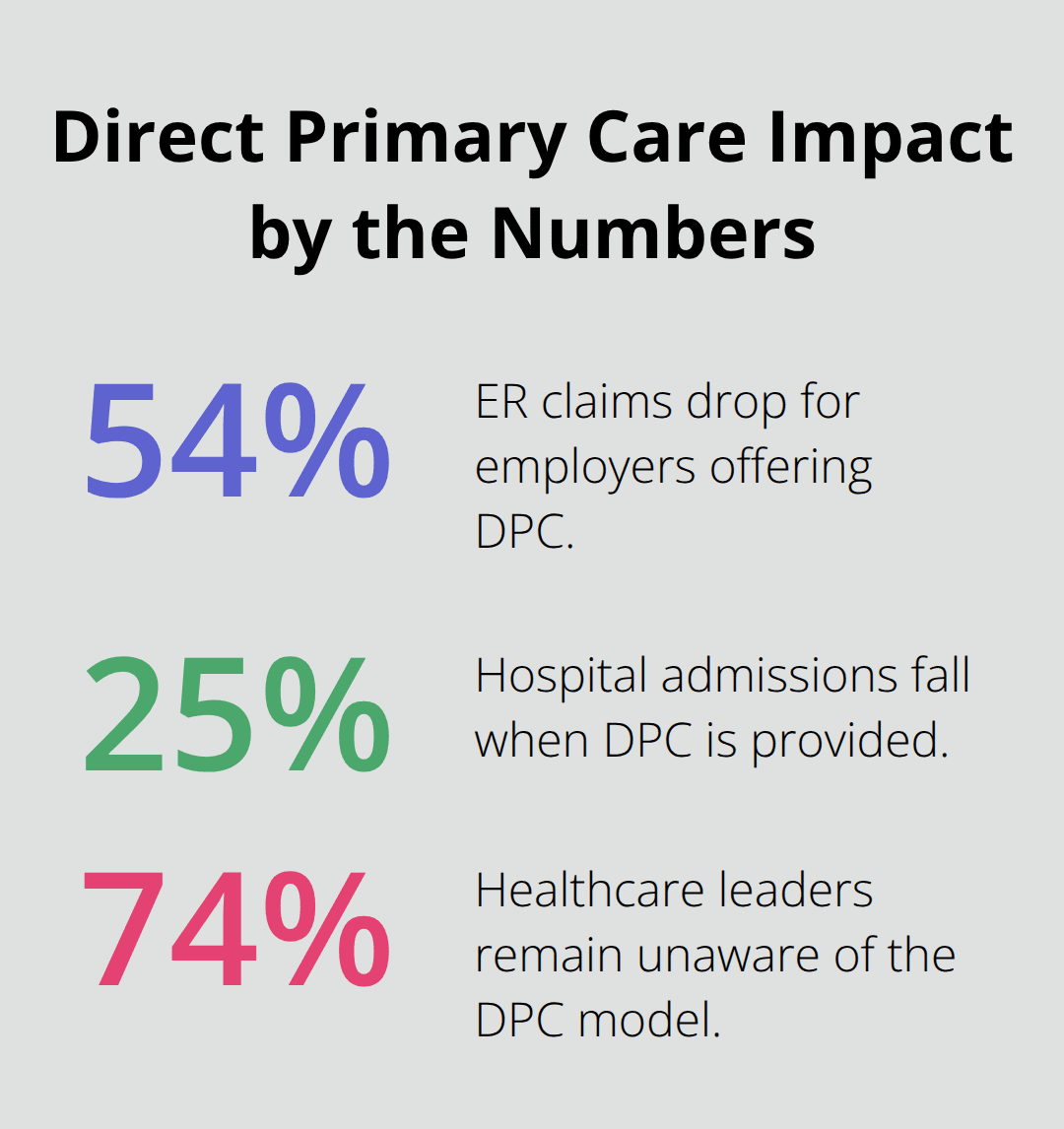
Direct primary care delivers substantial financial benefits that traditional healthcare models cannot match. The Medical Group Management Association found that 74% of healthcare leaders remain unaware of this model, yet those who adopt it see dramatic cost reductions.
Employers report a 54% decrease in emergency room claims and 25% fewer hospital admissions when they offer DPC to employees. A county government study revealed DPC participants cost $313 less per member monthly compared to traditional insurance models.
Monthly Fees That Cover Most Healthcare Needs
Monthly DPC fees typically range from $55 to $150, and these fees cover over 85% of healthcare needs without deductibles or coinsurance. Patients with high-deductible health plans save significantly when they pair their coverage with DPC membership.
This transparent approach eliminates surprise bills and hidden costs that plague traditional healthcare. Patients know their exact monthly expense and can budget accordingly.
Unlimited Appointments Build Trust
DPC practices allow physicians to spend meaningful time with each patient during unlimited scheduled appointments. Traditional insurance models rush doctors through brief visits, while DPC physicians can address complex health concerns thoroughly.
This extended face-time builds trust and improves health outcomes significantly. Patients develop genuine partnerships with their doctors, which leads to better adherence to treatment plans and more proactive health management. The American Academy of Family Physicians research shows this approach reduces long-term healthcare costs for healthier populations.
Same-Day Access Prevents Costly Emergencies
DPC offers same-day or next-day appointments, which eliminates the weeks-long waits common in traditional practices. Many DPC clinics provide round-the-clock availability through telemedicine, phone calls, and secure messaging.
This immediate access prevents minor issues from becoming expensive emergencies. Price transparency remains a cornerstone benefit-many DPC practices post their costs online according to American Medical Association data.
While these advantages make DPC attractive to many patients, the model also presents specific limitations that deserve careful consideration.
What Are the Real Drawbacks of Direct Primary Care
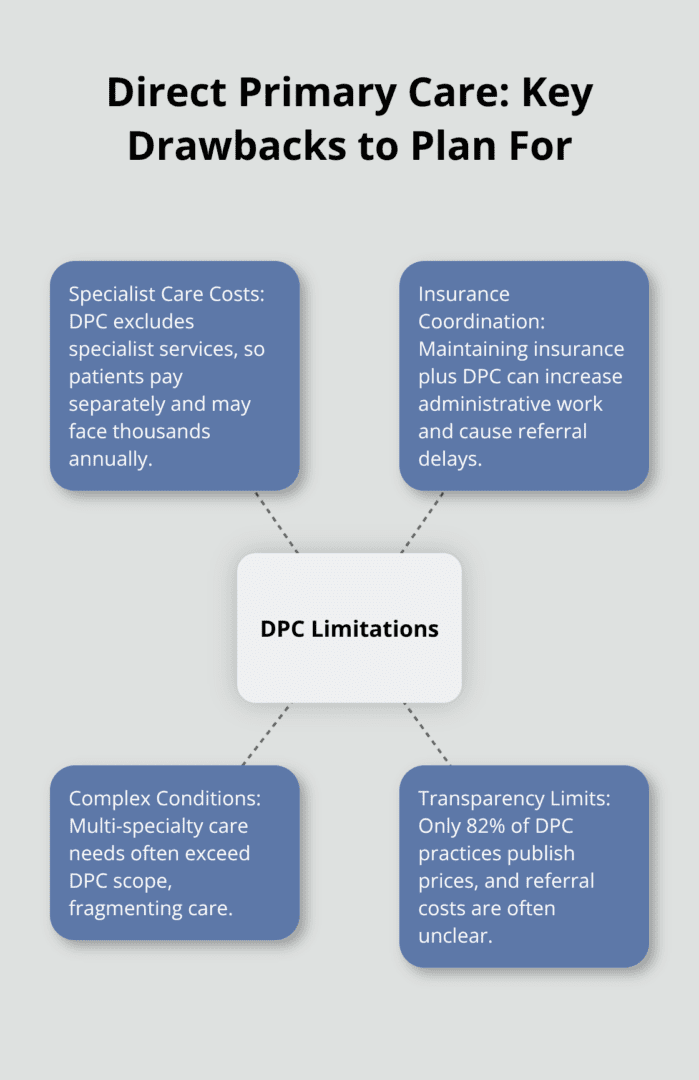
Direct primary care creates significant gaps in comprehensive healthcare coverage that patients must address separately. DPC practices focus solely on primary care services, which leaves patients responsible for specialist care, emergency services, and hospital treatments outside their monthly membership.
Specialist Care Requires Separate Payment
Patients must arrange separate care for cardiology, orthopedics, dermatology, and other specialty services. These specialists typically charge full rates without DPC discounts, which creates unexpected expenses that can reach thousands of dollars annually.
Emergency room visits, surgeries, and diagnostic tests fall entirely outside DPC coverage. Patients need traditional insurance or direct payment for these services. The American Medical Association data shows only 82% of DPC practices post transparent prices, but this transparency doesn’t extend to specialist referrals.
Insurance Coordination Doubles Administrative Work
Patients who maintain both DPC membership and traditional insurance for specialty coverage face doubled administrative complexity. Insurance companies may question DPC arrangements and delay approvals for specialist referrals.
High-deductible health plan holders face the challenge of meeting deductibles for specialty care while they pay DPC fees monthly. Some employers struggle to integrate DPC with existing health benefits, which creates confusion about coverage boundaries and reimbursement policies (particularly for small businesses with limited HR resources).
Complex Medical Conditions Exceed DPC Scope
Patients with multiple chronic conditions that require frequent specialist coordination find DPC limits their care options. Cancer patients, those with heart disease, and individuals who need regular surgical interventions must navigate fragmented care between their DPC physician and multiple specialists.
Comprehensive care coordination becomes difficult when primary care operates independently from specialist networks. Patients with rare diseases or complex diagnostic needs often find that DPC physicians lack the resources and connections necessary for optimal management (especially in smaller practices with limited referral networks).
These limitations don’t affect all patients equally, and certain groups find DPC particularly beneficial despite these drawbacks.
Who Gets the Most Value from Direct Primary Care
Patients with Chronic Conditions See Dramatic Improvements
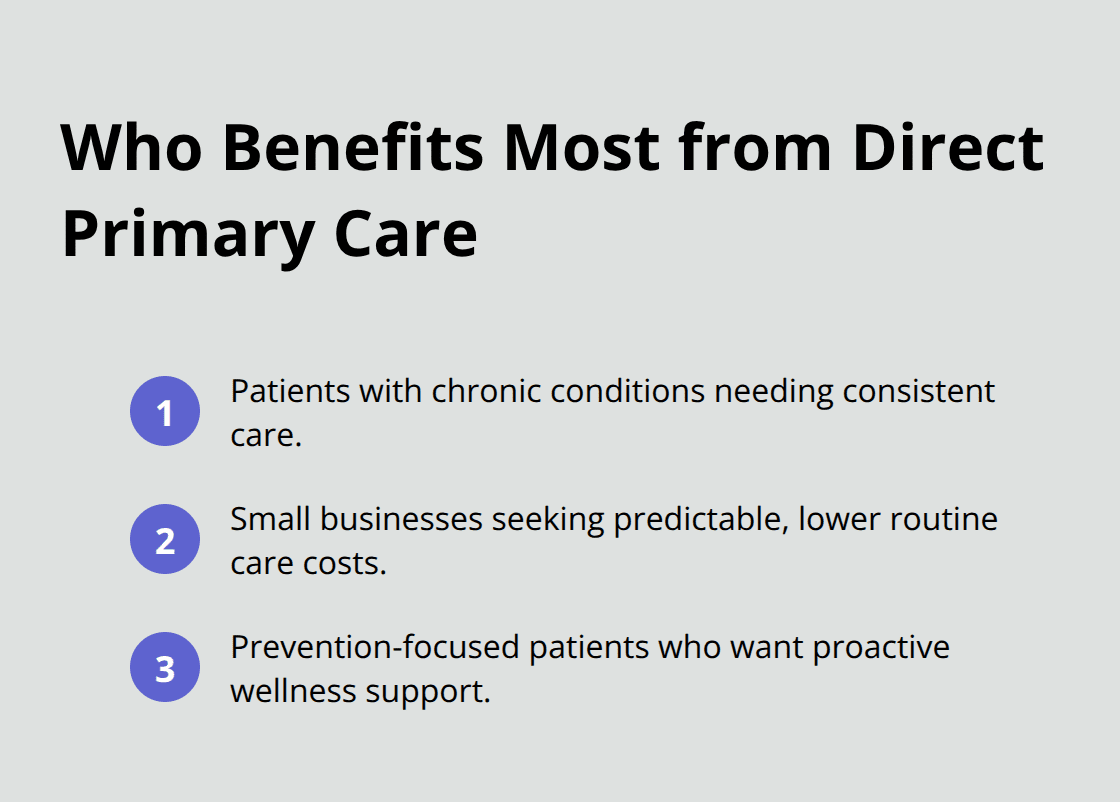
DPC works exceptionally well for people who manage diabetes, hypertension, heart disease, and other conditions that require consistent care and medication adjustments. Chronic diseases account for 90% of the $4.9 trillion that Americans spend on healthcare annually, which makes DPC’s focus on preventive care and lifestyle medicine particularly valuable for these patients.
The American College of Lifestyle Medicine reports that 59% of lifestyle medicine practitioners receive no reimbursement under traditional payment models, but DPC practices integrate these services seamlessly. Patients with chronic conditions benefit from unlimited appointments and direct physician communication, which leads to better medication compliance and fewer emergency interventions.
Small Businesses Discover Major Cost Savings
Small business owners experience substantial benefits when they offer DPC to employees instead of traditional insurance plans. Companies report savings of 20% to 30% when they combine high-deductible health plans with DPC memberships for their workforce.
The average deductible for high-deductible health plans now reaches $2,300, which makes DPC an attractive complement that covers routine care without additional out-of-pocket expenses. Small businesses with 10 to 50 employees find DPC particularly cost-effective because they avoid the administrative burden that comes with complex insurance networks while they provide employees with immediate healthcare access.
Prevention-Focused Patients See Long-Term Benefits
People who prioritize preventive care and wellness thrive in DPC environments because physicians spend extended time on health education and early intervention strategies. DPC practices offer comprehensive wellness programs, nutritional advice, and lifestyle modification support that traditional insurance rarely covers adequately.
Patients who seek proactive health management rather than reactive treatment find that DPC physicians can dedicate 30 to 60 minutes per appointment compared to the typical 7-minute visits in traditional practices (which often feel rushed and incomplete).
Final Thoughts
The advantages and disadvantages of direct primary care create a complex decision that depends entirely on your specific health needs and financial situation. DPC works best for patients who value preventive care, need chronic disease management, or want predictable healthcare costs without insurance complications. Consider your current health status carefully when you weigh these factors.
Small business owners and individuals with high-deductible health plans often find the most value in DPC membership. The monthly fee structure provides budget certainty while unlimited appointments address health concerns before they become expensive emergencies. Calculate your total costs from the past year including premiums, deductibles, and out-of-pocket expenses to compare against DPC membership fees plus potential specialist costs.
We at Mosaic Medicine Clinic help patients navigate these decisions daily through our membership-based healthcare model. Our approach focuses on unrushed appointments, direct physician access, and transparent pricing (which eliminates surprise medical bills). Contact Mosaic Medicine Clinic to discuss how our direct primary care model might fit your specific needs and budget.