The traditional healthcare system leaves patients frustrated-long waits, insurance hassles, and rushed appointments are the norm. At Mosaic Medicine Clinic, we’ve seen firsthand how direct primary care benefits transform the patient experience by cutting through the noise.
You get straightforward pricing, genuine time with your doctor, and care that actually listens to your needs. That’s why more patients are choosing membership-based medicine over the insurance-dependent model.
How Direct Primary Care Actually Works
The Membership Model Eliminates Insurance Middlemen
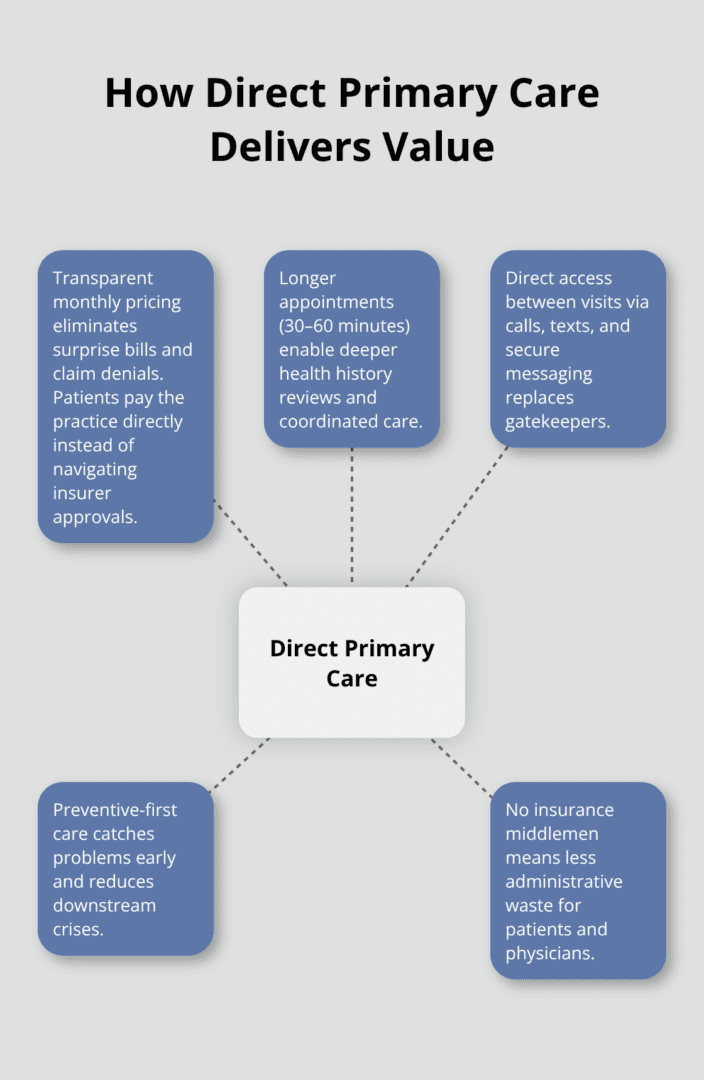
The membership model strips away the insurance middleman entirely. Instead of billing your insurer and waiting for approval, you pay a flat monthly fee-typically ranging from $20 to $49-directly to your physician. This upfront pricing means no surprise bills, no claim denials, and no haggling with insurance companies about what they’ll cover. You know exactly what you’re paying each month, and that fee covers your preventive care, chronic disease management, acute visits, and routine labs.
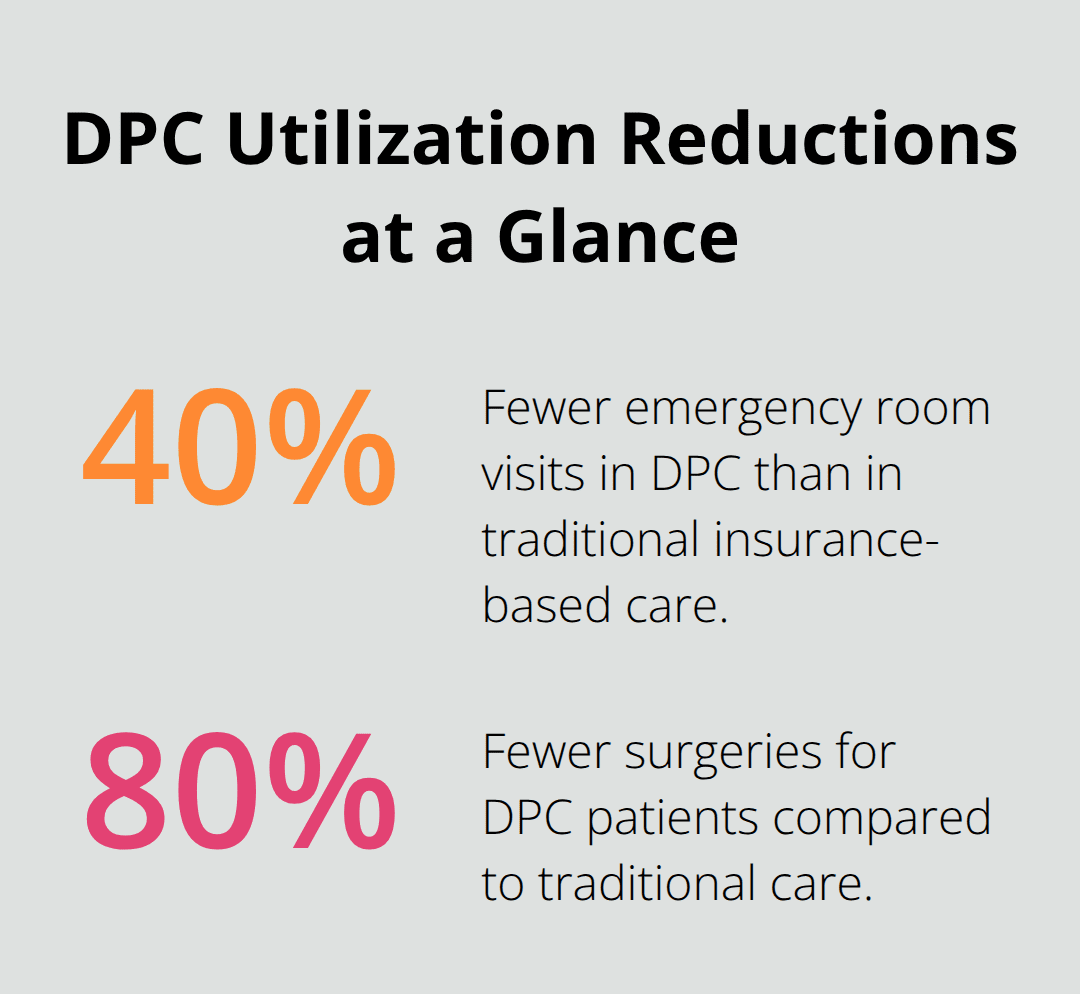
The administrative chaos that wastes both time and money vanishes when you remove insurance from the equation. Patients in DPC models had 40% fewer emergency room visits than those in traditional insurance-based care, suggesting that this direct access actually keeps people healthier by catching problems early.
Appointments That Actually Give You Time
Real time with your doctor replaces the rushed seven-minute appointments standard in fee-for-service medicine. DPC appointments typically run 30 to 60 minutes, giving your physician space to understand your full health picture and address what actually matters to you. Longer visits enable deeper health history discussions and better care coordination, especially for chronic conditions.
You also gain genuine access between appointments through phone calls, texts, and secure messaging-something traditional insurance-based offices struggle to offer because their billing model doesn’t support it. There’s no gatekeeper deciding whether you’re sick enough to see the doctor. You contact your physician directly when you need care, and same-day or next-day appointments are standard in DPC practices rather than the months-long waits many people face in traditional primary care.
Direct Relationships Change How Medicine Works
This direct relationship and unhurried time fundamentally transform healthcare. Your doctor can actually know you, remember your history, and make decisions based on what’s best for your health rather than what an insurance protocol allows. The stronger physician-patient connection means better adherence to treatment plans and more informed decision-making about your care.
When your physician spends real time with you and maintains ongoing contact, they catch health issues earlier and prevent small problems from becoming expensive crises. This shift from reactive to proactive medicine is why patients report higher satisfaction and better outcomes in DPC settings. The financial and healthcare advantages extend beyond just appointments-they reshape how you pay for care itself.
What Direct Primary Care Actually Costs
Transparent Pricing Replaces Insurance Surprises
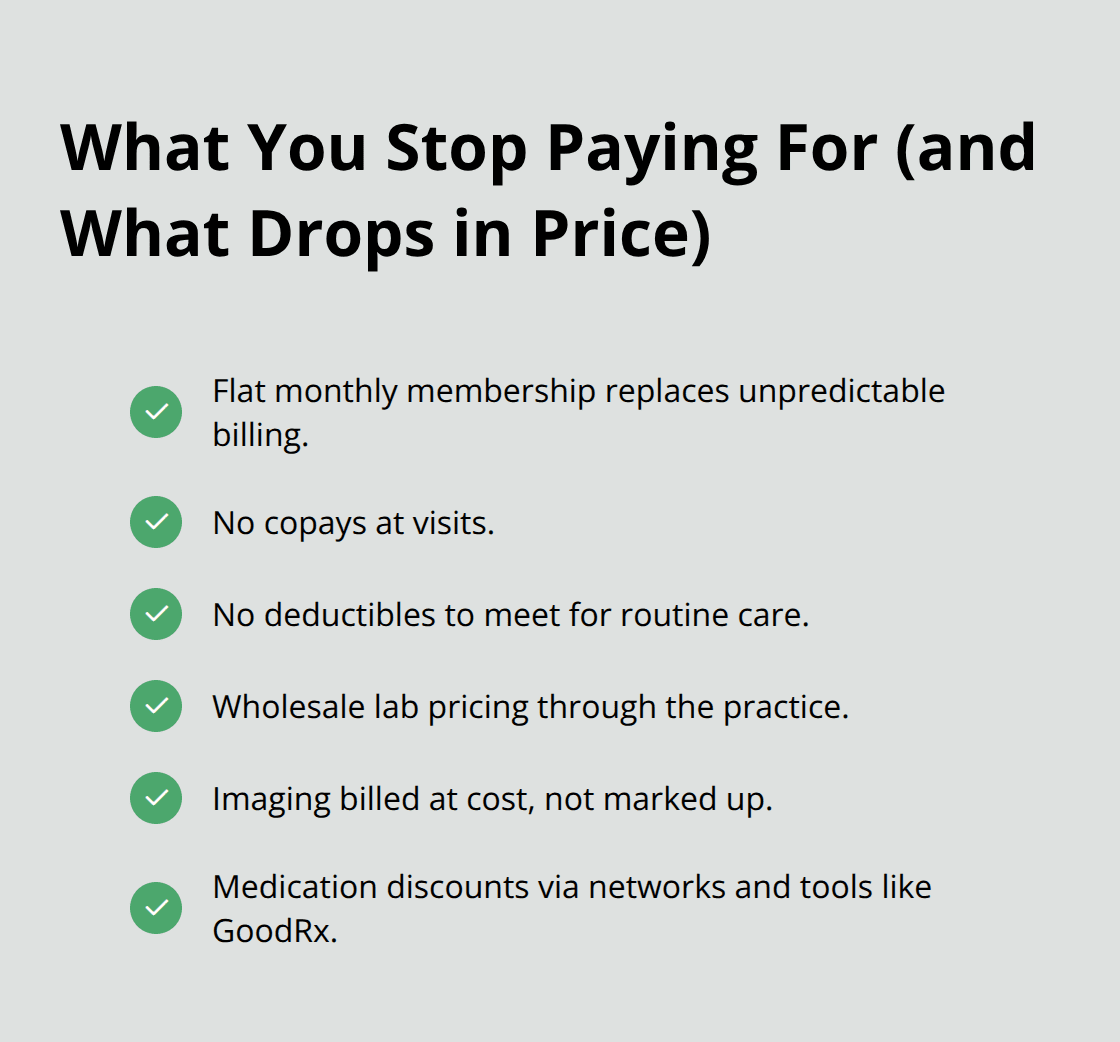
Direct primary care strips away the pricing mystery that plagues traditional medicine. You pay a flat monthly membership fee-typically between $55 and $150-that covers preventive care, chronic disease management, acute visits, and routine labs. No copays. No deductibles. No surprise bills arriving months later.
This upfront model lets you budget with certainty and eliminates the financial shock that traditional insurance creates.
Traditional insurance leaves patients exposed to massive out-of-pocket costs. The average person with a high-deductible health plan faces a deductible around $7,476, meaning they pay out of pocket for most routine care while also paying monthly premiums. DPC members save 20 to 30 percent on total healthcare costs compared to HDHP holders because a flat fee replaces premiums plus high deductibles.
Labs and Imaging Cost Dramatically Less
Laboratory work and imaging studies drop to a fraction of traditional prices. Direct primary care practices negotiate wholesale rates on bloodwork, urinalysis, and metabolic panels. X-rays and other imaging come at cost rather than marked up. When you need prescriptions, medication discounts through practice networks and tools like GoodRx further reduce pharmacy costs. These savings compound across the year, making routine preventive care genuinely affordable rather than something patients delay due to cost.
Early Intervention Prevents Expensive Procedures
The financial advantage extends beyond monthly fees. A 2020 study from the Society of Actuaries found that DPC patients spent roughly 30 fewer days in hospital settings and underwent 80 percent fewer surgeries than those in traditional care. Early intervention through direct physician relationships actually prevents expensive procedures down the line, meaning your membership fee pays for itself through avoided hospitalizations and surgical costs.
Tax Deductions and Health Savings Accounts Amplify Savings
This financial model works especially well when paired with a high-deductible health plan and a health savings account. Your membership fee qualifies as a medical expense for tax deduction purposes, reducing your taxable income while you receive better care. You essentially replace insurance bureaucracy with straightforward pricing that puts you in control of your healthcare spending rather than letting an insurer’s approval process dictate what care you receive.
The financial clarity of direct primary care creates space for something traditional medicine rarely offers: genuine attention to your health needs. This shift from cost-driven decisions to health-driven decisions shapes how your doctor approaches building stronger relationships with you.
How Your Doctor Actually Remembers You
Small Patient Panels Create Real Relationships
Your physician actually knows who you are in direct primary care. Traditional medicine forces doctors to see 2,000 to 3,000 patients annually, spending an average of seven minutes per visit. They cannot possibly remember your health history, your family situation, or what matters most to you. Direct primary care practices maintain small patient panels of 400 to 600 people instead, which allows your physician to spend real time understanding your complete health picture. This continuity fundamentally changes how medicine operates.
When your doctor sees you regularly over months and years, they recognize patterns that a rushed appointment misses entirely. They notice when your blood pressure creeps up slightly or when you mention stress at work that might explain your recent sleep problems. This observation-based medicine catches disease early, prevents complications, and creates treatment plans that actually work for your life rather than generic protocols.
Direct Access Without Gatekeepers
The direct relationship means you can reach your physician between appointments without bureaucratic gatekeeping. Text your doctor with a question about a medication side effect, and you get an answer the same day instead of waiting for a nurse hotline callback. Call for a same-day appointment when you develop new symptoms, and you see your physician rather than an urgent care clinic staffed by someone unfamiliar with your medical history.
Modern communication channels-secure messaging, phone calls, video visits-keep your physician accessible across your week rather than confined to scheduled appointment slots. This accessibility creates accountability on both sides: your doctor invests in your long-term health because they’ll see you again, and you follow through on treatment plans because you have a direct relationship with someone who genuinely cares about your outcomes.
Precision Medicine Tailored to Your Body
Research shows that patients with consistent primary care relationships experience better medication adherence and improved management of chronic conditions like diabetes and hypertension. You’re not starting from scratch at every visit, explaining your entire medical history to someone new. Your physician knows whether you’ve tried a particular medication before, how you responded, and what actually works for your body.
This knowledge transforms treatment from trial-and-error to precision medicine tailored specifically to you. Your doctor recognizes your individual patterns and preferences, adjusting care approaches based on what they’ve learned about you over time. The stronger physician-patient connection means better adherence to treatment plans and more informed decision-making about your care.
Why Direct Primary Care Matters Now
The healthcare system is shifting toward direct primary care benefits because patients finally experience medicine as it should work: unhurried, transparent, and genuinely focused on wellbeing. Patient satisfaction in DPC practices consistently outpaces traditional medicine, and this loyalty translates into better outcomes and lower costs across the entire system. When your physician knows you by name and remembers your health history, you stay engaged with preventive care and follow through on treatment plans.
Preventive medicine becomes the default in direct primary care rather than an afterthought squeezed between insurance approvals. Your doctor has time to discuss lifestyle changes, catch early warning signs, and address root causes instead of just treating symptoms. DPC patients experience significantly fewer emergency room visits and hospital admissions, meaning prevention actually works when physicians have time to implement it.
Better health outcomes emerge naturally from this model because comprehensive care replaces fragmented, insurance-driven medicine. Your physician coordinates your entire health picture rather than treating isolated complaints during rushed appointments. Chronic conditions like diabetes and hypertension improve when patients receive consistent, personalized management from someone who understands their individual circumstances, and we at Mosaic Medicine Clinic in Bradenton, Florida invite you to experience these benefits through our direct primary care practice.