
If you’re considering a membership-based primary care model, you’ve likely heard both terms thrown around interchangeably. They’re not the same thing, and the differences matter when you’re choosing how to access healthcare.
At Mosaic Medicine Clinic, we see patients weighing concierge medicine vs direct primary care regularly. Understanding what sets them apart helps you make a decision that actually fits your needs and budget.
What Concierge Medicine Actually Costs and Includes
The Dual-Payment Structure
Concierge medicine operates on a membership model where you pay an annual or monthly retainer directly to your physician, then the practice continues to bill your insurance for visits and services. This dual-payment structure fundamentally separates it from other membership models. Typical concierge membership fees can range significantly, with some patients paying up to $50,000 per year in fees depending on the scope of services offered.
What the Membership Actually Covers
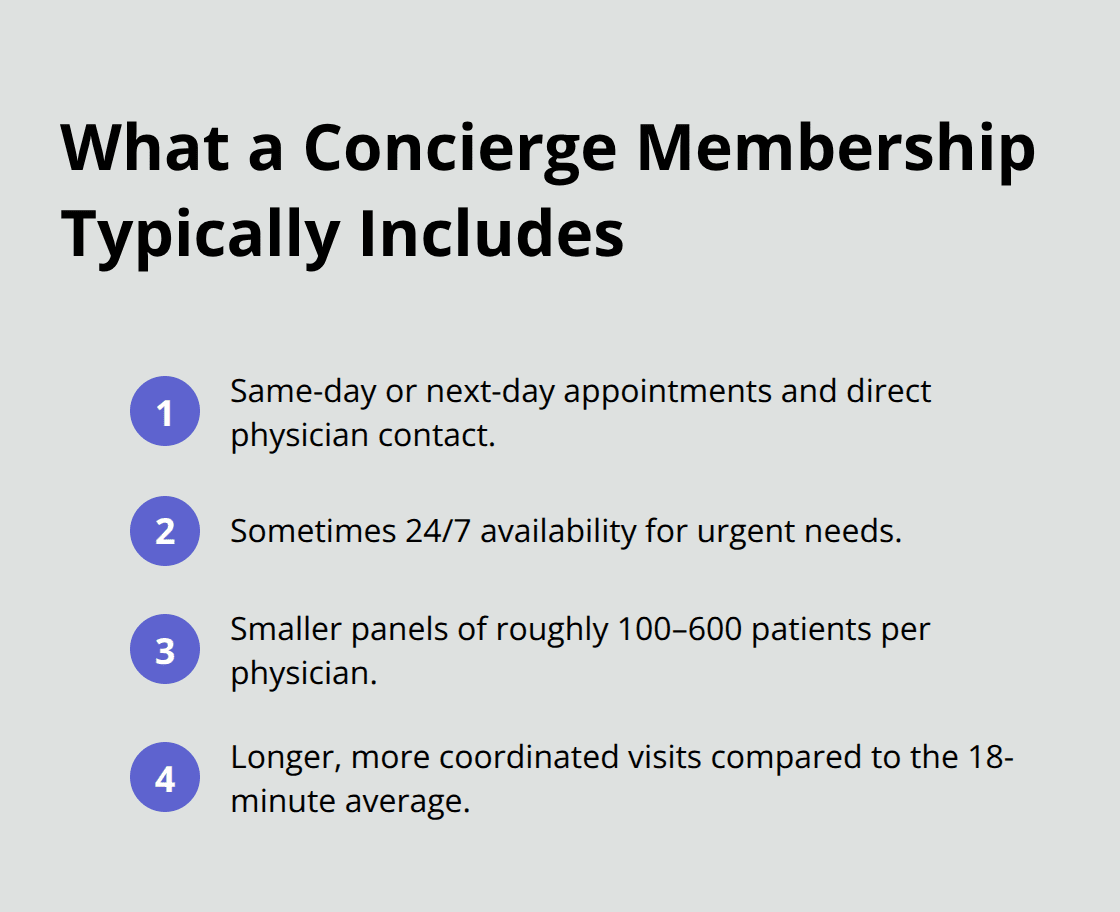
The fee covers enhanced access to your physician, including same-day or next-day appointments, direct phone or email contact, and sometimes 24/7 availability. Concierge practices limit their patient panels to 100–600 patients per physician, which allows for longer visits and more comprehensive care coordination than traditional primary care settings where the average visit lasts just 18 minutes according to the National Institutes of Health.
Beyond Basic Access
What you pay for in concierge medicine extends beyond appointment availability. Concierge memberships may include extended annual physicals, preventive screenings, care planning, and wellness support. You receive a physician who knows your complete health history, has time to discuss your concerns thoroughly, and actively coordinates your care across the healthcare system.
The Insurance Reality
This model works best if you have solid insurance coverage and can afford the upfront annual fee. The membership does not replace your traditional health insurance-it supplements it. If you’re self-employed or have gaps in coverage, the ongoing costs add up quickly when you factor in both the retainer and whatever your insurance doesn’t cover.
Who Concierge Medicine Attracts
Concierge medicine appeals to patients willing to pay premium prices for convenience and personalized attention, particularly those managing multiple chronic conditions or those with extremely busy schedules who value direct access to their physician without navigating traditional appointment systems. The model demands significant financial commitment upfront, which naturally limits access to higher-income populations. Understanding this cost structure matters as you compare it to direct primary care, which takes a fundamentally different approach to membership fees and insurance involvement.
What Direct Primary Care Actually Is
How DPC Works Without Insurance Middlemen
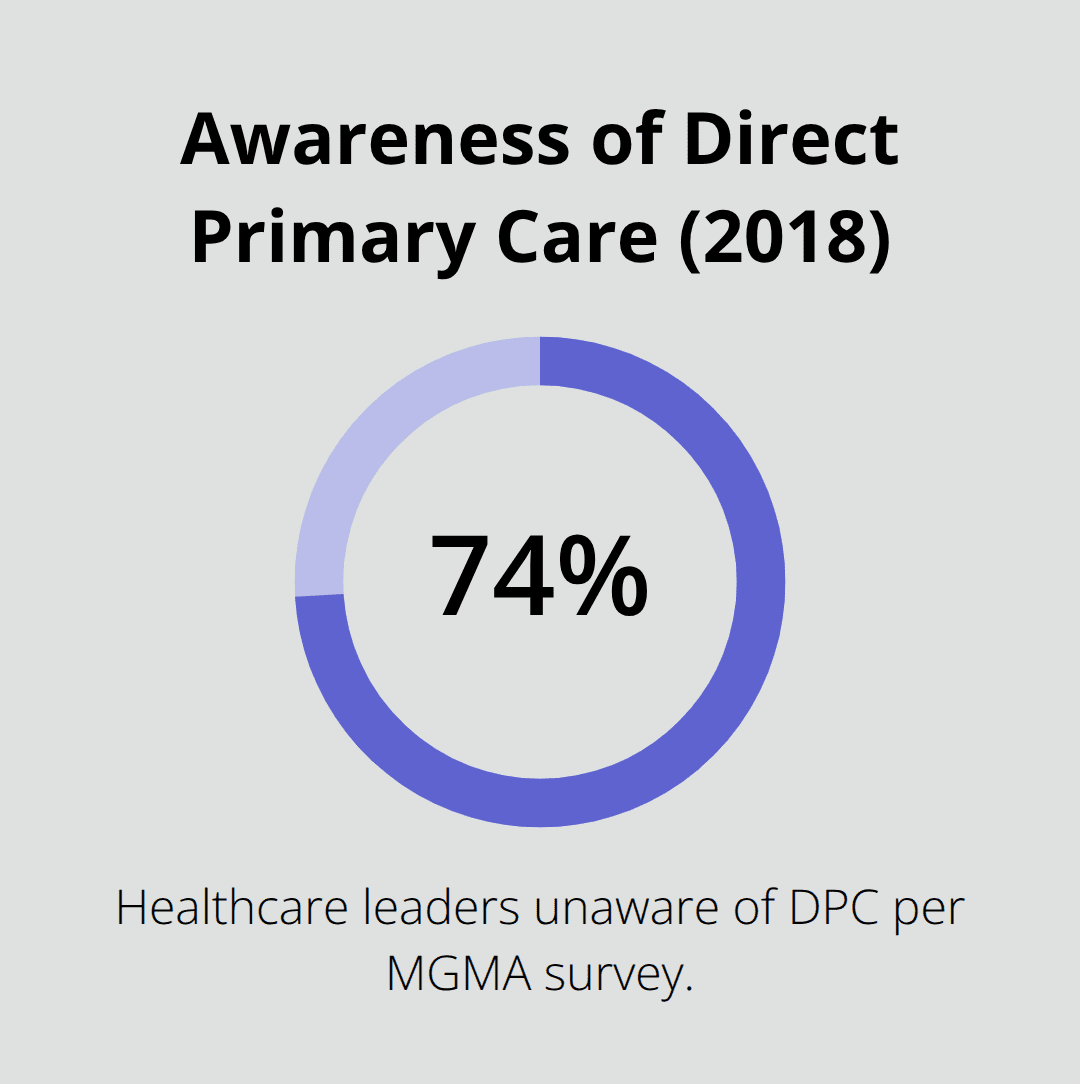
Direct primary care strips away the insurance billing middleman entirely. You pay a monthly membership fee directly to your physician, typically between $55 and $150 per month depending on your age and health needs, and that covers your primary care. No insurance claims. No coding games. No waiting for reimbursement approvals. The practice bills you for the care you use, not the insurance company, which fundamentally changes how physicians approach treatment decisions. A Medical Group Management Association survey from 2018 found that 74% of healthcare leaders weren’t even aware what DPC was, which speaks to how different this model remains from traditional primary care.
What Your Membership Actually Covers
Your membership covers unlimited scheduled visits, same-day or next-day appointments, and direct access to your physician through phone, email, or video. Most DPC practices manage smaller patient panels compared to traditional settings. That smaller panel means your doctor knows your name, your health history, and your concerns without scrolling through pages of notes. You receive longer appointments, typically 30 to 60 minutes, compared to the 18-minute average visit in traditional primary care.
The Insurance Reality You Still Need
Direct primary care does not replace your traditional health insurance. You still need coverage for emergencies, hospitalizations, and specialty care. Most DPC patients pair their membership with a high-deductible health plan, which costs less monthly and covers the catastrophic events your primary care membership cannot. This combination (a DPC membership plus a high-deductible plan) typically costs less than traditional insurance alone while you receive better access to primary care.
Cost Transparency and Affordability
The transparency is absolute. You know exactly what you pay monthly, no surprise bills, no insurance denials for preventive services you thought were covered. DPC physicians focus on prevention and early intervention because they have time to actually talk with patients, not because they chase volume metrics. That time investment often prevents expensive emergency room visits and specialist referrals down the road. Practices enhance affordability by offering wholesale labs, at-cost imaging, and discounted medications, which reduces your out-of-pocket costs dramatically compared to standard insurance pricing.
Why This Model Attracts Physicians and Patients
DPC operates on a fundamentally different incentive structure than traditional primary care. Physicians earn predictable revenue from memberships rather than fighting insurance companies for reimbursement approvals. Patients gain predictable costs and actual time with their doctor. The model works particularly well for individuals and families who want straightforward primary care without the friction of insurance authorization delays. Now that you understand how each model functions, the specific differences between them become much clearer.
Key Differences in How You Pay
The Dual-Payment Trap vs. Single Monthly Fee
Concierge medicine and direct primary care handle your money in completely opposite ways, and this distinction shapes everything about your healthcare experience. Concierge practices charge you an annual retainer ranging from $2,000 to $5,000 per year on average, though some practices exceed $50,000 annually, while simultaneously billing your insurance for each visit and service. You pay twice: once upfront for access, then again through insurance claims and copays. Direct primary care operates on a single, transparent fee. You pay $55 to $150 monthly and that covers your primary care entirely. No insurance billing for routine visits. No hidden charges. No authorization delays from insurers deciding whether your doctor’s recommendation qualifies for coverage.
This structural difference means concierge patients often face surprise out-of-pocket costs when their insurance denies coverage for services their physician recommended, whereas DPC patients know exactly what they’ll spend each month.
Why Appointment Length Costs More in Concierge
A primary care physician would need 26.7 hours per day to see an average number of patients while providing recommended preventive care, which explains why concierge practices justify their higher fees through genuinely longer appointments. Concierge physicians manage 100 to 600 patients, allowing 30 to 60-minute visits instead of the standard 18-minute appointment. However, that extended time comes at a premium price accessible primarily to higher-income populations.
DPC achieves similar appointment lengths through a different mechanism: physicians manage roughly 400 patients, generating sufficient revenue from modest monthly memberships without requiring insurance billing or higher fees.
Insurance Requirements and Total Monthly Costs
Insurance requirements differ fundamentally between these models, which directly affects your total healthcare costs. Concierge medicine requires you to maintain separate health insurance because the membership supplements rather than replaces coverage for emergencies, hospitalizations, and specialist care. You layer costs, not replace them.
Direct primary care also requires supplemental insurance for emergencies and specialty services, but the pairing strategy differs significantly. DPC patients typically pair their monthly membership with a high-deductible health plan, resulting in lower total monthly healthcare spending. A DPC patient spending $100 monthly on their membership plus $300 on a high-deductible plan pays $400 total, whereas concierge patients might pay $300 to $500 monthly for traditional insurance plus $200 to $400 monthly for their concierge retainer.
The math favors DPC for cost-conscious patients.
Care Coordination and Hidden Savings
Concierge practices often reduce friction by handling specialist referrals and coordinating care across the healthcare system, which appeals to patients managing multiple chronic conditions who value someone else managing the complexity. DPC practices emphasize prevention and early intervention, offering wholesale lab work, at-cost imaging, and discounted medications that reduce out-of-pocket expenses beyond the membership fee.
We at Mosaic Medicine Clinic built our DPC model around this principle of transparency and affordability, providing wholesale labs and discounted medications so patients actually save money on routine care rather than paying premium prices for convenience. The choice between these models depends on whether you prioritize comprehensive coordination of complex care (concierge) or straightforward primary care with maximum cost predictability (DPC).
Final Thoughts
Concierge medicine versus direct primary care represents a fundamental choice about how you want to interact with healthcare. Concierge medicine works best if you manage multiple chronic conditions and value comprehensive care coordination enough to pay annual retainers between $2,000 and $5,000 or higher. Direct primary care appeals to patients who prioritize cost transparency and straightforward primary care without insurance complications, paying one monthly fee between $55 and $150 instead.
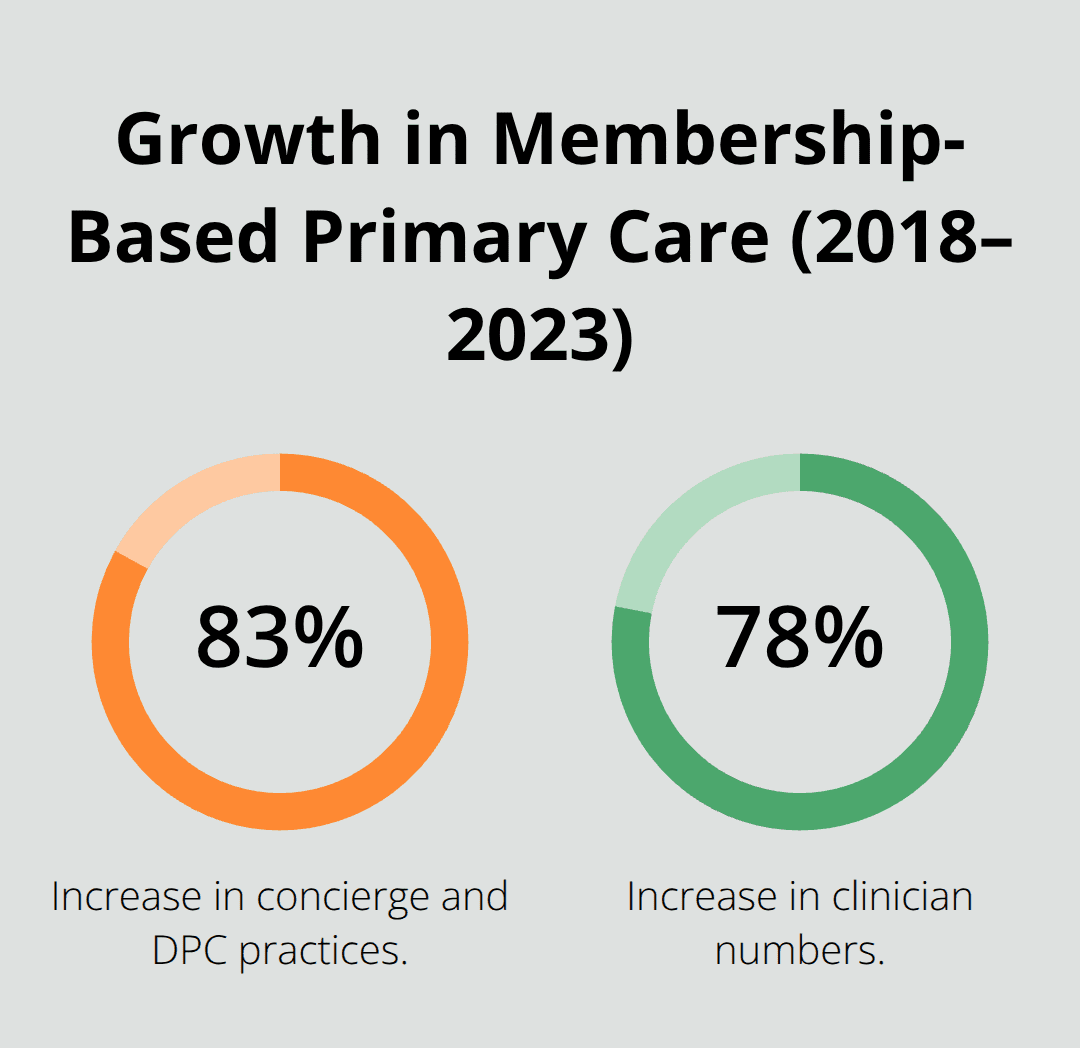
The growth of membership-based primary care models reflects real frustration with traditional healthcare. Between 2018 and 2023, concierge and DPC practices expanded 83 percent, with clinician numbers rising 78 percent, showing that physicians and patients both want something different.
Physicians escape burnout from massive patient panels and insurance authorization delays, while patients gain actual time with their doctor and predictable monthly costs.
If you want to experience primary care built on transparency and affordability, explore Mosaic Medicine Clinic’s direct primary care model in Bradenton, Florida, which offers wholesale labs, at-cost imaging, and discounted medications alongside unrushed appointments and direct physician access.