

Healthcare affordability has become a major concern for millions of Americans facing rising medical costs and complex insurance systems.
We at Mosaic Medicine Clinic believe direct primary care offers a refreshing alternative that puts transparent pricing and patient access first. This membership-based model eliminates insurance middlemen and hidden fees, potentially saving you thousands annually while improving your healthcare experience.
How Much Money Does Direct Primay Care Actually Save
Direct primary care as a membership-based model cuts out the expensive insurance bureaucracy that inflates healthcare costs across America. Traditional insurance companies create administrative overhead that consumes roughly 30% of every healthcare dollar spent, according to data from the Commonwealth Fund.
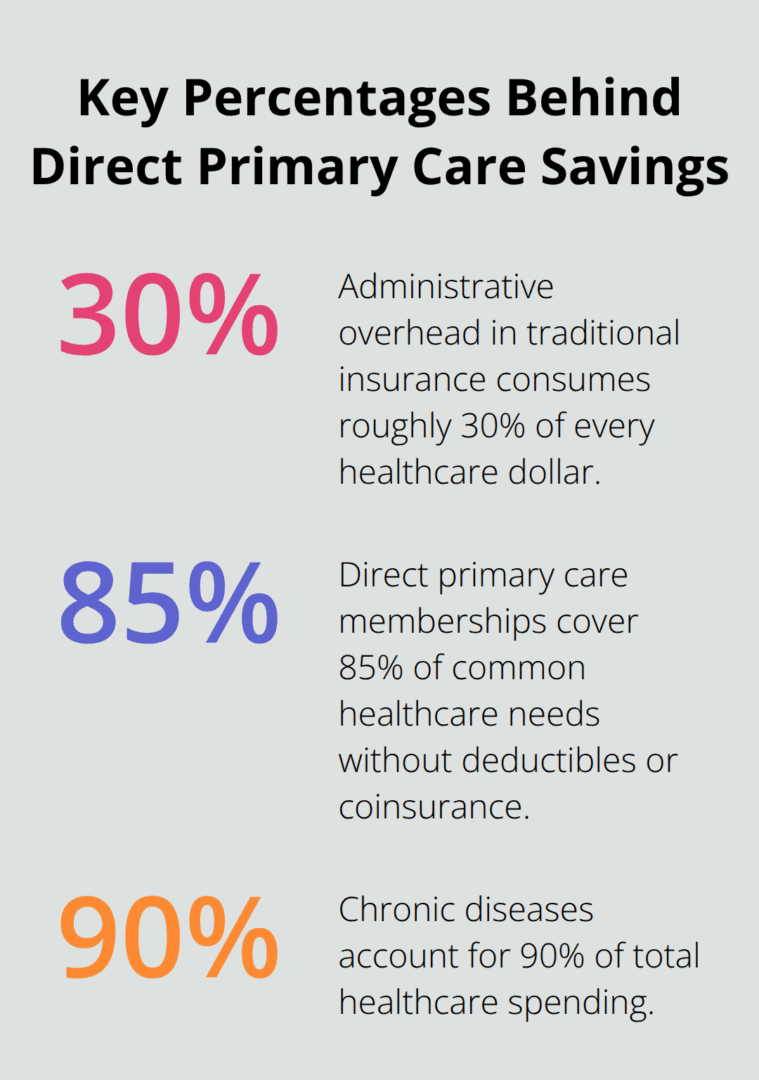
Direct primary care practices operate without these middlemen and pass those savings directly to patients through predictable monthly fees that typically range from $50 to $100 per month.
Wholesale Pricing Creates Healthcare Transparency
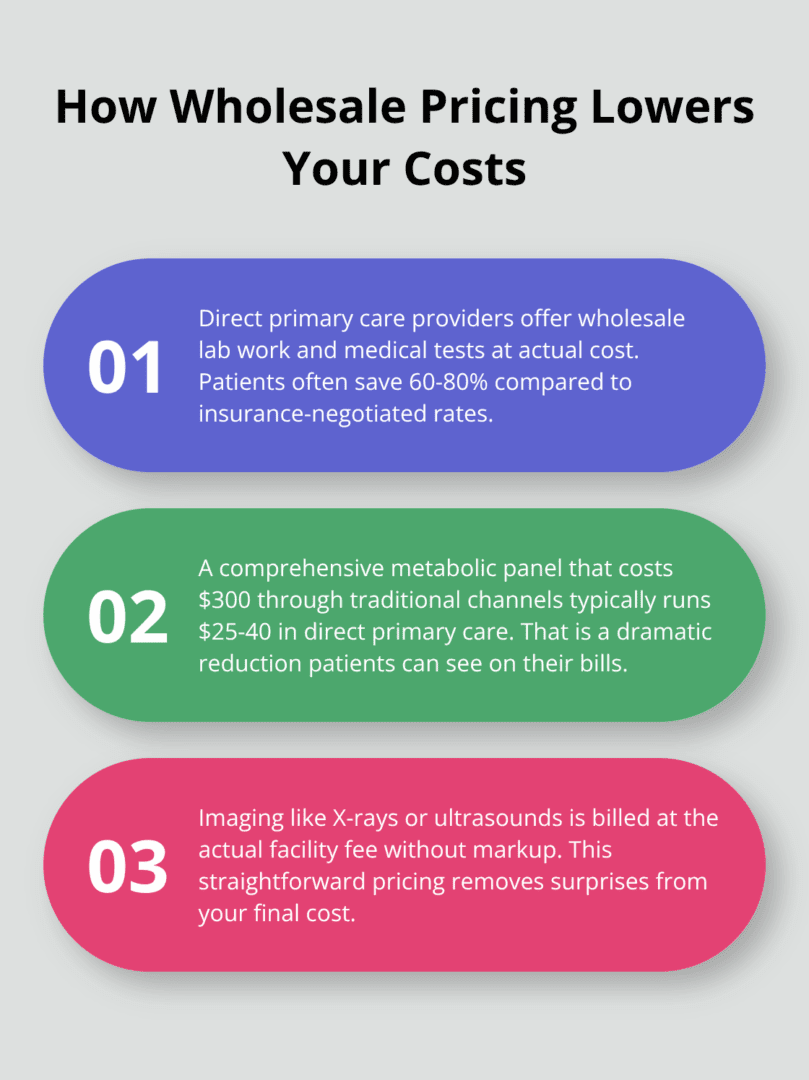
The pricing transparency in direct primary care contrasts sharply with traditional healthcare bills. Direct primary care providers do not bill insurance, which helps reduce overhead costs and supports lower costs for patients while allowing wholesale lab work and medical tests at actual cost, often saving patients 60-80% compared to insurance-negotiated rates. A comprehensive metabolic panel that costs $300 through traditional channels typically runs $25-40 in the direct primary care model. Similarly, medical tests like X-rays or ultrasounds cost patients the actual facility fee without markup.
Monthly Membership Covers Essential Services
A DPC membership typically uses a flat monthly fee that covers unlimited office visits, annual physicals, basic procedures, and easy access to your doctor through phone, email, and text messages, reflecting how direct primary care works in practice. Union County, North Carolina, documented over $1.2 million in medical claim savings during their first year of direct primary care adoption, which translated to $313 less cost per member compared to traditional payment models.
Emergency Room Prevention Saves Thousands
Direct access to your physician prevents costly emergency room visits that average $1,389 per visit nationwide (according to the Health Care Cost Institute). Patients with direct primary care access report fewer claims tied to emergency care compared to traditional insurance models. Same-day appointments and after-hours communication channels help patients get timely care for minor illnesses and urgent concerns from their primary care physician rather than expensive emergency departments.
Patients with high deductible insurance save an additional 20-30% when they pair their coverage with a direct primary care membership, since 85% of common healthcare needs receive coverage without deductibles or coinsurance through the membership model. These substantial savings become even more apparent when you compare direct primary care costs to what traditional healthcare models charge for similar services.
How Much Will You Really Pay
Direct primary care, direct primary care DPC, membership-based primary care fees range from $50-100 monthly compared to the average high-deductible health plan deductible of $2,300 annually according to the Health Care Cost Institute. A family that pays $80 monthly for direct primary care spends $960 yearly for unlimited primary care access, so patients can save money with this model, while traditional insurance patients must spend their full deductible before they receive meaningful coverage. The math becomes even more compelling when you factor in copays that average $25-50 per visit in traditional plans, which are often driven by the insurance company and add complexity.
Real Costs for Common Medical Services
Standard office visits cost $200-300 without insurance, but DPC members pay nothing beyond their monthly fee under the direct primary care model. Laboratory work shows the starkest difference – a lipid panel costs $150-200 through insurance billing but only $15-25 at wholesale prices in direct primary care practices. Strep throat treatment that generates $250-350 in traditional healthcare costs gets handled during a same-day appointment for acute conditions at no additional charge.
Annual physicals that cost $400-600 in fee-for-service medicine are included in membership fees, as are savings on common medications. The Health Affairs journal documented that patients who couple high-deductible plans with direct primary care save 20-30% on total healthcare spending while they receive more comprehensive primary care services.
Total Healthcare Spending Breakdown
In 2023, national healthcare expenditure was $4.9 trillion, with primary care representing roughly 5-7% of total spending. Direct primary care members typically spend $960-1,200 yearly because the model includes a broad range of primary care services, while traditional patients pay $2,000-4,000 between deductibles, copays, and out-of-network charges for equivalent services, illustrating why direct primary care can be worth it financially.
Emergency room visits become less necessary for minor illnesses when patients have better access to their physician and help coordinating specialty care, with the CDC reporting 155.4 million visits annually. This creates additional savings that compound throughout the year and demonstrates how direct primary care transforms healthcare economics beyond just the monthly membership fee.
What Additional Value Does Direct Primary Care Provide
Direct primary care membership creates financial value that extends far beyond the monthly fee by delivering personalized care and ongoing support that would often lead to hundreds of dollars in additional charges under traditional healthcare models, showing how direct primary care transforms patient experiences. Unlimited office visits mean many patients address health concerns earlier because unrestricted use removes the hesitation that can let minor issues turn into expensive complications requiring specialist care or hospitalization. The average American visits their primary care physician 3.9 times annually according to the National Center for Health Statistics, but direct primary care patients typically schedule 6-8 visits yearly because a smaller patient panel increases patient access when care is needed.
Same-Day Access Eliminates Urgent Care Expenses
Direct access to your physician through phone calls, text messages, and same-day appointments makes primary healthcare more accessible care and helps replace expensive urgent care visits that cost $150-300 per visit nationwide by embodying what direct primary care means for your healthcare. Traditional patients often wait weeks for appointments, while many direct primary care practices offer next day availability for non-emergency issues like respiratory infections, minor injuries, or prescription refills. Direct primary care patients receive immediate guidance and treatment from their personal physician, and patients feel more confident using care when that physician knows their medical history, eliminating the need for costly walk-in clinics that provide fragmented care.
Preventive Care Stops Expensive Chronic Disease Development
Comprehensive preventive care included in membership fees helps patients stay healthy and supports chronic disease management by identifying health risks before they become costly chronic conditions that consume 90% of healthcare spending, which is a core way direct primary care works to improve outcomes. Direct primary care physicians spend 30-60 minutes per appointment compared to the 15-minute average in traditional practice, avoiding rushed visits and providing extended visits that make individualized care plans possible through thorough health assessments that catch early warning signs of diabetes, heart disease, and other expensive conditions. Early intervention prevents the $19,736 annual cost of diabetes management and the $21,000 yearly expense of heart disease treatment that burden patients in traditional healthcare systems.
Extended Communication Channels Add Value
After-hours access through secure messaging, phone consultations, and video calls provides additional value, giving patients unlimited access outside office visits that traditional practices charge for separately, and exemplifies the benefits of direct patient care. These communication channels help patients manage minor health concerns remotely and ensure continuity between in-person visits, avoiding expensive telemedicine fees that range from $40-80 per consultation and showing how to set up direct primary care arrangements that prioritize accessibility. Direct primary care for families physicians respond to patient questions within hours rather than days and can arrange day visits for issues that cannot be fully handled remotely, which prevents health issues from escalating into emergency situations that cost thousands of dollars.
Final Thoughts
Healthcare affordability remains a pressing concern for American families, but direct primary care provides a practical solution that delivers superior value through transparent prices and enhanced access. The evidence shows compelling financial advantages when you compare monthly membership fees of $50-100 against traditional healthcare costs that include high deductibles, copays, and hidden charges that can total thousands annually. This membership-based model transforms healthcare economics for patients who want predictable expenses and personalized attention.
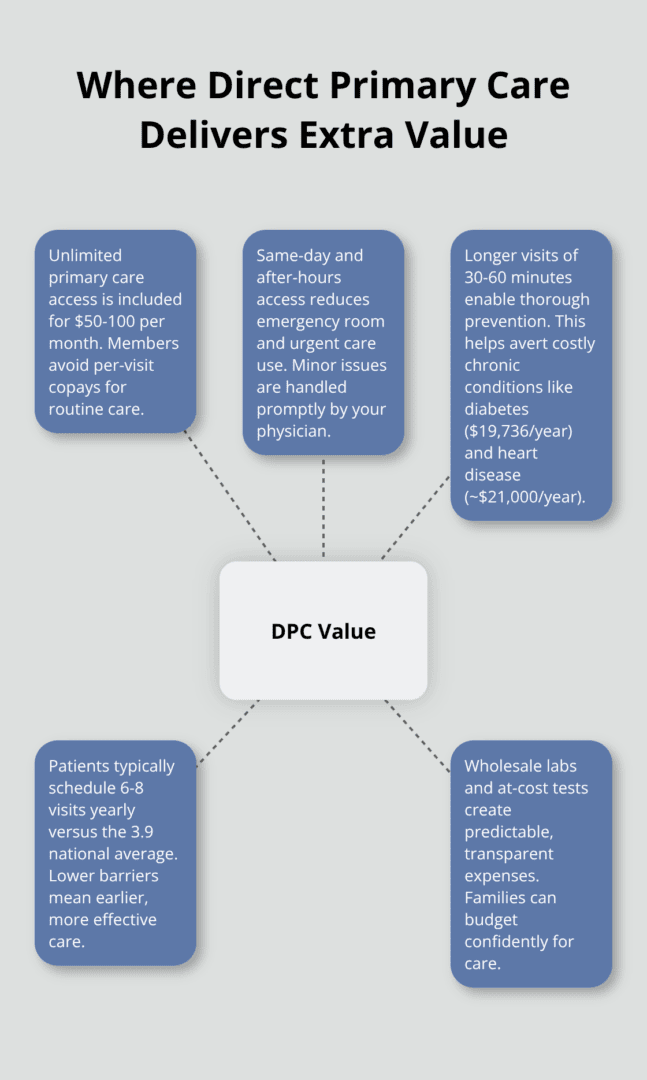
We at Mosaic Medicine Clinic have witnessed how this approach eliminates insurance middlemen while we provide comprehensive primary care, preventative medicine, and direct physician access through modern communication channels. The wholesale prices for labs and at-cost tests create predictable healthcare expenses that help families budget effectively. Our patients in Bradenton, FL, experience the financial benefits that come from unlimited office visits, same-day appointments, and preventive services (which create value that extends far beyond the monthly fee).
Direct primary care empowers you to take control of your healthcare expenses while you receive better care. The model makes quality healthcare more accessible and affordable for individuals, families, and small businesses who want predictable costs and direct access to their healthcare provider. Mosaic Medicine Clinic demonstrates how this approach transforms the traditional healthcare experience through transparent prices and personalized service.