

If you’ve ever wondered how direct primary care works, you’re not alone. Many patients are frustrated with long wait times, insurance denials, and feeling like just another chart number.
At Mosaic Medicine Clinic, we believe healthcare should be straightforward and personal. Direct primary care strips away the complexity, giving you direct access to your doctor and transparent pricing-no insurance middlemen, no surprise bills.
How Direct Primary Care for Individuals Replaces the Insurance Model
Traditional primary care operates on a fee-for-service system where insurance companies sit between you and your doctor, deciding what gets paid and how much. You pay premiums, deductibles, and co-pays while your doctor spends half the day fighting with insurance denials. Direct primary care flips this entirely. Instead of monthly insurance premiums that climb unpredictably, you pay a straightforward membership fee directly to your doctor. According to the 2024 DPC Data Brief from the American Academy of Family Physicians, most DPC practices charge between $50 and $100 per month. This flat fee covers your primary care visits, consultations, and basic services with no insurance company involved. There are no claim denials, no prior authorization delays, and no surprise bills months later. You know exactly what you’re paying and what you get.
What Changes When Insurance Steps Out
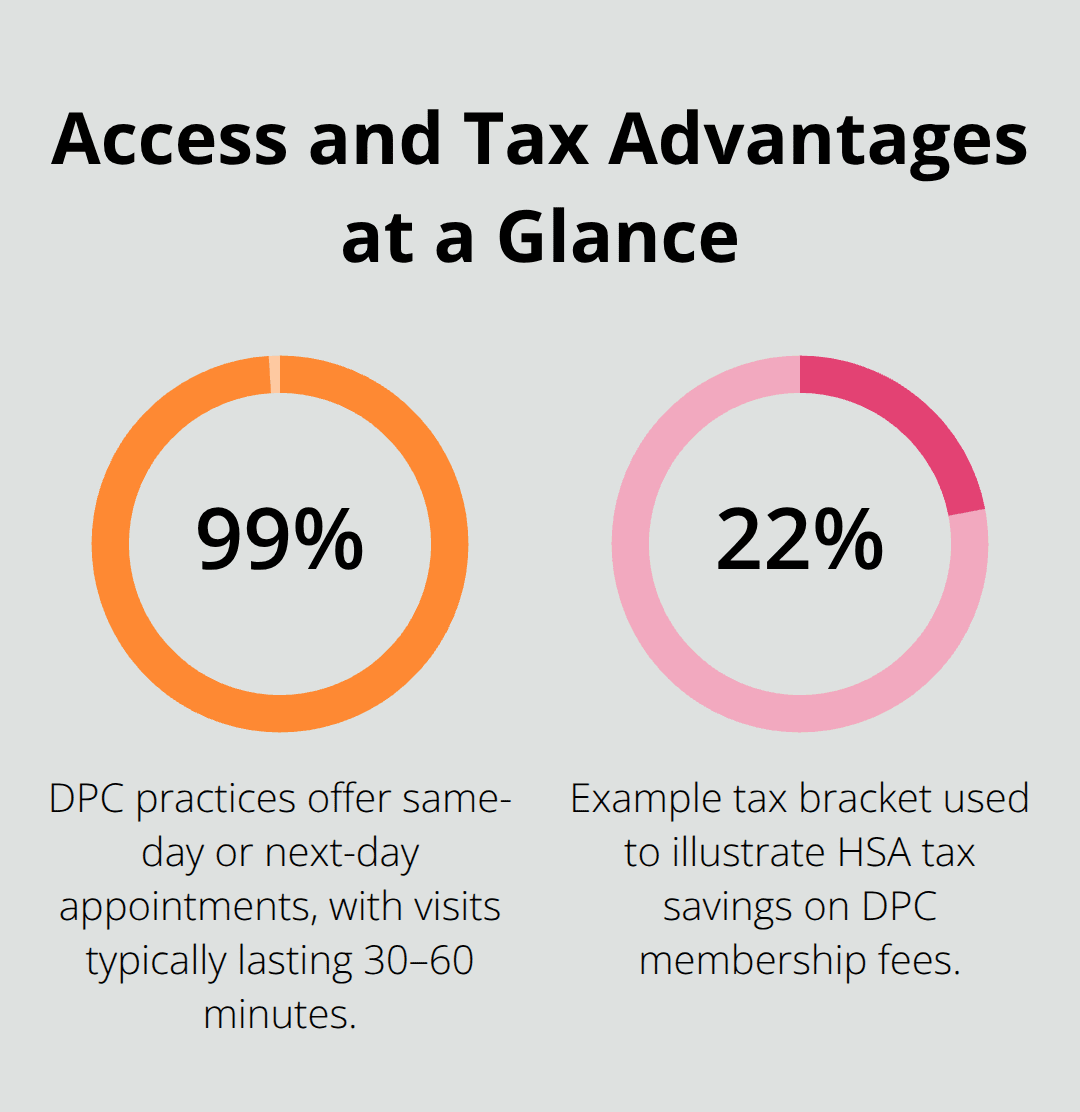
The difference becomes clear the moment you schedule an appointment. Traditional insurance-based practices operate under tight time constraints because insurance reimburses based on volume, not depth. Your doctor gets paid the same whether they spend 10 minutes or 30 minutes with you. The direct primary care model works differently because the membership structure removes this financial pressure, and most practices do not bill insurance or handle insurance paperwork. Nearly 99% of DPC practices offer same-day appointments, according to the 2024 AAFP data, and visits typically run 30 to 60 minutes instead of the rushed 15-minute slots common in traditional offices. Without insurance billing overhead, practices operate with lower administrative costs because they carry less administrative burden and lower overhead costs, with smaller patient panels, averaging around 413 patients per practice compared to thousands in traditional settings.
Your doctor actually has time to think about your health rather than rushing to meet quotas. That can support reduced burnout for doctors and more personalized care for patients.
Pricing You Can Actually Understand
Transparent pricing is where DPC becomes a genuinely different, affordable option, with predictable healthcare costs compared with traditional insurance. You never wonder what something will cost. If you need basic lab work, imaging, or medications, DPC practices often offer these at wholesale prices so patients can save money instead of paying the inflated rates insurance companies negotiate. The Society of Actuaries found in a 2020 study that DPC users had significantly reduced emergency department visits and lower hospital admissions than those using traditional primary care. This reduction in expensive downstream care happens partly because preventive medicine becomes the focus instead of emergency treatment. Small businesses particularly benefit from this model because DPC membership costs are predictable and stable, unlike insurance premiums that spike unpredictably year after year. Starting January 1, 2026, patients with high-deductible health plans can even pay DPC fees using tax-free Health Savings Account funds if the monthly fee doesn’t exceed $150 for individuals or $300 for families, and DPC can pair well with high-deductible insurance, making the model even more financially efficient.
How This Affects Your Healthcare Experience
The real impact of removing insurance middlemen shows up in how you experience care, with a patient-centered approach built around personalized care. Your doctor makes decisions based on what’s best for you, not what an insurance company will approve. Appointments happen when you need them, giving you timely care and easy access instead of making you wait weeks later. Prescriptions cost less because DPC practices negotiate directly with pharmacies. The administrative friction that consumes so much time in traditional offices simply disappears. This shift means your doctor can focus entirely on your health, with direct communication that keeps you connected to your provider rather than fighting bureaucratic battles. As you consider whether DPC fits your needs, the next section explores exactly what services and benefits come included with a membership and what direct primary care means for your overall healthcare.
What You Actually Get With a DPC Membership
Unlimited Access and Unhurried Appointments
When you join a direct primary care practice, you gain enhanced access and unlimited primary care through the membership. The 2024 American Academy of Family Physicians data shows that 99% of DPC practices offer same-day or next-day office visits, and the average appointment includes extended visits of 30 to 60 minutes instead of the 15-minute rush you experience in traditional offices. Your doctor examines you thoroughly, asks questions about your life and work, and thinks through your health problems rather than checking boxes to meet insurance quotas. This isn’t a luxury add-on; it’s the baseline of how DPC operates and helps build a more individualized doctor-patient relationship.
What’s Included in Your Membership
A DPC practice can offer a broad range of medical services, and memberships vary in what they cover. Most include unlimited in-person and virtual visits, phone and text consultations, wellness visits, acute care, chronic disease management, and basic labs and immunizations as part of your membership fee, reflecting the core principles of direct patient care in healthcare. When you need additional labs or imaging, you pay wholesale prices rather than the inflated rates insurance companies negotiate. Medications cost less too because DPC practices negotiate directly with pharmacies instead of relying on insurance formularies.
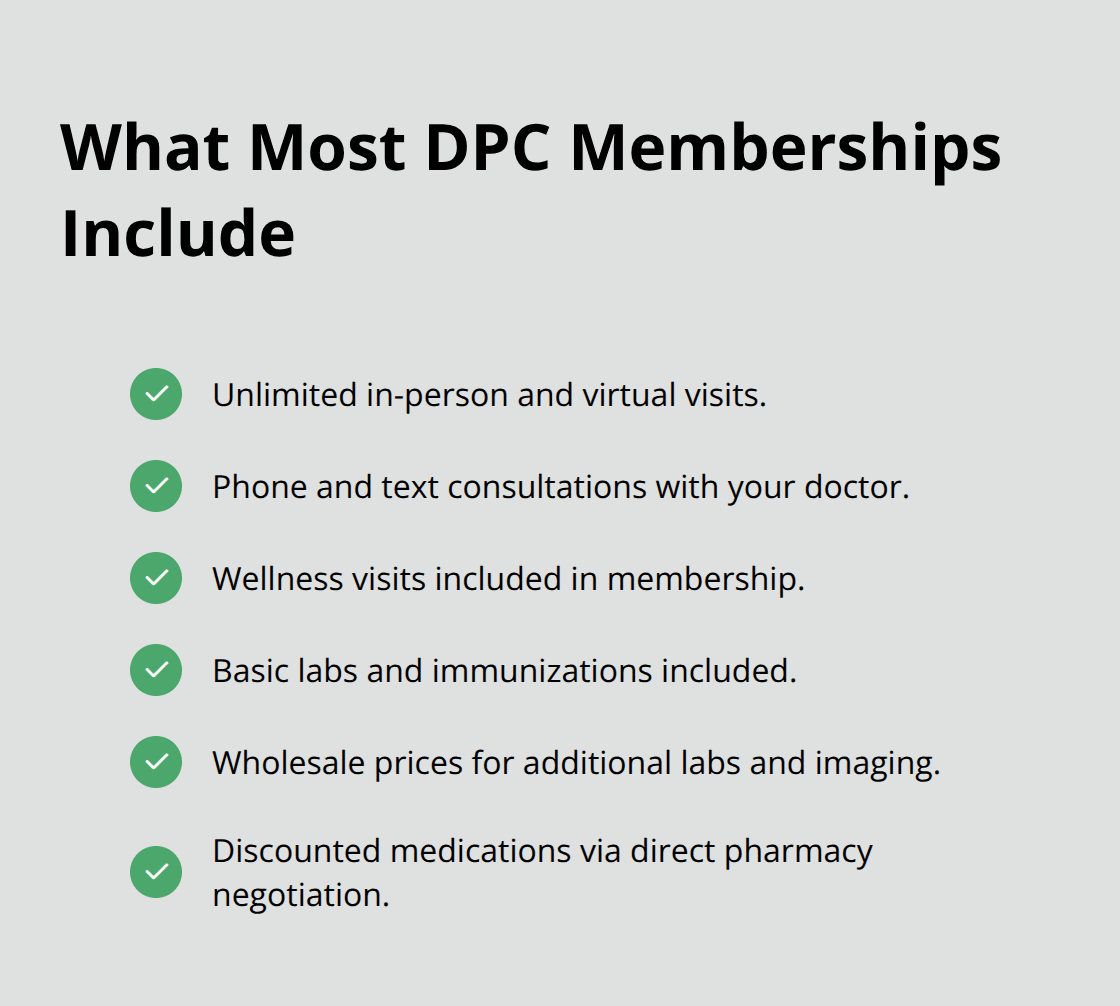
Some DPC practices offer specialized programs that address specific patient needs beyond standard primary care, including personalized care plans and comprehensive care management. These targeted services reflect how the membership model allows practices to customize care around what their patients actually require.
Prevention Becomes the Priority
Your doctor has financial incentive to keep you healthy and out of the emergency room, not to process as many billable encounters as possible. This shift transforms how medicine works and raises the question of whether direct primary care is worth it for many patients. Research shows that DPC patients experience fewer emergency department visits and lower hospital admissions than traditional primary care patients. Prevention works when your doctor actually has time to address problems early. You can text your doctor about a concern instead of waiting weeks for an appointment.
Transparent Costs and Direct Care Coordination
You know exactly what your membership costs each month and what’s included, eliminating the surprise bills that plague traditional insurance. Prescriptions and other medical services often cost less through DPC than they would with insurance co-pays. Your doctor coordinates specialty referrals directly and works with specialists to ensure continuity rather than sending you into the healthcare maze alone.
The Relationship That Changes Everything
The relationship itself transforms because DPC physicians see you as a whole person rather than a diagnosis code, building care around a patient-centered office setting. Since your doctor isn’t drowning in administrative work, the physician can serve as a consistent provider who remembers your medical history and your goals. This direct connection between patient and physician creates the foundation for better health outcomes. As you evaluate whether DPC fits your situation, understanding the financial benefits becomes the next logical step in your decision.
Cost Savings and Financial Benefits of Direct Primary Care
The financial case for direct primary care DPC becomes obvious when you stop thinking about insurance premiums and start calculating what you actually spend on health care, especially when you understand how much direct primary care really costs compared with traditional insurance. Instead of paying monthly insurance premiums that average $500 to $600 for individual coverage, you pay a DPC membership fee between $50 and $100 per month as a flat monthly amount, according to the 2024 American Academy of Family Physicians data. That single change saves most people $4,800 to $6,600 annually before you even factor in the other financial benefits. Add in the elimination of deductibles, co-pays, and surprise bills, and patients can save money on overall healthcare costs even faster. A family paying $1,500 monthly for employer-sponsored insurance suddenly pays perhaps $250 to $300 total for DPC memberships, freeing up real money for other priorities. The transparency matters as much as the numbers. You never open an envelope three months later, discovering your doctor’s visit cost $500 because the insurance company denied coverage. Your costs stay fixed, predictable, and knowable before you schedule an appointment.
Where DPC Saves You the Most Money
The biggest financial advantage extends beyond membership fees to how DPC practices handle labs, imaging, and medications. When insurance companies negotiate rates, they create a system where patients often pay more out-of-pocket than the actual cost of services. DPC practices offer wholesale lab pricing and at-cost imaging directly to patients, meaning you pay what the service actually costs rather than inflated insurance rates. Medications cost significantly less through DPC wholesale pharmacy partnerships than through traditional insurance co-pays. A patient needing a maintenance medication might pay $15 to $30 monthly through DPC wholesale pricing compared to a $50 co-pay under insurance. Over a year, that amounts to $240 to $420 in savings on a single medication. Primary care services, when provided on a timely basis, can reduce emergency department visits and hospital admissions compared to traditional care patients. These reductions represent enormous savings because emergency care and hospitalizations generate the highest costs in healthcare. Preventing a single emergency room visit, which averages $1,200 to $1,500, pays for an entire year of DPC membership. Hospital admissions that average $15,000 to $35,000 become less likely when your doctor has time for preventive medicine and early intervention.
Smart Insurance Pairing Maximizes Your Benefits
Many DPC practices do not accept insurance and work best when paired with catastrophic coverage rather than treated as a replacement for it, which is an important consideration when you set up a direct primary care arrangement. Starting January 1, 2026, new IRS rules allow patients with high-deductible health plans to contribute to Health Savings Accounts while maintaining DPC membership if monthly fees stay below $150 for individuals or $300 for families. This change makes DPC even more financially efficient because you can pay membership fees with pre-tax HSA dollars, reducing your taxable income while funding healthcare.
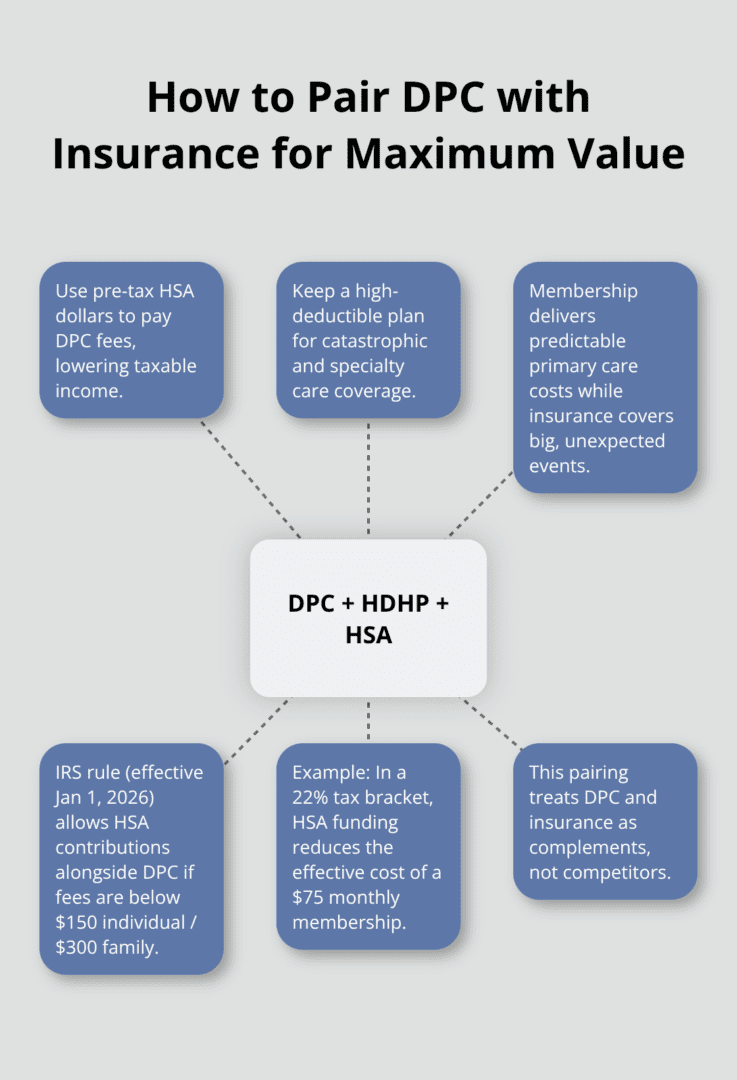
A patient in the 22 percent tax bracket using an HSA saves approximately $16.50 monthly on a $75 DPC membership simply through tax advantages. Many patients successfully combine DPC with a high-deductible health plan covering catastrophic care and specialty services while using DPC for all primary care needs. This combination keeps primary care covered through the membership, while high-deductible insurance handles major emergencies and specialty care.
Small Business Cost Stability
Small business owners particularly benefit from this arrangement because DPC membership costs remain stable year after year, unlike traditional insurance premiums that increase 5 to 10 percent annually. Compared with concierge practices or concierge care, DPC is typically more affordable for employers and employees, leading many to ask whether direct primary care is worth it as their most affordable option. A business offering $75 monthly DPC memberships to employees pays $900 annually per employee, a cost that stays consistent rather than climbing unpredictably. When employees also carry a high-deductible plan, the total cost structure becomes far more manageable than traditional insurance alone while actually improving healthcare access and outcomes. Employees gain direct access to their doctors through a membership rather than an annual fee, which translates to better health and higher productivity.
Final Thoughts
Direct primary care works by placing your health and your doctor’s judgment at the center of every decision, not insurance company profits. You pay a straightforward membership fee, receive same-day appointments with unhurried visits, and never face surprise bills or insurance denials. This model shifts control back to you and your physician, creating space for genuine health conversations that actually prevent serious problems before they start.
The financial benefits extend far beyond the low monthly membership cost. Wholesale labs, discounted medications, and fewer emergency room visits (because preventive care actually happens) add up to thousands in annual savings for individuals and families. Small business owners gain cost stability and improved employee health, while patients of all backgrounds gain direct access to their doctor through phone, text, and in-person visits without administrative friction.
If you’re ready to experience healthcare that respects your time and money, Mosaic Medicine Clinic in Bradenton, Florida, offers comprehensive direct primary care with transparent costs and direct physician access. We provide wholesale labs, at-cost imaging, and discounted medications alongside specialized programs designed around your specific health needs. Your health shouldn’t require fighting with insurance companies or guessing what you’ll owe.