

Healthcare costs keep climbing, and many people wonder if there’s a better way to get care without breaking the bank.
Direct primary care is gaining traction as an alternative to traditional insurance-based medicine. At Mosaic Medicine Clinic, we see patients asking whether this model is worth it for their specific situation. The answer depends on your health needs, budget, and how you use healthcare services.
How Direct Primay Care Actually Works
Direct primary care flips the traditional healthcare model on its head. Instead of paying insurance premiums and then dealing with deductibles, copays, and claim denials, you pay a flat monthly fee directly to your doctor’s office. In Central Florida, these fees typically range from $50 to $100 per person per month, or about $600 to $1,200 annually. That predictability matters-you know exactly what you’ll spend on primary care each month, no surprises.
The American Academy of Family Physicians reported in 2024 that 99% of DPC practices offer same-day appointments, and average patient panels sit around 413 patients per doctor. This smaller panel size is the secret ingredient that makes everything else possible. Your doctor isn’t juggling thousands of patients, so they can actually spend time with you. Most DPC visits run 30 to 60 minutes, compared to the 10 to 15-minute slots common in traditional insurance-based practices. That extra time allows your doctor to address chronic conditions thoroughly, discuss lifestyle changes, and catch problems early rather than treating emergencies later.
What’s Actually Included in Your Monthly Fee
The membership fees often cover far more than you’d expect from a monthly payment. A broad range of direct primary care services and other medical services—such as routine office visits, preventive screenings, vaccinations, basic lab work, and care coordination—fall under the flat fee. Many DPC practices negotiate steep discounts with pharmacies or dispense common medications directly from the office. Direct communication with your doctor happens through phone, text, or telehealth without extra charges, giving patients better access. This access matters for managing chronic conditions like diabetes or hypertension, where quick check-ins support timely care and prevent costly complications.
DPC patients had fewer emergency room visits and hospital admissions compared to traditional insurance patients, directly lowering overall healthcare spending. For someone with a chronic condition, that constant access to your doctor’s team can mean the difference between stable disease and a preventable crisis.
The Financial Reality of DPC Membership
A single urgent care visit or emergency room visit costs $300 to $1,000 out of pocket. One ER visit nearly wipes out an entire year’s DPC membership. DPC monthly fees range from $50 to $100, making the math straightforward for families. If you’re uninsured or underinsured, DPC provides transparent pricing upfront and helps you avoid hidden fees. You see the cost of services before you need them.
Many DPC practices also offer discounted rates on procedures, lab work, and imaging that exceed what you’d find through traditional insurance networks, helping reduce overall healthcare costs. The combination of lower monthly costs, fewer surprise bills, and reduced emergency visits helps families and uninsured patients save money over time. This financial clarity sets the stage for understanding how DPC stacks up against the traditional insurance approach-something we’ll examine in the next section, especially since many people pair DPC with high deductible insurance to cover emergencies outside the membership.
Direct Primary Care vs. Traditional Insurance: What Actually Changes
Same-Day Access Transforms How You Get Care
The difference between DPC and traditional insurance shows up the moment you need an appointment, especially in terms of patient access. 99% of DPC practices offer same-day appointments, while traditional insurance-based primary care often means waiting weeks. You call a DPC office in the morning and see your doctor that afternoon, which also helps address urgent concerns quickly. This speed matters for acute problems like infections or injuries where delays compound the issue and supports more accessible care.
Traditional practices operate under different constraints because doctors manage a traditional patient panel of 2,000 to 3,000 people. Your DPC doctor manages around 413 patients, which explains why they fit you in quickly and spend meaningful time during your visit. A typical DPC appointment runs 30 to 60 minutes, giving your doctor space to investigate what’s really happening instead of the rushed visits common in 10- or 15-minute traditional care slots.
Extended Visits Enable Real Conversations About Prevention
During that extended time, you and your doctor actually discuss prevention, lifestyle changes, and early warning signs in a way that shows how DPC does things differently from traditional practices rather than just treating symptoms after they escalate into problems. Your doctor asks questions about your daily habits, stress levels, and family history to shape personalized care plans. They explain what they find and why they recommend specific treatments. This conversation-based approach catches issues before they become emergencies.
Traditional insurance-based visits rarely allow for this depth. Doctors in high-volume practices spend most of their time documenting for insurance billing rather than talking with patients. The 10 to 15-minute appointment slot reflects this reality. DPC flips the priority: your doctor spends time with you, and patients feel more heard and connected, not fighting insurance paperwork.
Transparent Pricing Eliminates Financial Surprises
The financial comparison becomes stark when you examine what you actually pay. Traditional family health insurance averages around $24,000 per year in premiums alone, before you factor in deductibles, copays, and coinsurance.
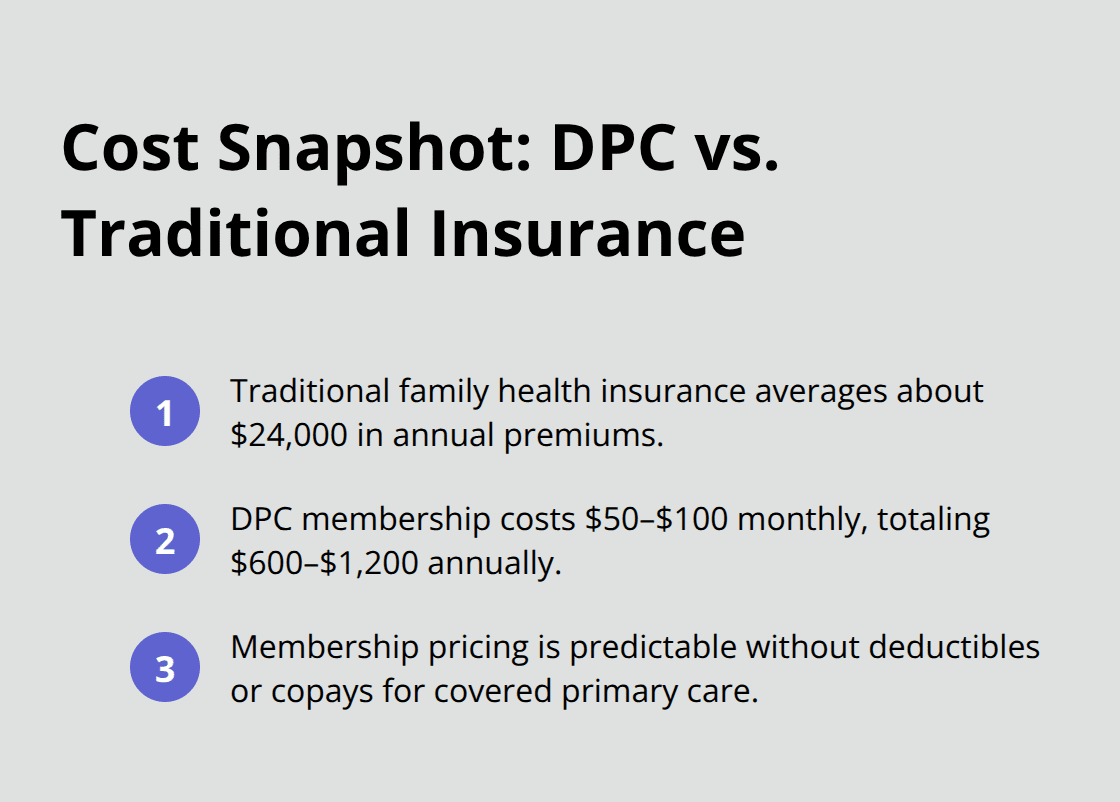
The direct primary care model keeps pricing simple: A DPC membership costs $50 to $100 monthly, totaling $600 to $1,200 annually. That difference is real money, especially once you compare direct primary care costs to traditional insurance.
Insurance companies also control what gets covered through prior authorization requirements, claim denials, and network restrictions that delay care. DPC eliminates this middle layer entirely, and practices do not bill insurance for included care. You pay your membership fee, and your doctor decides your health care needs without anyone else’s approval.
Knowing Your Costs Upfront Changes Everything
Pricing is transparent from the start. You know exactly what a visit costs, what lab work costs, and what medications cost. No surprise bills arrive three months later. This transparency lets you make informed decisions about your care instead of discovering unexpected charges after treatment.
For families trying to budget healthcare spending, this predictability reduces stress and lets you plan finances accurately instead of bracing for insurance surprises. When you understand your costs upfront, you can focus on your health rather than worrying about bills.
Who Feels the Impact Most
Many patients feel the impact of DPC most when they have chronic conditions, busy schedules, or limited budgets. Patients today often report that DPC improves satisfaction and access. Someone managing diabetes benefits from quick access to their doctor for medication adjustments. A self-employed person values the predictable monthly cost. A family with multiple health concerns appreciates longer visits where all issues get addressed, along with help coordinating specialty referrals when something falls outside the primary doctor’s scope. These groups experience the contrast between DPC and traditional insurance most acutely, which raises an important question: who actually benefits most from making this switch?
Who Benefits Most From Direct Primary Care
Self-Employed Individuals and Small Business Owners
Self-employed individuals and small business owners face a specific financial reality that DPC solves directly. When you’re self-employed, you shoulder both the employer and employee portions of health insurance premiums. DPC’s predictable monthly fees of $50 to $100 per person make the math obvious. A self-employed person with a spouse saves money annually when switching from traditional insurance to DPC, assuming they pair it with a high-deductible plan for emergencies. That money stays in your business or your pocket.
Beyond cost, self-employed people value the scheduling flexibility DPC provides. Same-day appointments mean you don’t lose entire workdays waiting for care. Quick telehealth consultations with your doctor happen during lunch breaks or between client calls. The predictable monthly membership fee also simplifies business accounting compared to fluctuating insurance premiums that change yearly.
Families Prioritizing Prevention and Continuity
Families with children or aging parents benefit differently from DPC, primarily through prevention and long-term care that helps ensure continuity for the whole family. When your entire family sees the same primary care doctor and works with primary care physicians who know your medical history, genetic patterns, and lifestyle habits, preventive care becomes more targeted and effective, especially once you understand the key pros and cons of direct primary care. A DPC doctor who knows your family’s history of diabetes catches early warning signs during routine visits instead of discovering problems in the emergency room.
Extended 30 to 60-minute appointments mean your doctor addresses all family members’ concerns comprehensively rather than rushing through separate quick visits. For families managing chronic conditions like hypertension, diabetes, or asthma, DPC’s direct access transforms daily management. Instead of scheduling appointments weeks out, you text your doctor about medication side effects or blood pressure readings and receive same-day guidance, with help coordinating specialist care when needs go beyond the practice.
People Managing Multiple Chronic Conditions
The American College of Lifestyle Medicine emphasizes that chronic disease management improves dramatically with consistent provider access and time for discussion about lifestyle changes. People managing multiple conditions particularly notice this difference, but it’s also important to understand the potential disadvantages of direct primary care so you can plan for specialist or emergency needs beyond your membership. Someone with diabetes and hypertension receives coordinated care from one doctor who understands how their medications interact, how diet changes affect both conditions, and when to coordinate specialty care, rather than piecing together advice from multiple insurance-network specialists who rarely communicate.
Direct access to your doctor transforms how you handle daily management through unlimited primary care. You don’t wait weeks for appointments when you need medication adjustments or have questions about your treatment plan. Your doctor knows your complete medical picture and can coordinate specialty referrals if specialists become necessary, making informed decisions quickly without insurance company approval delays. This continuity prevents costly complications and hospitalizations that often result from fragmented care across multiple providers.
Final Thoughts
Direct primary care works best when your healthcare needs align with what the model delivers: predictable costs, consistent access, and time for meaningful conversations with your doctor, all hallmarks of direct patient care in healthcare. If you’re self-employed, managing chronic conditions, or tired of insurance surprises, the answer to whether direct primary care is worth it becomes clearer. The financial math favors DPC for most people, especially when paired with a high-deductible plan for emergencies-you spend $600 to $1,200 annually on membership instead of $24,000 on traditional insurance premiums while gaining same-day appointments and 30 to 60-minute visits that address your health concerns.
The real value emerges over time through prevention and early intervention. When your doctor knows you personally and has time to discuss lifestyle changes, chronic conditions stabilize before they become emergencies. Fewer ER visits and hospitalizations mean lower total healthcare spending, not just lower monthly costs, because your doctor makes clinical decisions based on your needs rather than insurance company restrictions or prior authorization delays.
We at Mosaic Medicine Clinic in Bradenton, FL, see this value play out daily with our patients through our membership model that focuses on strong relationships and unrushed appointments with direct access to physicians. Evaluate your annual healthcare spending, how often you need appointments, and whether you value direct access to your doctor over insurance network options. If predictable costs and personalized care matter to you, explore what direct primary care offers and see if it aligns with your health goals.