
Most people have no idea what they’ll pay for healthcare until the bill arrives. At Mosaic Medicine Clinic, we believe direct primary care cost should be transparent and predictable from day one.
This guide breaks down exactly what you’ll spend on a DPC membership, how it compares to traditional insurance, and what you actually get for your money.
What You’ll Actually Pay for Direct Primary Care
Typical DPC memberships in the US range from $50 to $100 per month, according to the American Academy of Family Physicians 2024 data brief. Most practices cluster around $100 monthly for standard adult coverage. Your age, location, and the services included in the plan all affect the final price. Children often cost $20 to $75 per month, while older adults may pay up to $150. Many practices offer discounted family rates or allow annual payments with a small discount, so a family of four might spend $250 to $400 monthly instead of individual rates. One-time enrollment fees of $50 to $200 are standard across the industry, so factor that into your first-year costs.
What’s Included and What Isn’t
Your monthly fee covers unlimited office visits, same-day or next-day appointments, preventive care, chronic disease management, and extended visits that typically last 30 to 60 minutes. Many DPC practices offer same-day appointments, which saves you time and prevents problems from worsening. However, labs, imaging like MRIs or CT scans, procedures requiring general anesthesia, and most prescription medications are billed separately. Some practices offer wholesale pricing on labs and discounted medications, but you need to ask explicitly before enrolling. A routine blood test might cost $30 to $50 outside the membership, while an MRI could run $800 to $2,000. You should always request a detailed price list from any practice before signing up.
Why Location and Practice Size Matter
DPC practices in high-income suburban areas typically charge more than rural or underserved areas. A practice in a major metropolitan area might charge $125 to $150 monthly, while the same services in a smaller town cost $60 to $80. Practice size also influences pricing. The average DPC practice serves about 413 patients, according to AAFP data. Smaller practices with 200 to 300 patients often charge more because they have fewer members to spread costs across. Larger practices approaching 500 to 600 patients can sometimes offer lower fees. Geographic availability itself is uneven-DPC practices cluster in higher-income neighborhoods, which creates access disparities in underserved communities. If you live in a rural area or lower-income urban neighborhood, you may have limited options or higher costs due to less competition.
How to Compare Pricing in Your Area
The national averages don’t tell the whole story. You need to check what’s actually available in your specific area before assuming standard rates apply to you. Contact three to five practices near you and request their fee schedules, including any enrollment costs and add-on charges for labs or imaging. Ask whether they offer family discounts or annual payment options that might lower your total cost.
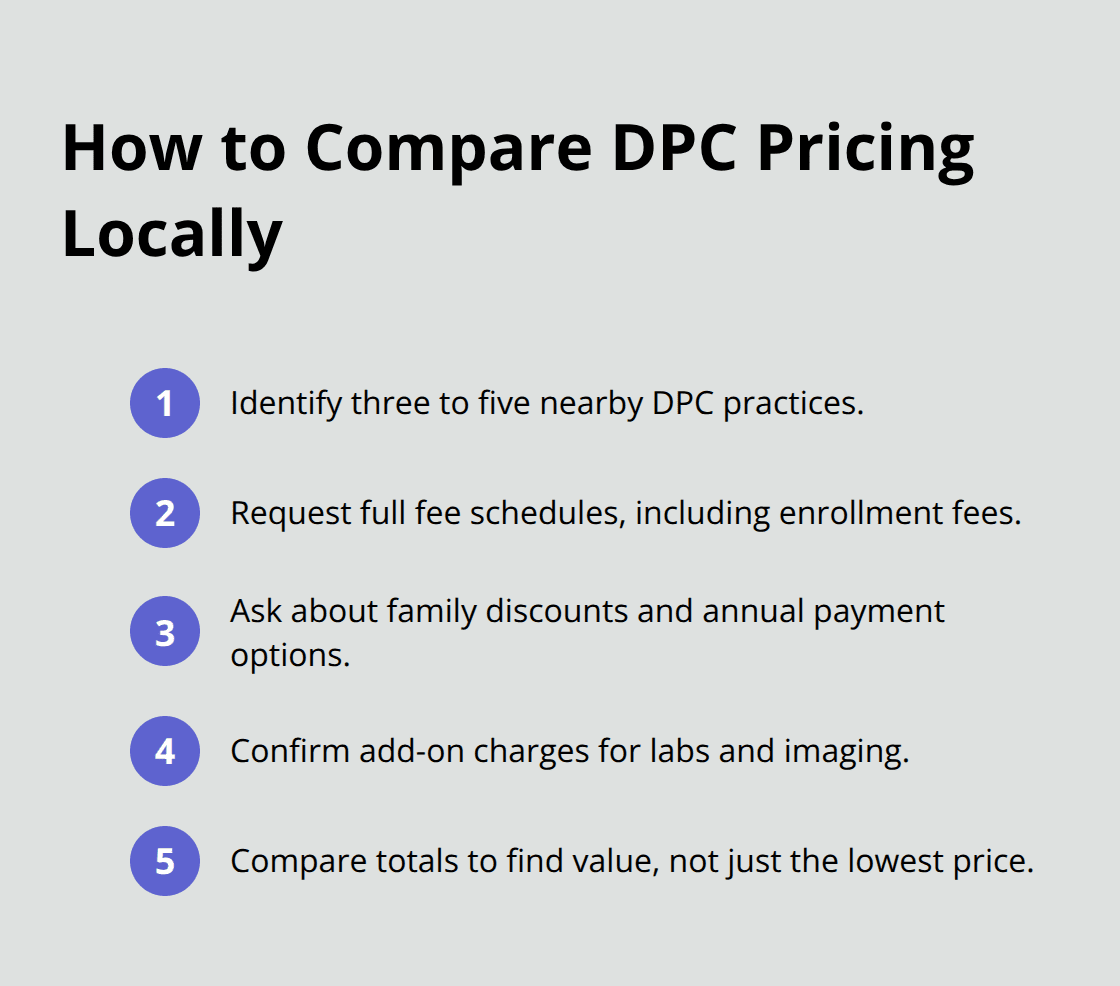
This comparison takes time, but it reveals the real market in your region and helps you avoid overpaying for services you don’t need.
How DPC Stacks Up Against Traditional Insurance
The True Cost of Traditional Health Insurance
Traditional health insurance costs far more than most people realize. The average worker paid $26,993 in premiums for family coverage in 2025, yet that covers only the baseline. Add a $1,500 deductible, $30 copays per visit, 20% coinsurance after your deductible, and an out-of-pocket maximum of $8,550, and your annual healthcare spending climbs rapidly. A single urgent care visit costs $150 to $300 out of pocket. An MRI runs $1,000 to $3,000 even with insurance. If you manage a chronic condition like diabetes or hypertension, you make monthly copay visits plus pay for ongoing medications, labs, and monitoring. Over a year, a family with moderate healthcare needs spends $15,000 to $20,000 total.
DPC Membership Costs Less and Offers More Predictability
DPC membership costs $100 monthly, or $1,200 annually for one person and perhaps $300 to $400 monthly for a family of four-that’s $3,600 to $4,800 yearly. Your unlimited office visits, same-day appointments, and preventive care are included. Labs cost less through wholesale pricing. No copays. No deductible games. No surprise bills because you know exactly what you’re paying upfront. The math heavily favors DPC for routine and preventive care, especially if you visit your doctor more than ten times per year or manage a chronic condition.
Prevention Reduces Long-Term Healthcare Expenses
The real advantage of DPC emerges over time through financial predictability and prevention. With traditional insurance, you cannot budget accurately because you don’t know if next month brings a specialist visit, imaging, or unexpected procedures. DPC eliminates that uncertainty-your membership fee stays fixed. More importantly, DPC practices emphasize preventive care and early intervention because physicians have time during extended 30 to 60 minute appointments to catch problems before they become expensive. When a doctor identifies high blood pressure during a routine visit and adjusts your medication immediately, you avoid a future stroke or heart attack that would cost $100,000 or more in hospital care. A prevention-focused model reduces downstream expenses significantly.
Pairing DPC with High-Deductible Coverage
DPC is not a complete replacement for insurance. You still need catastrophic coverage for hospitalizations, surgeries, and emergency care-most people pair DPC with a high-deductible health plan that costs less in premiums because it covers major medical events. The combination of a $100 monthly DPC fee plus a $150 monthly HDHP premium totals $3,000 annually, roughly 40% less than traditional family insurance premiums alone, while delivering better access and more physician time for routine care.
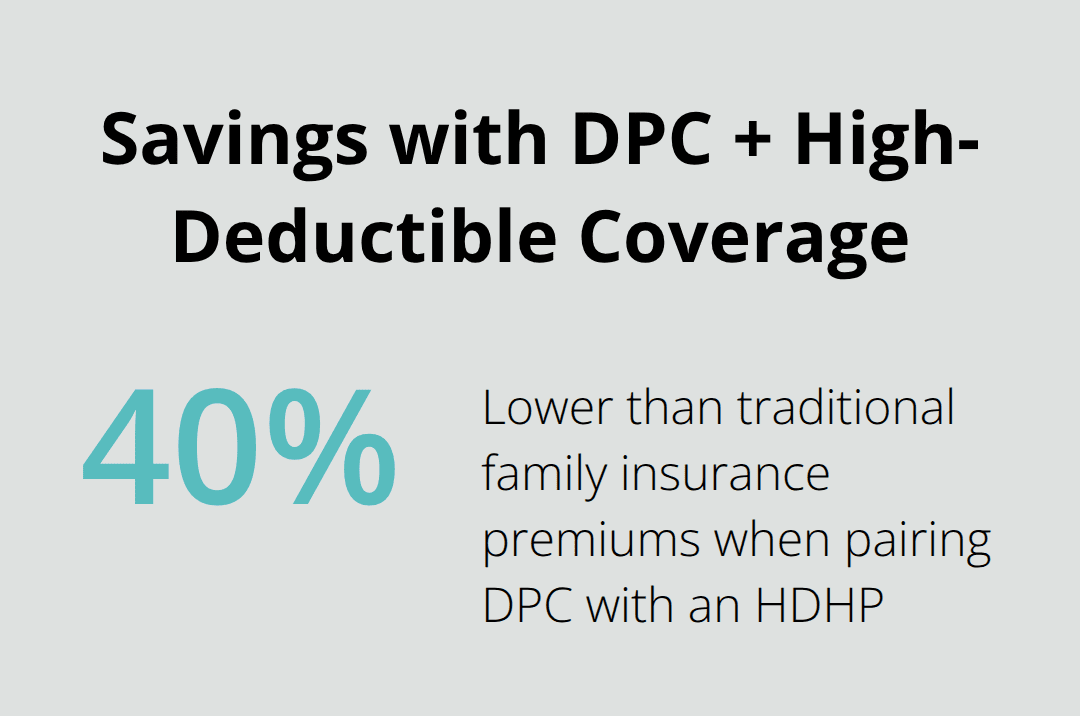
This hybrid approach protects you against catastrophic expenses while keeping your routine healthcare costs predictable and low.
What’s Included in Your DPC Membership
Unlimited Visits and Same-Day Access
Your DPC membership covers unlimited office visits without per-visit charges. Same-day or next-day appointments are standard-99% of DPC practices now offer this access according to the American Academy of Family Physicians 2024 data brief. Extended visits lasting 30 to 60 minutes replace the standard 10 to 15 minutes you receive with traditional insurance. This time matters. A patient with poorly controlled diabetes might visit a traditional insurance doctor for 12 minutes every three months, while a DPC member gets 45 minutes monthly to address diet, exercise, medication side effects, and lab results comprehensively.
Preventive Care and Chronic Disease Management
Preventive care sits at the core of your membership. Annual physicals, age-appropriate screenings, vaccinations, blood pressure monitoring, and health risk assessments all fall within your membership fee. If you manage chronic conditions like diabetes, hypertension, or asthma, your physician has actual time during appointments to review your medications, adjust dosages, discuss lifestyle changes, and coordinate your ongoing care without rushing. This continuity prevents problems from worsening and catches complications early when they cost far less to treat.
Labs, Procedures, and Transparent Pricing
Many DPC practices offer in-house lab work at wholesale rates, meaning a comprehensive metabolic panel costs $30 to $50 instead of $150 to $200. Imaging like X-rays and ultrasounds often runs at cost or near-cost pricing. The most popular procedures performed in DPC practices are EKGs and biopsy or excisions, both of which your membership typically covers or heavily discounts.
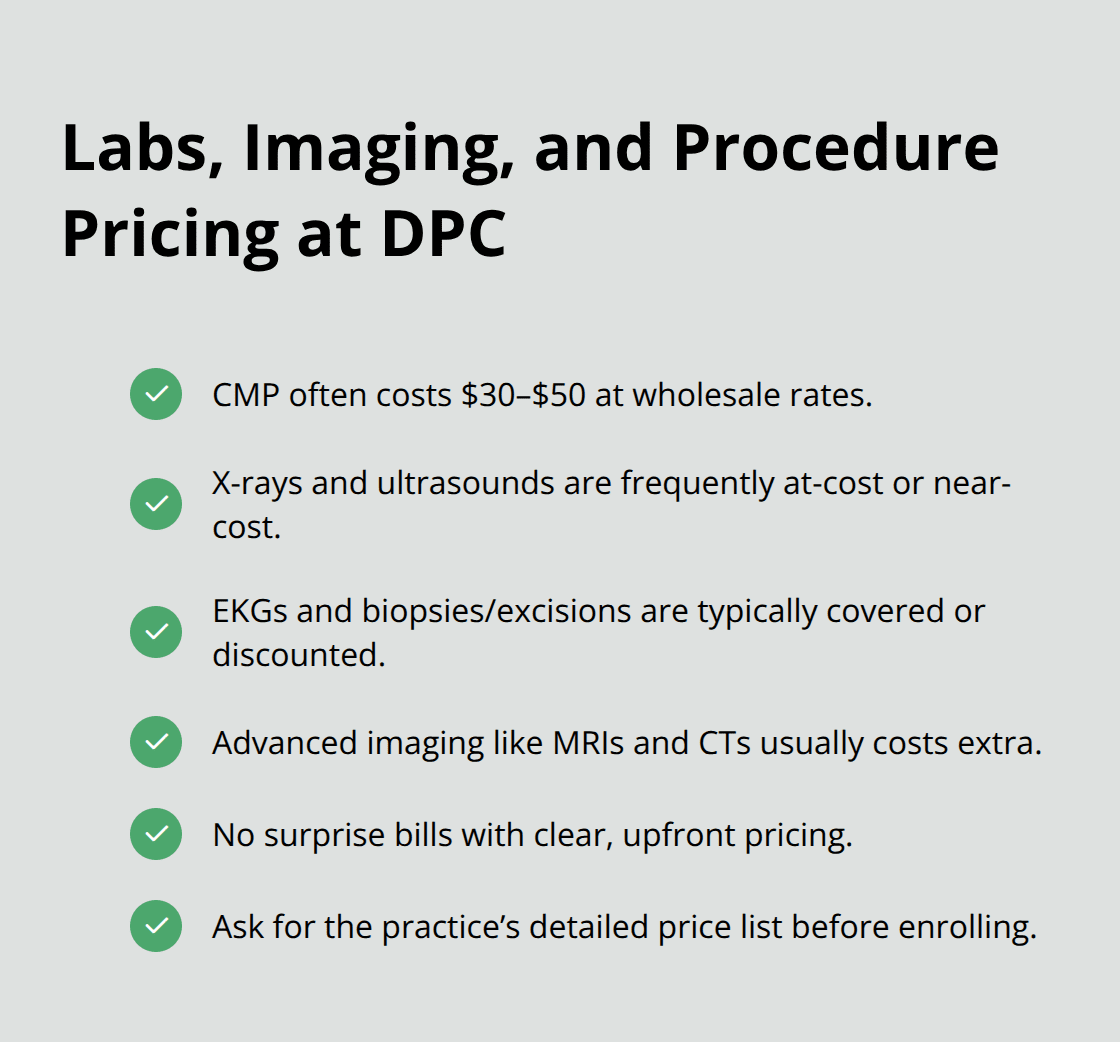
Advanced imaging like MRIs and CT scans usually requires separate payment, but your doctor orders them knowing you’ll receive transparent pricing with no surprise bills, no copays, and no deductibles before receiving care. Mosaic Medicine Clinic emphasizes clarity on costs through wholesale labs, at-cost imaging, and discounted medications, ensuring you know exactly what additional expenses beyond your membership fee to expect.
Direct Access and Flexible Communication
Direct access to your physician distinguishes DPC from traditional care where you navigate nurse hotlines and appointment schedulers. Many DPC practices provide secure messaging, email, or patient portal communication so you can ask non-urgent questions without scheduling a visit. Some offer 24/7 availability for acute concerns, preventing unnecessary urgent care trips that cost $150 to $300 out of pocket. Telemedicine visits for follow-ups, medication refills, and minor issues eliminate travel time and childcare hassles. Home visits remain available at certain practices for elderly or homebound patients, though these may carry additional fees.
Prevention-Focused Care Philosophy
The membership model means your doctor has financial incentive to keep you healthy and prevent expensive complications rather than perform unnecessary tests or procedures. Your physician spends time understanding your full health picture, your family history, your work stress, your sleep patterns, and your health goals. This holistic approach catches problems early when they’re cheaper and easier to treat. Before enrolling anywhere, request a detailed price list for common services like routine labs, vaccinations, and minor procedures so you understand what sits inside versus outside your membership boundary.
Final Thoughts
Direct primary care cost transparency sets DPC apart from traditional insurance where bills arrive weeks later with unexpected charges. At Mosaic Medicine Clinic, we believe you deserve to know exactly what you’ll pay before committing to any healthcare plan. Your membership fee covers unlimited visits and preventive care with no surprise copays or deductible games, while labs cost less through wholesale pricing and imaging carries transparent pricing.
Evaluating whether DPC fits your budget requires honest assessment of your healthcare needs. If you visit your doctor more than ten times yearly, manage a chronic condition, or value extended appointment time with your physician, DPC typically costs less than traditional insurance while delivering better access. Calculate your current annual healthcare spending including premiums, deductibles, copays, and out-of-pocket maximums, then compare that total to a DPC membership plus a high-deductible health plan-most families discover they spend 30 to 40 percent less with DPC.
Finding a DPC practice in your area starts with searching directories like the Direct Primary Care Coalition or asking your current physician if they offer DPC arrangements. Contact practices directly and ask about their monthly fees, enrollment costs, family discounts, and what services carry additional charges. If you live in the Bradenton, Florida area, Mosaic Medicine Clinic offers comprehensive primary care with wholesale labs, at-cost imaging, and discounted medications, making quality healthcare more accessible and affordable.