
Direct primary care arrangements offer a straightforward alternative to traditional insurance-based healthcare. Instead of navigating complex insurance networks, you pay a membership fee directly to your doctor for comprehensive primary care services.
At Mosaic Medicine Clinic, we’ve seen firsthand how this model transforms ,./ patient care. This guide walks you through evaluating, choosing, and starting with a DPC practice that fits your needs and budget.
What Direct Primary Care Actually Means
The Core DPC Model
Direct primary care strips away the insurance middleman and replaces it with a straightforward membership model. You pay a monthly fee directly to your doctor, typically between $65 and $85 for adults, and that covers your primary care services without copays or deductibles. This isn’t insurance-it’s a membership to access comprehensive care from a single physician who knows your health history. DPC practices maintain panel sizes around 2,263 patients, compared to 2,500 patients in traditional primary care settings. That smaller number means your doctor actually has time for you.
Services included in membership typically cover preventive care, treatment for acute and chronic conditions, basic lab work, and care coordination. Some practices add imaging and additional diagnostics to the package.
How DPC Differs From Traditional Insurance
The real power of DPC emerges when you compare it to traditional insurance-based care. With insurance, you pay premiums to a company that profits from denying claims, navigating authorization requirements, and managing networks of providers who’ve never seen your file. DPC flips this entirely-your doctor’s success depends on keeping you healthy, not on processing volume or billing procedures.
You get same-day or next-day appointments, direct phone and email access to your physician, and longer visit times that let you actually discuss what matters. Studies show DPC patients experience fewer emergency room visits compared to traditional care, which means the model genuinely improves outcomes.
What This Means for Your Care
The membership approach eliminates the insurance company’s profit motive between you and your doctor’s medical judgment, which fundamentally changes how care gets delivered and what actually gets recommended. You know exactly what you’re paying and why, with transparent pricing and no hidden fees. At Mosaic Medicine Clinic in Bradenton, we offer wholesale lab costs and at-cost imaging so you understand the full picture of your healthcare expenses.
This transparency and direct relationship with your physician sets the stage for the next critical step: evaluating whether a DPC practice aligns with your specific healthcare needs and budget.
Choosing the Right DPC Practice for Your Situation
Assess Your Health Needs and Budget
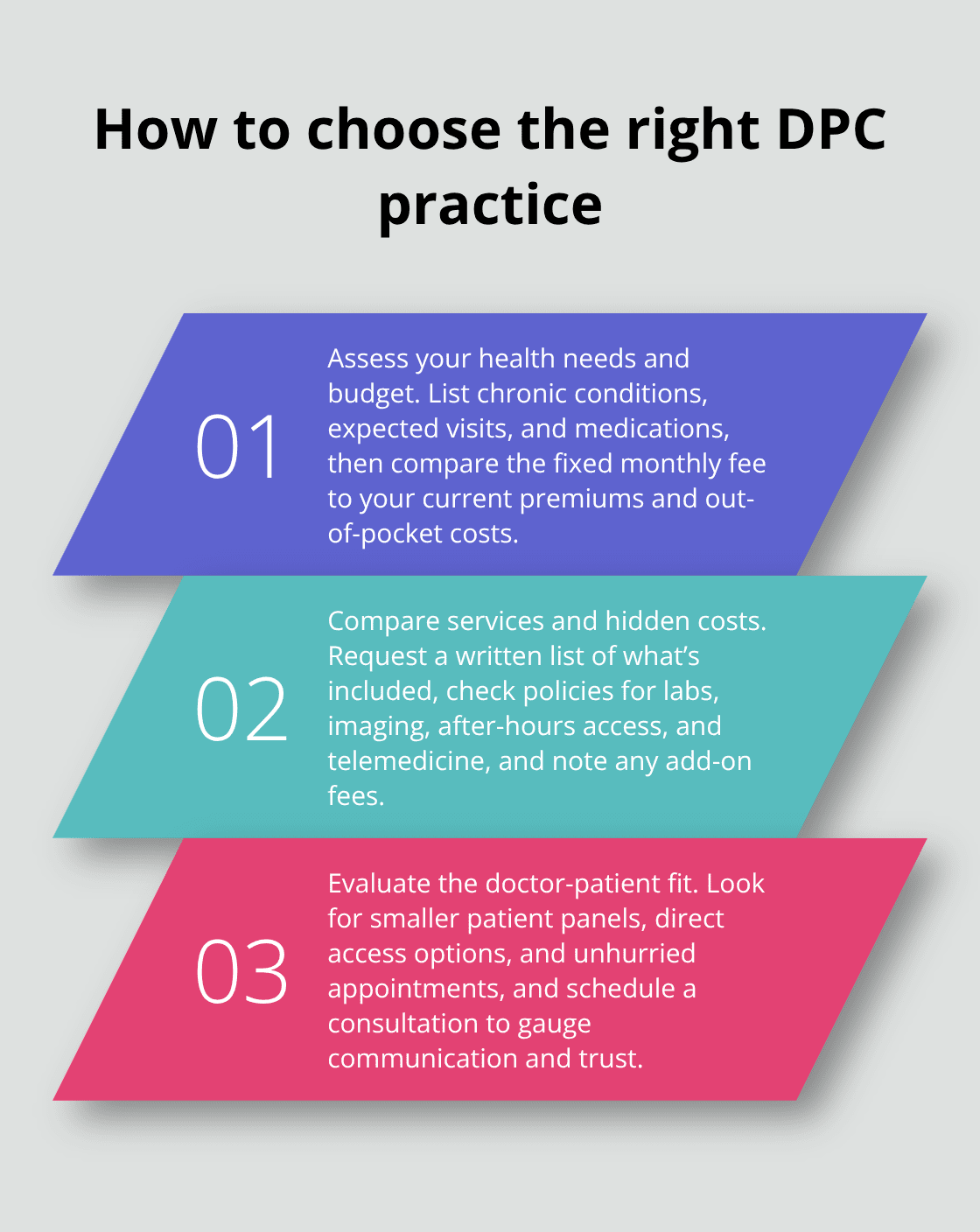
Selecting a DPC practice requires honest assessment of what you actually need from healthcare rather than defaulting to what you’ve always done. Start by mapping your current health status and anticipated care needs over the next year. If you manage chronic conditions like diabetes or hypertension, confirm the practice has experience with ongoing disease management and offers unlimited visits without extra fees. If you’re primarily focused on preventive care and annual physicals, a basic DPC membership works fine. If you have young children, verify the practice covers pediatric care or partners with pediatricians nearby.
The typical monthly fee ranges from $65 to $85 for adults, so calculate whether this fixed cost beats your current insurance premiums plus out-of-pocket spending. Most people find DPC saves money within the first year when you account for eliminated copays and deductibles, but this depends on your actual usage patterns.
Search for DPC Practices in Your Area
Finding DPC practices in your area requires more effort than searching for traditional doctors because the model remains relatively new outside medical circles. Search for direct primary care practices in your city using Google Maps and add terms like DPC or membership medicine to narrow results. Call practices directly and ask specific questions: How many patients does the physician see? What does membership include versus what gets billed separately? Do they offer telemedicine? What happens if you need emergency care or specialty referrals? Compare at least three practices before deciding.
Compare Services and Hidden Costs
When evaluating practices, look beyond membership fees and examine what services carry additional costs. Some practices bundle labs and basic imaging into membership while others charge separately. Request a written summary of included services and ask about after-hours access policies. The cheapest membership means nothing if you charge separately for every lab test or minor procedure.
Verify the practice accepts your health savings account if you have one, since HSA-compatible DPC arrangements help stretch your healthcare budget further. At Mosaic Medicine Clinic in Bradenton, we offer wholesale lab costs and at-cost imaging so you understand the full picture of your healthcare expenses.
Evaluate the Doctor-Patient Fit
Trust your instinct about whether the physician listens and takes time to understand your health priorities. The entire DPC model hinges on the doctor-patient relationship, so schedule a consultation call before committing to membership. This conversation reveals whether the practice maintains smaller patient panels that allow unhurried appointments and whether physicians provide direct access through phone, email, and video. The right practice match sets the foundation for the next step: understanding your membership terms and getting started with your actual care.
Getting Started With Your DPC Membership
Understanding Your Membership Agreement
The first days after signing up for DPC membership set the tone for your entire experience with the practice. Before your first appointment, you’ll receive a membership agreement that spells out exactly what’s included, what costs extra, and how to access care outside standard hours. Read this carefully rather than skimming it-the document should specify whether labs, imaging, and medications are bundled into your fee or billed separately. Ask your practice to clarify the after-hours response time, whether they handle refills electronically, and what happens if you need emergency care or a specialist referral. Some practices guarantee same-day phone callbacks; others offer different response windows. This matters because it affects how you’ll actually use the service when you’re sick at night or need quick guidance.
Request a written summary of all included services and keep it somewhere accessible-you’ll reference it when questions come up about whether a particular service requires an additional charge. Many DPC practices use patient portals to store this information, making it easy to check coverage before scheduling anything beyond your regular visits.
Preparing for Your First Appointment
Your first appointment typically runs 45 to 60 minutes, which feels shockingly different from traditional medicine where you wait 30 minutes to see a doctor for 10 minutes of interaction. Bring your complete medical history, current medication list, and insurance information even though you won’t be using traditional insurance for primary care services. The physician will establish baseline health metrics, review your health goals, and discuss how the membership covers your needs.
Accessing Your Doctor and Communication Channels
After your first appointment, you’ll have direct access to your doctor through multiple channels-phone for urgent questions, email for non-urgent matters, and video visits for follow-ups that don’t require physical examination. This direct access eliminates the frustration of phone trees and message relays. Your physician can refill prescriptions with a quick phone call or email rather than requiring you to call the office during business hours and wait for staff to process requests.
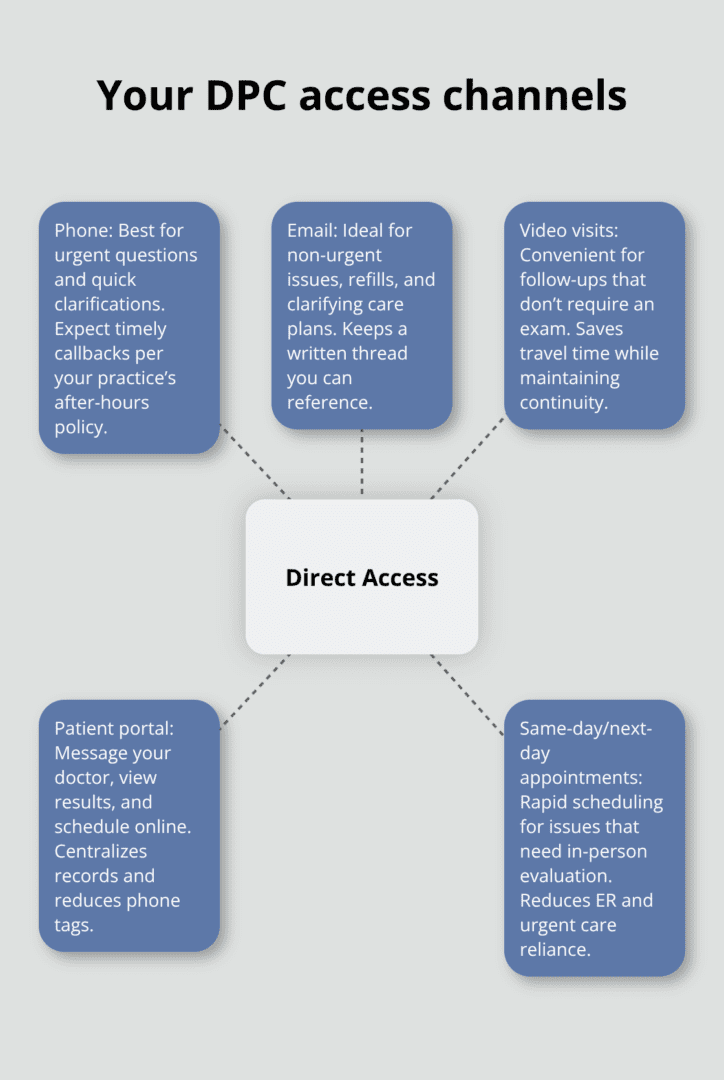
Set up your patient portal account during or immediately after your first visit so you can message your doctor, view test results, and schedule appointments without phone calls. The combination of unhurried initial appointments, direct communication access, and smaller patient panels means your doctor actually knows you as a person rather than as a chart number moving through a system.
Why Direct Primary Care Is Worth Considering
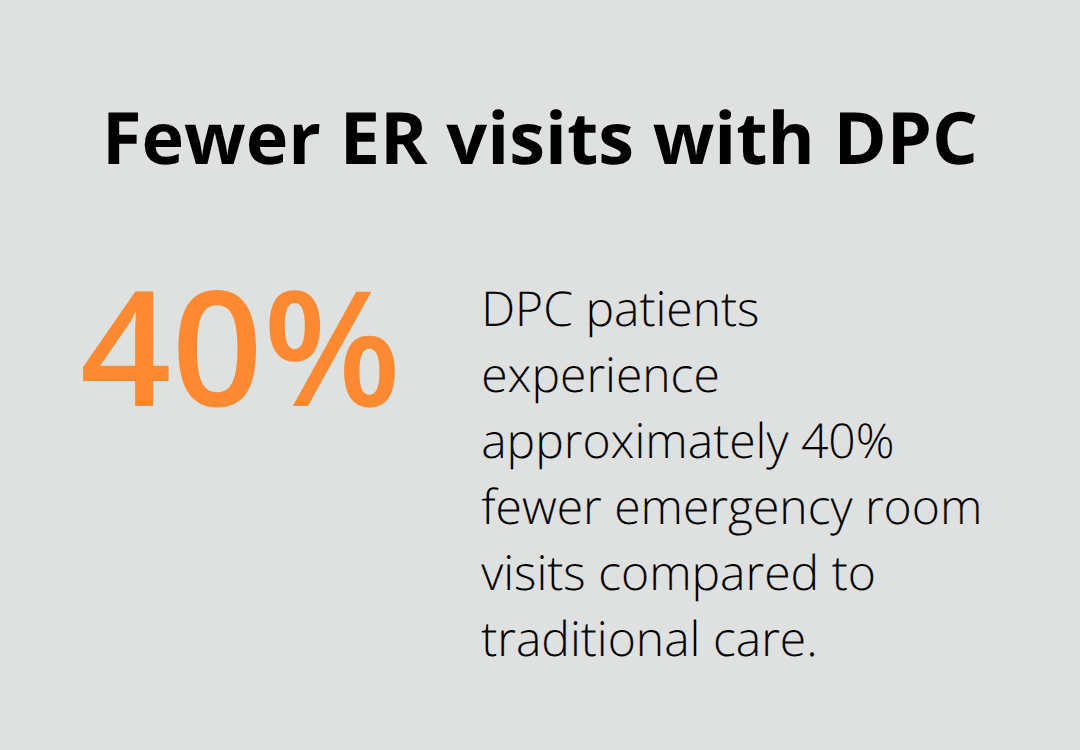
Direct primary care arrangements deliver real financial benefits that extend far beyond the monthly membership fee. You eliminate copays, deductibles, and surprise bills that plague traditional insurance, and most people save money within the first year when you factor in lower out-of-pocket costs and fewer emergency room visits. Studies show DPC patients experience approximately 40% fewer emergency room visits compared to traditional care, which means you stay healthier and avoid expensive urgent care situations.
The doctor-patient relationship fundamentally changes under the DPC model because your physician has time to listen instead of rushing through 40 patients daily. Your doctor knows your family history, your work stress, and your health goals, which means they catch problems early rather than treating crises after they develop. When your physician actually knows you, they make better recommendations tailored to your specific situation rather than following generic protocols, and preventative care becomes the focus instead of an afterthought.
Regular check-ups, health screenings, and lifestyle counseling happen naturally when you have unlimited access to your doctor, and early detection of conditions like hypertension or diabetes prevents expensive complications down the road. Direct primary care arrangements work because they align your doctor’s interests with your health rather than with insurance company profits. Explore what we offer at Mosaic Medicine Clinic in Bradenton to experience healthcare that prioritizes your wellbeing and your wallet.