

Traditional healthcare often feels like navigating a maze of insurance approvals, rushed appointments, and unexpected bills. Patients spend more time fighting the system than focusing on their health. We at Mosaic Medicine Clinic see how direct primary care at our Bradenton DPC clinic changes this dynamic completely. The DPC benefits extend far beyond cost savings, creating genuine partnerships between doctors and patients that prioritize your wellbeing over paperwork.
How Does DPC Wholesale Transform Your Healthcare Experience
Direct primary care operates on a simple membership model where you pay a flat monthly fee for comprehensive healthcare access. This approach removes insurance companies from your medical decisions and allows your doctor to focus entirely on your health rather than paperwork and approval processes, reflecting how direct primary care works as a membership-based model. The average monthly membership fee for DPC patients is approximately $77.38, compared to $160 per appointment for new uninsured patients in traditional healthcare (according to research by Eskew and Klink), which illustrates how direct primary care pricing compares to traditional healthcare costs. More than 2,500 DPC practices now exist across the United States, which reflects the rapid growth of this patient-centered direct primary care model.
Direct Communication with Company Inc Changes Everything
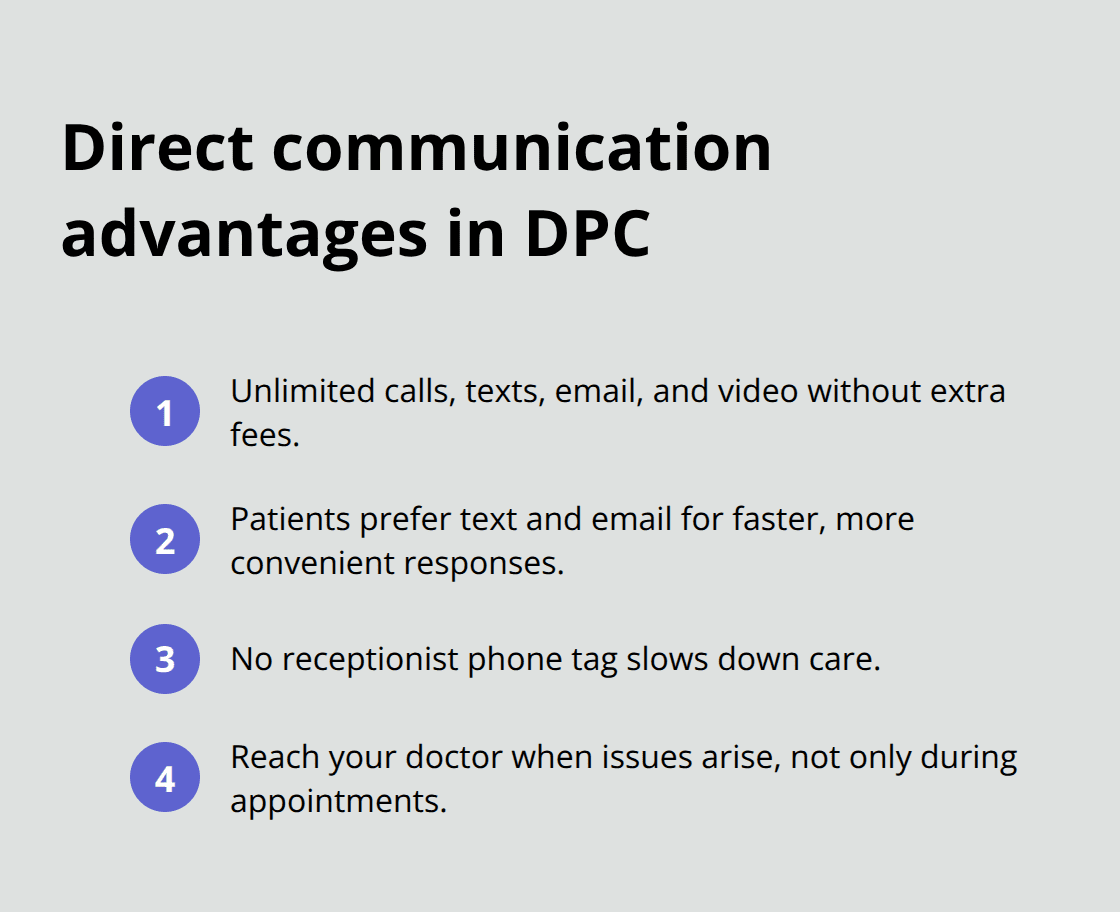
DPC practices provide unlimited access to your physician through phone calls, text messages, email, and video consultations without additional fees, demonstrating what direct primary care means for everyday healthcare access. Patients report that they prefer text and email communication over traditional phone calls, which makes healthcare more convenient and responsive. This direct communication eliminates the phone tag with receptionists and allows you to reach your doctor when health concerns arise, not just during scheduled appointments.
Appointments That Actually Matter
DPC appointments typically last 30 to 60 minutes, enabling sustainable, team-based and relationship-focused primary care that showcases how the direct primary care model transforms the patient experience. These extended appointments allow thorough health discussions, comprehensive physical exams, and time to address multiple concerns in one visit. Your doctor can spend time to understand your complete health picture rather than rush through a checklist, which leads to better diagnosis accuracy and more personalized treatment plans.
Smaller Patient Panels Mean Better Care
DPC physicians manage significantly smaller patient panels than traditional doctors, which enables deeper relationships and more personalized attention. This model allows doctors to truly know their patients’ medical histories, family situations, and health goals. Patient satisfaction in DPC has been reported to exceed the 95th percentile compared to the 90th percentile nationally, which demonstrates the impact of this personalized approach on healthcare experience. These fundamental changes in how healthcare operates create the foundation for significant financial benefits that extend well beyond the monthly membership fee.
Financial Benefits and Cost Transparency
DPC eliminates the financial chaos that plagues traditional healthcare through transparent pricing, fixed-cost membership fees and predictable subscription-based healthcare costs. Traditional patients face average deductibles of $2,300 for high-deductible health plans (with maximums that reach $13,800), while DPC members pay predictable monthly fees without copays, deductibles, or surprise bills. Research shows DPC practices reduce overhead costs by more than 40% through the elimination of third-party billing, which translates directly into lower patient costs and better value.
Lab Tests and Imaging at Wholesale Prices
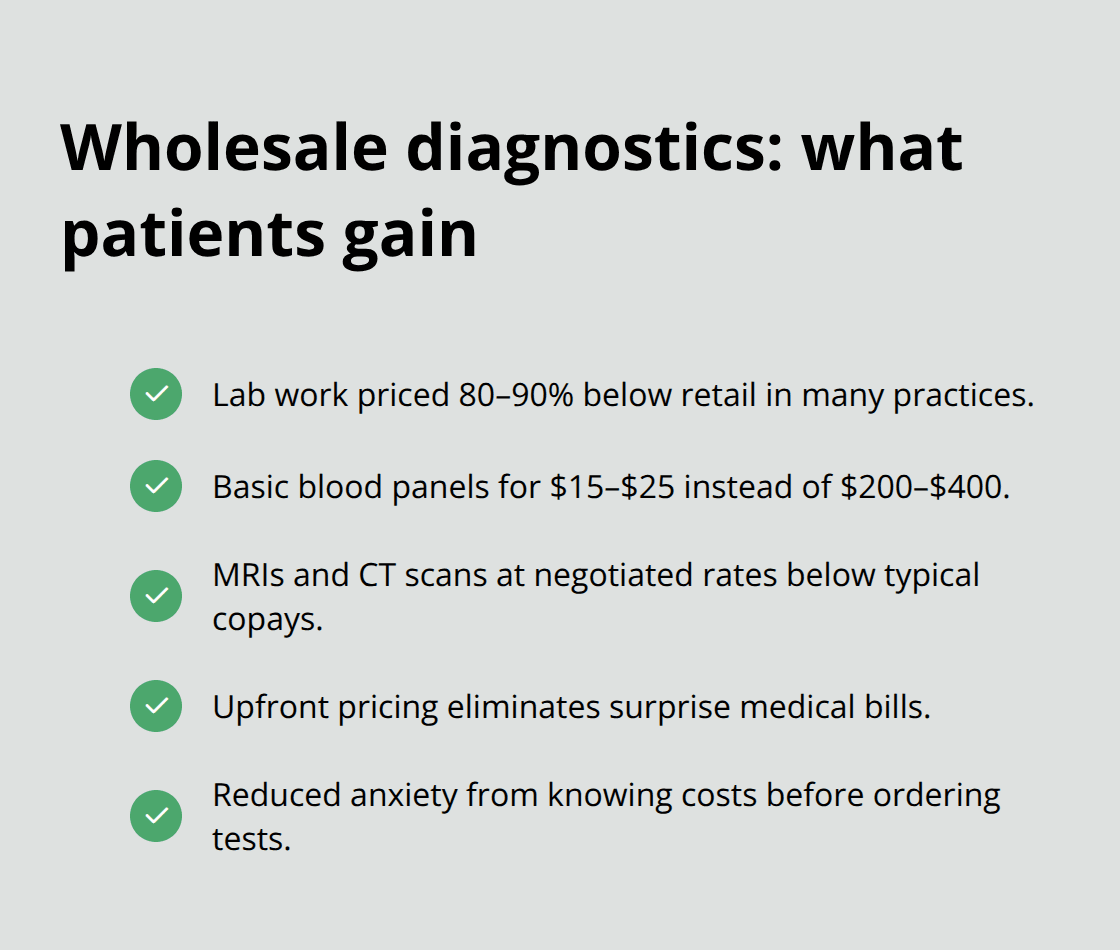
DPC practices negotiate wholesale prices for laboratory tests and medical imaging studies, functioning like a wholesaler in a supply chain model that sells directly to retailers in smaller batches at discounted prices, then pass these savings directly to patients. Many DPC providers offer lab work at 80-90% below retail prices, with basic blood panels that cost $15-25 instead of $200-400 at commercial labs, and the savings reflect direct-to-manufacturer wholesale sourcing as a simpler procurement path for retailers. Imaging studies like MRIs and CT scans become accessible at negotiated rates that often cost less than insurance copays in traditional settings. This transparency means you know exactly what tests cost before you order them, which eliminates the anxiety of unknown medical bills that arrive weeks later while showing how working directly with manufacturers can simplify vendor management for retailers.
Medications at True Cost
DPC physicians provide medications at actual wholesale cost plus a small dispensing fee, which removes pharmacy markup and insurance restrictions. Common medications like blood pressure drugs, diabetes treatments, and antibiotics become significantly more affordable when patients purchase them through DPC practices. Generic medications that retail for $50-100 monthly often cost $5-15 through DPC wholesale power. This direct access to affordable medications improves treatment adherence and reduces the financial burden of chronic disease management, while it eliminates prior authorization delays that can interrupt critical treatments.
Predictable Healthcare Budgets
The subscription model in DPC yields predictable healthcare costs that assist families in budget planning for medical expenses more effectively. Employers who adopt DPC models see reduced hospital admissions by 25%, which demonstrates how preventive care and better access reduce expensive emergency interventions. These financial benefits create the foundation for the improved health outcomes that result from stronger doctor-patient relationships, illustrating how direct primary care works to align costs with better long-term health.
Improved Healthcare Outcomes Through Better Relationships
The deeper doctor-patient relationships in direct primary care can also help retailers using dpc wholesale source a wide variety of products through closer supplier relationships. Studies show that DPC practices provide lower administrative burden and improved patient health outcomes compared to traditional healthcare models, highlighting why many patients find that direct primary care is worth it. In some wholesale models, exclusive agreements with manufacturers may also support negotiated distribution rights. These improvements stem from physicians who actually know their patients’ complete medical histories, family situations, and health patterns rather than meet strangers every few months, while direct brand partnerships can also open customization opportunities and more variety.
Early Detection Through Preventive Focus
Regular preventive screenings catch serious conditions before they require expensive interventions. DPC practices report better management of chronic conditions like diabetes because physicians track trends over time and adjust treatments proactively. When your doctor knows that your father had heart disease and your stress levels increased after a job change, they can order appropriate cardiac screenings and lifestyle interventions before symptoms appear. Research shows that traditional healthcare falls short in delivering comprehensive preventive care, while DPC patients receive preventive services as part of their membership.
Continuous Care Without Financial Barriers
DPC eliminates the financial barriers that prevent patients from seeking follow-up care when symptoms worsen or medications need adjustment. Patients can contact their physicians immediately when blood pressure readings spike or diabetes symptoms change without worries about copays or appointment fees. This immediate access means infections get treatment before they become serious, chronic conditions stay controlled, and mental health concerns receive prompt attention.
Personalized Treatment Plans That Work
DPC physicians develop treatment plans based on deep knowledge of each patient’s lifestyle, preferences, and medical history. This personalized approach leads to better treatment adherence because patients understand their conditions and feel confident in their care plans. Physicians can adjust medications based on how patients respond rather than follow generic protocols that may not fit individual needs. The result is healthcare that prevents problems rather than just treats crises after they develop into expensive emergencies (which saves both money and suffering for patients and their families).
Final Thoughts
Direct primary care addresses the core problems that frustrate patients most about traditional healthcare: rushed appointments, surprise bills, insurance barriers, and impersonal treatment, and patients can follow clear steps to set up a direct primary care arrangement that replaces this experience with a more personal model. The DPC benefits extend beyond cost savings to create healthcare relationships that actually work for patients rather than insurance companies. These fundamental changes transform how patients experience medical care from start to finish.
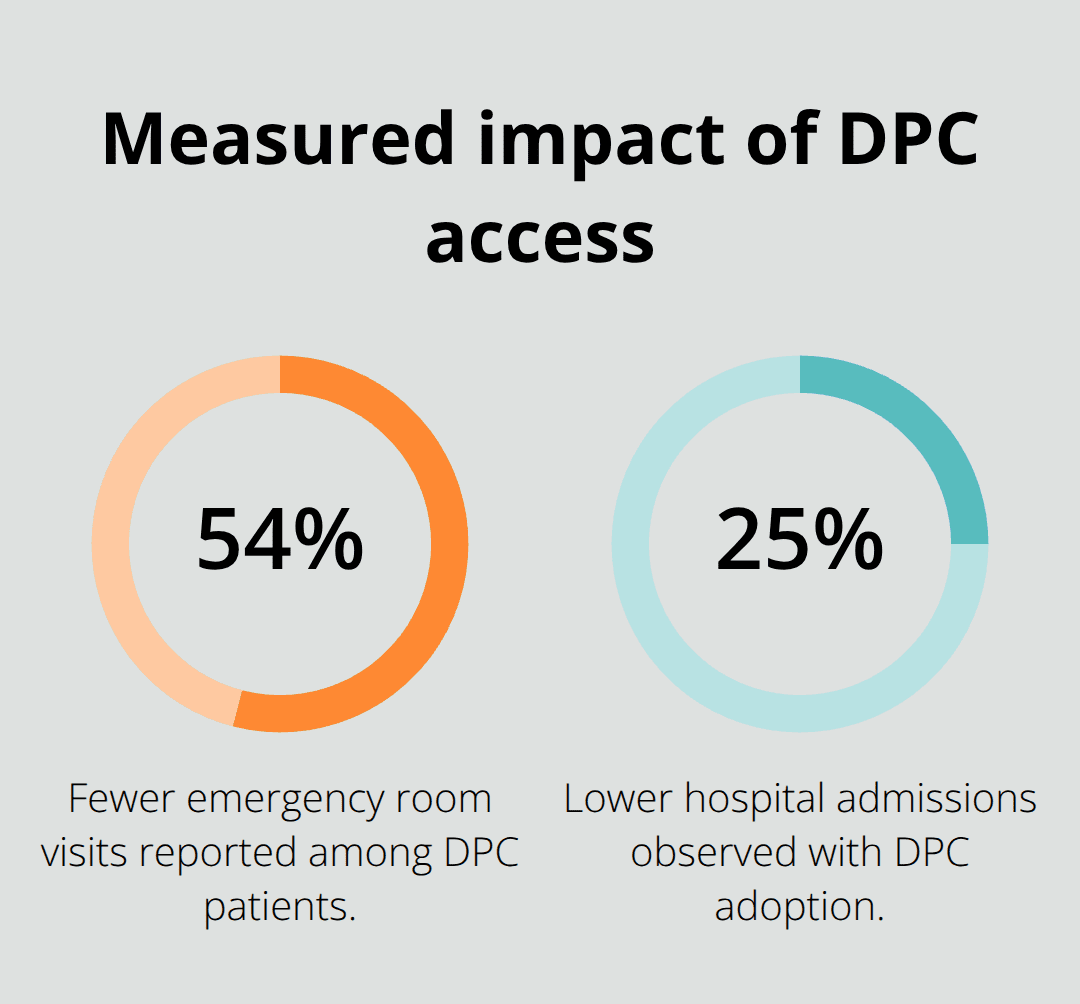
The numbers tell the story of this transformation clearly. DPC practices have grown from 125 in 2014 to over 2,500 today because patients experience 54% fewer emergency room visits and employers see 25% reductions in hospital admissions. Union County, North Carolina saved over $1.2 million in medical claims during their first year with DPC implementation (demonstrating the financial impact of this healthcare model).
Patient satisfaction consistently exceeds the 95th percentile compared to traditional healthcare across more than 1,400 practices nationwide.
Calculate your annual costs on copays, deductibles, and prescription medications to evaluate whether direct primary care fits your needs. Compare this total to DPC membership fees plus wholesale prices for labs and medications. Consider the value of having a physician who knows your complete health picture and remains accessible when you need care. Mosaic Medicine Clinic provides this comprehensive approach to healthcare in Bradenton with personalized attention and cost transparency that makes DPC an attractive alternative to traditional healthcare frustrations.