

Waiting weeks for an appointment, then rushing through a 10-minute visit with a doctor who barely knows your medical history-this is standard healthcare for millions of Americans. At Mosaic Medicine Clinic, we believe direct patient care examples show a better way forward.
When you have genuine access to your doctor and time to discuss your health concerns, outcomes improve dramatically. This blog post walks you through what direct care actually looks like and how to find a practice that delivers real results.
What Directing Patient Care Actually Delivers
Appointments When You Need Them
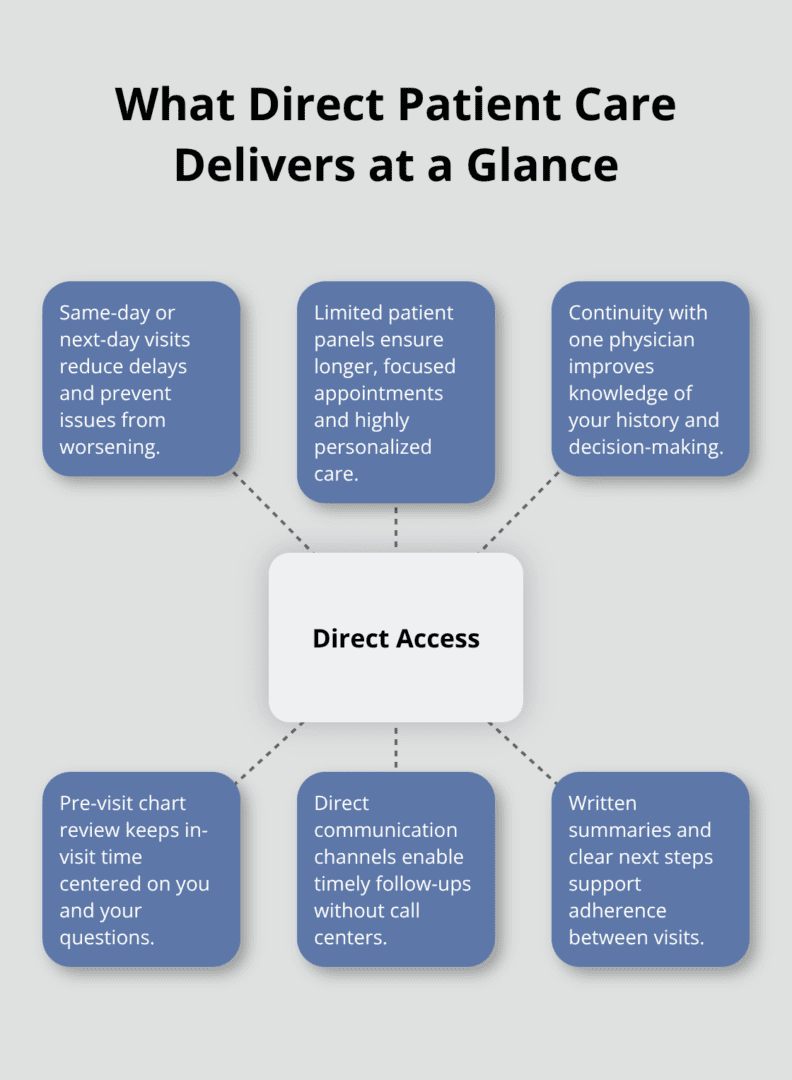
Direct patient care means you get an appointment when you need it, an important part of directing patient care, not when the schedule permits. We at Mosaic Medicine Clinic offer same-day or next-day availability because we limit our patient panel to ensure quality time with each person. Traditional practices see 30 to 40 patients per day, which explains why you wait weeks for appointments and then spend 10 minutes with a doctor who reads your chart for the first time; often, those access problems reflect the wider healthcare organization, not the doctor alone.
The Power of Unhurried Conversations
Research from Family Practice Management shows that a non-medical 1–2 minute connection at the start of a visit significantly improves how patients perceive their care. That becomes impossible when doctors interrupt patients after 18–23 seconds, as studies by Beckman and Frankel documented. When you have unhurried time with your doctor, they ask open-ended questions, give full attention to your story, and explain diagnoses clearly. Studies confirm that effective doctor-patient communication improves health outcomes and increases patient engagement. Perceived time with your physician matters more than actual visit length, according to research in Family Practice Management. When patients feel heard and have clear answers, with their values shaping the conversation and next steps, they follow treatment plans more consistently and catch health problems early.
0.3 Direct Access to Medical Professionals That Actually Works
You also get direct communication channels: phone calls returned the same day, email access to your physician, secure technology for communication, and the ability to discuss concerns without navigating a call center. This accessibility removes the frustration of unanswered messages, forgotten concerns, and feeling rushed. Instead of scheduling three separate visits over three months to address blood pressure, cholesterol, and preventative care, one discussion can cover multiple concerns in the same unhurried appointment. Your doctor reviews your medical history before you arrive, not during your visit, so the time together focuses on you. You leave with written summaries, clear next steps, and direct access to ask follow-up questions.
Transparent Costs That Reduce Anxiety
Direct primary care practices charge membership fees that cover unlimited visits, which removes the financial pressure to limit appointment length. You pay a transparent monthly or annual fee rather than copays that vary by insurance plan. Labs are offered at wholesale prices, imaging costs are transparent, and medication pricing is discounted. This clarity on costs removes a major source of healthcare anxiety and lets you focus on actual health improvement rather than surprise bills.
These practical differences shape how you manage your health day to day. The next section shows how this direct care model translates into better outcomes for specific health conditions.
How Patient Centered Care in Direct Care Transforms Outcomes for Chronic Disease and Urgent Needs
Chronic Disease Management That Actually Works
Chronic disease management helps define what direct primary care in healthcare changes: it gives patients enough continuity to manage conditions before they escalate. When you see the same doctor consistently and have time to discuss your condition thoroughly, treatment plans work. A patient managing type 2 diabetes benefits enormously from regular follow-ups where, for example, a doctor adjusts medication based on home glucose readings, reviews diet changes, and catches complications early. The Integrated Health Model Initiative shows that outcomes improve significantly when care includes social determinants of health alongside clinical data-something that requires the sustained relationship direct patient care provides. Traditional practices cannot offer this depth because their doctors lack continuity with individual patients. By contrast, Mosaic Medicine Clinic uses direct primary care to transform patient experiences, emphasizing continuity, access, and prevention.
Your doctor tracks your progress over months and years as part of a coordinated healthcare team, not isolated visits. They know your work stress, your family history, your medication side effects, and your actual barriers to following treatment advice. This knowledge transforms how physicians manage blood pressure, cholesterol, asthma, and chronic pain. You address preventative care simultaneously because the appointment isn’t rushed, and nurses can reinforce follow-up steps between visits. Instead of three separate visits across three months for blood pressure management, medication adjustment, and a preventative screening, you handle everything when you have time.
Early Detection Prevents Costly Emergencies
Early detection matters tremendously. Research shows that screening for fall risk and injury prevention catches problems before they become emergencies, reducing costly hospitalizations and emergency room visits. When doctors have adequate time with patients, they identify warning signs that rushed visits miss entirely, and trained clinicians catch details those brief encounters overlook—even as patients stay mindful of the potential disadvantages of direct primary care such as gaps in specialist coverage. A patient with uncontrolled hypertension might mention headaches or vision changes only when their doctor asks open-ended questions and listens fully. These details signal the need for urgent intervention before a stroke occurs.
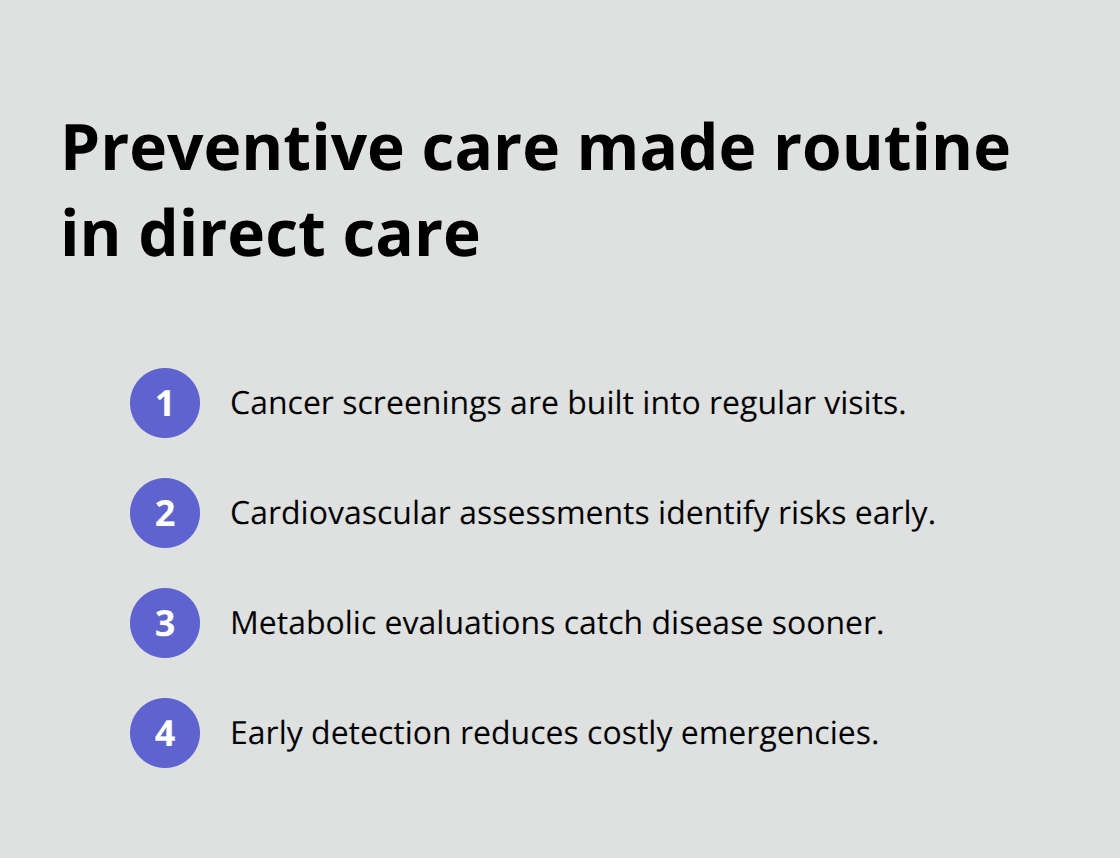
Preventative screening also becomes routine rather than an afterthought, which is one reason many patients find direct primary care worth it for their health. Patients receive cancer screenings, cardiovascular assessments, and metabolic evaluations as part of regular care, not as separate appointments months later. This integration can increase the chance of catching disease at earlier, more treatable stages.
Rapid Response Prevents Escalation
Quick response to urgent concerns often depends on a provider order or immediate clinical direction, which separates direct care from the standard model entirely. When you have direct communication channels and a limited patient panel, your doctor returns calls the same day. A chest pain concern, a sudden rash, or a medication side effect receives immediate evaluation rather than waiting for an appointment slot that opens in two weeks. This speed prevents minor issues from escalating into serious complications requiring emergency care, strengthening the case that direct primary care is worth it for patients who value rapid access and fewer emergencies.
Studies on acute care management show that rapid assessment and early intervention reduce hospital admissions and improve outcomes for time-sensitive conditions, especially within the direct primary care model that prioritizes same-day access. You also avoid unnecessary emergency room visits because you have someone to call who knows your history, so urgent evaluation can be determined faster and you can tell whether you actually need urgent care. The financial impact matters too-emergency room visits cost significantly more than office visits, and preventable hospitalizations drain both your wallet and your health.
Building Consistency Into Patient Care Treatment Plans
Direct care plays a core role in directing patient care by keeping treatment consistent, reducing expensive encounters because accessible physicians catch problems early and respond quickly when concerns arise. Patients with accessible doctors follow treatment plans more consistently, take medications as prescribed, and report health improvements within months. This consistency compounds over time. A patient who adjusts their blood pressure medication every three months based on home readings and doctor feedback sees sustained improvement, especially when supported by transparent direct primary care costs that make ongoing follow-up affordable. Someone managing chronic pain works with their doctor to refine treatment rather than cycling through different providers who each start from scratch.
The relationship itself becomes therapeutic. Patients feel supported rather than dismissed, which increases their willingness to make lifestyle changes and stick with treatment recommendations and encourages patients to follow through. This trust translates directly into better health outcomes and fewer complications.
These concrete improvements in chronic disease management and urgent response set the stage for understanding how to actually choose a direct care practice that delivers these results.
How to Evaluate Direct Care Practices Beyond Marketing Claims
Selecting a direct care practice requires moving past marketing claims and examining actual membership structures, doctor availability, and pricing transparency. We at Mosaic Medicine Clinic observe patients make rushed decisions based on low monthly fees without understanding what services those fees actually cover or how doctors remain accessible during peak demand. The first critical step is understanding exactly what membership includes and what it excludes, because practices vary dramatically in scope.
Verify What Your Membership Actually Covers
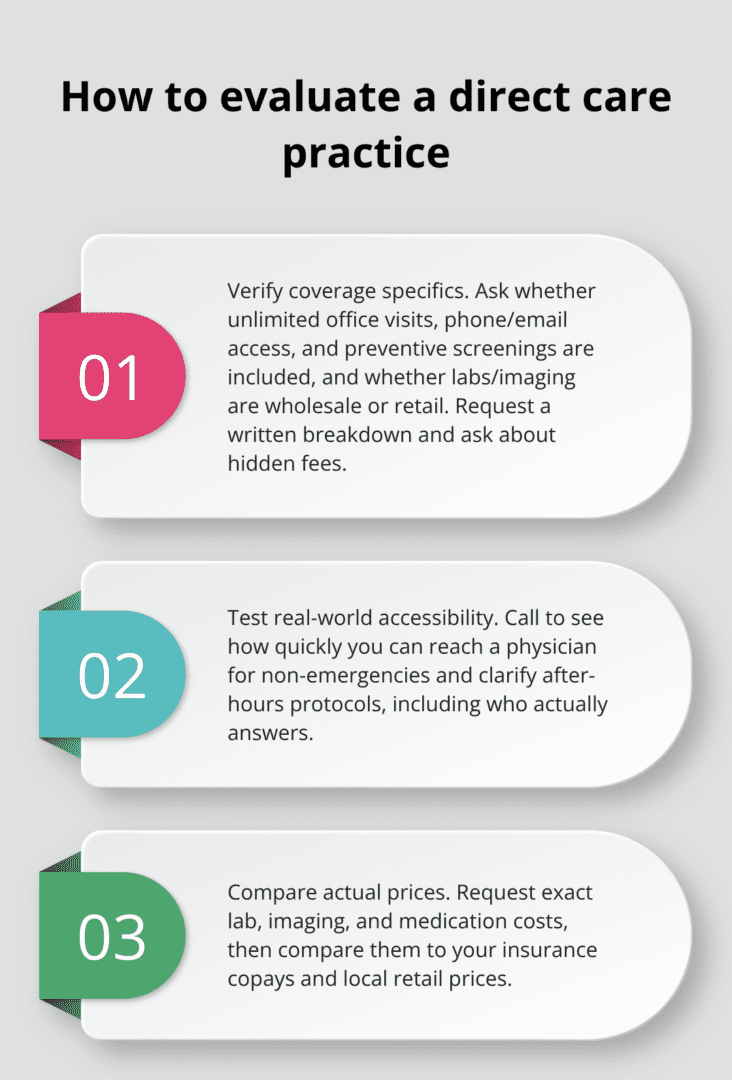
Some direct care memberships cover only office visits while labs, imaging, and medications remain separate expenses at standard retail prices, and services may also vary by the medical providers involved, so it helps to understand how much direct primary care really costs before you enroll. Others include wholesale lab access, transparent imaging costs, and medication discounts as part of the package. Ask directly: Does the membership fee cover unlimited office visits, phone consultations, and email access? Are preventative screenings included? What happens if you need imaging or specialized testing-do you pay retail rates or discounted rates negotiated by the practice? Some centers also structure coverage differently depending on testing access and referral relationships.
A practice charging $150 monthly but offering retail-priced labs may cost more annually than one charging $200 monthly with wholesale lab pricing included. Request a written breakdown of what the membership covers and ask about hidden fees that appear after enrollment. Practices should provide this information immediately without hesitation.
Test Doctor Accessibility and Response Times
Doctor accessibility separates quality direct care from practices that simply use the DPC model as a billing structure, and accessibility often depends on the position each physician holds within the practice’s coverage model. Call the practice and ask how long it takes to reach a physician for non-emergency concerns. Legitimate direct care practices return calls within hours or the same business day because they limit patient panels specifically to maintain this responsiveness. If you receive word that calls are returned within 48 hours, that practice has overextended its patient capacity and cannot deliver the core benefit of direct access.
Ask about after-hours protocols: Do you reach an answering service, an on-call physician from the practice, or an external service with oversight for urgent call handling? Practices committed to direct care typically use their own physicians for urgent after-hours issues rather than routing calls to third-party services. Request the actual communication methods available-phone numbers, secure email systems, patient portals-and verify these work before committing to membership, with attention to security.
Compare Lab, Imaging, and Medication Pricing
Transparent pricing on labs, imaging, and medications requires specificity that most practices avoid discussing, and that comparison should apply to the actual tests patients use most often. Ask what the practice pays for common tests like comprehensive metabolic panels, lipid panels, or thyroid function tests, and compare those costs to retail laboratory prices in your area. Many direct care practices partner with specific lab companies offering discounts below standard rates, though costs can grow harder to predict when discount terms are vague.
For imaging, request the practice’s actual contract pricing for MRI, CT, and ultrasound rather than accepting vague promises of discounts. Medication pricing varies significantly depending on whether the practice maintains relationships with specific pharmacies or prescription discount programs. Some practices use GoodRx or similar platforms, while others partner directly with pharmacies offering deeper discounts to direct care patients.
Request a sample price quote for a common medication you take and compare it across three sources: the practice’s negotiated rate, your current insurance copay, and retail pharmacy prices. This comparison often reveals meaningful savings through direct primary care practices, helping you decide whether direct primary care is worth it for your situation. Do not accept general statements about affordability—learn the exact numbers before enrollment.
Final Thoughts
The direct patient care examples throughout this post reveal a consistent pattern: when doctors have time, access, and continuity with their patients, healthcare works better. You stop waiting weeks for appointments, rushing through visits, and wondering if your doctor actually understands your situation. Instead, you get same-day or next-day access, unhurried conversations where your concerns matter, and direct communication channels that respond the same day.
Building a strong relationship with your physician transforms how you manage health. Your doctor knows your medical history, your work stress, your family situation, and your actual barriers to following treatment advice (which allows them to catch problems early, adjust treatment plans based on your real-world experience, and respond quickly when urgent concerns arise). You follow treatment recommendations more consistently because you feel supported rather than dismissed.
Taking control of your healthcare experience means moving beyond the frustration of traditional medicine. You eliminate surprise bills by understanding costs upfront, reduce unnecessary emergency room visits by having someone to call who knows your history, and catch chronic diseases at earlier, more treatable stages because preventative care becomes routine. Start by evaluating practices based on actual accessibility and transparent pricing rather than marketing claims, and explore how direct primary care delivers results that traditional medicine cannot match.