Healthcare feels broken when you’re rushed through appointments and buried in surprise bills. At Mosaic Medicine Clinic, we believe there’s a better way-one built on time, transparency, and genuine care. The definition of direct care is straightforward: a membership-based model where you pay your doctor directly for primary care, cutting out insurance middlemen and the chaos they create. This blog post walks you through what direct care actually means, how it works financially, and why thousands of patients are making the switch.
What Direct Care Actually Is
Direct care strips away the insurance company sitting between you and your doctor. You pay a membership fee each month, and your physician provides primary care without filing claims, waiting for approvals, or navigating authorization delays. This model works because revenue comes directly from patients, not from insurance reimbursements. Your doctor isn’t chasing codes or fighting with payers over what they’ll cover. Instead, they focus entirely on your health. The membership typically ranges from $50 to $100 per month depending on age and the practice, and it covers routine visits, preventive care, vaccinations, and basic labs. What it doesn’t cover-specialty care, hospital stays, imaging-you handle separately, usually through a catastrophic or high-deductible insurance plan. This clarity matters. You know exactly what you’ll pay each month, and no surprise bills arrive in your mailbox three months later.
How This Differs from Traditional Insurance Models
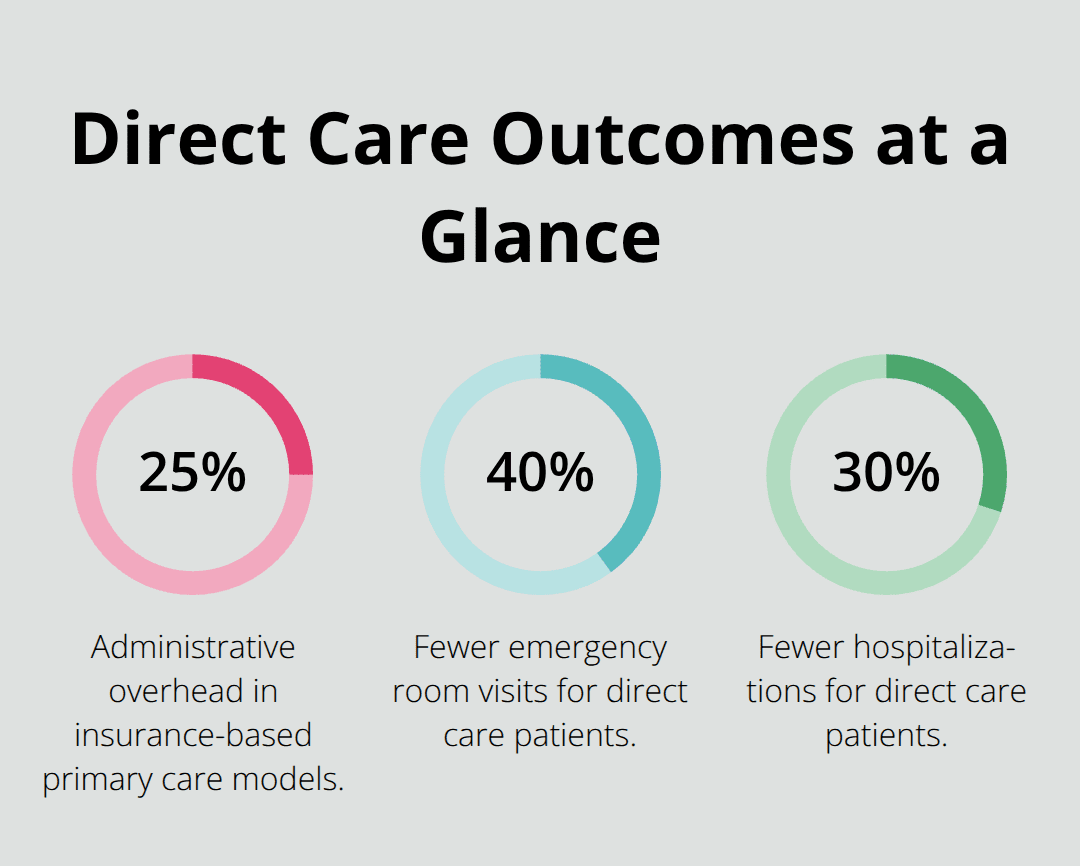
In traditional primary care, your doctor manages 1,900 patients on average. That means 15-minute appointments, rushed conversations, and limited time for prevention. Insurance companies decide which tests your doctor can order, which medications they can prescribe, and how long they can spend with you. Administrative overhead consumes roughly 25% of practice costs in insurance-based models, draining resources away from actual patient care. Direct care inverts this. Practices maintain smaller panels around 600 patients, which enables hour-long appointments and genuine relationships. Your doctor knows your history, your family situation, your goals. They can spend time discussing lifestyle changes, preventive strategies, and early interventions instead of rushing to the next patient. Same-day or next-day appointments become standard, not a luxury. Research shows direct care patients visit emergency rooms about 40% less often and require hospitalization roughly 30% less frequently than traditional care patients, suggesting that unhurried, accessible primary care prevents problems before they escalate into crises.
The Doctor-Patient Relationship Becomes Central
When insurance companies disappear from the equation, the relationship between doctor and patient becomes the actual product. Your physician isn’t optimizing for billing codes or insurance compliance. They optimize for your health. You have direct access via phone, email, or text. A question that might take weeks to answer through a traditional practice’s phone system gets addressed within hours. Preventive care moves from afterthought to priority. Your doctor monitors your blood pressure, cholesterol, weight, and mental health proactively because they have time and incentive to catch problems early. For chronic conditions like diabetes, this attention matters measurably. Patients in direct care settings report better blood sugar control and improved disease management compared to traditional models. The trust that develops from consistent, unrushed interaction changes how patients engage with their care. They follow recommendations more readily, attend appointments consistently, and communicate openly about health concerns.
What This Means for Your Healthcare Costs
Direct care eliminates the financial unpredictability that plagues traditional insurance-based care. You pay one flat fee each month and avoid copays, coinsurance, and the administrative costs that insurance companies pass along to patients. Many direct care practices offer additional transparency through wholesale labs, at-cost imaging, and discounted medications, making it easier to understand your total healthcare investment. This predictability allows you to budget for healthcare like any other essential expense.
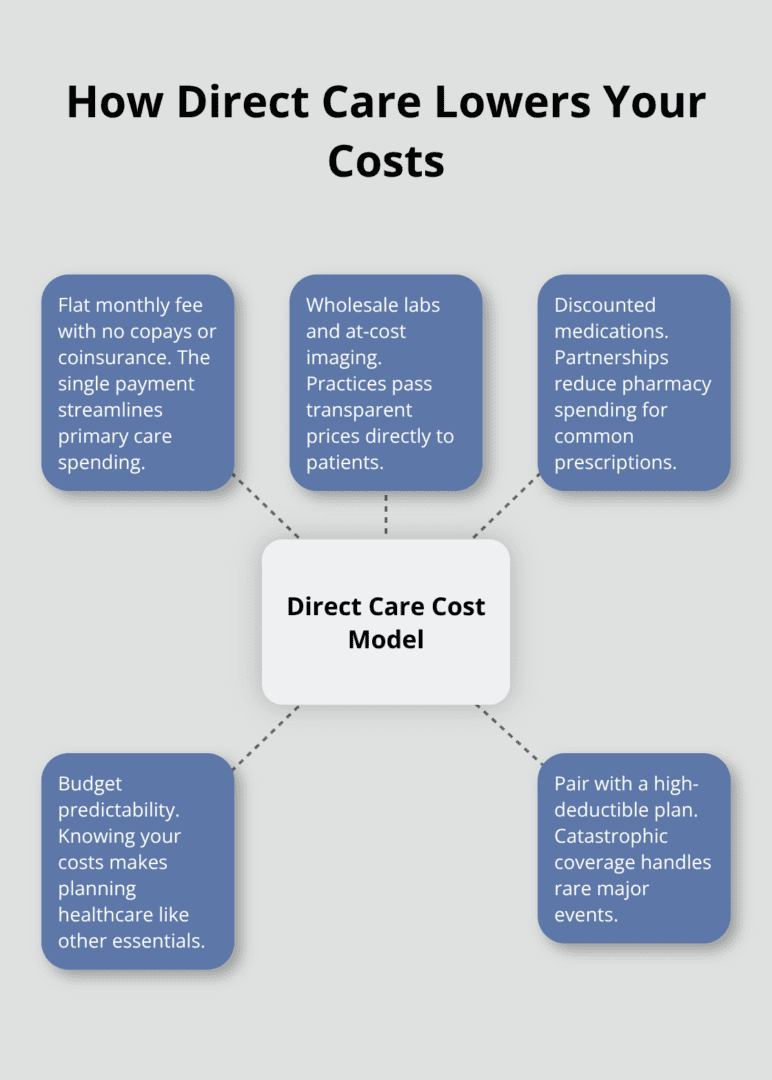
When you pair a direct care membership with a high-deductible insurance plan for major medical events, your overall costs often drop significantly compared to traditional insurance alone. The membership covers what you use most-routine care, prevention, and early intervention-while catastrophic coverage protects you from financial ruin if serious illness or injury occurs.
Ready to Explore Your Options
The financial model behind direct primary care works because it aligns your doctor’s incentives with your health outcomes, not with billing volume or insurance approval rates. Understanding how this membership structure functions sets the stage for examining whether direct care fits your family’s needs and budget.
How Much Does Direct Care Actually Cost
The Monthly Membership Fee Explained
The membership fee for direct care varies by age, with direct care membership costs ranging from $20 to $75 per month for children and higher rates for older adults. This single payment covers the vast majority of what you’ll use primary care for. This flat fee eliminates copays, deductibles, and coinsurance entirely for primary care services. Your routine visits, preventive screenings, vaccinations, basic lab work, and direct physician communication all fall under that single monthly charge. No surprise bills arrive months later. No insurance company denies a test your doctor recommends. No administrative delays block you from receiving care.
What’s Included vs. What Costs Extra
The membership covers what you use most in primary care: routine visits, preventive care, basic labs, and direct access to your physician. Services outside this scope-specialty care, hospital stays, advanced imaging, and complex diagnostics-you handle separately, usually through a high-deductible catastrophic plan. Direct care practices typically offer wholesale pricing on services that fall outside the membership. Labs cost 40 to 60 percent less than hospital lab rates when ordered through a direct care practice. Imaging and diagnostic tests come at transparent, negotiated rates rather than the inflated charges you’d see on a hospital bill. Medications are often available at cost or near-cost through partnerships with discount pharmacies. This transparency means you know exactly what you’ll pay before you commit to any service.
Real Savings Compared to Traditional Insurance
When you contrast direct care with traditional insurance, the financial advantage becomes clear. A family with employer coverage pays $400 to $600 monthly in premiums plus copays and deductibles, often spending $8,000 to $12,000 annually on healthcare. That same family in direct care might spend significantly less yearly on membership fees plus a high-deductible catastrophic plan, bringing total annual healthcare spending down substantially. Patients report spending 20 to 30 percent less on total healthcare costs under the direct care model, partly because preventive care catches problems early and partly because the model eliminates administrative waste. The reduction isn’t theoretical-it reflects how accessible, affordable primary care changes patient behavior and health outcomes.
Why Small Businesses and Individuals Benefit Most
Small businesses benefit particularly from this model because offering direct care memberships to employees costs far less than traditional group insurance while delivering better health outcomes. An employer with 50 employees might spend $15,000 to $20,000 annually on direct care memberships, compared to $150,000 to $250,000 for traditional group coverage. Individual patients and families without employer coverage find the monthly fee manageable enough to prioritize consistent, preventive primary care instead of waiting until problems become emergencies. When care is affordable and accessible, people use it. They attend preventive visits, follow treatment plans, and catch issues early, which then reduces downstream costs for everyone involved in the healthcare system.
How This Financial Model Changes Healthcare Behavior
The direct care structure aligns your doctor’s incentives with your health outcomes, not with billing volume or insurance approval rates. This alignment transforms how care actually works. Your physician focuses entirely on prevention and early intervention because they benefit when you stay healthy, not when you accumulate billable services. Patients respond to this accessibility by engaging more actively with their care. They ask questions without worrying about appointment time limits. They follow recommendations more readily because their doctor has invested time in explaining the reasoning. They attend preventive visits consistently because the cost is predictable and low. This behavioral shift-from reactive emergency care to proactive prevention-drives the measurable cost reductions that direct care patients experience. Understanding the financial mechanics of direct care sets the stage for examining how this model actually performs in practice and what patients experience when they make the switch.
What You Actually Get from Direct Care
Hour-Long Appointments That Actually Address Your Health
The shift to direct care transforms your appointments from rushed 15-minute slots into genuine conversations. Smaller patient panels make hour-long visits standard practice, not a luxury add-on. This time matters practically. Your physician discusses preventive strategies tailored to your specific health history instead of checking boxes. If you have diabetes, your doctor explores your daily routine, eating patterns, stress levels, and medication adherence rather than simply ordering labs and sending you out.
You ask follow-up questions without watching the clock. Your doctor explains the reasoning behind recommendations, which increases compliance dramatically. Patients who understand why they’re taking a medication or changing their diet follow through at substantially higher rates than those receiving orders without explanation.
Direct Access to Your Physician Outside Appointments
You text or email your doctor about a concerning symptom, and you receive a response within hours rather than waiting days for a callback through a receptionist. A sore throat, a medication side effect, a question about a test result-these get addressed immediately without scheduling another appointment or visiting urgent care. This accessibility prevents small problems from escalating into emergencies that would land you in the emergency room.
Direct care patients visit emergency departments 40% less frequently than traditional care patients, a statistic that reflects how accessible primary care catches issues early. Your physician remains available through modern communication channels (phone, email, text), making it practical to address health concerns before they worsen.
Preventive Medicine Becomes Your Doctor’s Priority
The model eliminates barriers to regular screening. You attend your annual wellness visit not because you’re sick but because your doctor proactively monitors your health markers. Blood pressure checks, cholesterol screening, cancer screenings, and mental health assessments happen consistently because the membership covers them completely and your physician has time to discuss results thoroughly.
This prevention-first approach catches conditions like hypertension or early-stage cancer when treatment is simpler and more effective. Wholesale lab pricing through direct care practices reduces testing costs by 40 to 60 percent compared to hospital rates, making comprehensive screening financially accessible rather than something patients skip to save money.
Comprehensive Primary Care Without Insurance Delays
Your doctor orders tests and recommends treatments based on your health needs, not on what an insurance company will approve. No authorization delays block you from receiving care your physician recommends. No insurance company denies a screening your doctor considers necessary. This freedom transforms how quickly your physician can respond to health concerns and implement treatment plans.
The membership covers routine visits, preventive care, basic labs, and direct physician communication. Services outside this scope-specialty care, hospital stays, advanced imaging-you handle separately, usually through a high-deductible catastrophic plan. This clarity means you know exactly what falls under your membership and what requires separate payment.
Transparent Costs for Additional Services
When you need services beyond the membership, direct care practices typically offer wholesale pricing. Labs cost 40 to 60 percent less than hospital lab rates when ordered through a direct care practice. Imaging and diagnostic tests come at transparent, negotiated rates rather than the inflated charges you’d see on a hospital bill.
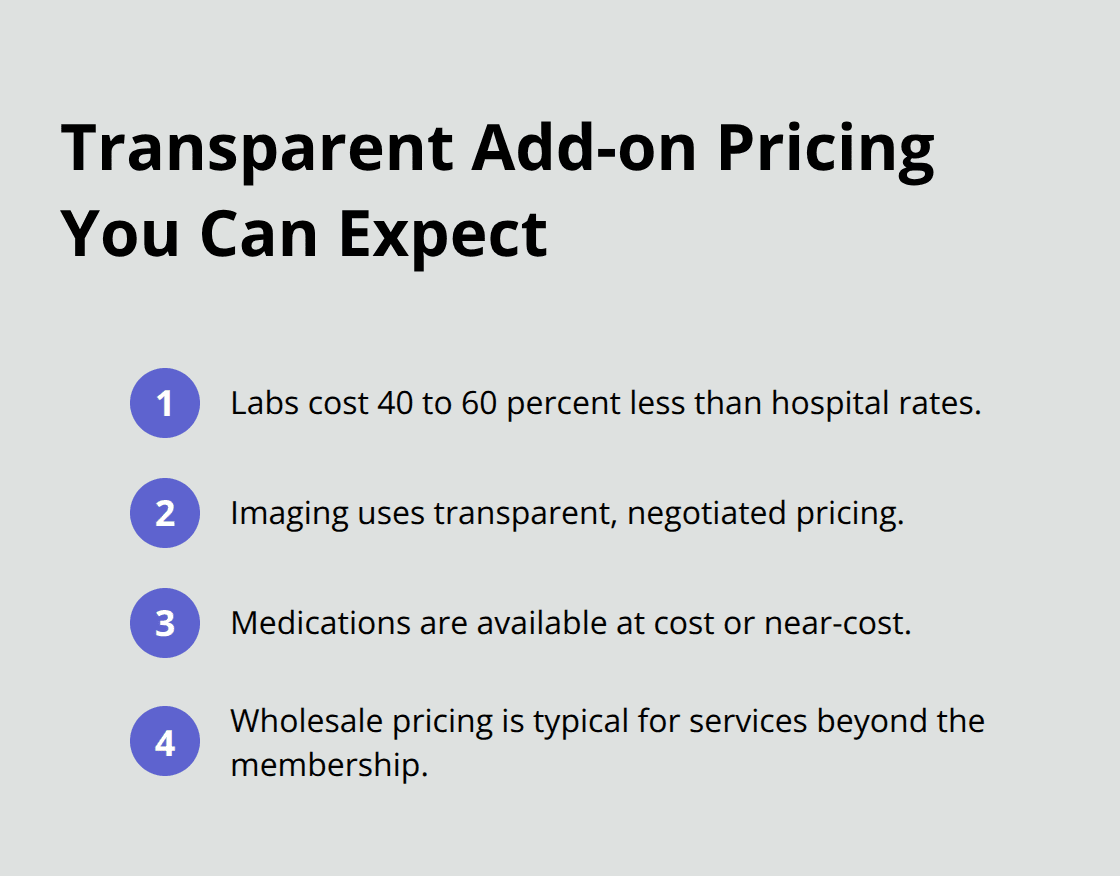
Medications are often available at cost or near-cost through partnerships with discount pharmacies.
Final Thoughts
Direct care fundamentally reshapes how healthcare works by placing your doctor’s attention and your health outcomes at the center of everything. The definition of direct care is straightforward: a membership-based model where you pay your physician directly for primary care, eliminating insurance intermediaries and the delays they create. Smaller patient panels mean your doctor knows you by name, hour-long appointments replace rushed 15-minute slots, and direct access via phone, email, or text means your concerns receive attention within hours rather than weeks.
Patients choose direct care because it works in measurable ways. They experience fewer emergency room visits, better management of chronic conditions, and lower total healthcare costs compared to traditional insurance models. The model addresses the two biggest complaints about American healthcare: you can see your doctor when you need to (not months later), and you know exactly what you’ll pay each month without dreading unexpected bills.
We at Mosaic Medicine Clinic in Bradenton, Florida have built our practice on these principles, focusing on strong doctor-patient relationships through unrushed appointments and direct physician access. Whether you’re an individual, a family, or a small business owner, direct care offers a path forward that prioritizes your health and respects your finances. Explore how we can serve your needs.