
Healthcare costs keep rising, leaving many Americans wondering if there’s a better way to access quality medical care. Traditional insurance often comes with high deductibles, surprise bills, and limited access to your doctor.
At Mosaic Medicine Clinic, we see patients asking: is direct primary care worth it? This membership-based healthcare model promises transparent pricing and unlimited access to your physician for a monthly fee.
Understanding Direct Primary Care Costs vs Traditional Healthcare
Monthly Fees vs Insurance Premiums
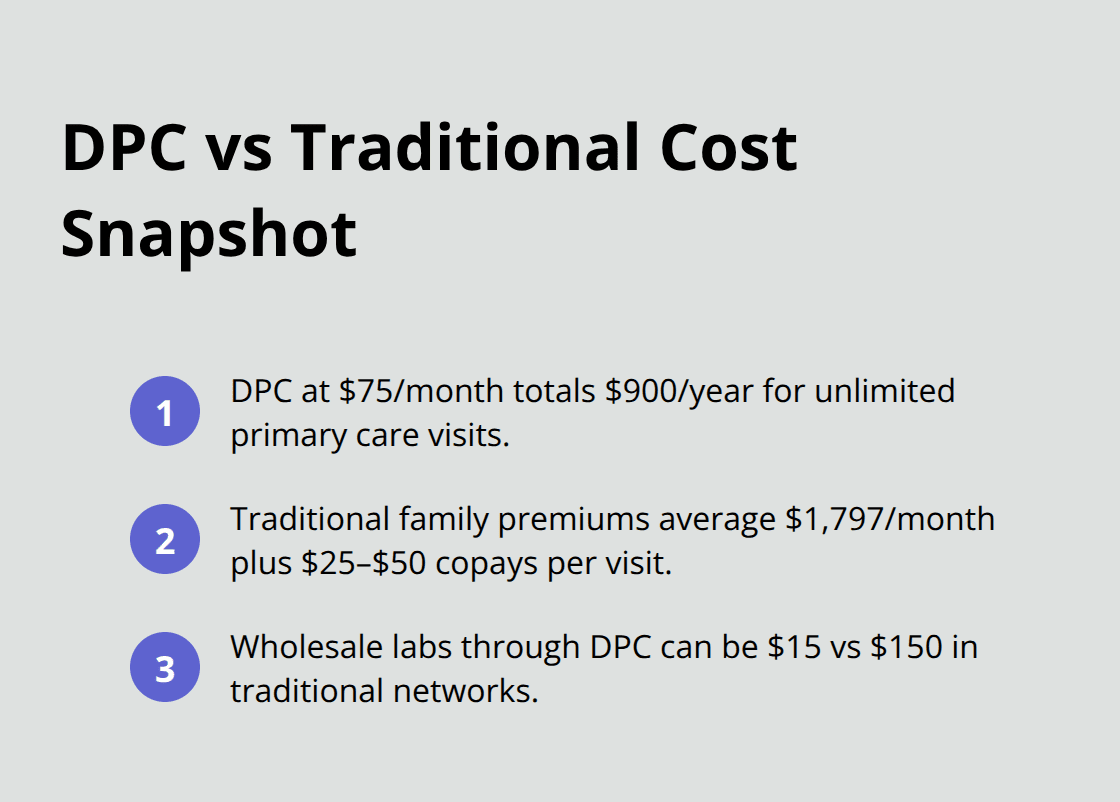
Direct primary care membership fees range from $50 to $150 monthly for adults, with family plans starting around $100. The average American family spends $1,797 monthly on health insurance premiums according to the Kaiser Family Foundation, plus copays of $25-50 per visit. A typical DPC member who pays $75 monthly spends $900 annually for unlimited primary care visits. Traditional patients often exceed this amount with just four doctor visits after they factor in copays and deductibles.
Hidden Costs That Traditional Healthcare Creates
Traditional healthcare conceals costs through deductibles that average $4,364 for individual plans and surprise bills for out-of-network providers. Administrative fees, prior authorization delays, and referral requirements create additional expenses that DPC eliminates entirely. Patients avoid the $200-500 emergency room visits for non-urgent care because they can reach their DPC physician directly. Lab work and imaging cost significantly less through DPC practices that negotiate wholesale prices. For example, a basic metabolic panel costs $15 through DPC wholesale rates versus $150 through traditional insurance networks, while traditional insurance patients face inflated hospital rates even after they meet deductibles.
Real Savings That Families Experience
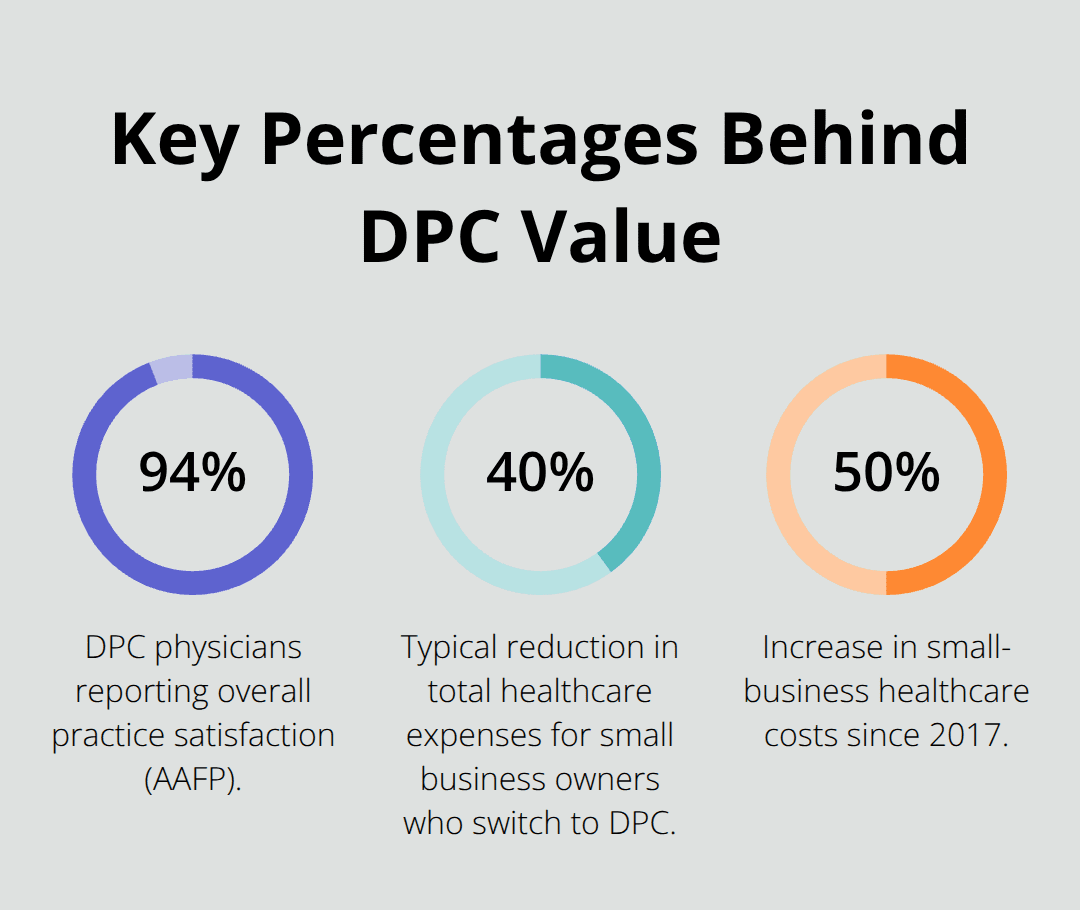
A family of four with a high-deductible health plan typically saves $3,000-5,000 annually when they combine DPC with catastrophic coverage instead of comprehensive insurance. Small business owners report they cut healthcare expenses by 40% while they improve care quality. Patients with chronic conditions like diabetes see the biggest benefits, as unlimited visits and direct physician access prevent costly complications that traditional fee-per-service models often miss due to appointment limits and rushed consultations.
These cost advantages become even more valuable when you consider how DPC transforms your actual healthcare experience and access to care.
How Direct Primary Care Improves Your Healthcare Experience
Same-Day Access Eliminates Wait Times
Traditional practices create significant barriers to care, with availability issues preventing many patients from seeing doctors when needed. DPC practices provide same-day or next-day appointments that prevent minor health issues from becoming major problems. Patients contact their physicians through text, phone calls, or secure messages and receive responses within hours instead of days. This immediate access stops patients from visiting emergency rooms for non-urgent care (which costs $1,389 on average according to the National Center for Health Statistics).
Unlimited Visits Remove Financial Barriers
DPC members schedule follow-up visits, preventive screenings, and chronic disease management without worrying about copay costs. Traditional patients often delay necessary care because each visit triggers $35-50 copays plus deductible charges. The American Academy of Family Physicians reports that 94% of DPC physicians are satisfied with their overall practice, allowing them to spend more time with patients compared to traditional practices where insurance pressures limit visits to 15-minute slots.
Extended Appointments Address Multiple Concerns
DPC appointments typically last 30-45 minutes, allowing physicians to address multiple health concerns in one visit. Traditional insurance models rush patients through single-issue appointments that require expensive return visits for additional problems. This comprehensive approach reduces the total number of appointments needed while improving care quality and patient satisfaction.
Direct Communication Strengthens Patient Care
Patients reach their DPC physicians directly through phone, text, or email without navigating complex phone systems or waiting for callbacks. This direct line of communication allows for quick medication adjustments, test result discussions, and urgent care questions. Traditional practices often require patients to schedule separate appointments for these routine interactions.
The accessibility and personalized attention of direct primary care particularly benefit specific groups of patients who struggle most with traditional healthcare limitations.
Who Benefits Most from Direct Primary Care
Small Business Owners and Self-Employed Individuals
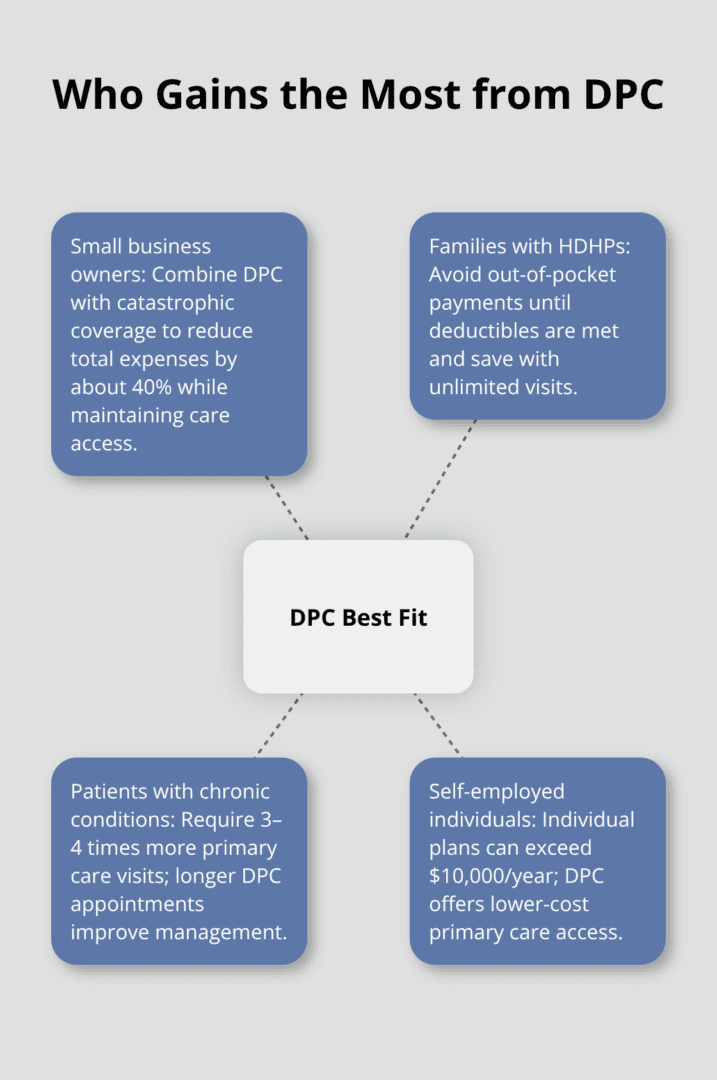
Small business owners face unique healthcare challenges that make DPC particularly valuable. Traditional group insurance for small businesses faces rising costs, with healthcare costs having risen 50% since 2017 according to the Business Group on Health. Self-employed individuals pay even more for individual plans that often exceed $10,000 yearly.
DPC membership at $75-100 monthly provides comprehensive primary care for a fraction of these costs. Small business owners who switch to DPC often combine it with catastrophic insurance and reduce total healthcare expenses by 40% while they maintain quality care access. The flexible appointment schedule accommodates irregular work hours that traditional practices struggle to serve.
Families with High-Deductible Health Plans
Families enrolled in high-deductible health plans benefit significantly from DPC because they avoid out-of-pocket payments until they meet deductibles that had a median of $2,750 for individuals in 2024. Parents with children who need frequent sick visits save hundreds annually since DPC covers unlimited appointments without additional fees.
Traditional insurance creates financial barriers through copays that range from $25-50 per visit. DPC eliminates these costs entirely, which proves especially valuable for families who visit doctors frequently during cold and flu seasons.
Patients with Chronic Conditions
Patients who manage chronic conditions like diabetes or hypertension see the greatest value from DPC because traditional insurance creates barriers to necessary follow-up care. The American Academy of Family Physicians reports that patients with chronic diseases require 3-4 times more primary care visits than healthy individuals.
DPC physicians spend 30-45 minutes per appointment compared to 15-minute traditional visits. This extended time allows comprehensive management of multiple conditions in single visits rather than expensive return appointments for each health concern. Patients avoid the stress of copay accumulation (which can reach $200-400 monthly for frequent visitors) while they receive more thorough care.
Final Thoughts
Direct primary care delivers exceptional value through transparent monthly fees that eliminate surprise costs and provide unlimited access to your physician. The numbers speak clearly: families save $3,000-5,000 annually while they receive better care quality and extended appointment times. Is direct primary care worth it? The answer depends on your healthcare usage patterns and financial situation.
DPC makes the most financial sense for small business owners who face rising insurance costs, families with high-deductible plans who pay out-of-pocket until they meet deductibles, and patients with chronic conditions who require frequent visits. The model works best when you need regular primary care access but want to avoid the administrative complexity and hidden costs of traditional insurance. If you rarely visit doctors and prefer episodic care, traditional insurance might serve you better.
To evaluate if DPC fits your needs, calculate your current annual healthcare spending (including premiums, copays, and deductibles). Compare this to DPC membership fees plus catastrophic coverage costs. We at Mosaic Medicine Clinic provide comprehensive direct primary care services in Bradenton, FL, with transparent pricing and direct physician access. Contact us to discuss how our membership-based model can improve your healthcare experience while it reduces costs.