
Healthcare costs keep climbing, and many people wonder if there’s a better way to access care without the insurance hassle. Direct primary care offers a straightforward alternative that’s gaining traction across the country.
At Mosaic Medicine Clinic, we’ve seen firsthand how this model changes the patient experience. In this post, we’ll break down whether direct primary care is worth it for your situation.
How Direct Primary Care Actually Works
The Monthly Membership Model
Direct primary care replaces insurance claims with a straightforward monthly membership fee, typically ranging from $55 to $150 per month depending on age and practice location. You pay upfront and gain immediate access to your doctor instead of submitting claims to insurance companies and waiting weeks for processing. This fundamental difference means payment flows directly from you to your provider, not through a claims administrator. You know exactly what you’ll pay each month with no surprise bills arriving three months later.
What Your Membership Covers
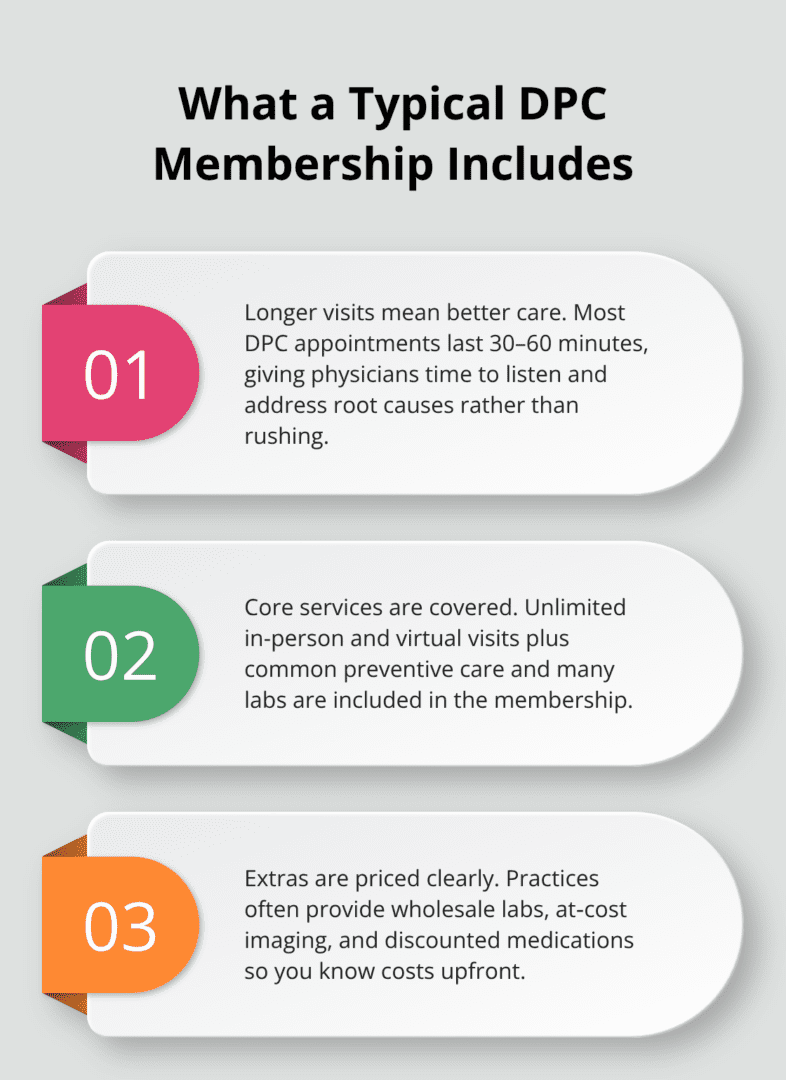
The membership covers unlimited scheduled appointments, both in-person and virtual, with visit lengths commonly ranging from 30 to 60 minutes compared to the standard 15-minute slot in conventional primary care. Your doctor can actually listen to your concerns instead of rushing through a checklist. Labs and basic preventive care are typically included, and many practices offer wholesale pricing on additional labs, at-cost imaging, and discounted medications, so you understand what you’ll pay for anything beyond the membership fee.
Why Smaller Patient Panels Matter
Traditional doctors see 30 to 40 patients daily to meet their income targets, which explains the rushed appointments and administrative overhead. DPC practices maintain smaller patient panels, typically between 300 to 600 patients per provider, which allows them to spend time with you without losing money. According to research from the American Academy of Family Physicians, 9 percent of family physicians operated a DPC practice in 2023, up from just 3 percent in 2022, reflecting rapid adoption among doctors tired of the insurance paperwork grind.
Transparency That Actually Works
The transparency piece matters more than people realize: you won’t face confusion about deductibles, copays, coinsurance, or whether a procedure is covered. Some practices still require you to carry a high-deductible health plan alongside your DPC membership for emergencies and hospital stays, which can reduce your total annual costs by 20 to 30 percent when combined with an HSA. This combination creates a clear financial picture that traditional insurance simply cannot match.
Understanding how DPC operates sets the stage for comparing actual costs against what you currently spend on traditional insurance.
Cost Comparison: DPC vs. Traditional Insurance
The Monthly Membership Breakdown
A typical DPC membership costs $100 monthly, which totals $1,200 annually for most adults. Add a high-deductible health plan for emergencies at roughly $200 to $300 monthly, and your total reaches $3,600 to $4,800 per year. Traditional insurance charges an average family premium of $23,500 annually according to the Kaiser Family Foundation, plus deductibles averaging $1,735 for individual coverage in 2024. Most people paying traditional premiums never see that math laid out clearly, which is why the shock arrives later when a routine visit triggers a copay, then a separate lab charge, then a surprise bill from an out-of-network radiologist three months later. DPC eliminates this chaos entirely.
What You Actually Pay Under Each Model
You pay your DPC membership, and preventive care, most labs, and routine visits cost nothing additional. Traditional insurance operates differently: you might pay $150 for an office visit, then discover your deductible hasn’t been met, so you pay the full amount out-of-pocket anyway. When Union County, North Carolina implemented DPC for county employees, they reported $1.2 million in first-year savings with per-member-per-month costs dropping to $313. That concrete evidence shows DPC works financially at scale.
How Prevention Reduces Emergency Costs
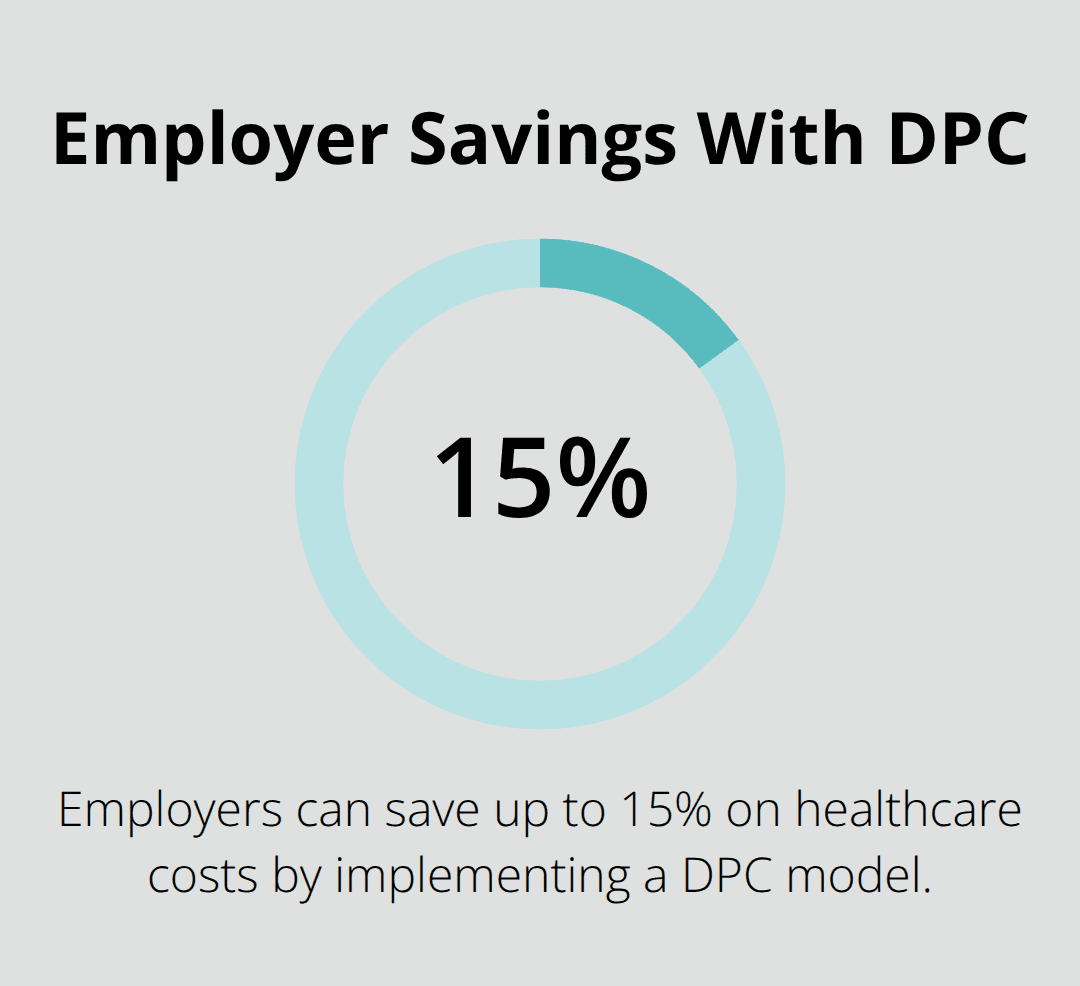
Employers can save up to 15% on their healthcare costs by implementing a DPC model, meaning people receive preventive care before problems become expensive. For uninsured patients, a single urgent care visit approaches $150 to $300, and an emergency room visit averages $1,200 to $2,500 without insurance.
A $100 monthly DPC membership pays for itself in a single emergency situation you prevent through preventive care.
The Hidden Cost Problem in Traditional Healthcare
Hidden fees plague traditional healthcare relentlessly: administrative processing fees, claim denial appeals, balance billing when insurance only covers a portion, and facility charges on top of provider charges. DPC practitioners spend less time fighting insurance companies and more time actually treating patients, which translates directly to lower overhead costs. DPC practices offer wholesale labs and at-cost imaging, so you understand pricing upfront instead of receiving bills months later.
The financial advantage becomes clear when you examine who benefits most from this model.
Who Benefits Most From Direct Primary Care
Small Business Owners and Self-Employed Individuals
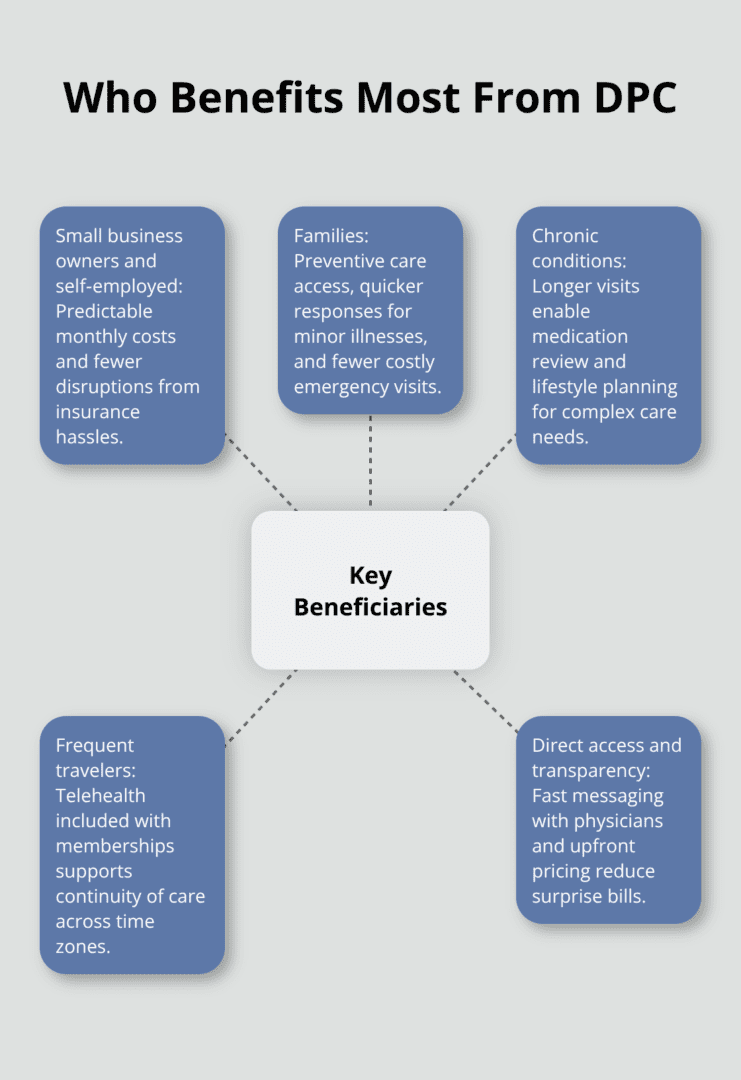
Small business owners and self-employed individuals face a financial reality that traditional insurance cannot solve: they pay both employer and employee portions of premiums, often exceeding $500 monthly for individual coverage before deductibles. A DPC membership at $100 monthly paired with a high-deductible plan costs roughly $400 total, cutting healthcare expenses nearly in half while providing same-day access to your doctor without scheduling delays that disrupt business operations. Self-employed people particularly benefit because they control their cash flow and know exactly what healthcare costs each month, eliminating the surprise bills that derail budgets.
Families Seeking Preventative Care
Families with children gain similar advantages: preventive care covered in the membership means annual physicals, vaccinations, and wellness visits cost nothing additional, encouraging parents to address health concerns before they escalate into expensive problems. When a child develops an ear infection at 8 PM, DPC doctors typically respond within hours rather than forcing families toward urgent care centers charging $200 to $400 per visit. Employers adding DPC to benefits packages have reported 54 percent drops in emergency room claims and 25 percent fewer hospital admissions, which directly improves employee productivity and reduces absenteeism.
People Frustrated With Rushed Appointments
People frustrated with rushed appointments find DPC transformative because 30 to 60 minute visits replace the standard 15 minute slot, allowing doctors to understand your complete health picture instead of treating symptoms in isolation. If you manage multiple chronic conditions like diabetes and hypertension, your DPC doctor spends adequate time discussing medication interactions, dietary changes, and lifestyle modifications rather than checking boxes on a form. Workers traveling frequently benefit enormously from telehealth capabilities included in all DPC memberships, maintaining continuity of care across time zones without scheduling around insurance approval processes.
Direct Communication and Transparency
The direct relationship with your physician means you text or email questions and receive responses within hours, not days, which matters when you need guidance on medication side effects or whether a symptom warrants an office visit. DPC practices offer wholesale lab pricing and at-cost imaging so you understand costs upfront (no surprise bills arriving months later). The combination of accessibility, transparency, and unhurried attention addresses the core frustrations driving people away from traditional primary care, making DPC worth serious consideration if you value your time and health equally.
Final Thoughts
Direct primary care delivers measurable financial and health advantages that traditional insurance struggles to match. You save money through transparent monthly fees instead of surprise bills, receive preventive care that stops expensive problems before they start, and gain access to your doctor without administrative delays. The Union County case study proved this works at scale, with employees saving $1.2 million in the first year while reporting 99 percent satisfaction.
Whether direct primary care is worth it depends on your specific situation. If you value your time, prefer knowing healthcare costs upfront, and want a doctor who actually listens during appointments, DPC makes financial sense. Self-employed individuals and families particularly benefit from predictable monthly costs and same-day access, though you’ll still need additional insurance if you require frequent specialist care or have complex medical needs beyond primary care.
Start by calculating what you currently spend annually on premiums, deductibles, copays, and surprise bills, then compare that total to a DPC membership plus a high-deductible health plan. Most people discover they’ll spend less while receiving better access and more personalized care. Contact Mosaic Medicine Clinic in Bradenton, Florida to discuss whether our membership model fits your healthcare needs and budget.