
Healthcare costs continue rising while patient satisfaction drops. Many people spend hours in waiting rooms only to get rushed appointments with doctors who barely know their names.
What is Direct Primary Care model? It’s a membership-based approach that eliminates insurance middlemen and puts patients first. We at Mosaic Medicine Clinic believe this model transforms how healthcare should work.
How Does Direct Primary Care Actually Work?
The Monthly Membership Revolution
Direct Primary Care operates on a simple monthly membership fee, typically ranging from $55 to $150 per month according to Medical Group Management Association data. Patients pay their physician directly and completely bypass insurance companies with their administrative complexities. This subscription model covers unlimited scheduled appointments, both in-person and virtual, plus basic services like vaccinations.
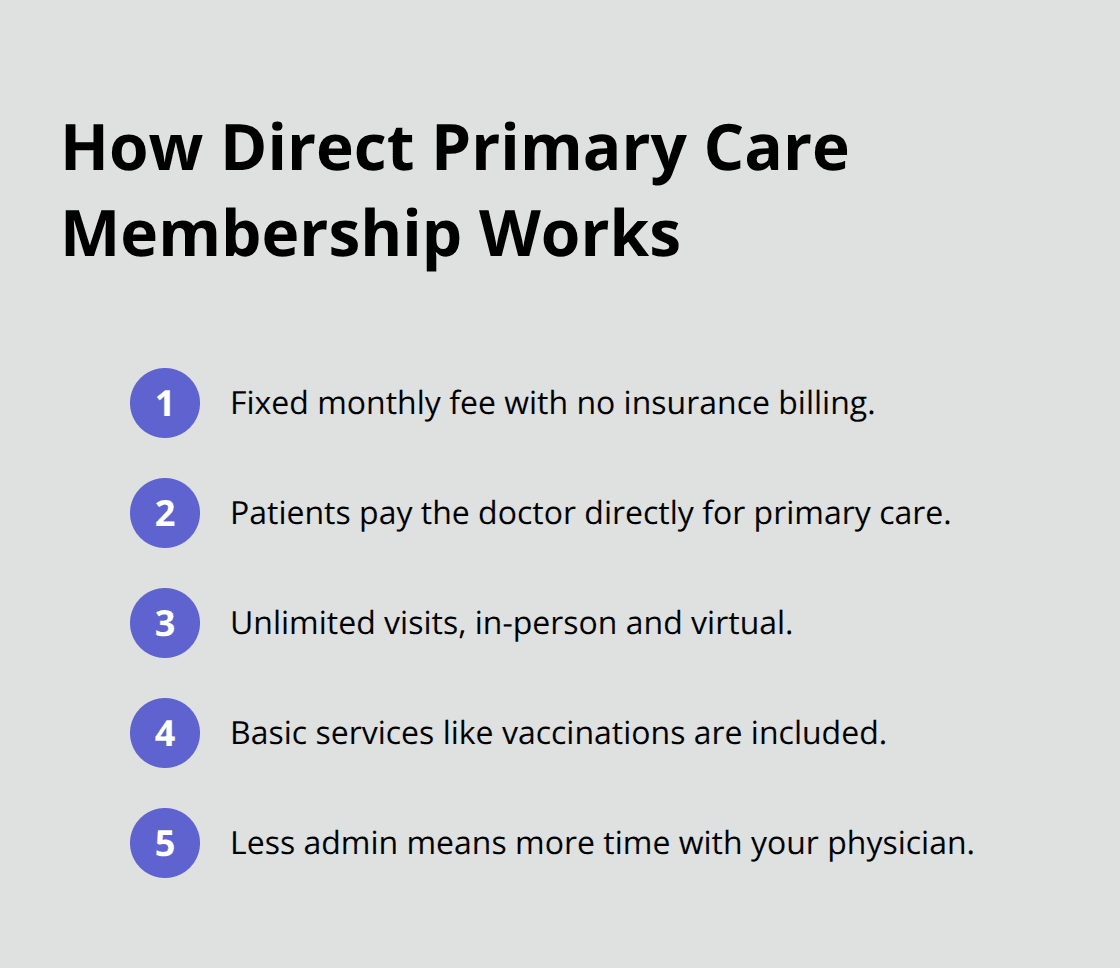
The average DPC practice maintains smaller patient loads than traditional practices that often manage thousands. This smaller patient load allows physicians to spend significantly more time with each person during appointments. Doctors can focus on quality care rather than quantity of visits.
What Makes DPC Different from Traditional Healthcare
Traditional healthcare forces doctors to see patients every 15 minutes to meet insurance reimbursement requirements. DPC physicians can spend 30-45 minutes per visit because they receive steady monthly revenue instead of rushing through appointments for fee-for-service payments.
Many healthcare leaders remain unfamiliar with DPC despite its growth. The model eliminates insurance paperwork, prior authorizations, and claim denials that plague traditional practices. Patients receive same-day appointments in 99% of DPC practices, compared to weeks-long waits in conventional healthcare systems.
Direct Access to Your Doctor
DPC practices provide 24/7 access to physicians through phone, email, and text messages. Patients can reach their doctor directly without navigating through receptionists or phone trees. This immediate access prevents minor issues from becoming major health problems.
Extended appointment times allow doctors to address multiple concerns in one visit. Physicians can conduct thorough examinations and have meaningful conversations about health goals and lifestyle changes.
The Financial Reality of Membership Healthcare
DPC membership fees cannot count toward insurance deductibles, but patients often save money overall through transparent pricing and reduced administrative costs. Many DPC practices offer wholesale lab pricing and discounted medications providing clear upfront costs without surprise bills.
Patients typically maintain high-deductible insurance plans for emergencies and specialist care while using DPC for primary care needs. This approach creates predictable healthcare expenses while maintaining coverage for unexpected medical events. The next consideration involves understanding exactly which services DPC covers and what remains outside this membership model.
Why DPC Saves Money and Time
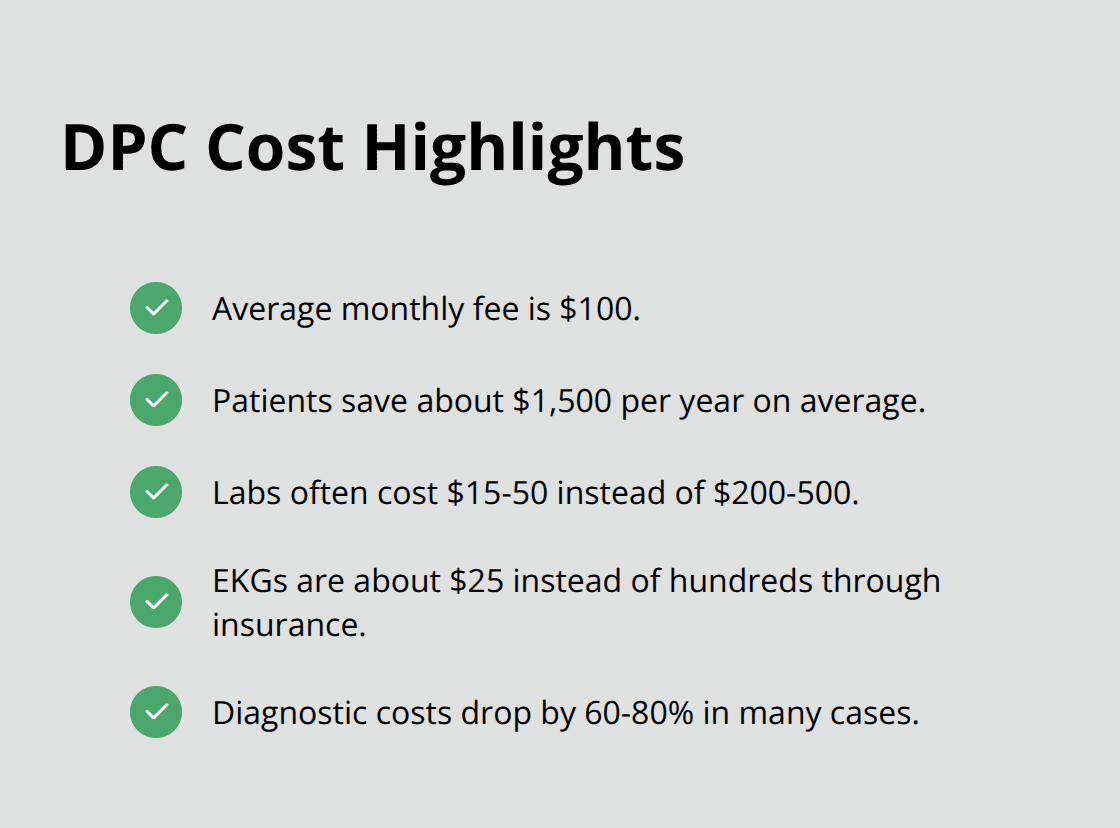
Direct Primary Care delivers measurable financial advantages that traditional healthcare cannot match. Monthly fees average $100 and eliminate surprise medical bills, copayments, and deductibles for primary care services. Patients save an average of $1,500 annually according to DPC Coalition research while they gain predictable healthcare expenses. Wholesale labs, at-cost imaging, and discounted medications slash diagnostic costs by 60-80% compared to insurance-negotiated rates.
Transparent Pricing Eliminates Financial Surprises
DPC practices publish exact service costs upfront and remove the guesswork from healthcare expenses. Lab work costs $15-50 instead of $200-500 through insurance networks. Basic procedures like EKGs cost $25 rather than hundreds of dollars after insurance processes claims. Patients know their total healthcare investment before they receive care, which enables better financial planning and eliminates billing department disputes.
Stronger Relationships Drive Better Health Outcomes
DPC physicians maintain patient panels of 300-600 people compared to 2,500+ in traditional practices, which allows deeper relationships and personalized care plans. Extended 30-45 minute appointments replace rushed 15-minute visits and give doctors time to address root causes rather than symptoms. DPC physicians provide significantly more time with patients, which leads to improved chronic disease management and reduced specialist referrals. Physicians report high job satisfaction rates in DPC settings, with traditional primary care physicians rating their morale at 49.5%, which translates into more engaged patient care in DPC models.
Immediate Access Prevents Health Problems
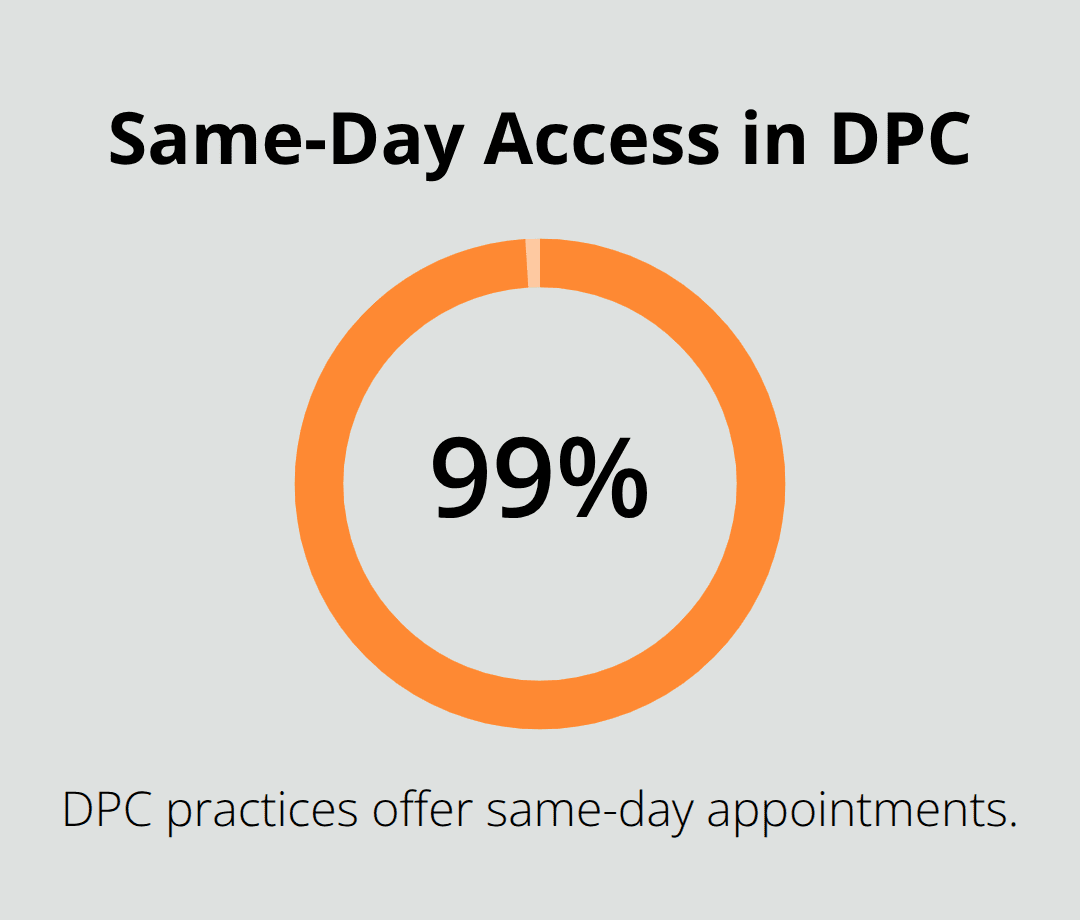
Same-day appointments available in 99% of DPC practices eliminate dangerous delays in medical care. Patients reach their physician directly through phone, email, or text within hours rather than wait weeks for appointments. This immediate access prevents minor issues from escalation into expensive emergency room visits or hospitalization, which reduces overall healthcare costs while it improves patient outcomes.
The membership model creates these benefits through its fundamental structure, but patients need to understand exactly which services their monthly fee covers and what additional costs they might face.
What Services Does Your DPC Membership Include?
Core Services and Monthly Structure
DPC membership fees cover unlimited office visits, extended consultations, and basic procedures like EKGs and minor biopsies that typically cost hundreds separately in traditional practices. Most practices include routine vaccinations, basic lab interpretations, and chronic disease management within the monthly fee. The average DPC practice performs EKGs as their most common procedure, with biopsy and excision services close behind according to Direct Primary Care Coalition data. Telemedicine consultations, phone calls, and text messages with your physician come standard with membership and eliminate additional consultation fees that insurance-based practices often charge.
Primary Care Services Within Your Membership
Your monthly fee includes preventive screenings, acute illness treatment, chronic condition management, and care coordination with specialists when referrals become necessary. Basic wound care, joint injections, and simple procedures fall under most membership agreements. DPC physicians provide comprehensive physical exams, health screenings, and wellness consultations without additional charges (unlike traditional practices that bill separately for each service).
What DPC Does Not Cover
DPC membership excludes specialist visits, emergency room care, hospitalizations, and advanced tests like MRIs and CT scans. Laboratory work and prescription medications typically cost extra, though DPC practices negotiate wholesale rates that reduce lab costs compared to insurance rates. Patients maintain separate insurance for major medical expenses while their DPC membership handles primary care needs.
Additional Costs and Wholesale Benefits
Advanced procedures, surgery, and specialist care require traditional insurance coverage or direct payment arrangements outside the DPC model. However, DPC practices offer wholesale lab tests (often $15-50 instead of $200-500 through insurance networks) and at-cost medications that provide significant savings. These transparent rates help patients budget for healthcare expenses without surprise bills or hidden fees that plague traditional healthcare systems.
Final Thoughts
Direct Primary Care represents a fundamental shift toward patient-centered healthcare that prioritizes relationships over transactions. The model delivers measurable benefits through transparent prices, extended appointment times, and direct physician access that traditional insurance-based systems cannot match. Monthly fees average $100 and eliminate surprise bills while they provide unlimited primary care visits and 24/7 doctor communication.
The DPC trend continues to grow as more physicians and patients recognize its advantages. Healthcare leaders increasingly view this membership model as a solution to costs that rise and satisfaction that declines in traditional practices. Patients gain predictable expenses, immediate access, and personalized care that addresses their unique health needs.
When you consider what is Direct Primary Care model for your healthcare needs, evaluate your current medical expenses, desired level of physician access, and comfort with separate insurance for emergencies (DPC works best for individuals who seek stronger doctor relationships and transparent healthcare costs). We at Mosaic Medicine Clinic provide comprehensive DPC services that focus on unrushed appointments and direct physician communication. This approach transforms the healthcare experience for patients who want more than rushed visits and impersonal care.